

This article first appeared as part of the Rory Smith on Football newsletter – a guide to help understand what is happening on the pitch, off the pitch, and why all of it matters. To receive it in your inbox, sign up here.
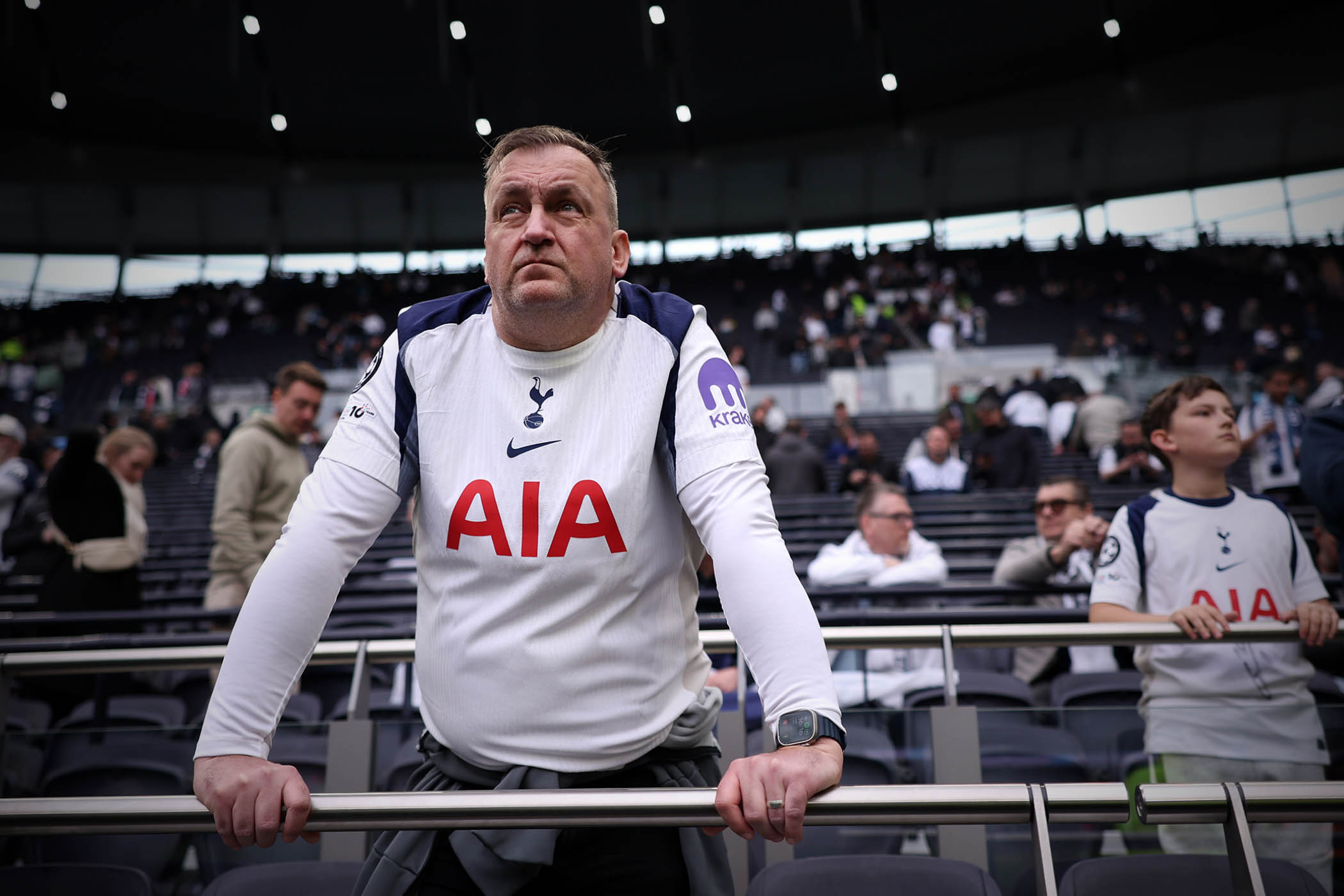
Late on Monday night, after what had threatened to be a particularly bleak weekend in a season full of them, Tottenham Hotspur received what by their standards currently counts as a boost. Naturally, it was not related to anything they had done. It was a vicarious sort of fillip, a second-hand tonic, a benefit accrued by the actions of someone else.
Or, rather, the lack of actions. The best thing that happened to Spurs this weekend was, by some distance, the fact that West Ham did not score against Crystal Palace, meaning that what might have been a truly shattering couple of days can merely be recorded as an intensely disappointing one. Another intensely disappointing one.
To recap: on Saturday, Leeds United effectively relegated Wolves, breezing past the Premier League’s bottom club at Elland Road. 24 hours later, Nottingham Forest did pretty much the same to Burnley at the City Ground. In between, despite producing their best performance in months, Spurs contrived to draw 2-2 with Brighton.
What’s that Hemingway line that everyone uses? Oh yes. Spurs, it seemed, were learning that relegation happens very much like bankruptcy: slowly, then all at once. As much as it might have felt like they have been marooned in the Premier League’s bottom three all season, Tottenham slipped into it for the first time – since 2009, in fact – just last week.
And now, all of a sudden, gaps were appearing. What had been slender fissures between Spurs and the teams around them, the kind of teams who expect to be contemplating survival at this stage of the season, began to yawn into chasms. By the close of play on Sunday, Spurs were eight points behind Leeds and six behind Forest. They all have just five games left to play.
Had West Ham completed a trifecta and won at Selhurst Park, there would have been clear daylight between them and Tottenham: a full four points, enough to mean that Spurs were guaranteed to be in the bottom three when the final whistle blows on next weekend, too. They would, in that circumstance, not merely have been in the relegation zone. They would have been marooned in it, trapped in it, cemented in it.
All of this is, in truth, pretty scant solace: the only positive is that it could have been worse. Tottenham are running out of games, out of time. They are now two points off West Ham. They have employed three different managers this calendar year. None of them have actually won a Premier League game. Only Burnley are in worse form. The auguries are not good.
Football is pretty good at adapting to new realities, internalising and accepting them, no matter how much of a jarring, screeching volte-face they represent. Nation states own football clubs now, do they? OK. Manchester City, that old byword for bumbling ineptitude, are now the most successful club of the century? Let’s run with it. Bournemouth are now richer than AC Milan, are they? Fair enough.
That capability has, over the last few months, extended even to normalising the fact that Tottenham Hotspur might get relegated from the Premier League. And on one level, that is completely understandable: Spurs have been uniformly dreadful all season, have been in a state of seemingly permanent crisis, and finished 17th last year. It hardly requires a great leap of imagination.
Take a step back, though, and the absurdity of the situation becomes almost overwhelming. Tottenham are the ninth-richest club in the world. They have annual revenues getting on for £200m more than Atlético Madrid, a team currently preparing for a Champions League semifinal, and with players of the calibre of Julián Álvarez and Antoine Griezmann in their ranks. They make almost £400 million more a year than West Ham.
The idea that they might get relegated, in other words, should really be an economic impossibility. Everything we have learned about football tells us that this does not happen. League position correlates nigh-on perfectly with wage bill. The structures of the game have been relentlessly redesigned, for years, to ensure that the rich get richer, to provide the softest and most extensive of safety nets, to ensure that there is never any real jeopardy, at least for the select few.
In a certain sort of light, then, it is actually quite impressive that Tottenham have managed to defy that economic logic. It’s not the sort of thing you would put in a chant, admittedly, but still: it takes something special to face down the immutable law of the market and declare that your incompetence can overpower it.
It is also, on some level, faintly heartening. For years, the operating assumption in the Premier League has been that a handful of teams are so rich that they are effectively exempt from relegation. No matter how many bad decisions Manchester United or Liverpool or Chelsea or Arsenal made, their wealth and their status meant that their failures would always be relative.
When Chelsea finished 10th under José Mourinho, the manager who replaced him, Antonio Conte, considered it such a source of such shame that he used the term “Mourinho season” as a withering insult. Liverpool were regularly accused of mediocrity, dismissed as failures, in the 1990s, 2000s and 2010s. Liverpool have not finished lower than eighth since 1962. Manchester United’s modern malaise has seen them not qualify for Europe precisely twice in 13 years.
What Tottenham have proved, this season, is that something has shifted. All 20 of the Premier League’s clubs are now so rich and so powerful and so knowledgeable that what was once an insurmountable financial edge has been dulled.
If the story of this season at the league’s summit has been one of elite teams having to scrap for every point – United, Aston Villa and Liverpool are on course to qualify for the Champions League after distinctly underwhelming campaigns – then the same pattern has made itself at the bottom, too. Spurs’ wealth has not been enough to save them at least from the threat, and maybe even the act, of relegation.
Should the worst happen, should they manage to pull off the impossible and go down, they will receive very little sympathy from the teams they once considered their peers. There would be peels of laughter, howls of derision. But they may have an anxious edge, at the spectre of certainties evaporating and consequences taking shape. This might feel like the sort of thing that can only happen to Spurs. All of a sudden, it isn’t.
Photograph by Alex Pantling/Getty Images
Newsletters
Choose the newsletters you want to receive
View more
For information about how The Observer protects your data, read our Privacy Policy