
This article is part of the Rory Smith on Football newsletter – a guide to help understand what is happening on the pitch, off the pitch, and why all of it matters.
Throughout the tournament, Rory will be travelling across America, delivering daily commentary on the biggest World Cup ever direct to subscribers. Never miss a newsletter, subscribe now here.
Great wisdom can, occasionally, be found in slightly unexpected places. There’s no way of telling this story without some fairly egregious name-dropping. Maybe what might be taken as a touch of showing off. Otherwise the story makes no sense. Still, I’ve been in the United States for long enough to feel that British bashfulness sluicing off me, the show-and-tell culture taking root.
So: the other day, I found myself joined on stage at a Men In Blazers event in Philadelphia by Mario Balotelli. I was, I’ll admit, just a touch surprised by this. I’d met him years ago, at a Manchester City-sanctioned charity day, and he did not – let’s be diplomatic here – strike me as someone with any great interest in pursuing a media career.
Still, he seemed happy enough to be there, answering questions about his own World Cup experiences. Balotelli might be described as being economical with words. He is not given to using more than he needs. He was, he said, “sad” that he was the last Italian to score at a World Cup, all the way back in 2014 – against England in the Azzurri’s 2-1 victory. He found being here in the United States sad, too; even at 35, having spent the last few months playing in the UAE, he believes both he and his national team should be here.
His finest pearl, though, came when he was asked to explain the performances of the minnows in this tournament. Fifa’s controversial expansion was supposed to dilute the quality of the games, to tilt the competitive balance, to turn the first few weeks into nothing more than a procession. Why had that not materialised?
Balotelli’s response was simple. “Because the small teams are good.”
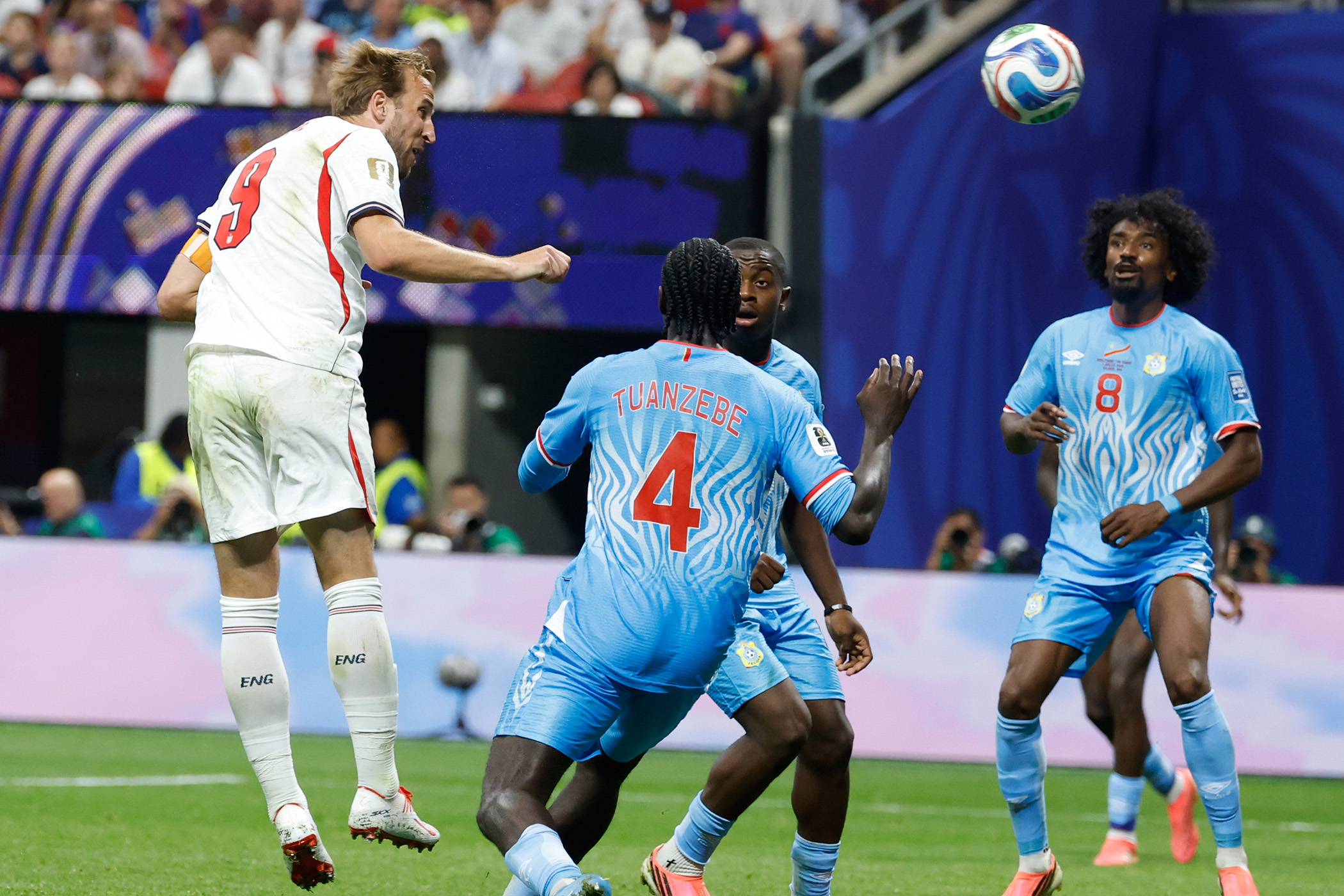
And that has, basically, held true. DR Congo were good against England, at least until their resistance broke and England’s quality told in the 75th minute. (There has been a surprising amount of praise for Thomas Tuchel’s substitutions. He was probably helped by having the luxury of being able to throw on £300 million worth of talent.)
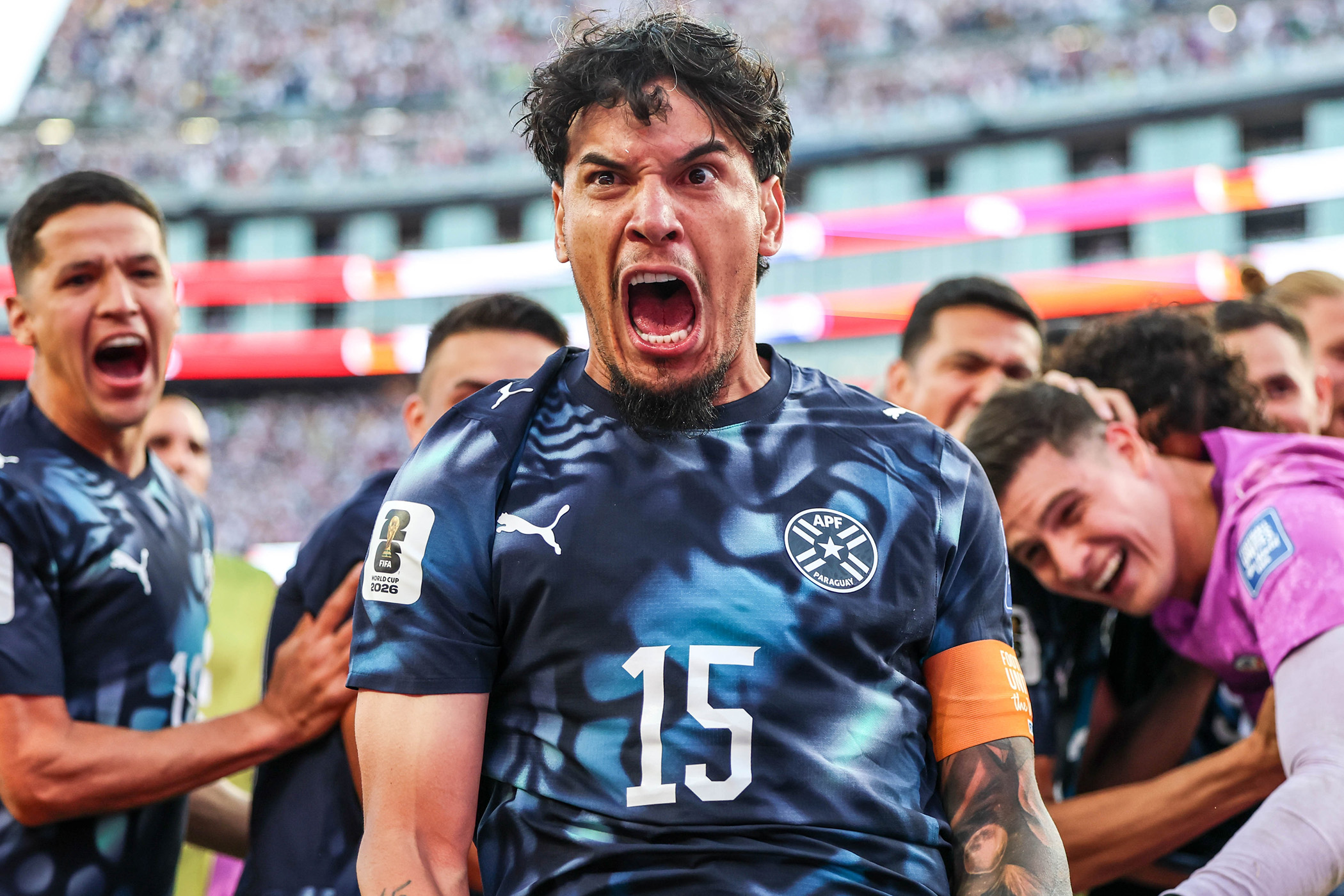
Paraguay were good in their win over Germany, particularly when judged against what they were trying to achieve (which is the only way any team should be judged.) It is probably pushing it to describe Japan as a smaller team, these days, but they proved they were a match both for the Netherlands and for Brazil.
This pattern has held true throughout the tournament. Only nine of the 82 games played in the World Cup before Thursday had been won by a margin of more than three goals. Only two knockout ties so far felt like a mismatch, and both of those were inter-European squabbles.
Newsletters
Choose the newsletters you want to receive
View more
For information about how The Observer protects your data, read our Privacy Policy
True, it does feel like the traditional heavyweights are starting to flex their muscles now: nine African teams got to the round of 32, but only one had made it through at the time of writing; Asia’s hopes of representation in the last 16 now rest on Australia; Concacaf, the confederation spanning North and Central America, will have three, but they are the three hosts.
The World Cup, broadly, contains two types of teams. There are those whose success in the tournament depends on how long they last – the genuine contenders to win it, the aspirants who arrived expecting a deep run, the game’s major powers and their pursuers – and there are those for whom being here at all is success enough.
What we have seen, again and again, is that the gap between those two groups is both much narrower than it has been previously and much narrower than we typically imagine it to be.
The reasons for that are multifold, ranging from access to cutting-edge conditioning and nutrition and sports science to teams being able to boost their resources by tapping into their diaspora populations.
That is not to say there is not still a difference, that the World Cup has become so much of a meritocracy that its games are now effectively a roll of the dice; that is very obviously not true. Weight of talent, so often honed by access to the very best resources, will still tilt the balance eventually, in most cases. The semi-finals will still, likely, involve four of Spain, France, England, Argentina and Brazil.
Whether in international or club football, the modern era or some impossibly ancient one – the 1990s, for example – talent is still the most important, and more often than not the decisive factor; but it is also only the final fraction of a percent. In everything else, the smaller nations have been able to level the playing field.
The proof of this World Cup is that they can run as hard, as far, as fast; they are just as well-prepared, just as tactically smart, just as well-prepared. Those African teams that have been eliminated in the last couple of days, for example, fell only by a single goal; the margins remain fine, the balance delicate.
It will take a while for that reality to sink in, I think; we are not all quite so quick to adjust to the changing nature of our complex world as, well, Mario Balotelli.
Would Brazil losing to Japan really have been such a shock? Is it that unthinkable that Germany might be held to a draw after extra time by Paraguay? England should beat DR Congo, of course. But they probably should not beat them heavily; DRC’s team features plenty of players from Europe’s elite leagues. There are no more pushovers; there are few mismatches. Balotelli knows that small teams are good now. He is just waiting for the rest of us to catch up.