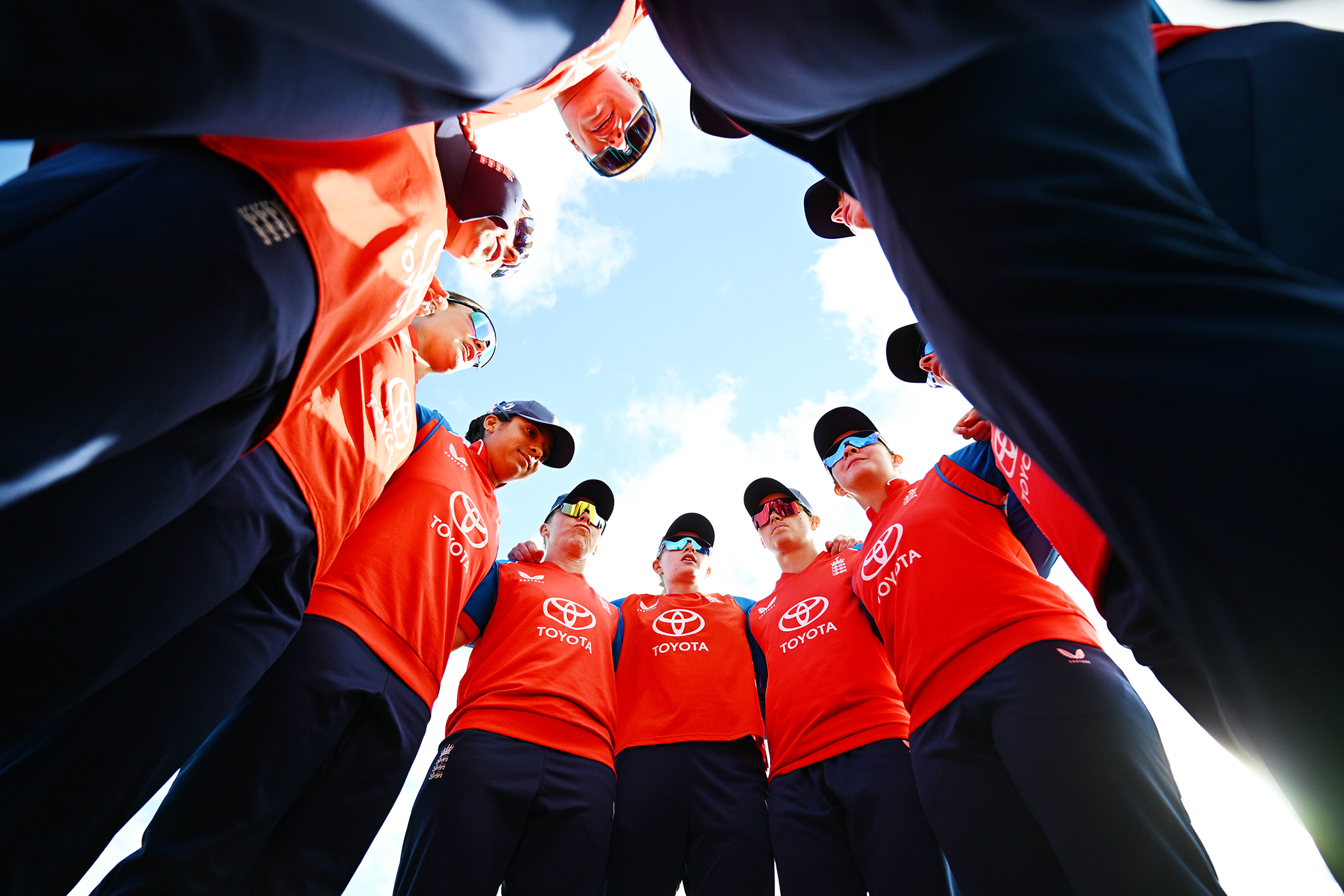

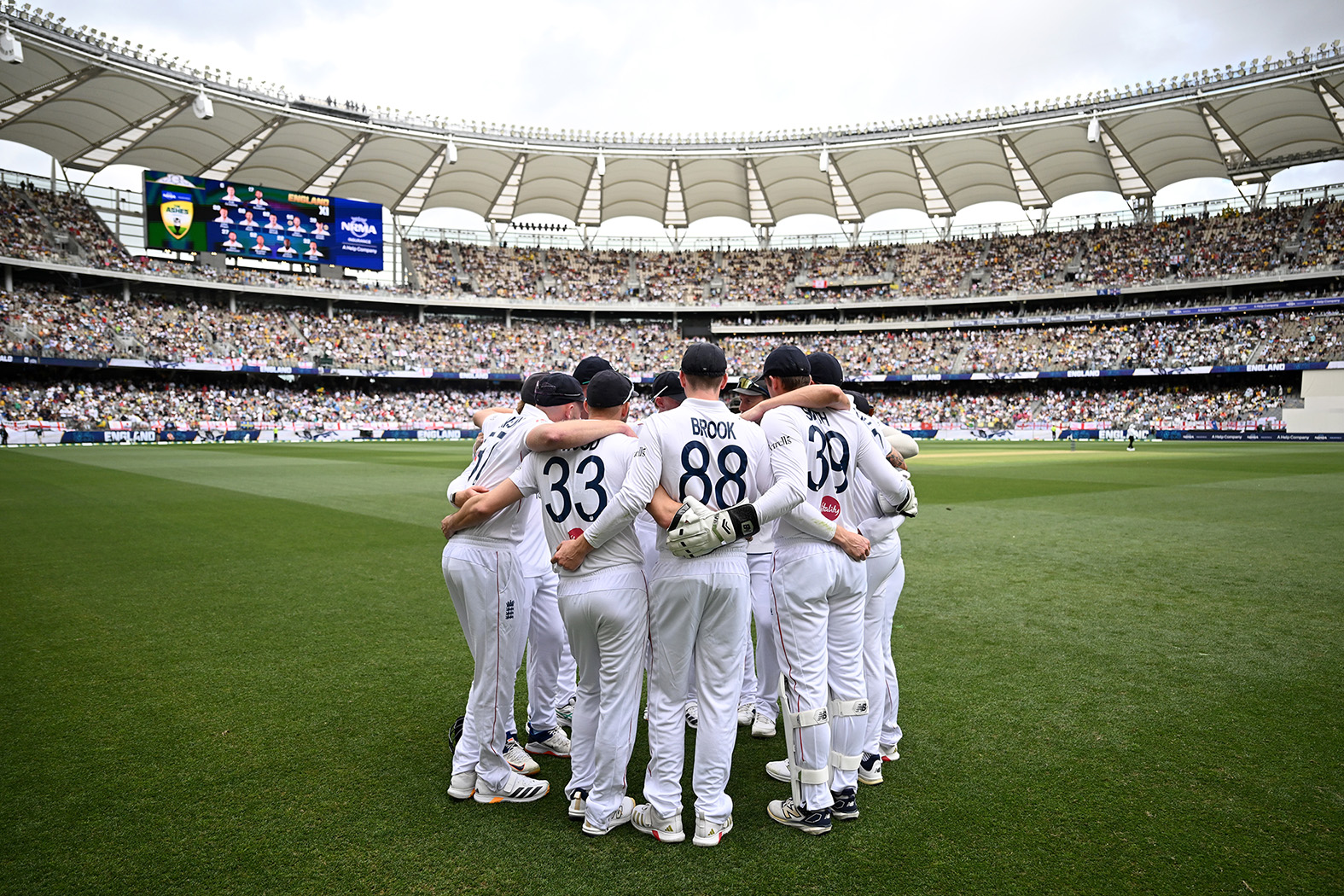
For the third time in four years, a women’s World Cup is being hosted in England. This summer, it is the turn of England Women’s cricket team to try and capture the hearts and minds of the nation in the way that the Lionesses managed in 2022 and the Red Roses did last year. The success of those two teams has only heightened the pressure on a team that has failed to deliver on the international stage in recent years.
In the forcefully homogenised world of women’s sport, regularly bracketed off as its own niche pursuit where the gender of the participants has more congruency than their sport, the aim of these home competitions is often framed as an awareness-raising one as opposed to a sporting one.
That puts England in a tricky position. They did win their last home World Cup, the 50-over tournament that took place in 2017. But they have drastically underperformed at this level recently, failing to make the final of a T20 World Cup since 2018. Their losses in recent editions have not come against the world cricketing behemoths of India or Australia either but instead a semi-final loss to South Africa in 2023 and a loss to the West Indies in 2024, meaning they failed to make it out the group. Not only that, as a sporting event they are going up against the men’s football World Cup, Wimbledon, and a men’s Test series against New Zealand.
Unlike England’s football team, who were not favourites at their home tournament but had made three consecutive semi-finals at international tournaments prior to 2022, or England’s rugby team, who operate in a differently funded stratosphere to their opponents, highlighted by the fact that the beaten finalists Canada had had to crowdfund to reach the tournament, England’s cricket team are attempting to steer the boat back on course after a bruising couple of years.
Charlotte Edwards, who was appointed head coach in April 2025 after the disastrous Ashes tour saw the team finally part ways with Jon Lewis, has had a mammoth task on her hands. The image of the squad as petulantly unaware of their own foibles, emphasised by spin bowler Sophie Ecclestone’s refusal to talk to BBC pundit Alex Hartley during the Ashes following Hartley’s comments about their fitness, was one that at least chimed closely with the behaviour of the men’s team Down Under. Also in her in-tray was the correct assessment that the England squad were unfit, that they were poor in the field and mentally unable to deal with difficult situations. October’s 50-over World Cup saw scant evidence of improvement when they lost to South Africa in the semi-finals by 125 runs, a team that they had thrashed by ten wickets in their opening match of the tournament.
It is hard to glean how much improvement has been made since then, with relatively little cricket played. A series of international camps kept players away from the domestic scene, but there have been series wins against New Zealand and India over the last couple of weeks. What has been notable in the matches has been the variety of heroes that England have found. There was Freya Kemp’s impressive 31 not out with the bat against New Zealand in May. Dani Gibson took 3-14 to restrict the visitors to 80 in the final match of that series. This week, Alice Capsey and Heather Knight put on a dominant partnership of 137 runs from 76 balls in the third T20 against India to bring about England’s highest-ever women’s T20 chase on home soil of 181.
The difficulty facing Edwards is that inconsistency has plagued this England side over the past couple of years
The difficulty facing Edwards is that inconsistency has plagued this England side over the past couple of years
But among that there has also been uncertainty around how England’s starting XI against Sri Lanka at Edgbaston on Friday would look. Captain Nat Sciver-Brunt has not featured in the warm-up matches due to a calf tear but is expected to return to bat at 3 for the World Cup opener. There were arguments for Knight, England’s most-capped women’s player, to make way until she showed exactly why she is still involved in the team at Taunton on Tuesday night. Meanwhile, Sophia Dunkley has failed to impress, opening all six matches in the series, and averaging around 16 with a high score of 26.
The difficulty facing Edwards is easy to see because inconsistency has plagued this England side over the past couple of years. There are too many players in the team who, on their day, can look like world-beaters but on another day, fail to show up. It is why there has been concern at how Edwards has overlooked young talent coming through like Davina Perrin, who scored the fastest century in The Hundred last year when she reached 100 in 42 balls. It would be foolish to think that a teenager could solve all of England’s problems but perhaps not as foolish as thinking that the stuttering opening partnership of Dunkley and Danni Wyatt-Hodge will suddenly work.
The fact that Scotland have made their second consecutive T20 World Cup, having never featured in the competition prior to 2024, is cause for celebration. The side are continuing to defy the barriers put in front of them which have meant that they rarely play, going 13 months without a T20 match from October 2024 to November 2025. They are yet to win a match at a World Cup but will be circling 20 June for the opportunity to pull off a significant upset against England, although their match against Ireland might be a more realistic opportunity.
This is the fifth T20 World Cup that Ireland have qualified for, making a return to the competition after missing out in 2024, although they are still yet to secure a win. A recent DLS-aided victory over the West Indies will give them a boost, as will finishing second only to Bangladesh in qualifying. Orla Prendergast is one to watch having previously been shortlisted for World T20 player of the year.
Newsletters
Choose the newsletters you want to receive
View more
For information about how The Observer protects your data, read our Privacy Policy
When it comes to tournament favourites, the good money is, as always, on Australia. But 2024’s tournament, which saw New Zealand prevail over South Africa in the final, was a reminder that the door is always open. Over the years, England have acted like the assumption was that they would sail through any crack left by their opponents. If they are to have success this summer, they need to concentrate on doing it.
PLAYERS TO WATCH
Hayley Matthews
The West Indies all-rounder starred in her team’s first-ever T20 World Cup title win in 2016 when she scored 66 in the final at the age of just 18. Now their captain, Matthews will hope she can recreate their success a decade on.
Shabnim Ismail
The 37-year-old South African fast bowler retired from international cricket in 2023 but reversed her decision to be part of their squad for this World Cup. She marked her return by taking 4-39 in a warm-up match against Australia and holds the record for the fastest ball bowled in women’s cricket, with the speed gun clocking 132.1km/h when she was playing in the WPL in 2024.
Amelia Kerr
“Melie” Kerr was named Player of the Tournament in 2024 after she helped New Zealand win their first-ever T20 World Cup. She has not necessarily had the brightest start after being named their new captain, with scores of 0, 5 and 8 in their recent T20 series against England, but she remains a talismanic player.
Annabel Sutherland
The 24-year-old all-rounder is part of Australian cricket royalty, with her father James being a former head of Cricket Australia and her brother Will also playing. Sutherland represents part of a younger generation of Australian cricketers hoping to continue their nation’s historic dominance of the women’s game.
Kathryn Bryce
Scotland captain Kathryn Bryce was the first Scottish cricketer to make the top ten of the ICC Player Rankings when she was ranked the tenth-best batter in 2021. Alongside her sister Sarah, she has been integral in transforming Scotland into a side that will be competing at their second-ever T20 World Cup, after debuting at the competition in 2024. Sarah holds the record for the most runs scored for Scotland’s women in T20 internationals.
Photograph by Harry Trump / Getty Images