
When did the house of Tottenham begin to fall? Let’s start here: it’s March 2020, two weeks before the lockdown that we all kind of know is coming, and José Mourinho’s Spurs are playing Norwich City in the FA Cup in their fantastic new stadium that has been open less than a year. Spurs are without Harry Kane and Son Heung-min, Dele Alli is playing badly and Norwich are the better team. The game goes to penalties and Spurs lose.
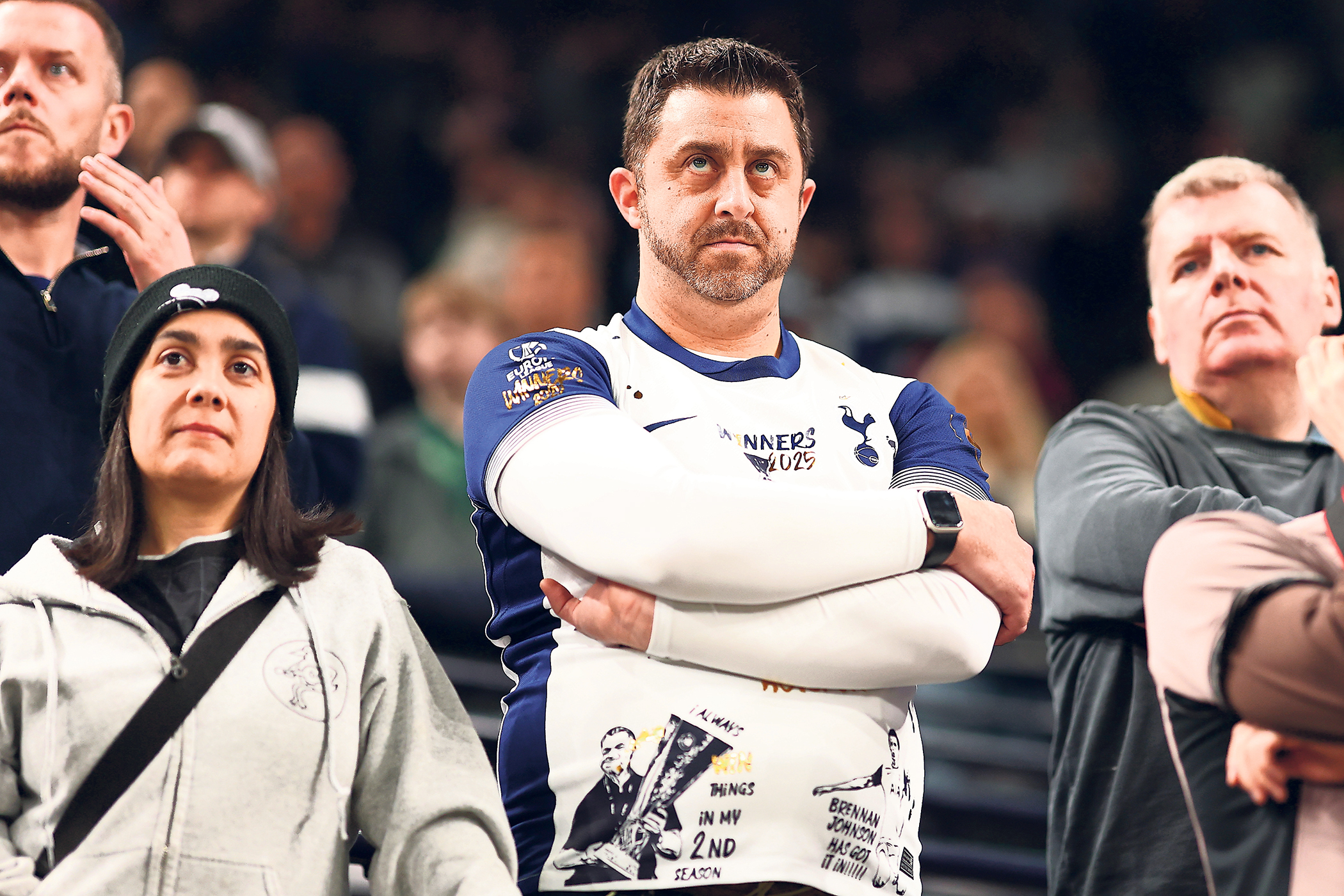
A football team lose a game every time another football team win one. So it’s what happens next that is striking. Some of the fans start booing the Tottenham team, in a stadium designed to amplify noise. And the Spurs and England centre-half, Eric Dier, thinks he sees his brother being abused by an angry fan and wades into the crowd to confront the abuser. The next day’s headlines are all about the booing and Dier’s loss of discipline. It’s a harbinger, though we don’t realise it.
Less than three years earlier an ecstatic crowd – with me in it – had celebrated the last day of a season where Spurs had finished second with what many thought was actually the best side in the Premier League. It was also the last match at White Hart Lane.
The next November, temporarily based at Wembley, Mauricio Pochettino’s Spurs beat Cristiano Ronaldo’s Real Madrid team 3-1. I think it might be my peak moment as a supporter and I don’t think I have ever loved a team so much as that one. But by the time of the famous Champions League semi-final won away at Ajax in 2019, Spurs were already a declining force. A declining force, however, that could be rebuilt.
No Spurs fan under 60 knows what total failure looks like. I do. In 1976-77, my second season of going regularly to games, we were relegated to what was then the Second Division, shipping 72 goals and losing 8-2 away at Derby. I remember a dreadful home loss to Bristol City particularly vividly. But in those days, when tickets cost £1 and hooliganism was rife, no one booed their own team. They told the opposing supporters that they were going to get their heads kicked in. And usually failed to follow through.
So I spent the next season watching Mansfield, Notts County and Orient, and in the end Spurs scraped promotion back to the top flight, a feat the board celebrated by buying two players who had just won a World Cup with Argentina. Soon the glory days returned in the form of Tottenham becoming a cup-winning team who, in a good season, might finish in the top six. In the years from the late 70s to the mid-2000s, Spurs were generally an underperforming side illuminated by the occasional genius: Glenn Hoddle, Paul Gascoigne, Jürgen Klinsmann, Dimitar Berbatov. Some teams were better than others, some were pretty dreadful. From 1978-79 to 2005-06, Spurs won 429 top-flight games and lost 400. You can’t get much more average than that.
Then came years of steady improvement leading up to and including the Pochettino era – 228 wins and 116 losses over the following 12 seasons.
Am I nervous? Of course I’m bloody nervous! And am I checking other results now? Of course I’m bloody checking other results now.
Am I nervous? Of course I’m bloody nervous! And am I checking other results now? Of course I’m bloody checking other results now.
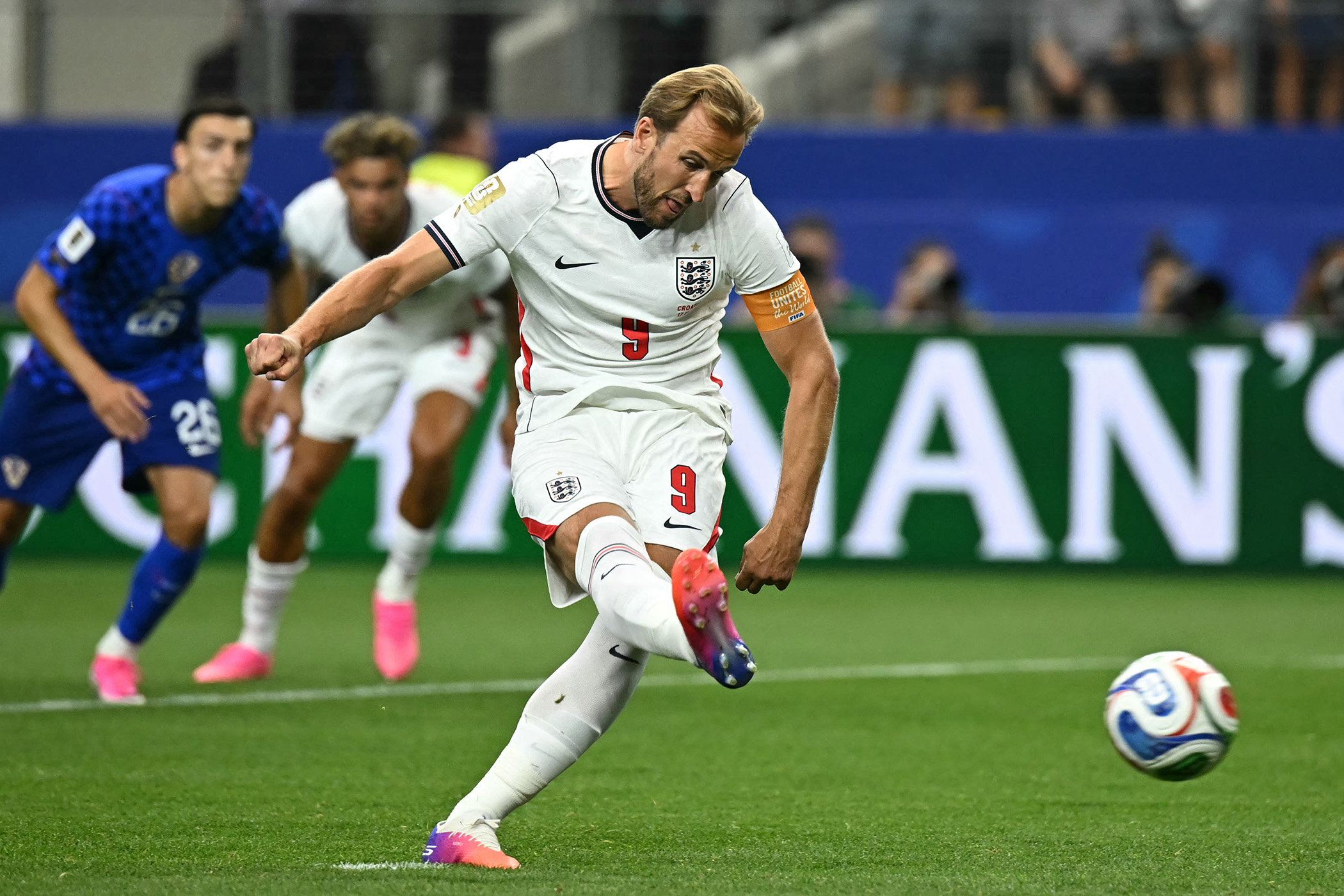
In one way the 2017 team we loved so much were an overperforming aberration. For a start they were a lot cheaper than all their rivals (save one, Leicester, the reigning champions). The club’s wage bill was just under half that of Chelsea (the runaway big spenders), nowhere close to Manchester City or United and well behind Liverpool and Arsenal. The lesson the board took from this was that you could put a winning team together with youngsters, clever bargains and a bright manager. But in fact, it had also taken a lot of luck, mostly in the shape of Kane, the most remarkable forward the club had ever had.
And it didn’t last. The good fortune ran out and the mean was regressed to. The board concluded that we needed a succession of former Chelsea managers to take us back to the heights, and they couldn’t.
But if this history explains why Spurs fell out of the top four most seasons, it doesn’t remotely account for the club’s present predicament: two catastrophic seasons, bizarrely offset against the winning last May of the Europa League.
Newsletters
Choose the newsletters you want to receive
View more
For information about how The Observer protects your data, read our Privacy Policy
So what does? My explanation is controversial. While a struggling manager and the sixth highest wage bill can mean mid-table mediocrity, it doesn’t spell relegation.
Two factors account for that: an injury crisis that is easily the most severe I have ever known in my time as a fan (one disgruntled Liverpool fan described last week’s team as “Tottenham reserves”) and the fact that many Spurs fans are no longer supporters but high-paying consumers, who treat a loss like a disappointed restaurant customer on Tripadvisor.
The two have compounded, rendering managers helpless, the younger players demoralised and the older ones surly. The sixth league match this season was a home game against Wolves. Despite having lost all his creative midfield players to injury, Thomas Frank’s team still went third. But the match was reported with headlines such as “Spurs booed despite last-minute equaliser”, the boos seeming louder than the number of booers might have justified, but the message was clear: if things go badly, we’re not on your side.
There is no universe in which young players perform better because they’ve been booed: they are inhibited, they don’t take risks. Frank clearly struggled with the rule that managers can never speak ill of the fans, but writers don’t have to abide by that prohibition and this writer saw Tottenham’s home form dropping off a cliff.
The problems caused by injuries and the boo-boys melded to leave a patchwork team many of whom must wish they were playing anywhere else. Which, of course, they soon may be, though I still think not. Because, judging by the two last games, and just in time, everyone – even entitled fans – seems to have got the memo.
And if you’re inclined to intrude on my private neuroses, am I nervous? Of course I'm bloody nervous! And am I checking other results now? Of course I'm bloody checking other results now.
Photography by Shaun Brooks/CameraSport/Getty