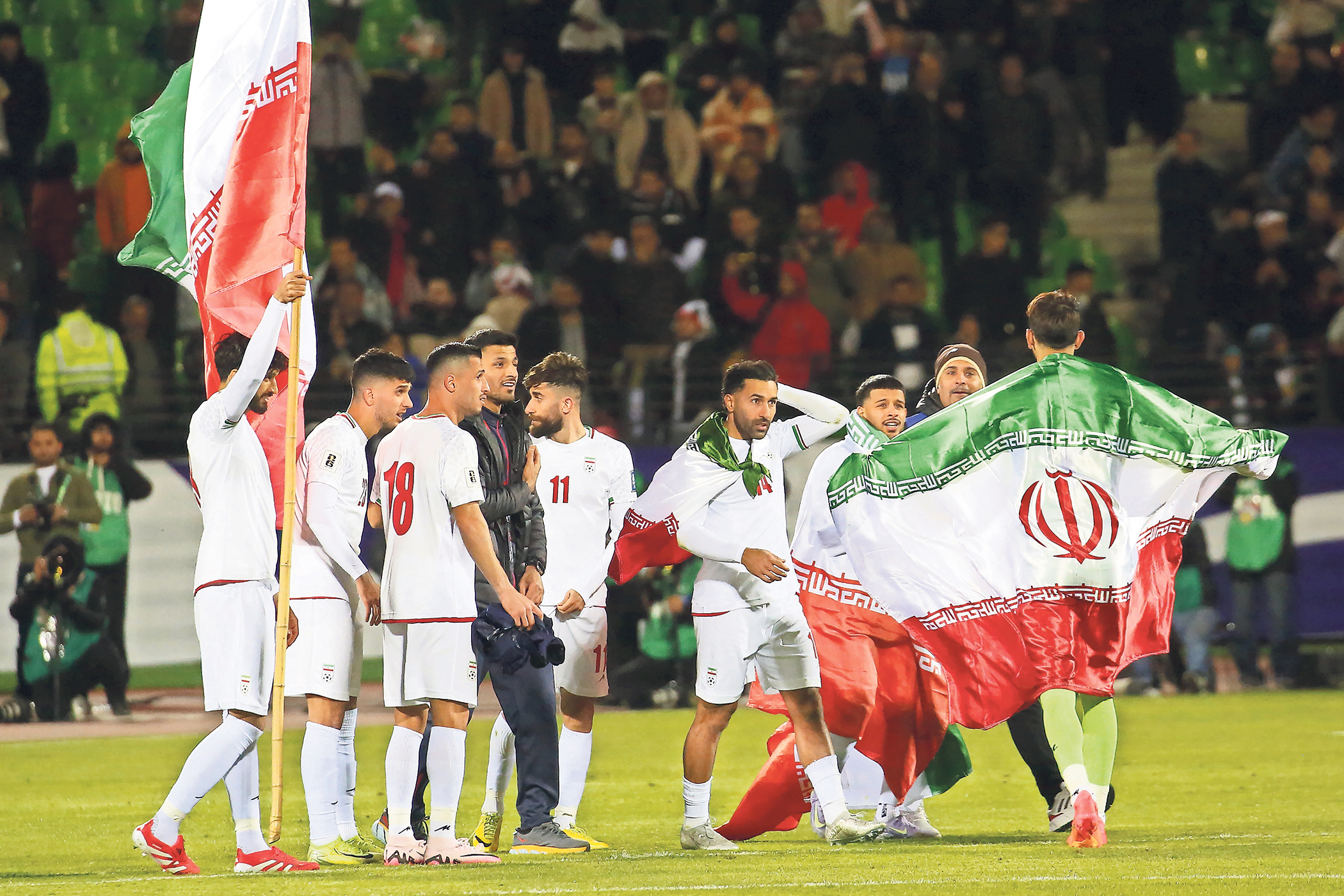
Of all the questions ricocheting round our heads, whether Iran will jog out for this summer’s World Cup is among the more trivial. Except perhaps to anti-regime Iranians desperate to feel the world’s embrace.
Ditching the possibility of Iran taking part in the 48-team hallucination scheduled for the US, Canada and Mexico might seem the easiest decision for politicians and Fifa apparatchiks.
First, a co-host being at war with a participant is not only unprecedented but unfeasible. Death and blood on the Middle East’s current scale can’t be suspended in 90-minute chunks. Long before Fifa gets to the morality of whether Iran should be there, practicality comes to its rescue.
Iran are meant to play New Zealand and Belgium in Los Angeles (16 and 21 June), then Egypt in Seattle (27 June). Orwell said sport was war minus the shooting. This is sport with the shooting. Trying to guarantee the security of spectators and host cities would be daunting, even if the risks involved could reappear any time, anywhere, at the tournament.
Today is a tricky place to decide on events less than 100 days away. In Trumpworld, policy is a Main Street parade of impulse and whim. Iran’s violent theocracy has stood for 47 years, quelling protest with machine-gun fire against its people. So far the apparatus of oppression has survived all challenges.
It could fall quickly, slowly or not at all. In any event, no expert we’ve heard from yet expects it to be a Shia Sweden by the time Iran’s footballers are due to check in to their Arizona training base. Even full regime collapse would spark a chaotic transition, a fight for control, with internal and external security complications.
For sport there are two dimensions. One is the end of the Gulf State dream of being the new Madison Square Garden of international sport. The image of Dubai or Saudi Arabia as stable, safe havens for world title fights, grands prix and football tournaments is damaged, perhaps permanently. On Tuesday players and officials at an ATP Challenger event in the UAE fled the court when an oil terminal 10km away was hit.
Externally, on the global stage, those Gulf nations under attack are unlikely to argue for Iran to keep their World Cup spot – especially when Iraq and UAE are the two most likely beneficiaries of their expulsion.
There are, though, nuances to an apparently open-and-shut case for exclusion (or withdrawal by Iran). Iran reached the last three World Cup finals and played USA in 1998 in France and Qatar four years ago. They’re not minnows. They and the USA would clash again this summer if both finish second in their group.
Iran’s women are still playing international football – at the Women’s Asian Cup in Australia, where they declined to sing the national anthem in their opening match, but relented in game two, singing and saluting the tune while sections of the crowd booed.
Newsletters
Choose the newsletters you want to receive
View more
For information about how The Observer protects your data, read our Privacy Policy
And California, where two of their games will be played, is home to more than a third of America’s estimated 400,000 immigrants of Iranian descent. Many fled after the 1979 revolution. They are not religiously or ethnically homogeneous.
Football saying it is “monitoring developments” is code for “we haven’t a clue how this will turn out”
Football saying it is “monitoring developments” is code for “we haven’t a clue how this will turn out”
The strong anti-regime culture among Iranians (or Persians) in America would add to the political tension around the country’s fixtures. Those games might also light a beacon for better times. Above all, though, they would heap an unrealistic extra burden on to a tournament already carrying the load of US adventurism, hardline border controls and killings by ICE on America’s streets.
Against that backdrop, football saying it is “monitoring developments” is code for “we haven’t a clue how this will turn out”. There is no disgrace in not knowing now how this war will end. All the shame is reserved instead for Fifa’s peace prize to President Trump: a suck-up that made no difference to US foreign policy. Trump said this week of Iran’s participation in the World Cup: “I really don’t care.”
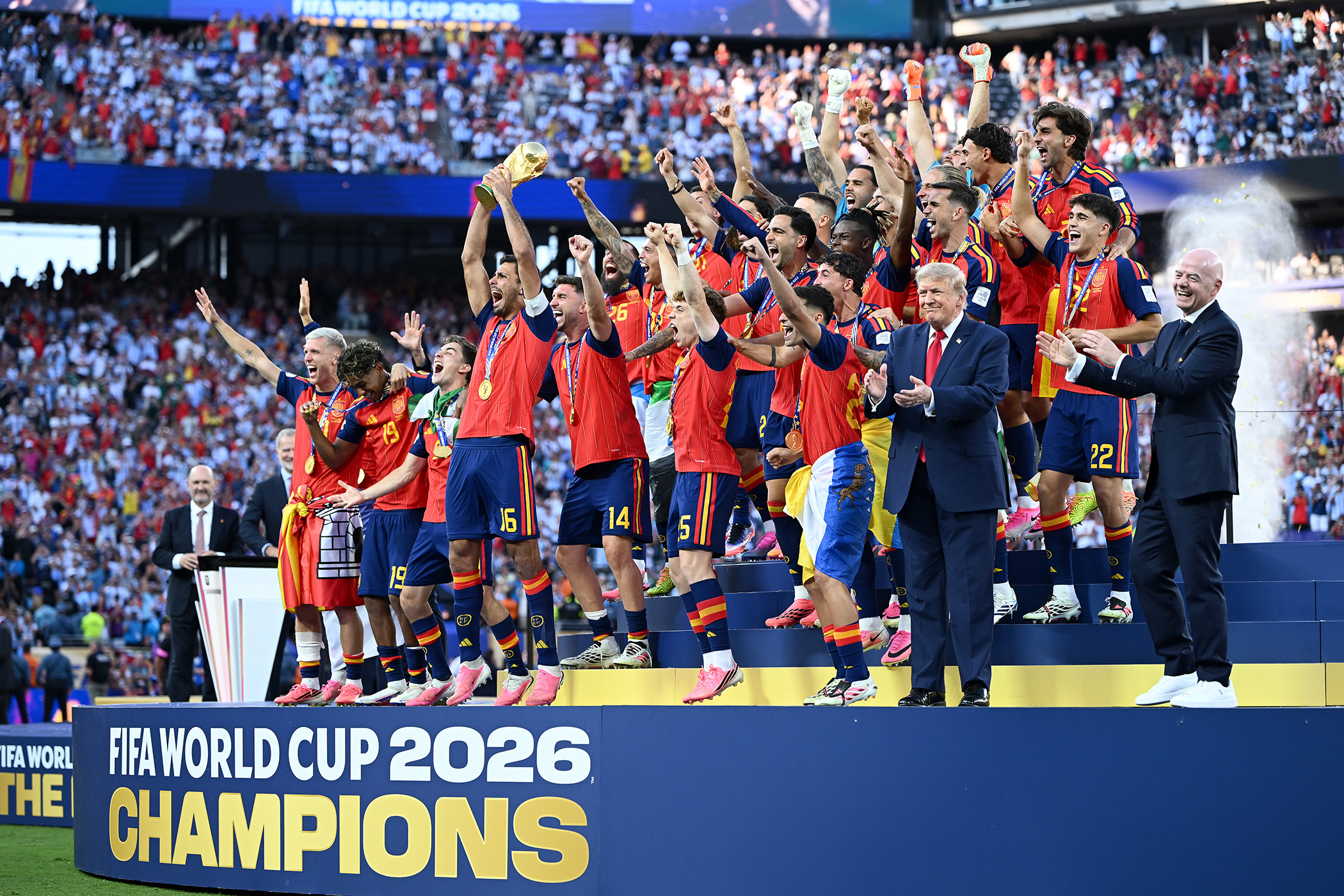
By then, borrowing Trumpian hyperbole, Fifa president Gianni Infantino had called this World Cup, “the greatest event that humanity, mankind, has ever seen and will ever see”. Ventriloquists and dummies come to mind.
Even before Iran was attacked, Trump had menaced one co-host, Canada, threatening it with annexation, while including the other, Mexico, in his belligerent critique of Central and South America.
Denmark is the last country to benefit from a tournament expulsion, when Yugoslavia was banned from the 1992 European Championship, and the Danes came off the beach to win it. Now, Denmark could arrive at this World Cup – via the play-offs – with their main host still demanding the right to seize Greenland.
Before the current conflagration there was already a case for boycotting this World Cup – to challenge a US administration that was shredding international law, throwing up arbitrary visa barriers and potentially exposing World Cup visitors to the random malevolence of ICE. Not to mention renewed drug-cartel related violence in Mexico, a problem for Fifa further south.
There is a savage irony, meanwhile, in Russia and Belarus being readmitted to Paralympic sport while so many Ukrainians are rendered disabled by Putin’s missiles and bombs. Infantino is pushing for the ban on Russia and Belarus in football to be lifted, saying it serves no purpose.
People used to say sport and politics shouldn’t mix. Now they’re almost indistinguishable. On Wednesday, the US Secretary of War Pete Hegseth compared the current war to “a football game”, complete with extended metaphors.
Whatever happens now should respect the thousands killed in protests in Iran, and the countless others slaughtered and maimed by acts too seldom constrained by international law, reason or humanity.
Photography by Fatemeh Bahrami/Anadolu via Getty Images