
At 11am at Lord’s on Thursday, the British summer of sport will commence when England bounce down the pavilion steps to face New Zealand, five months after they last played Test cricket. Their finest and fieriest fast bowler won’t be bouncing with them. Jofra Archer would have led England’s attack – but won’t play. Jofra Archer has a central contract to be among those running out at Lord’s – but won’t be taking part. The Indian Premier League (IPL) season ends this weekend and its influence stretches to every corner of Lord’s. Its power supersedes the wants of MCC members and the needs of red-ball cricket.
England’s managing director Rob Key uttered a statement for our times when he said Archer would be rested for the first New Zealand Test. “That’s the world we live in,” Key said. The IPL has plans to extend its season, reach and wealth. A star bowler missing an England Test is only a taste of where this might be heading.
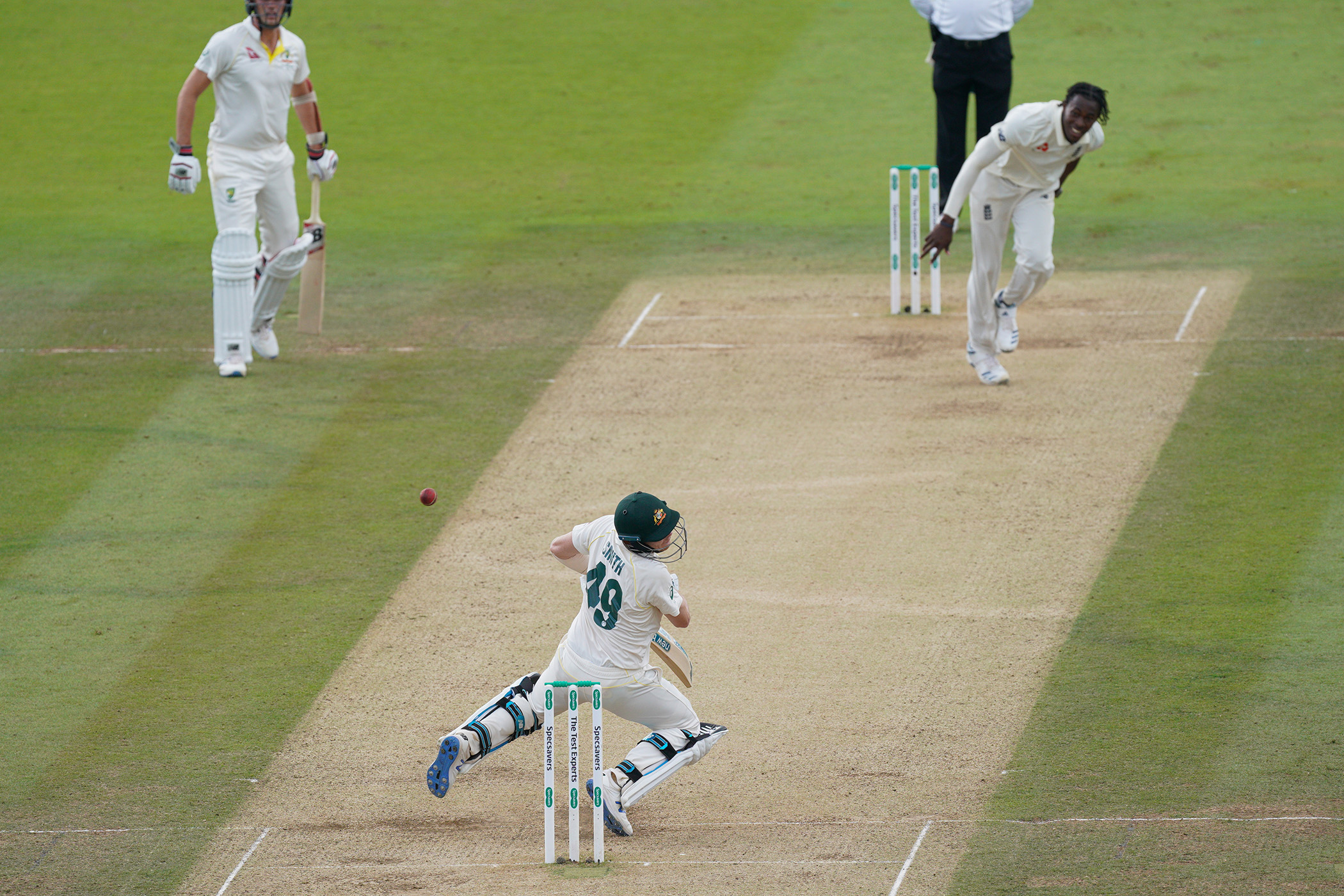
Acolytes of Archer’s silky aggression will have to content themselves with memories of him peppering Steve Smith in the 2019 Lord’s Ashes Test. That summer, on Test debut, Archer reached 96mph, struck Smith on his headgear and sent him reeling back to the sheds. Then he landed one on the helmet of his replacement, Marnus Labuschagne. Cricket scribes were handed one of the easiest splashes they’ll ever write. The Archer had arrived and woe betide anyone in the way of his arrows.
There were six-fers for the new terror at Headingley and the Oval and 22 wickets in that series. Yet Archer’s role as parable in cricket’s white ball revolution can be traced to the previous year, 2018, when he was bought by Rajasthan Royals for £800,000, 17 times his reserve price.
Thus began a relationship that has shaped a career of only 18 Tests and 60 wickets. More painfully – a career punctuated by elbow, lower back and finger injuries – some probably the fault of England, who bowled him into the dust, not least in New Zealand in late 2019, where he ground out 42 overs in a single innings on a dead pitch.
You don’t have to go far to hear people say that if Archer’s work is done in India he should be trotting out at Lord’s. One former England captain even said he owed the ECB a debt for paying him during his many injury breaks. The bit missing from that critique was that England had broken him down in the first place.
Against the backdrop of what Mike Atherton called last week the ECB’s “complete subservience” to India, self-preservation is a natural mode for players. Archer’s two-month IPL contract is worth more than his 12-month ECB one. There’s the clue.
It wasn’t today’s players who devised ECB central contracts and then decided they would be enforced for only nine months a year. It wasn’t the players who built an ecology in which India generates an estimated 80% of the game’s global revenues or sells the IPL TV and streaming rights for $6.2bn.
While cricket goes franchise crazy, it is spectators who will feel the ache of loss at Lord’s
While cricket goes franchise crazy, it is spectators who will feel the ache of loss at Lord’s
Logic says England have just surrendered to economic reality. Or rather, dived headlong into it, inventing a bastardised form of T20 called The Hundred, then selling it to private equity, with four of the eight franchises “heavily backed” by IPL ownership groups. In other words, they’re all in on it.
But while the sport goes franchise crazy, it’s spectators who will feel the ache of loss at Lord’s; Test cricket aficionados; England fans still wiping their eyes from the trail of tears in Australia. It’s the contest that loses.
Newsletters
Choose the newsletters you want to receive
View more
For information about how The Observer protects your data, read our Privacy Policy
England v New Zealand will be a lesser version of what it would have been had the IPL not shut up shop just days before Test cricket’s return. The rising star of English batting, Jacob Bethell, meanwhile, returned from India with a finger injury, which put his place at Lord’s in doubt.
“That’s the world we live in.” How true. But it’s not the world we’re going to be living in soon, because this is a process, not an event, even if there’s a chance the IPL may be pushing its luck. In The Times of India, the industrialist Harsh Goenka warned that fan fatigue, poor stadium infrastructure and “batting exhibitions” were jeopardising the show’s long-term health.
Lalit Modi, the IPL’s founder, shot down Goenka’s call for a shorter schedule. “IPL as a format could now move to a full window of home and away played for 6-7 months starting in November…” Modi responded. He called a larger IPL footprint “inevitable.”
Goenka’s analysis began with the question: “Will IPL remain merely India’s biggest cricket tournament, or can it evolve into the world’s biggest sports league, comparable with the NFL, English Premier League, NBA and Formula 1?”
But he also diagnosed growth pains: “Most stadiums still struggle with basics such as clean toilets, adequate parking, efficient entry systems, and food that a family would pay for.” Two months of evening games, he said, turned the league into “background noise.”
The IPL’s financial might, though, isn’t in doubt. It shows itself this week in an absence, that of Jofra Archer, at Lord’s, on a June day that heralds true summer – cricket season, as we used to call it, before the business of sport created a mono-season, called money.
Photograph by Jed Leicester / Getty Images