

These friendlies may have been tagged the “Send-Off Series” but last-minute auditions for fringe players aren’t Thomas Tuchel’s big concern.
England’s spring fixtures against Uruguay and Japan offer hints of hunger and character but they are as much about inaction as action. Tuchel’s tournament build-up plan is innovative, by English standards. His experiment is to not play his best players and to restrict miles on the clock, to prevent the familiar syndrome of English fixture overload killing the national team in the summer heat of tournaments.
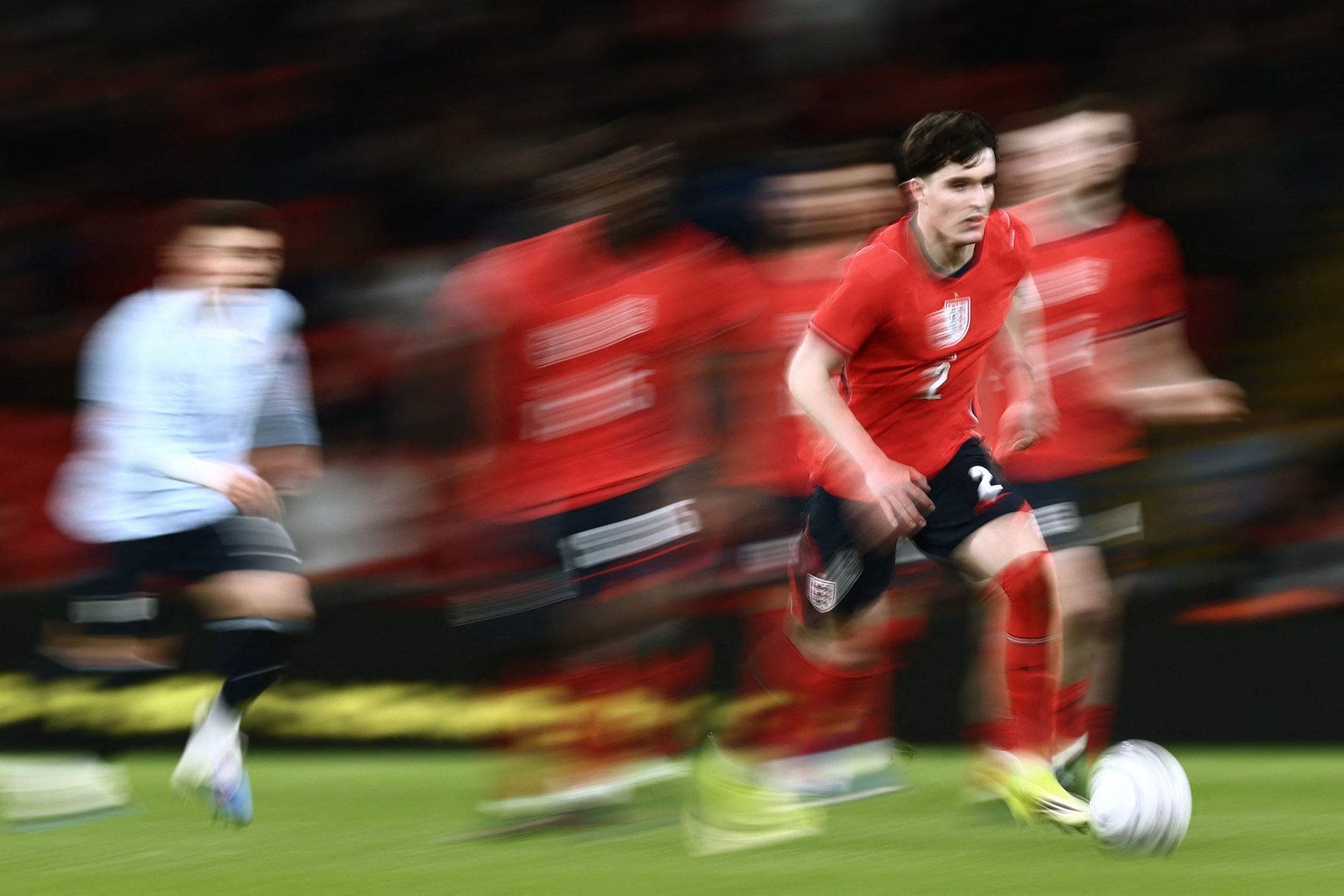
Incredibly 80,581 paid at Wembley on Friday night to see an England C team draw 1-1 with Uruguay in a game of hefty tackling, laissez-faire refereeing and a compressed hero-villain story arc for Ben White, who was booed on to the field, scored, then gave away the penalty for Uruguay to equalise. All this is in his first appearance since walking out during the 2022 World Cup in Qatar.
The most intriguing attempt to grab a boarding pass for the US, Canada and Mexico involved Phil Foden, once the guiding light for English youth but now becalmed by mid-career struggle. Tuchel said Foden had been “outstanding in training in the defensive patterns” but the “Stockport Iniesta” couldn’t defend himself against the appalling challenge by Ronald Araújo that forced him off after 56 minutes. The Uruguay coach Marcelo Bielsa had called Tuchel to say there would be “no compromise” from his team – and so it proved.
White’s return was the clearest evidence of Tuchel’s plan before he announces his World Cup squad: a bigger group, split into cohorts, more rest, and the first game off for his chosen ones (Harry Kane et al), who huddled together to watch the Uruguay game from the stands.
Tradition used to dictate that England’s final warm-up games were a late “chance to impress”. Not any more. We all know friendlies reveal almost nothing that wasn’t already known, except perhaps about temperament, “good tourist” vibes and the crowd’s paper-aeroplane throwing skills.
The weekend’s most bizarre stat is that Jordan Henderson became only the fourth England player to extend his international career beyond 15 years, joining Peter Shilton, Wayne Rooney and Stanley Matthews. Also quirky is that two Spurs players were offered an escape from fighting relegation to make Tuchel’s starting line-up – Djed Spence and Dominic Solanke.
And yet the Japan game on Tuesday night has the odd note in the margin from the Uruguay outing. James Garner is a proficient central midfielder. Tuchel even called him “our mini-Federico Valverde” before pointing out the parts of his game he needed to improve. It would be perverse, meanwhile, not to take Harry Maguire. Likewise Cole Palmer, who can float and hurt opponents in gaps, off the bench, if Tuchel prefers Jude Bellingham or Morgan Rogers at No 10.
Newsletters
Choose the newsletters you want to receive
View more
For information about how The Observer protects your data, read our Privacy Policy
Anyone who thinks Tuchel picked an extended 35-man squad before the Fifa deadline of 30 May to cure his own indecision, however, hasn’t been paying attention.
Plainly he mugged up on England’s history of emptying out at tournaments. People must have been telling him: England are lions in winter, lambs in the summer, as Michel Platini said. Tuchel can read the mad club fixture schedule just like the rest of us. Last week Liverpool overturned a first-leg Champions League deficit on an emotional Wednesday night (against Galatasaray), then lost to Brighton in a Saturday lunchtime kick-off.
England will probably arrive in America without a single Liverpool player for the first time since 1986. The point still stands. Tuchel knows the nine-month cramming of a 20-club league campaign, FA and League Cups, plus European assignments, places English footballers at a physical disadvantage.
It also gives them a handy excuse for technical and tactical failings that go all the way back to 1950 – when the “mother country” first joined the World Cup carnival. One world title in 76 years is definitive proof of congenital English flaws. Giving Marc Guéhi and Declan Rice the night off might bring a marginal gain but it won’t by itself correct decades of underachievement.
Tuchel was hired not for his rota-writing talents but to win big knockout games – all the big knockout games, including the final. England were unbeaten in qualifying but haven’t been able to win against the two major sides they have faced under his management: Senegal and Uruguay.
Kane still has no obvious understudy at centre-forward. Solanke started against Uruguay and Dominic Calvert-Lewin was given 34 minutes (and missed from close range.)“The decision is not made,” Tuchel said. “I liked the effort from Dom Solanke. He worked his socks off, he worked like a dog up there, he was our first defender.” When Calvert-Lewin “missed from six metres out”, Tuchel said, pointedly, “he could have made his statement straight away”.
The most poignant struggle, though, was that of Foden. “In moments I thought he could be a bit more adventurous, he could be a bit more like a No 10, and try a bit more stuff, take a bit more risk,” said Tuchel.
“I felt him getting stronger. I felt he could make the difference in the second half, then he got this brutal tackle against him. But I liked him, because he did well against the ball, he initiated the press, he played with a lot of responsibility.”
A sentence nobody ever expected to write was that England have too many No 10s. What that really means is – an abundance of players capable of playing No 10. The beacon for creative midfield play was right in front of them: Real Madrid’s Valverde, who recently scored a hat-trick against Foden’s Manchester City, and was a case study in what England will be up against when it really counts this summer.
Photograph by Henry Nicholls/AFP via Getty