
The best moment in Rory McIlroy’s billowing epic of a second consecutive Masters victory barely made the highlights packages, a fundamental misunderstanding of the sort of McIlroy content the world wants. It’s not the chip-in on the 17th, or that temerarious tee shot at the 12th, or even bear-hugging his dad after trying on his second green jacket for the first time.
It’s Sunday afternoon, after his lag putt on the 18th, bathed in relief and ecstasy and the long shadows of Augusta twilight. He knows he’s going to win. We know he’s going to win. He drops to his haunches already sobbing and mouths “I can’t believe it”, utterly discombobulated by the scale of his accomplishment. And for the first time in four days, for both McIlroy and those watching, everything stops spinning. Within the Rory McIlroy Experience, calm is the rarest, and most glorious, sensation.
All sporting fandom is ultimately a quest to feel something. To live vicariously but also to experience genius as it unfurls. And no great athlete has allowed us to feel with them quite like McIlroy. To watch him is to care, to understand him almost instantly, to be touched by universal sentiments from a unique talent. There is a charming dichotomy between his attempts to keep his private life private – he even created a production company to oversee the recent documentary about his first Masters win – and an interior life so publicly projected. No one else provides quite the same window on the vagaries of excellence, makes it look as easy and as hard. Buried in here is the real allure of watching McIlroy: the hope that if we share his flaws and fragility then perhaps, somehow, we share his genius too.
Spectators want sport to matter as much as it feels like it does in the moment, and McIlroy validates that desire. His is a story about parental sacrifice and love, about ability meeting passion and self-belief, but more than anything about extremes: fragility and strength, risk and reward, humanity and superhumanity. Despite his attempts to separate the mental and physical, he helps us grasp that great sport is about reconciling the balance between mind and body.
Modern elite athletes have an increasingly dull habit of undermining their own successes, telling us that what really matters is the love of their partners and children and friends, and of course God, whose grace conveniently made them really good at backhand slices/step-overs/cover drives (four-time golf major champion Scottie Scheffler’s Instagram bio is “Christ Follower | Pro Golfer”). Yet even after summiting the mountaintop, McIlroy entertains no such illusions. If anything, his Damascene moment was not the realisation that winning doesn’t fulfil him, but that losing doesn’t have to destroy him, so push harder, give more of yourself. He ranks completing the grand slam above his wedding day and his daughter’s birth, already talking about wanting more, needing more, about the next record, agonisingly aware of legacy and purpose.
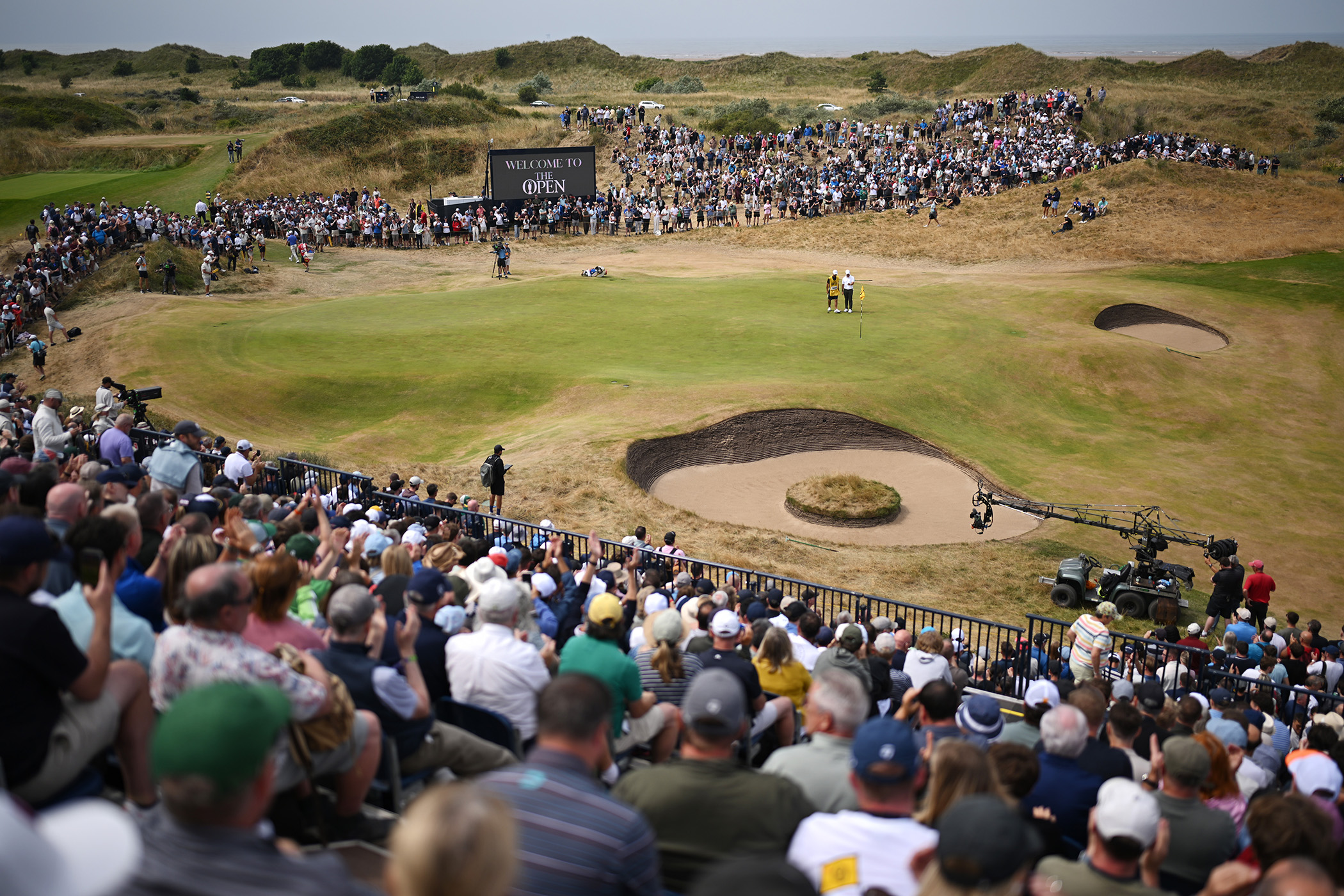
Having matched Nick Faldo’s six majors, he called discussion over the greatest European golfers “a cool conversation to be a part of”. This is, after all, a man who as a nine-year-old said he wanted to win every major, and was spoken of on national television in the same breath as Tiger Woods. He has long been Woods’s successor – literally here as the first man in 24 years to win consecutive Masters, and only the fourth to have done so, after Woods, Faldo and Jack Nicklaus – and he is already the greatest European golfer. But he is also now the emotional and gravitational core of a sport grappling with an existential crisis, especially considering reports that the Saudi-backed breakaway LIV Golf is flirting with a collapse that has long felt inevitable. Whatever comes next, he will shape and define it.
Every victory seems to make him want more, but no longer to a crushing extent. His four rounds last weekend encapsulated his career in miniature – the statement first; the dominating second; the flailing, doubting third; and the chaotic if resilient fourth. There is a sense of something just starting here; that these are the early days of a third act that will define the legacy he cares so deeply about. At 36 he is still nine years younger than Justin Rose and seven years younger than Woods was in his final major victory. He is a US Open and Open Championship away from a double career grand slam.
And yet whatever follows, McIlroy should not be judged by statistics, or volume. Perhaps this is a privilege the previous two Masters have afforded him. Or perhaps it’s just because whatever anyone else has achieved, through chaos and calm, no one makes us feel like he does.
Photograph by Hector Vivas/Getty Images
Newsletters
Choose the newsletters you want to receive
View more
For information about how The Observer protects your data, read our Privacy Policy