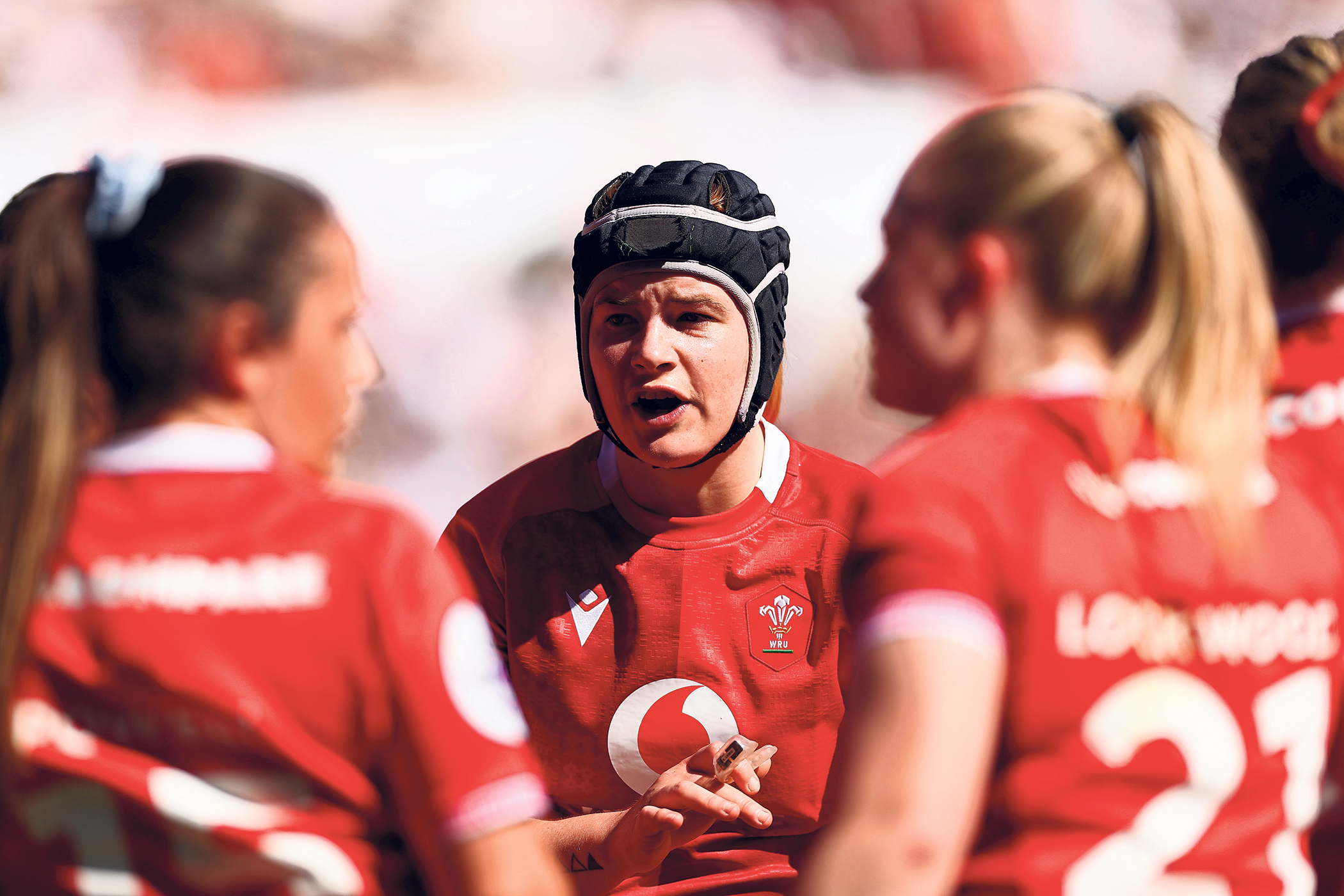



Wales’ pre-match rhetoric centred on building performances, style of play and developing identity under the coaching direction of serial Premiership title winner Sean Lynn.
Those admirable ambitions certainly surfaced on a sun-kissed afternoon in Bristol as they posted the highest points total in their history against England and claimed a losing bonus point for scoring four tries.
But amid the highlights, there was also a dollop of reality that once again hit them straight between the eyes. Lynn had rightly acknowledged England as “trailblazers in the women’s game”, and the Red Roses’ 36th successive Test victory since they lost to 2022 World Cup final opponents New Zealand merely underlined just how far John Mitchell’s team are ahead of the rest.
The world champions are in a league of their own, and with a likely title shoot-out against France scheduled for Bordeaux’s Stade Atlantique on 17 May, everyone else is playing a game of catch-up that will probably never be completed.
And that is the whole point for teams like Wales – and Ireland, Scotland and Italy. In terms of their yardstick for Six Nations progress and success, it is effectively, and can only realistically be, to secure third place as the best of the rest.
Some of Wales’ first-half rugby in particular offered much to applaud, but they have now lost 11 in a row against England, conceding more than 600 points, while their world ranking of 12th is closer to countries like Hong Kong and Kazakhstan. Lynn’s record since he took charge before last season’s Six Nations shows a dozen defeats from 13 starts.
Lynn arrived amid considerable fanfare, having been the stand-out candidate following Gloucester-Hartpury’s domination of the English domestic game that he masterminded through three successive league crowns. A Six Nations wooden spoon quickly followed, though, and while Wales then posted a notable World Cup warm-up win over Australia in Brisbane, the tournament itself proved one to forget with no victories, no points and no quarter-final place.
Seasoned Wales watchers bemoaned a lack of physicality and poor game-management, although that was balanced by genuine belief that the under-18 and under-20 pathways are working by producing a young playing crop with the potential to flourish eventually.
Where, then, are Wales heading? In the short term it will be another wooden spoon unless they can beat at least one of Ireland or Italy, but should they be judged more on performances than results?
How to square the circle, especially in an environment like that of Welsh rugby where little is off limits when the closest scrutinies are required, and the women’s programme will not be immune from that? But Ashton Gate against the most complete team in women’s rugby history is neither the place nor the time. Ireland in Belfast and Italy at Cardiff Arms Park next month are way more relevant, both for Lynn’s stock and that of his squad’s.
Newsletters
Choose the newsletters you want to receive
View more
For information about how The Observer protects your data, read our Privacy Policy
Photograph by Dan Istitene/Getty