
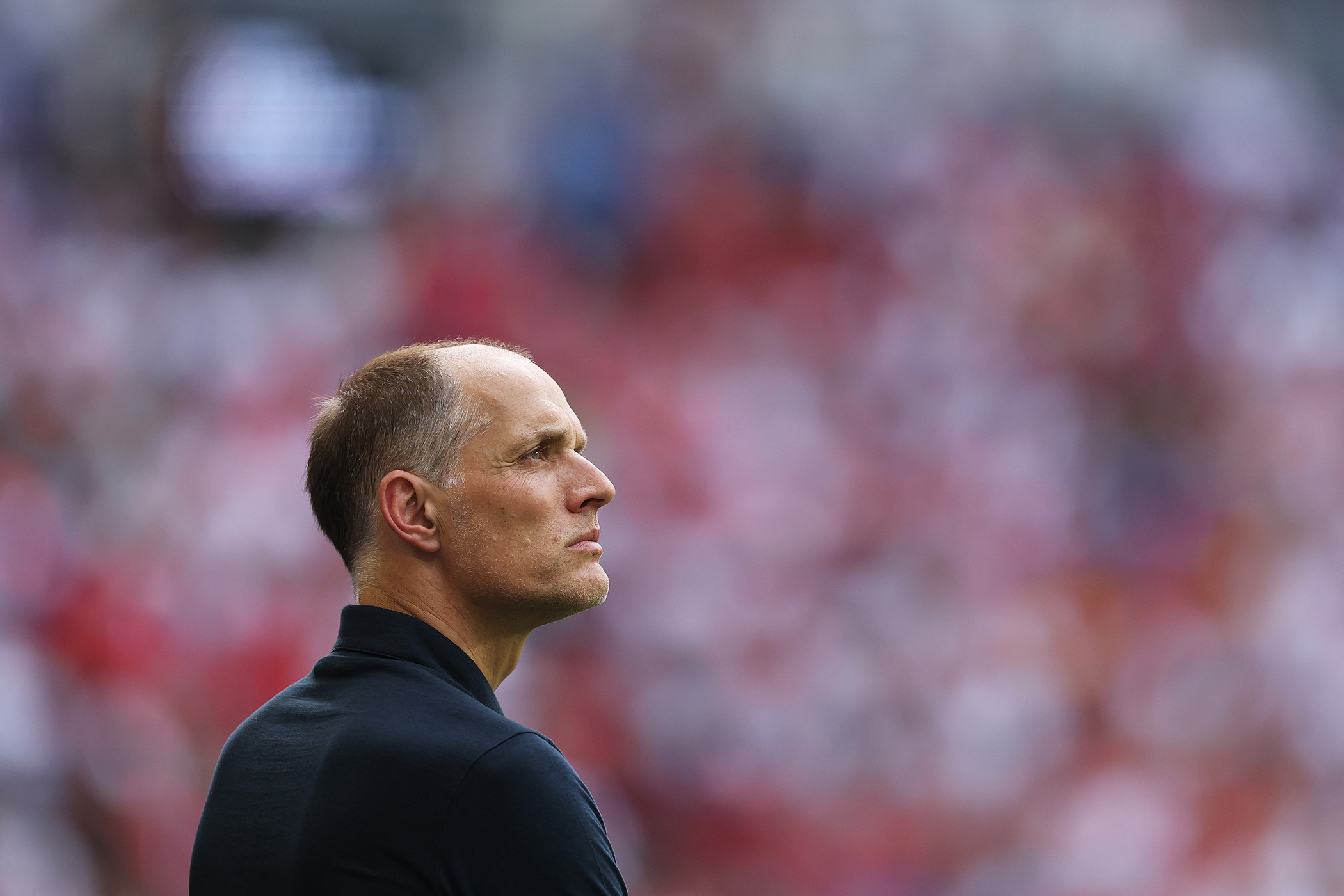

Make sense of that. Thomas Tuchel’s masterplan was melting in the maddening Florida heat, England in pain and incoherent and verging on incompetent. At half-time Steve Aoki dunked an overexcited bloke’s face in a birthday cake on the big screen before Tuchel brought on Eberechi Eze for the stiff ghost of Declan Rice, decided midfields are overrated, that possession is for wimps, only to realise 25 minutes later than having the ball sometimes helps. The problem with trying to corral the chaos is sometimes it corrals you, consumes you.
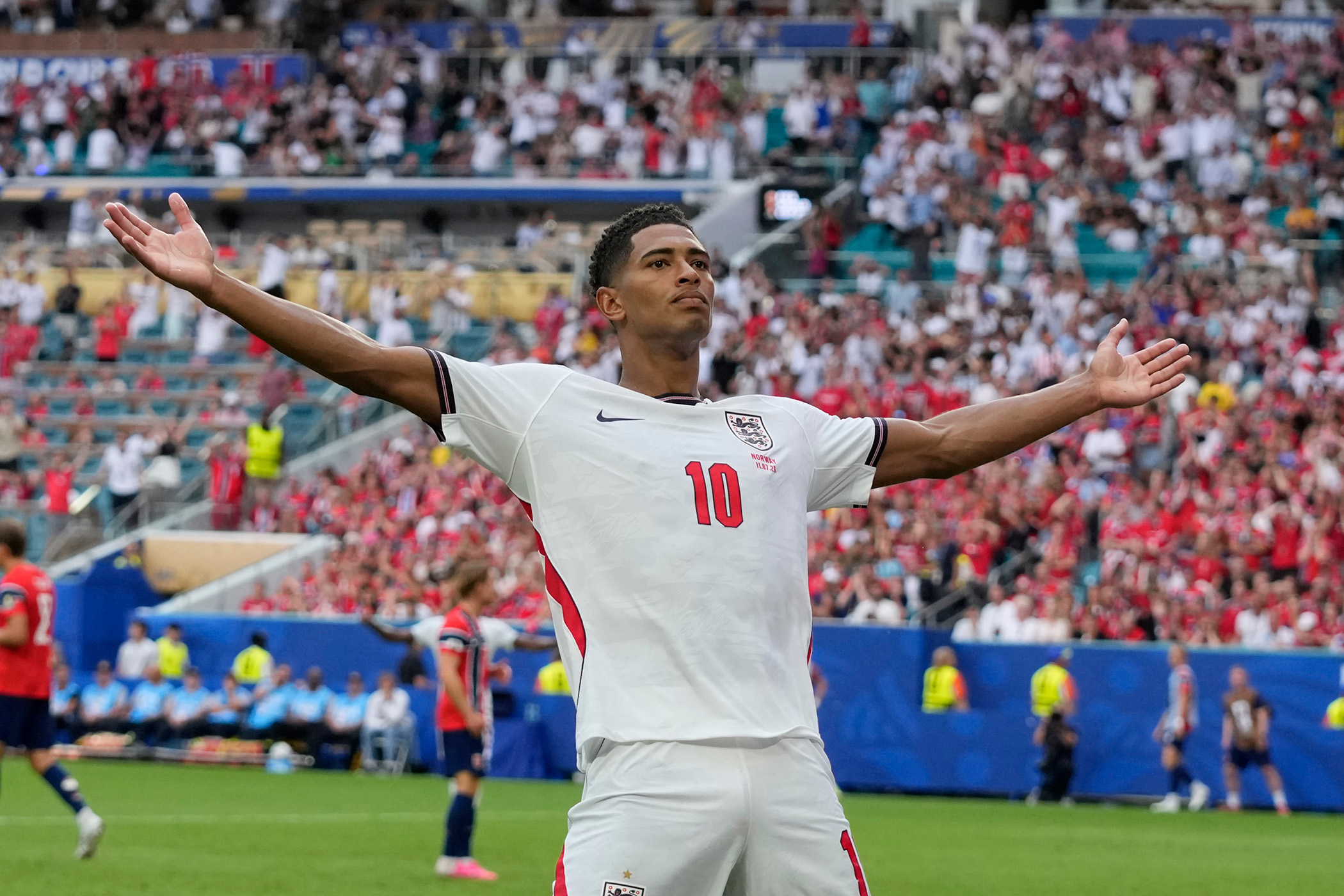
Unless, of course, you’re Jude Bellingham. This is now the greatest major tournament run by an English player ever, something truly masterful and massive, bending the world to his irrepressible will. And so somehow England have reached their second semi-final in three World Cups, not so much a golden generation but a golden era with no obvious ceiling or end in sight. This is what watching this team is now, confusing and conflicting, migraine-inducing methball with Bellingham and Harry Kane somewhere in the middle.
Miami is an uncannily smooth place, an entire city seemingly hooked on the peptides advertised on bus stops, every beach and building and body nipped and tucked in search of an impossible perfection. Fifteen miles north, the Hard Rock Stadium juts out of the ceaseless flatness like the start of a suspension bridge to Mars, all sharp edges and clean lines. In one corner Ellie Goulding appeared to lip-sync to an apathetic and half-empty ground 25 minutes before kick-off.
Supposedly 33C but feeling like 43C, the stadium was enveloped by an obnoxious, oppressive heat that grabbed hold of you and wrung out every drop of hydration and hope, heat that strengthened gravity, humidity enough to make even the Andrew formerly known as Prince sweat.
With Arlington and Atlanta air-conditioned, New Jersey and Mexico City grey and grim, these were the maddening conditions Thomas Tuchel and his staff have spent much of the past 18 months preparing for, constant testing and tinkering in service of one match, one moment. In May 2025 players were fed biometric tablets and made to cycle in a heated tent for 45 minutes to understand how their bodies reacted, which informed the eventual squad selection. They trained in Florida pre-tournament, played friendlies in Tampa and Orlando to acclimatise, had ice vests and palm coolers waiting on the bench.
But considering what the Azteca must have taken from these players, the expected cost of existing in the eye of the storm, England only made two changes: Noni Madueke replacing Bukayo Saka and John Stones Jarell Quansah, meaning Ezri Konsa shifted into the right-back role Unai Emery often deploys him in. Pre-match, Tuchel said “the brave will have the luck on their side,” and talked about needing to free their mind and release their energy, football as yoga retreat. And within two minutes Madueke was freely dashing down the right and launching a shot over the crossbar with the staggering imprecision of a movie henchman firing an AK47, the archetypal Madueke moment, all pace and power and devastating waste. Shortly afterwards he was caught offside twice in four minutes, Tuchel writhing and raging on the touchline. He was replaced by Saka at half-time having failed to create anything of note and appearing to run away from one cross into the box, a reminder of quite how significant the gulf to Saka is.
Norway’s only change from beating Brazil was Benfica’s Andreas Schjelderup replacing Antonio Nusa on the left wing, perhaps because Nusa was the only player at risk of a yellow card suspension. And it was Schjelderup who opened the scoring, whipping a left-footed shot that fizzed and flew over Jordan Pickford – beating Peter Shilton’s record of World Cup appearances by an England goalkeeper – and in off the post. This was one of those goals that England never score but always seem to concede, goals of invention and risk, opportunism and elite skill. It broke the early sanity of a tentative game, cracked the door and let the madness in – within the next 10 minutes Norway could have extended their lead. The clearest opportunity left John Stones alone with Alexander Sørloth and Erling Haaland charging towards him like rampaging bulls, but Sorloth inexplicably spurned endless space and time to allow Marc Guéhi to recover.
For all the talk of free minds, England didn’t have a corner until the 45th minute or a shot on target until first-half added-time. Ørjan Nyland sprayed a goal-kick to Elliot Anderson, who rapidly found Anthony Gordon down the left. Gordon drilled a flat pass to Jude Bellingham, who looked up and did the Bellingham thing, the transcendent thing, the “I guess I’m going to have to do this alone thing.” He weaved and rolled through three helpless Norwegian defenders and hammered a low shot across Nyland. At this point it is clear that the plan is Bellingham and Kane, that this dependence is by design. Just before the half-time whistle, Kane chipped over Nyland but was offside, Bellingham dropping to his knees to curse the linesman and fate.
This tournament has elevated Haaland from superstar to megastar, breaking America via novelty T-shirts and sandwich shops, via the odd dichotomy between his childish charm and alpha male appearance. Representing Norway reveals something different about him, shows us his ability to lead and define a side in a way his detractors claim he never quite can for Manchester City. Norwegian journalist Eirik Grasaas-Stavenes has called him “Norway’s most valuable commodity since oil, salmon, and the tripartite cooperation between trade unions, employers, and government.” While his team-mates received their final instructions, Haaland stood alone on the edge of the centre circle, staring down the England squad, and then almost instantly collapsed under pressure from Marc Guéhi. Stones almost passed him the ball across the box on 33 minutes, and he then leapt over his City teammate shortly after to head at Pickford, the game’s first shot on target. Perhaps the first real error he had made in the past month emerged early in the second half, Torbjørn Heggem’s goal from a corner disallowed because Haaland shoved Anderson over under no pressure, both a clear foul and one which will undoubtedly incite national fury in Norway.
So to a semi-final destined to be just as mentally and physically and spiritually draining as everything that has come before it, one that should come with a content warning. Despite spending much of the evening, much of the past month, on the edge of collapse, they are one match from a first World Cup final since 1966. But so long as Bellingham is still somewhere in the middle, still dancing and leaping and corralling chaos, there’s hope.
Newsletters
Choose the newsletters you want to receive
View more
For information about how The Observer protects your data, read our Privacy Policy
Photograph by Lynne Sladky/AP