

If you were walking around Silicon Valley 10 years ago and came across an entrepreneur pitching on the street, they would say – no matter what business they’d started, to resolve whatever imagined problem – that they had one aim in mind: to make the world a better place.
Feverish techno-optimism was rife in the 2010s. At that time tech bros insisted that every startup – whether it offered Uber for babysitters or surveillance tech for low-wage workers – had altruistic ambitions. Profit was apparently irrelevant to the transformed, happier world their company would help create. Following an era of Carnegies and Rockefellers – and more recently Gateses – where capital was repurposed for PR-friendly philanthropy, the CEOs leading these tech companies argued they were one tidy package, delivering shareholder returns and public good via one benevolent enterprise. Remember Google’s proud motto, “Don’t be evil”?
That slogan fell by the wayside in 2015, and now, in 2026, the whole virtuous enterprise is buckling under the weight of reality. Tech scepticism has reached a peak, despite Anthropic’s recent announcement that it would hold back releasing its latest product to protect us all from its mighty powers. Even among people who utilise these now giant, dominant companies (Jeff Bezos’s Amazon, or WhatsApp, owned by Mark Zuckerberg’s Meta), many feel uncomfortable about their reliance on the technology and – more often – have an active distaste for the man at the top. People might enjoy using Instagram but still think Zuckerberg is a creep; they might like Amazon’s speedy delivery but they still mocked Bezos’s grey-carpeted wedding. (Many might also recognise that rather than what you’d really call “enjoyment” of tech, they feel more of a sense of addiction: not least after a jury in Los Angeles last month judged Meta and YouTube to have wilfully created addictive products.) In 2025, Tesla owners and investors protested against Elon Musk’s involvement in Donald Trump’s administration, selling their cars and shares and putting dissenting bumper stickers on their Cybertrucks.
The effective altruist movement, which claims to maximise charitable donations by letting the rich strategically deploy profits to the poor, has been blunted by the criminal conviction of their crypto poster boy, Sam Bankman-Fried, sentenced to 25 years in prison for misappropriating billions of dollars of customer funds deposited with his FTX cryptocurrency exchange.
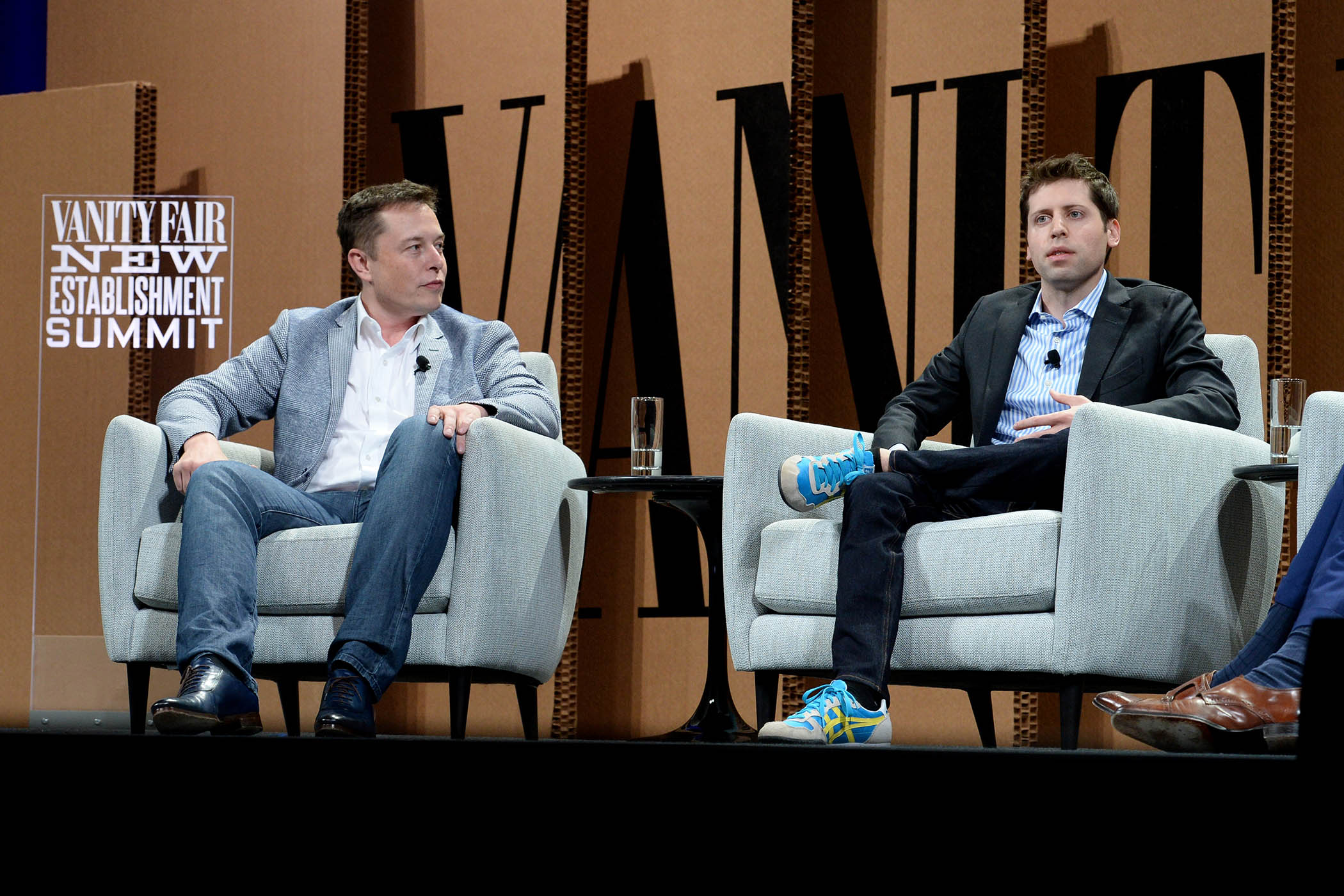
The image of the benevolent billionaire is in crisis. So, it might not have been a huge surprise when last week the New Yorker published an unflattering profile of Sam Altman, the CEO of OpenAI, the company that runs ChatGPT, centring on Altman’s brief ouster by the OpenAI board in 2023. “Sam Altman may control our future – can he be trusted?” ran the headline. The board’s concerns focused on what seemed to them a frightening shift in Altman’s priorities. Substantial written records showed he had founded OpenAI because of a sincere fear that artificial intelligence might one day fall into the wrong hands – and that he and his team had built OpenAI as an antidote, continuing to push for regulation and promote stringent ethical use.
But by 2023 Altman had, in the eyes of the board, become those same wrong hands. (At the top of their list of issues with Altman: “Lying.”) The coup lasted just five days and, upon Altman’s return, all but one board member was removed. Now OpenAI, which was founded as a nonprofit, has recapitalised as a for-profit entity before a rumoured IPO and, as the New Yorker put it, is “securing sweeping government contracts, setting standards for how AI is used in immigration enforcement, domestic surveillance, and autonomous weaponry in war zones”.
The more sinister revelations in the report are perhaps unsurprising to those who have paid any attention to Altman, who as early as 2015 said: “AI will probably most likely lead to the end of the world, but in the meantime, there’ll be great companies.” But perhaps what is surprising is the old, echoing Silicon Valley refrain that appeared at the heart of Altman’s original aims. The controversy stems from the idea that he did, at one point, actually care about making the world a better place.
Altman may not be unique: we can glimpse historic good intentions, even if slim, in several of today’s most notorious billionaires. Musk founded Tesla with the goal of speeding the transition to electric vehicles amid the climate crisis. The persona he presented in the 2010s also pushed a benevolent image ((lest we forget his rejected attempt to play the hero by sending a submarine to rescue a group of boys trapped in a Thai cave in 2018, which then led him to call one of the rescuers “pedo guy”). And in Careless People, the 2025 memoir that Meta tried to block, the former Facebook executive Sarah Wynn-Williams writes that there were moments early on when senior staff were united in their desire to make Facebook a net positive for society, by improving disaster communication and community organising, for example.
But in each of these tales a violently divergent path unfolded instead – and this is what the Sam Altman story crystallises. Inevitably, every soon-to-be tech billionaire faces a fork in the road, where a future of unprecedented wealth and power stands in opposition to one that prioritises public good at the cost of profit. Reaching billionaire status, winning global dominance – such achievements are mutually exclusive with the ethics and morality that the few truly altruistic tech bros might once have pursued. You could argue the corrupting influence of so much capital might be resisted by the right CEO, but I’m not sure there are any significant instances where sticking to those optimistic aims was the path taken.
A decade on, we can claim that at least we’ve copped on to this Silicon Valley ruse. Few of us today believe any billionaire is pure of heart, though they may have started out that way. But while their benevolence is questioned, their actions tend to offer them the success and ballooning wealth they desire. Whatever their intentions once were or weren’t, they still hold outsized power and resources, and their greed is able to run unchecked, in part, because we’re happy to ignore our discomfort, to keep shopping on Amazon, giving our data to Instagram or relying on ChatGPT. In which case trust might just not matter any more.
Newsletters
Choose the newsletters you want to receive
View more
For information about how The Observer protects your data, read our Privacy Policy
Photograph by Getty Images