


This article first appeared as part of the Daily Sensemaker newsletter – one story a day to make sense of the world. To receive it in your inbox, featuring content exclusive to the newsletter, sign up for free here.
Several European countries have condemned Israel for revoking the licences of at least 37 aid organisations in Gaza and the occupied West Bank, after they failed to comply with a deadline to provide information about their Palestinian staff.
So what? There is already a severe humanitarian crisis in Gaza, where 90% of people rely on aid. An effective ban will make that worse. Those targeted include some of the biggest groups operating in the enclave, such as
•
Oxfam, which has worked in Israel and Palestine since the 1950s;
•
the International Rescue Committee, which has helped more than 430,000 people in Gaza over the past two years; and
•
Médecins Sans Frontières, which provides life-saving healthcare and says it has lost more than a dozen staff members to attacks by the Israeli army.
Rationale. Israel said staff lists were necessary to prevent Hamas from diverting aid and infiltrating humanitarian organisations. It has not provided evidence that this is a major issue.
No can do. MSF said it had “legitimate concerns” about sharing personal information with authorities, citing the death of 15 staff members at the hands of Israeli forces. Ruth James from Oxfam told The Observer that complying with Israel’s registration process “would violate our duty of care to our staff, international data protection standards and labour law”.
Reaction. Volker Turk, the UN human rights chief, condemned the decision to ban the organisations as “outrageous”. The foreign ministers of 10 countries, including the UK, said it would have a “severe impact on access to essential services”.
Obligations. The bans could violate international humanitarian law, which requires conflict parties to allow and facilitate the “rapid and unimpeded” delivery of aid, and appears to contravene the ceasefire, which obliges Israel to allow “full” assistance to be sent to Gaza.
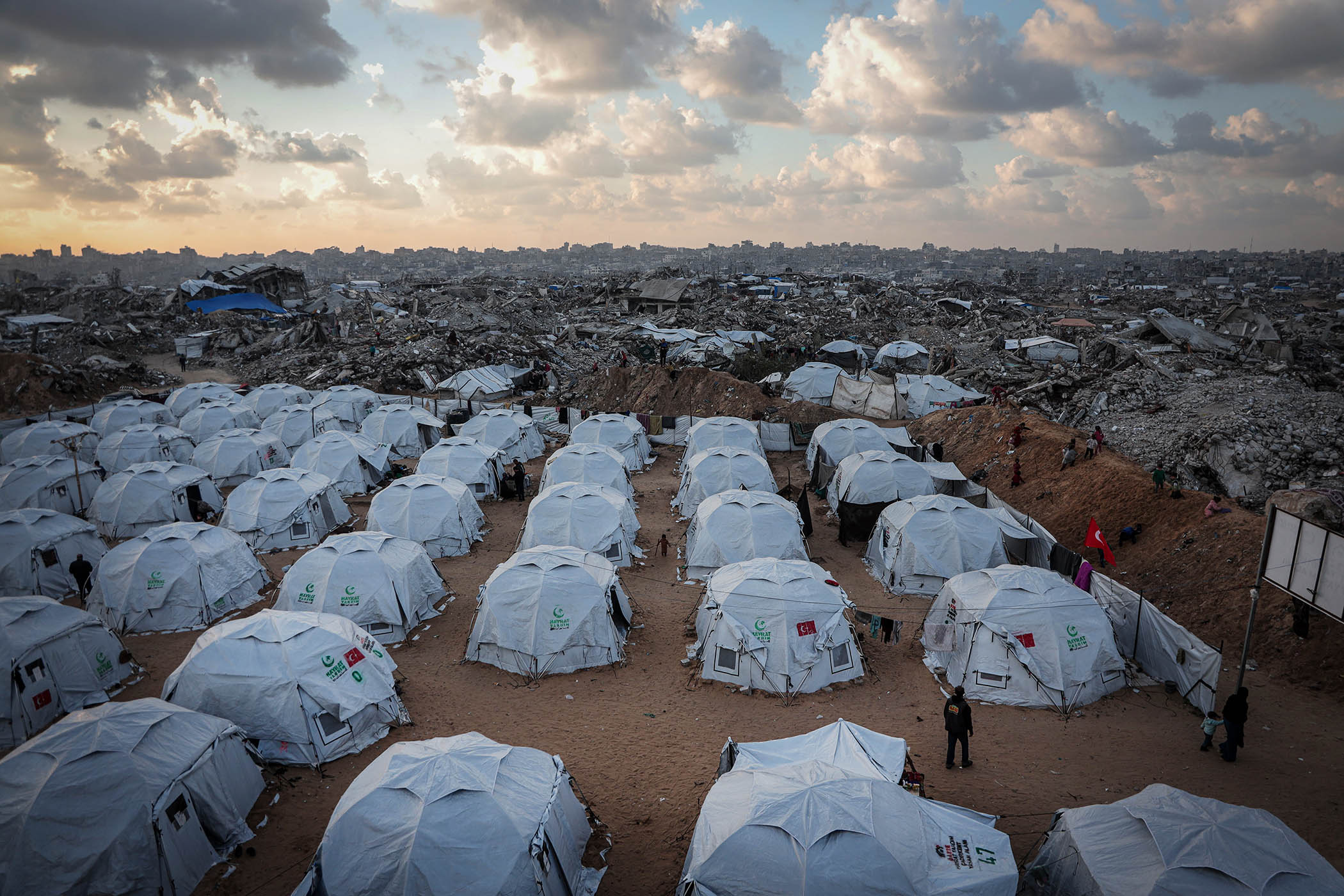
Biting deeper. Recent winter weather has destroyed thousands of tents, flooded makeshift shelters and toppled war-damaged buildings. Despite the ceasefire, Israel has been accused of severely limiting the supplies entering the strip even before the aid group ban. James described the needs of those in Gaza as “unprecedented”.
Stalled. Living hostages have returned home, but there has been slow progress on implementing the second transitional phase of the ceasefire. Donald Trump and Benjamin Netanyahu were all smiles during a summit at Mar-a-Lago last week, but the US president is frustrated with his Israeli counterpart.
Boots on the ground. One of the outstanding issues is the composition of an international stabilisation force to oversee Gaza’s security. Despite Turkey being a guarantor of Trump’s peace plan, Netanyahu has ruled out its involvement. Several countries want the force to be UN-mandated, but Israel and the US want it to coordinate with an America-led military unit.
Newsletters
Choose the newsletters you want to receive
View more
For information about how The Observer protects your data, read our Privacy Policy
In-tray. Trump has still not formed his promised Board of Peace, which is meant to appoint a Palestinian-led interim administration to govern Gaza. Redevelopment is also a long way off.
Digging in. Israel appears uninterested in pulling back from the half of Gaza it still occupies. It says it wants Hamas to disarm before it withdraws. Hamas, meanwhile, shows no signs of giving up power or weapons without negotiations on a Palestinian state.
Rumbling on. Gaza’s Hamas-run media office says Israel violated the ceasefire nearly 1,000 times between 10 October and 29 December, while the enclave’s health authorities say at least 414 Palestinians have been killed since the ceasefire came into effect.
Staying put. Trump claimed last week most Gazans want to leave the besieged enclave. He appeared to be citing a recent poll where nearly half of respondents said they would be willing to move. It did not specify if the departure would be permanent or temporary, and previous surveys have shown that only a fraction of Gaza’s population is in favour of leaving for good.
Brainstorming. Some Israeli ministers would prefer to empty Gaza of Palestinians altogether. The country’s defence minister has proposed moving its 2.1m population into a “humanitarian city” built on the ruins of Rafah in southern Gaza. The area is about the size of Guernsey.
More brainstorming. A group of Israeli businessmen has proposed offering Palestinians £3,700 cash, four years of rent and a year of food to “voluntarily” relocate elsewhere. Suggested destinations include Libya, Syria and the breakaway territory of Somaliland.
What’s more… Israel recently became the first country to formally recognise Somaliland as an independent state.
Photograph by Abdalhkem Abu Riash/Anadolu via Getty Images