
This article first appeared as part of the Daily Sensemaker newsletter – one story a day to make sense of the world. To receive it in your inbox, featuring content exclusive to the newsletter, sign up for free here.
Nicolás Maduro arrived at a New York detention centre this weekend after being captured and removed from Venezuela by US forces.
So what? America First has never felt so ill-defined. Not since the 1989 invasion of Panama has the US brokered regime change in Latin America. Donald Trump’s demand for a sequel could define his legacy, having already
•
left a nation to face its government and oil wealth being controlled by US interests;
•
made a continent wonder who could be the next victim of American expansionism; and
•
drawn an international response that is a mix of scepticism, shock, silence and support.
Operation Absolute Resolve. Around 2am on Saturday morning, power to the area around Maduro’s fortress was cut. This allowed the US Army’s elite Delta Force, conveyed as part of a fleet of 150 aircraft, to seize the presidential couple. The US had built a mock-up of Maduro’s compound in Kentucky to rehearse the operation.
Long way from home. Maduro was swept out of Venezuela to the US warship Iwo Jima, after which he was taken, blindfolded and handcuffed, to a plane that transported him to New York.
The build up. While the US was applying pressure to Venezuela over the past few months, it was also secretly planning to capture Maduro. The CIA and Department of Defense worked to understand how the dictator moved, where he lived, what he ate, and even the identity of his pets. There was reportedly a CIA source inside the Venezuelan government.
Human cost. No Americans died in the operation, but that doesn’t mean it was without loss. A Venezuelan official told the New York Times that 40 people were killed, including military personnel and civilians. The US said its helicopters came under fire when extracting Maduro.
Some freedom. Trump said on Saturday that the Venezuelans were “free”, and that the US was going to run the country until there could be a “judicious transition”. He did not expand on what this would look like, but dismissed working with opposition leader María Corina Machado.
Some more freedom. An interim government in Venezuela would be expected to kowtow to the US under the threat of further military action, but many have asked why Trump would remove Maduro while keeping Chavistas in place. It is possible they will hold on to power.
Same old story. Delcy Rodríguez, Maduro’s vice-president, was sworn in as interim leader on Saturday afternoon. She condemned the removal of Maduro as “imperialist aggression.”
Newsletters
Choose the newsletters you want to receive
View more
For information about how The Observer protects your data, read our Privacy Policy
Legal questions. The US is expected to justify the operation on the grounds of self-defence, framing Maduro as a national security threat. But there is no evidence the US was about to be attacked and legal experts say the country is likely to have violated the UN charter.
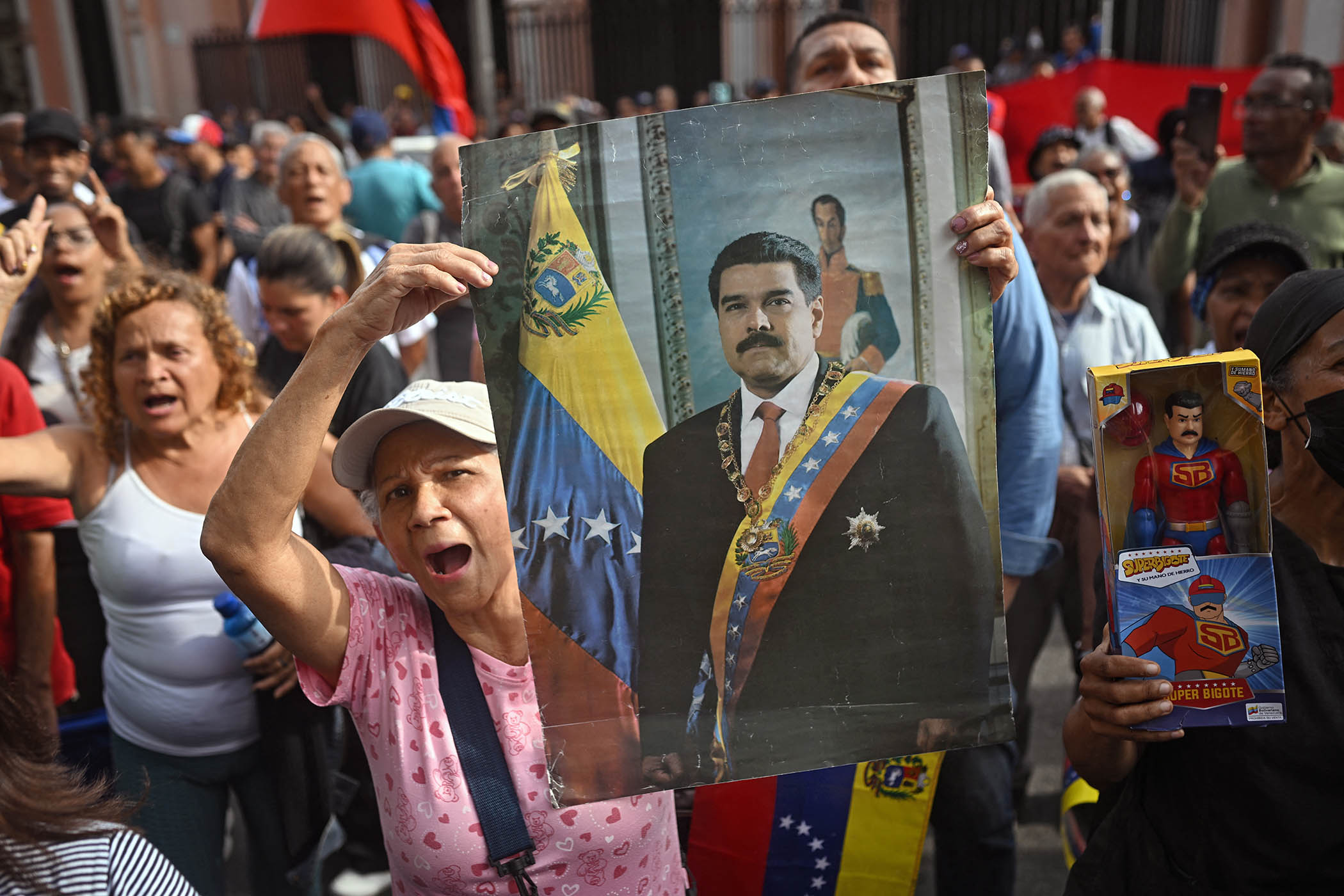
View from the ground. Nearly two-thirds of Venezuelans do not view Maduro as a legitimate president, but many are apprehensive about what will come next and are stockpiling supplies.
View from Latin America. Regional reactions split along ideological lines. Trump’s right-wing allies in Ecuador and Argentina hailed Maduro’s capture, while Brazil, Chile, Colombia, Mexico and Uruguay said US actions set an “extremely dangerous precedent”. In the crosshairs are
•
Mexico, about which Trump said something was “going to have to be done”;
•
Colombia, whose president was told by Trump on Saturday to “watch his ass”; and
•
Cuba, which was described by Marco Rubio, the secretary of state, as a “huge problem”.
View from the fence. Keir Starmer has upheld the UK’s position as Washington’s ally, while voicing support for international law. He stressed that Britain, although supportive of democratic transition in Venezuela, was not involved in the operation. It was not informed either.
Why the US did it. The Trump administration does not recognise Maduro as the legitimate leader of Venezuela. It has labelled him a “narco-terrorist” and holds him responsible for the flow of illegal drugs into the US, which he strongly denies.
In the dock. This is the thrust of a four-count indictment against Maduro and other defendants, which was unsealed on Saturday and filed in the Southern District of New York. Maduro will appear in court later today on charges that include
•
narco-terrorism conspiracy;
•
cocaine importation conspiracy; and
•
possession of machine guns and destructive devices.
The other guy. It is hard to square this quest for justice with Trump’s pardon of Juan Orlando Hernández last month. The former Honduran president was serving 45 years for cocaine trafficking. He was also charged – and convicted – in the Southern District of New York.
We’re in the oil business. A more coherent reason for US actions is Venezuela’s crude reserves, which make up nearly a fifth of the world’s proven total. Trump claims that US oil firms will invest heavily in the country to rebuild “rotted” infrastructure and begin making money.
Spheres and loathing. Trump has also revived the “Monroe Doctrine”, the rationale that justified force in Latin America to maintain influence in the backyard of the US. He said on Saturday that “America’s dominance in the western hemisphere will never be questioned again”.
In practice, the idea is to force hostile states such as Russia, which supplies Venezuela with arms, and China, where most Venezuelan oil ends up, out of the region and regain US control.
What’s more… The fear is that this will also involve leaving Ukraine to Moscow and Taiwan to Beijing, with each power governing its domain of influence. Venezuela may only be the start.
Photograph by Federico Parra/AFP