

Photograph by Jeff J Mitchell/Getty Images
This article first appeared as part of the Daily Sensemaker newsletter – one story a day to make sense of the world. To receive it in your inbox, featuring content exclusive to the newsletter, sign up for free here.
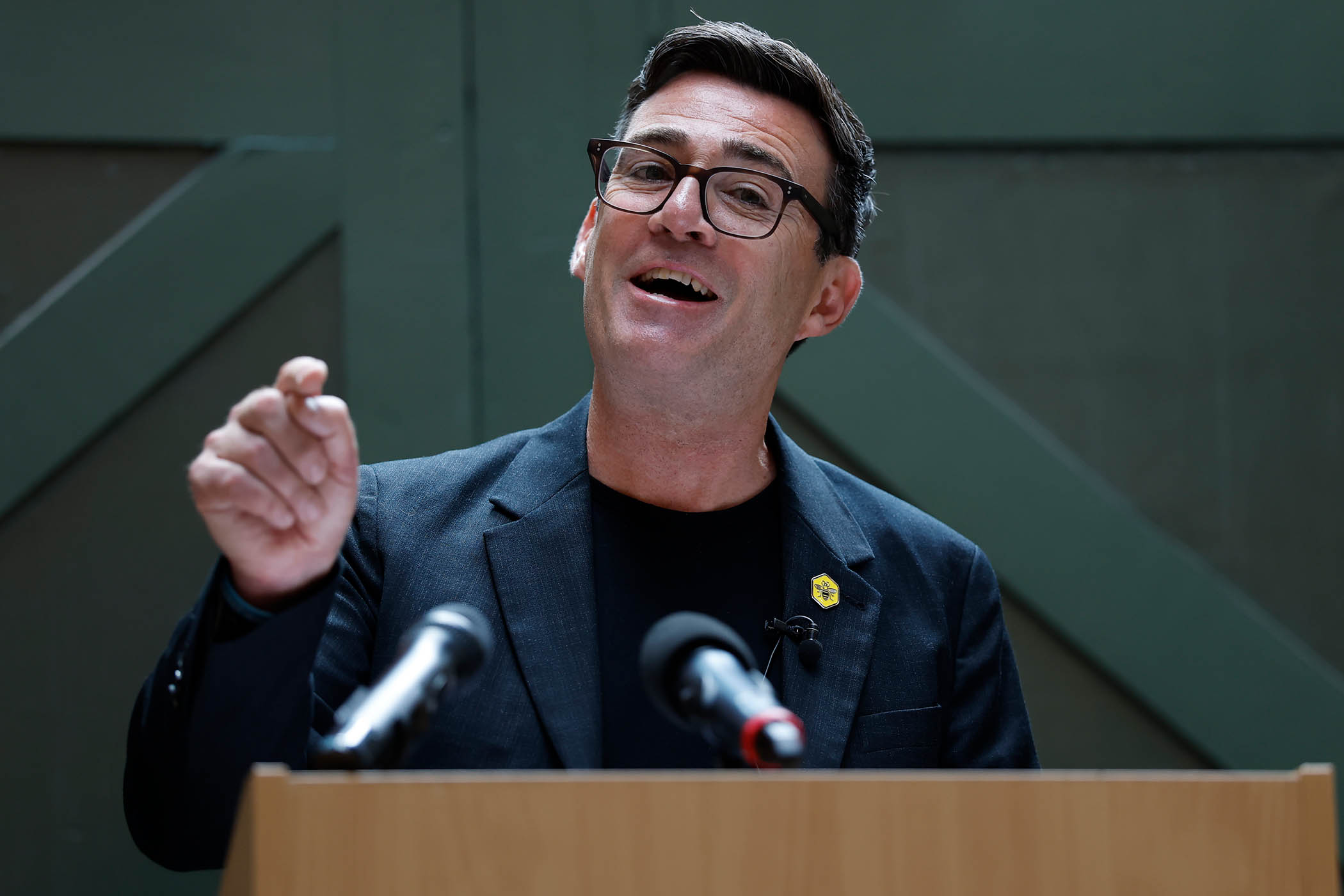
Andy Burnham has announced plans to expand the prime minister’s office to Manchester as part of a push to “redistribute power and resources” across the country.
So what? The ambition of the new MP for Makerfield cannot be faulted. In his first major policy speech since launching his bid to become prime minister, Burnham laid out a vision of radically “rewiring” the British state. He said his new “No 10 North” will focus on
•
the generation of places;
•
reindustrialisation; and
•
reforming essential services.
Lesson learnt. Burnham has studied the mistakes of Keir Starmer, whose U-turns and technocratic style left voters wondering what he stood for. Yesterday Burnham nailed his colours squarely on the mast of devolution, promising “the biggest change in our lifetimes to the way the country is run.” The aim is “good growth in every postcode and hope in every heart”.
Backyard. More powers will be given to leaders across the country. This includes Scotland, Wales and Northern Ireland. But Burnham’s pitch was mostly aimed at places like his Makerfield constituency: post-industrial English regions that used to instinctively vote Labour but are switching to Reform. Regaining their support will be key if Labour is to avoid electoral oblivion.
Other eye-catching promises included the biggest council house building programme since the postwar period and a commitment to bring water, energy and transport under greater public control. There were also mentions of trimming welfare and reforming business rates.
The context. Britain is one of the most economically lopsided countries in the rich world. London powers about a quarter of all growth and accounts for more than a third of exports, despite having about 15% of the national population. By contrast Berlin generates 5% of economic output in Germany, where skilled jobs are spread between places like Frankfurt, Munich and Hamburg.
A big part of the problem is a highly centralised state. Only 6% of British tax revenues are collected by local government, compared to 14% in France, 24% in Spain and 32% in Germany. This means British regions have to appeal to Whitehall for money. But civil servants give priority to projects in the most productive areas, which are London and its environs.
Familiar feeling. Burnham is not the first politician to diagnose this problem. George Osborne created the Manchester mayoralty that Burnham held for almost a decade, as part of a broader scheme to create a ‘Northern Powerhouse’, while Boris Johnson promised “levelling up”. Even Keir Starmer spoke of a “devolution revolution”.
Transplant. But Burnham believes he has the solution: exporting ‘Manchesterism’ to the rest of England. The city is thriving. It is the top destination for foreign investment outside of London and has grown by about 3% a year since 2015, compared to the national average of 1.5%.
Why? Its model, which predates Burnham’s time as mayor, combines active public sector interventions with business-friendly policies. Burnham has described it as “the end of trickle-down economics”. It is perhaps best captured by the towers that now line Manchester’s skyline and its network of subsidised buses that charge £2-a-fare.
But it is imperfect. An Oxford Economics report said this growth strategy “failed to translate into meaningful improvements in living standards” outside the booming city centre.
And it may not work elsewhere. Manchester is a youthful city with a strong international brand, bustling universities and several other towns in its orbit, meaning it benefits from the economic multiplying effects of agglomeration. Its model could benefit other large cities such as Liverpool or Leeds, but may not be so easily applied to more provincial places like Hull or Stoke.
What’s more… Burnham will need to add more detail to his vision to show he can deliver. But he has at least laid the foundations of a narrative of change that voters are desperate to hear.
Newsletters
Choose the newsletters you want to receive
View more
For information about how The Observer protects your data, read our Privacy Policy