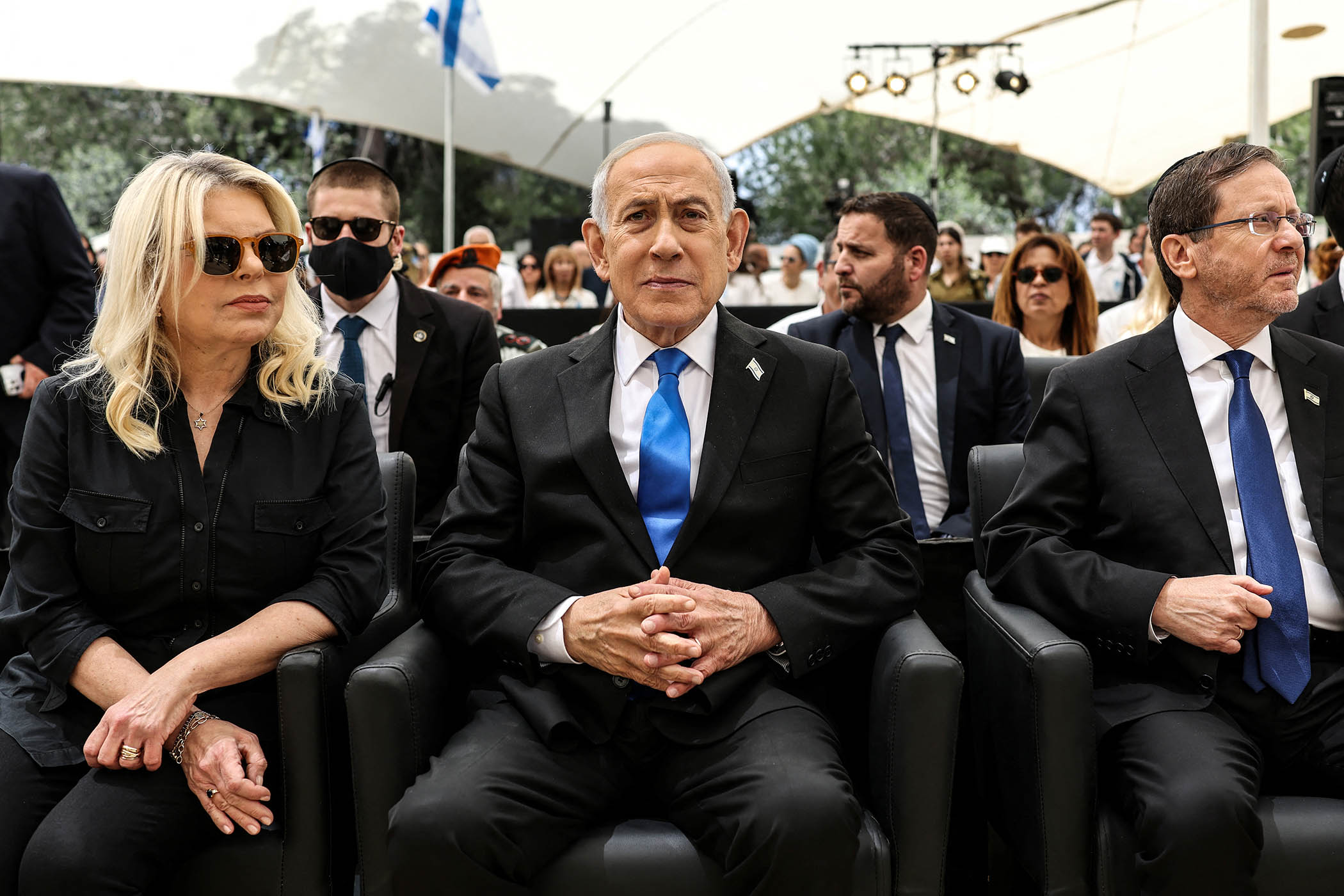



This article first appeared as part of the Daily Sensemaker newsletter – one story a day to make sense of the world. To receive it in your inbox, featuring content exclusive to the newsletter, sign up for free here.
Israel has intensified attacks in Gaza and Lebanon, despite Iran’s insistence that any peace deal with the US requires a ceasefire on all fronts.
So what? These are the actions of a man desperate to stay in office. Early elections in Israel threaten the future of Benjamin Netanyahu, who
•
is struggling to keep together his unwieldy coalition;
•
faces ongoing questions over security failures around October 7; and
•
remains wanted by the ICC and, separately, on trial for corruption charges.
How we got here. Last Wednesday, the Israeli parliament approved the first stage of a bill to dissolve itself after a religious faction of Netanyahu’s coalition withdrew its support for the prime minister. Ultra-Orthodox lawmakers are angry about plans to allow seminary students, previously exempt from military service, to be conscripted into the army.
What happens next? Israelis were due to go to the polls by October, but an earlier vote is now more likely.
The calculation. Because of Israel’s fractured political system, Netanyahu has historically only needed enough votes for his Likud party to form a coalition. But the uncertain support of ultra-Orthodox parties complicates these efforts. If he doesn’t yield to their demands, he will struggle to get them on board in a future government. If he does, he may lose votes from the high proportion of Israelis – 85% as of last year – who believe Haredim should be conscripted.
Temperature check. One poll found that 55% of Israelis want Netanyahu to retire from political life entirely, while 38% said they want him to run again. Issues that may rear their head in an election race include:
A court case. Netanyahu’s corruption trial is not over. Donald Trump has repeatedly pressured Israeli president Isaac Herzog to pardon Netanyahu, but may opt to stop doing so as the midterms approach. Herzog has prevaricated, trying to get Netanyahu’s lawyer and Israel’s attorney general to strike a bargain. Netanyahu has repeatedly denied all allegations.
October 7. In the years since the Hamas attacks on Israel, when at least 1,200 people were killed in towns and kibbutzim around Gaza, Netanyahu has dodged calls for an inquiry into security failures in the lead up to the attack and on that day. Instead he has taken the fight elsewhere, attacking Lebanon, Iran, Syria, Yemen and Qatar.
Military action. Even while there is talk of peace between the US and Iran, Netanyahu has pledged to ramp up strikes on Lebanon, and continues to hit Gaza, perhaps in the view that a forever war is better than no war.
Newsletters
Choose the newsletters you want to receive
View more
For information about how The Observer protects your data, read our Privacy Policy
Case in point. The wars that Netanyahu started maintain significant support. Some 64% of Jewish Israelis say a ceasefire in Iran is “not compatible” with the country’s security interests.
Friend to few. But Netanyahu could be undone by his own political machinations, according to the pollster Dahlia Scheindlin, who says that Israelis are angry at his concessions to far-right members of his coalition, attacks on institutions and the allegations of corruption. In other words, Netanyahu has been in power so long that he has found ways to anger everyone.
What’s more… Netanyahu has always found ways to galvanise his base, arguing that the wars he has started overseas help to protect their interests at home. But that line of reasoning is falling apart, as he makes his country more unpopular abroad than ever. Two-thirds of American adults now have an unfavourable view of Israel and a majority dislike Netanyahu.
Photograph by Ilia Yefimovich/AFP/Getty Images