
This article first appeared as part of the Daily Sensemaker newsletter – one story a day to make sense of the world. To receive it in your inbox, featuring content exclusive to the newsletter, sign up for free here.
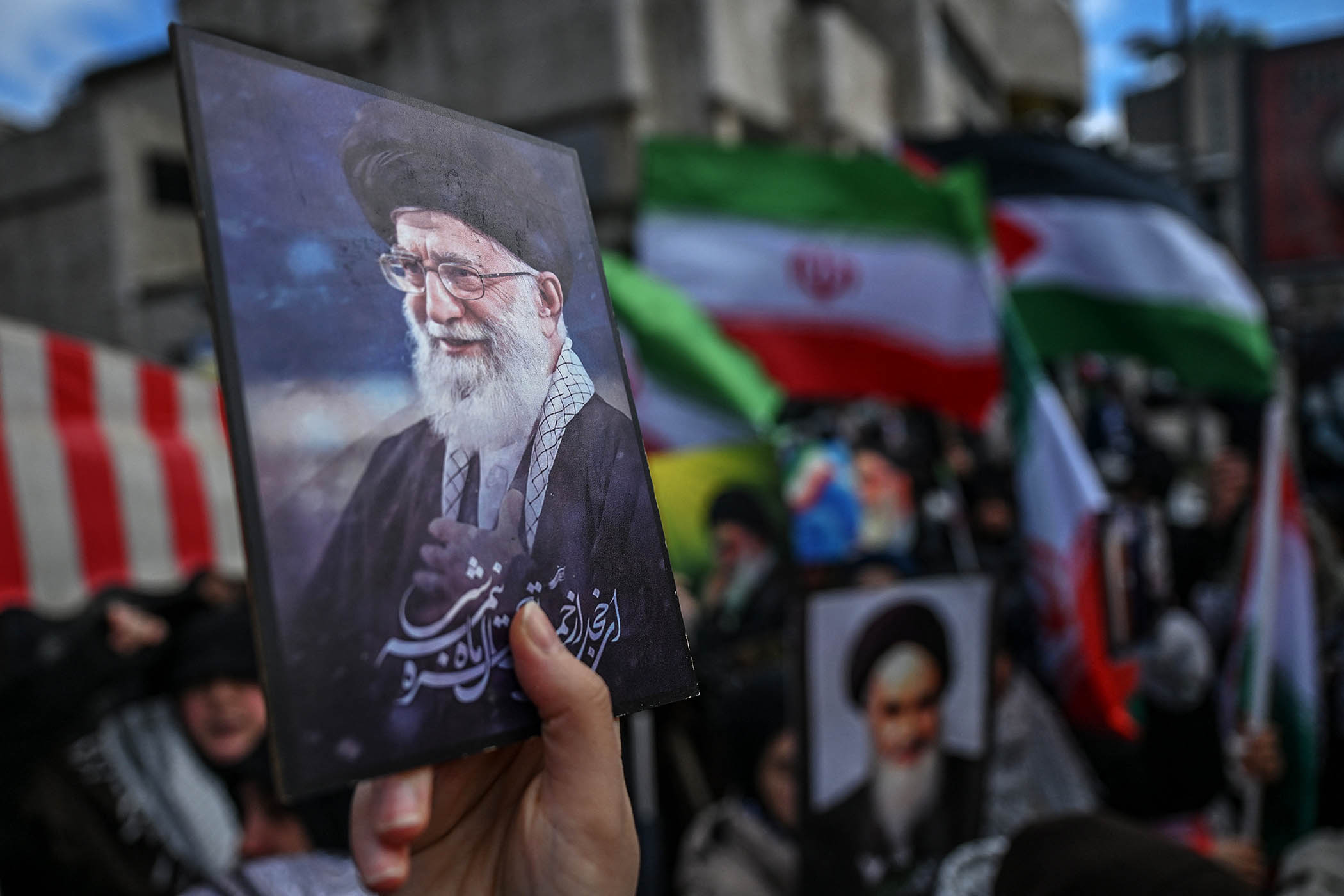
A joint US-Israeli strike killed Ayatollah Ali Khamenei, the supreme leader of Iran, in broad daylight on Saturday morning. Donald Trump called for regime change in Tehran.
So what? A clear plan for how to bring this about remains lacking. Even so, the assassination of Khamenei as part of a large-scale air attack is the most significant American foreign intervention since the invasion of Iraq. It is also the country’s second this year after the abduction of Venezuela’s Nicolás Maduro. Khamenei ran a brutal theocracy at home and transformed Iran into a powerful security state abroad in his 37 years in charge. His death
•
wrongfooted allies of Washington and Tehran;
•
led to retaliatory drone strikes across the Middle East; and
•
opened up an internal power struggle that will be shaped by threats of further US attack
Fury road. The strikes hit Khamenei’s compound in the heart of Tehran during a meeting of the upper echelons of the Iranian defence establishment. The CIA had reportedly been tracking the supreme leader for months. Knowledge of the gathering pushed forward the timeline of attack.
Power spin. Many of Iran’s top military and security officials were also killed, including the head of the national defence council, the leader of the Islamic Revolutionary Guard Corps, the defence minister and the intelligence chief. The status of Mojtaba Khamenei, the son of the supreme leader and a potential hardline successor, is currently unknown.
Human cost. Iranian state media have said that more than 165 people were killed by a missile strike on a girls’ school in the south of the country shortly after the US-Israeli attack began.
Political gamble. Trump said in a video statement on Saturday morning that he sought regime change, asking the Iranian people to “take over your government” after the fighting. A day later he told the Atlantic that he and unknown elements within the regime had agreed “to talk”.
Deep and wide. Even though the Islamic Republic has never been weaker, the regime is well prepared for the death of a supreme leader who was 86 years old and reportedly in poor health. According to Iran’s constitution, three figures will temporarily take charge.
•
Masoud Pezeshkian, a reformist president with little sway over the regime;
•
Gholam-Hossein Mohseni-Eje’i, a judicial chief accused of serious human rights abuses; and
•
Ayatollah Alireza Arafi, an increasingly powerful cleric and member of Iran’s guardian council.
Assembly of experts. Arafi is also part of the body that will choose the next supreme leader, which Iranian officials have suggested could happen within days.
Jostling parties. But experts say that any successor is likely to have a weak hold on power. The IRGC and other security elements will look for a candidate they can influence while the US and Israel hope that they can deter hardline figures from stepping up to the plate for fear of being immediately targeted.
Newsletters
Choose the newsletters you want to receive
View more
For information about how The Observer protects your data, read our Privacy Policy
Chaos is just as possible. While some people took to the streets of Iran to celebrate the death of Khamenei, crowds elsewhere wept at the passing of their long-serving supreme leader. It is possible now that the regime splinters into rival factions or even dissolves into civil war.
Take cover. The scope of Iran’s retaliation to the US-Israeli operation suggests the state may have already fractured. Abbas Araghchi, Iran’s foreign minister, did nothing to allay these fears when he told Al Jazeera on Sunday that his country’s military units were “independent and somewhat isolated” and that strikes on Oman were “not our choice”.
Wider conflagration. Iran also launched attacks on Israel, Saudi Arabia, the United Arab Emirates, Bahrain and Kuwait. Drones hit civilian airports in Dubai, Kuwait and Baghdad. Three US service troops have been confirmed dead in the operation so far, while the UK said that 300 British military personnel were “within several hundred yards” of a strike this weekend. Hezbollah, an Iran-backed group, also joined the fray late last night.
Wishful thinking. None of this will help the Iranian people “take over” the government. The country’s security forces recently gunned down thousands of protesters. Air attacks alone rarely bring about regime change and many powerful elements of the state are loyal to the status quo.
View from an expert. Danny Citrinowicz, a former Israeli intelligence analyst of Iran, said he thought Trump’s assumption the regime would crumble without Khamenei was “mistaken”.
What’s more… Moscow and Beijing have offered little more than verbal condemnation of the US-Israeli operation, but western support has hardly been full-throated. Although Keir Starmer has agreed to a US request to use UK bases for Iran strikes, he also said that Britain had learned from the “mistakes of Iraq”. A coalition of the willing, at least for now, seems unlikely.
Photograph by Ozan Kose / AFP via Getty Images