This article first appeared as part of the Daily Sensemaker newsletter – one story a day to make sense of the world. To receive it in your inbox, featuring content exclusive to the newsletter, sign up for free here.
Russian athletes will compete under their own flags at the Paralympics in Milan-Cortina.
So what? Fighting a war of invasion appears to be no barrier to entry to a sporting event built on respect and friendship. Since the war in Ukraine, Russians and Belarusians have only been permitted to participate as neutral athletes at Summer and Winter Olympics. But their restoration in the upcoming Games will
•
open the door for readmittance to other sports;
•
increase tensions between governing bodies and Ukraine; and
•
raise doubts about the effectiveness and purpose of cultural bans.
Back in action. The return of Russian and Belarusian athletes followed an International Paralympic Committee vote last September that supported ending their partial suspensions. Earlier this month they were given ten slots for the Paralympics, which begin on 6 March.
Stay neutral. Twenty Russian and Belarusian athletes competed in the Winter Olympics but not under their own flags. Nikita Filippov, a ski mountaineer, was the only one to win a medal.
How neutral? No one participating was allowed to have actively supported the war in Ukraine, but BBC Sport has found evidence that suggests that this condition may not have been met.
Hats off. Many Ukrainian competitors have been dissatisfied with the International Olympic Committee’s attitude towards the Russian invasion. Vladyslav Heraskevych was excluded from the men’s skeleton competition after he refused to remove a helmet that depicted children and athletes who had been killed over the past four years of war. The IOC said that Heraskevych had violated the Olympic rules on making political statements.
Once the politics starts, stop. Pierre de Coubertin, founder of the modern games, saw the Olympics as a way to promote global harmony. This led to the development of Rule 50, which doesn’t allow any kind of “demonstration or political, religious or racial propaganda”.
Try to follow. Nonetheless the IOC does make political decisions. South Africa was banned throughout the apartheid years, Germany was not allowed to compete in 1948 due to its role in the second world war, while the readmittance of Russian and Belarusian athletes constitutes a statement in itself.
Double standards. The fact that Israel has been permitted to keep competing has also led to accusations of hypocrisy. In a statement before the 2024 Summer Olympics, an IOC spokesperson said that the situation was “not comparable” to the invasion of Ukraine.
Newsletters
Choose the newsletters you want to receive
View more
For information about how The Observer protects your data, read our Privacy Policy
None of our business. The spokesperson argued at the time that Israel had not officially extended its “area of jurisdiction” into Palestine, which meant that the war existed in the “pure realm of politics”. The Israeli delegation was booed at the opening ceremony in Milan.
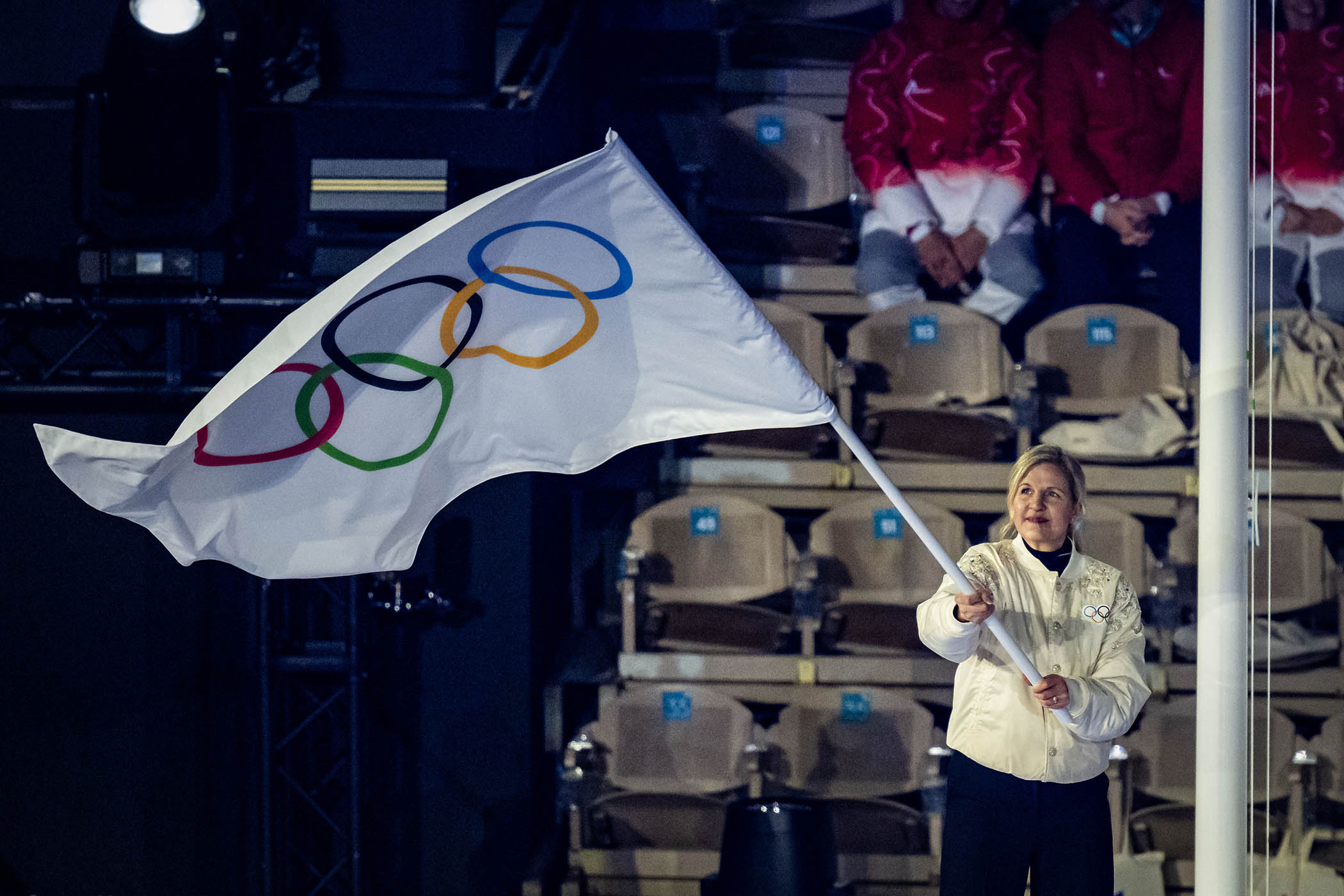
One direction. Kirsty Coventry, the president of the IOC, had already hinted that Russia and Belarus may return to the 2028 Summer Olympics in Los Angeles. The stage had been set before the Winter Olympics, when Coventry said sport should be a “neutral ground”. Now it has been furnished by the return of Russian and Belarusian flags to the Winter Paralympics.
And you? Coventry’s position is only one step ahead of that of the Fifa president Gianni Infantino. Fifa and Uefa banned Russia from football competitions in 2022 but Infantino said this month that it had “achieved nothing” and only created “more frustration and hatred”.
And yet… Initial reactions to the Paralympic news show the frustration that is generated when bans are lifted. No Ukrainian officials plan to attend any events at the upcoming Games, while the country’s athletes say they will boycott the opening ceremony.
Photograph by Kevin Voigt / Getty Images