
This article first appeared as part of the Daily Sensemaker newsletter – one story a day to make sense of the world. To receive it in your inbox, featuring content exclusive to the newsletter, sign up for free here.
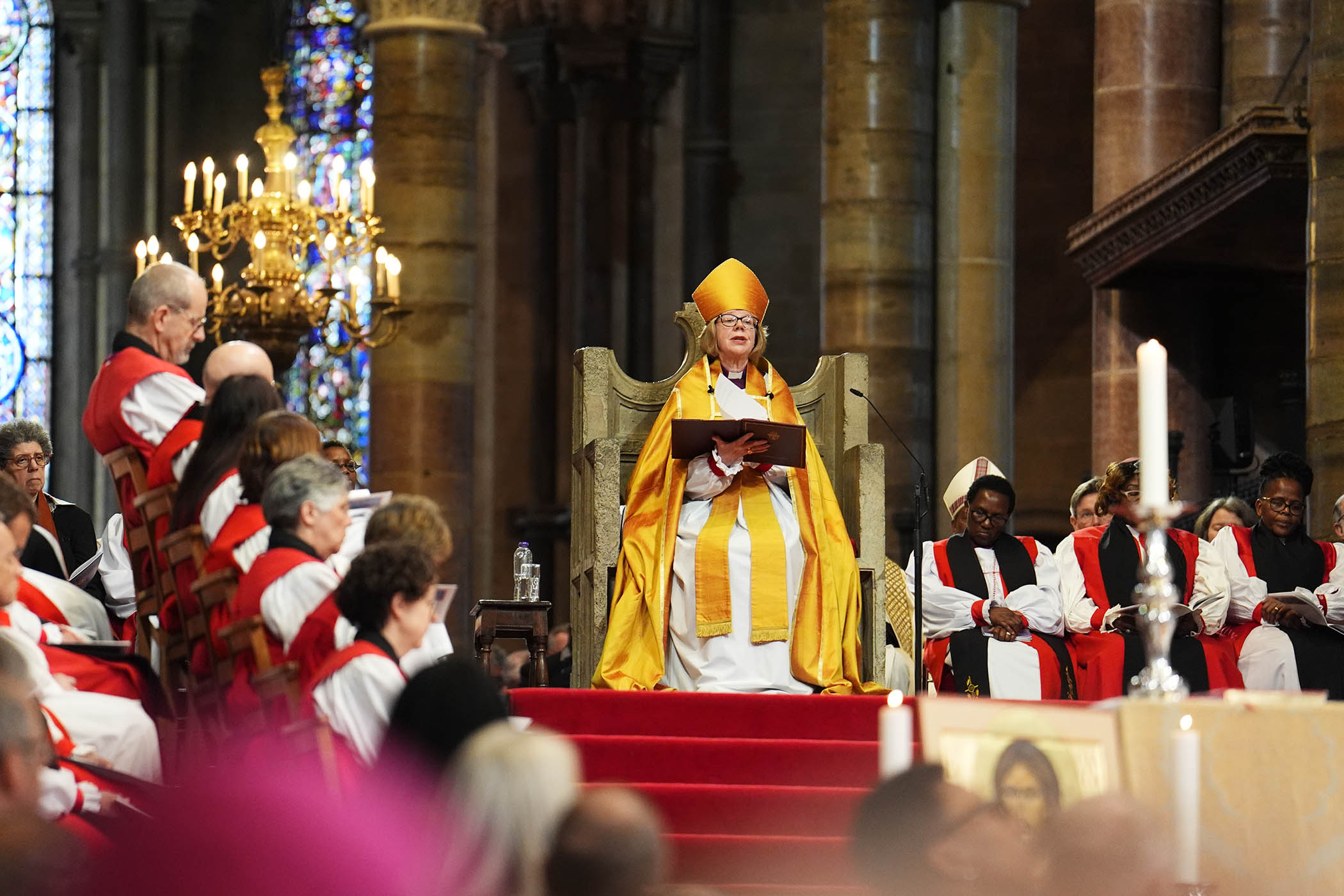
Sarah Mullally has been enthroned as the 106th archbishop of Canterbury, making her the first woman to take up the position in the 1,400-year history of the role.
So what? She will lead a church that is bruised and fractured with flecks of hope. The Church of England didn’t even allow women to become bishops until 2014. Now it has chosen a trained midwife and former cancer nurse to guide an institution through
•
the long-term decline of church attendance;
•
major schisms in the global communion; and
•
doubts over its ability to reform after abuse scandals.
Pomp and circumstance. Yesterday afternoon, on the Feast of the Annunciation, Mullally knocked on the door of Canterbury Cathedral to seek admission. The 64-year-old walked from London to Canterbury over six days to mark the journey to her new role. In a service attended by 2,000 people, including Prince William and Keir Starmer, Mullally was enthroned in two chairs that symbolise her duties as a diocesan bishop and the Church’s highest-ranking bishop.
First among equals. A third chair could have represented her responsibility as head of the global communion. A 2001 review suggested that the archbishop actually has six jobs.
At the pulpit. Mullally promised that the Church would serve “the whole nation and for the world”. She also said that “we hold victims and survivors in our hearts and in our prayers”.
Some context. In early 2025, Justin Welby stepped down as the archbishop of Canterbury. This followed a review that said Welby “should have done more” to stop John Smyth, a barrister who abused schoolboys at Christian holiday camps in the 1970s and 1980s. Welby denied any knowledge, but resigned “in sorrow with all victims and survivors of abuse”.
Successor search. It took nine months to find his replacement. Mullally was chosen by a 20-member panel chaired by a former head of MI5. She worked as a cancer nurse in the NHS before becoming chief nursing officer for England. She was ordained as a priest at 40.
Mixed blessings. She now leads an Anglican community that is both shrinking and growing. Sunday service attendance in England fell from roughly 3.5% of the population in the 1960s to just over 1% in 2019. Conversely, the global communion has doubled in size in 50 years.
Filling pews. A bright spot for the Church at home is evidence that suggests there has been a mini religious revival in England and Wales. YouGov polls from 2024 found that
•
the proportion of adults who describe themselves as Christian, and attend a church service at least once a month, rose from 8% in 2018 to 12% in 2024; and
•
the proportion of those aged 18-25 who do so rose from 4% to 16%.
Why this matters. The Church of England relies on voluntary local parish donations for 75% of its operating costs. Hundreds of churches may be forced to close within five years due to repair bills. People need to see the value of the institution to put their hands in their pockets.
Large and unwieldy. The expanding global flock, which numbers around 100m, is a bright spot for the Church. But Mullally may struggle to unite it. Many new adherents are from sub-Saharan Africa, where there are theological differences on gender and sexuality. The Global Anglican Future Conference, mainly made up of African and Asian churches, fell short of electing a rival leader to Mullally this month but did create a council to challenge her authority.
To note: The Church of Nigeria is larger than the Church of England.
North star. Both domestically and globally, Mullally needs to restore the reputation of an institution that has previously failed to protect people from abuse. The new archbishop has described safeguarding as a “non-negotiable responsibility”.
However, it is not clear if everyone has got the memo. Last year the Church decided not to adopt a fully independent safeguarding model.
Photography by by Jordan Pettitt/Getty Images
Newsletters
Choose the newsletters you want to receive
View more
For information about how The Observer protects your data, read our Privacy Policy