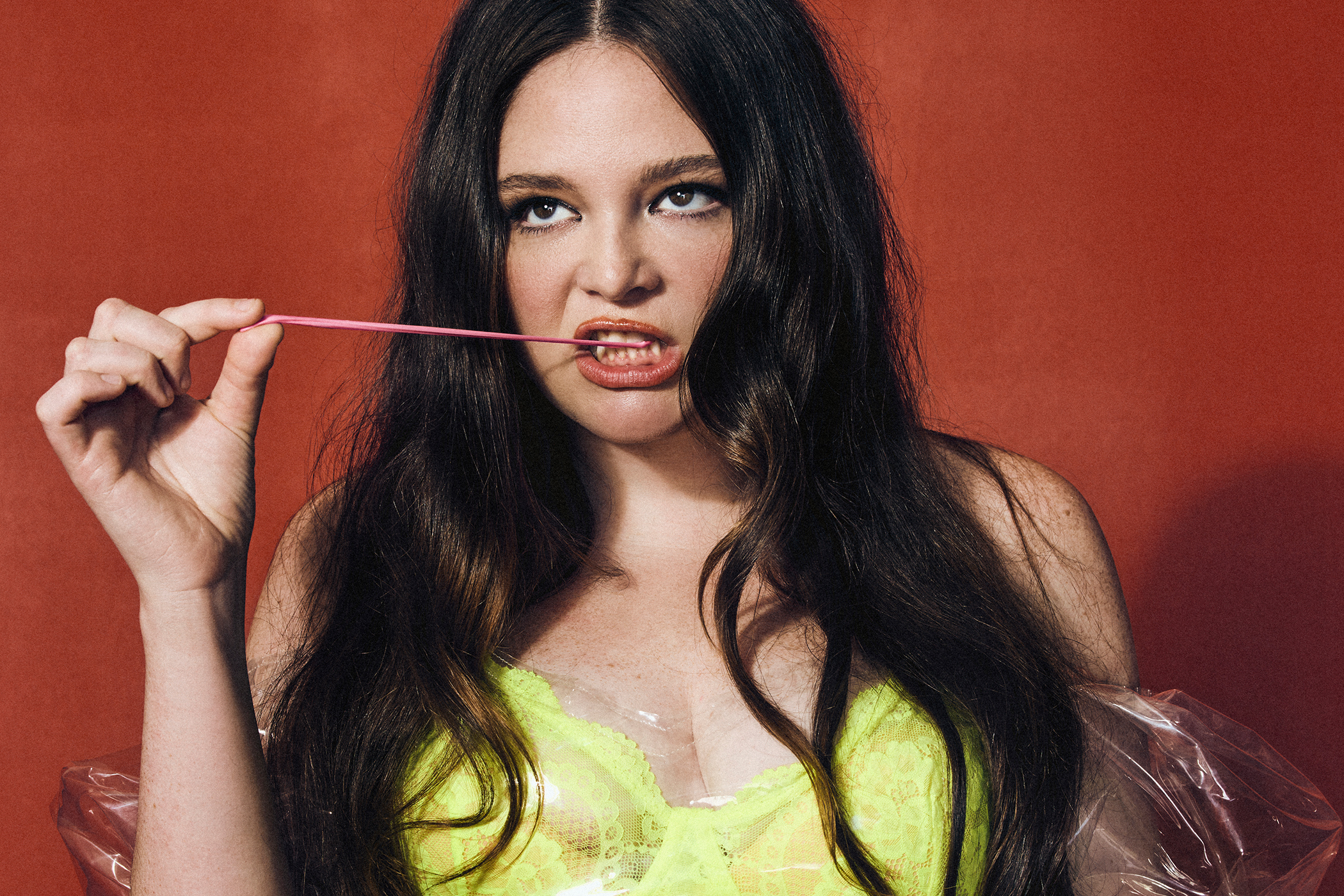


The comedian Meg Stalter looks like a doll but performs like Chuckie. Like many of her fans, I first fell in love with her in 2022 through her Instagram comedy, in which she is outlandish and abrasive, lovingly poking fun at delusional celebrities and capitalist conglomerates. In one video, she satirised companies that co-opt the language of Pride to sell products; her character was an anxious employee reading off a script. “Hi, Gay!” she began. “Happy Pride month! This month we are sashaying away with deals…” I cackled on the bus, and then solidly across the four years since, every time I saw Stalter perform versions of that character – stuttering, faux naive – and whenever I noticed examples of the things she’d been lampooning: a hastily yassified logo, a hand soap claiming allyship. Her jokes merrily tore holes in the expensive veil of corporate desperation, allowing in a beam of sanity.
Soon after Stalter became internet famous, Lena Dunham picked her as a muse. Writing her into last year’s romcom series Too Much seemed to audiences like the closest thing to casting herself. They share a pop-cultural literacy, a contagious zaniness – to place Stalter in the cultural moment, imagine her as Dunham 2.0, only louder. Promoting Too Much, Dunham remembered an interview during which they were asked how they felt when body shamed online. Dunham started to give a sincere answer, but “Megan just said, ‘If you want to leave a comment on my Instagram that says that I’m fat, let’s face it, you’re in love with me and you want to have sex with me.’”
At 35, Stalter has become a bonafide modern celebrity famous for both mocking and delighting in celebrity culture. In her online comedy, her porcelain prettiness frequently cracks to reveal the character she’s created has an ego the size of Spain. She explains her work to me today with the guileless quality of a cheerleader. “The thing is,” she leans in, “I don’t mind if I make people awkward.”
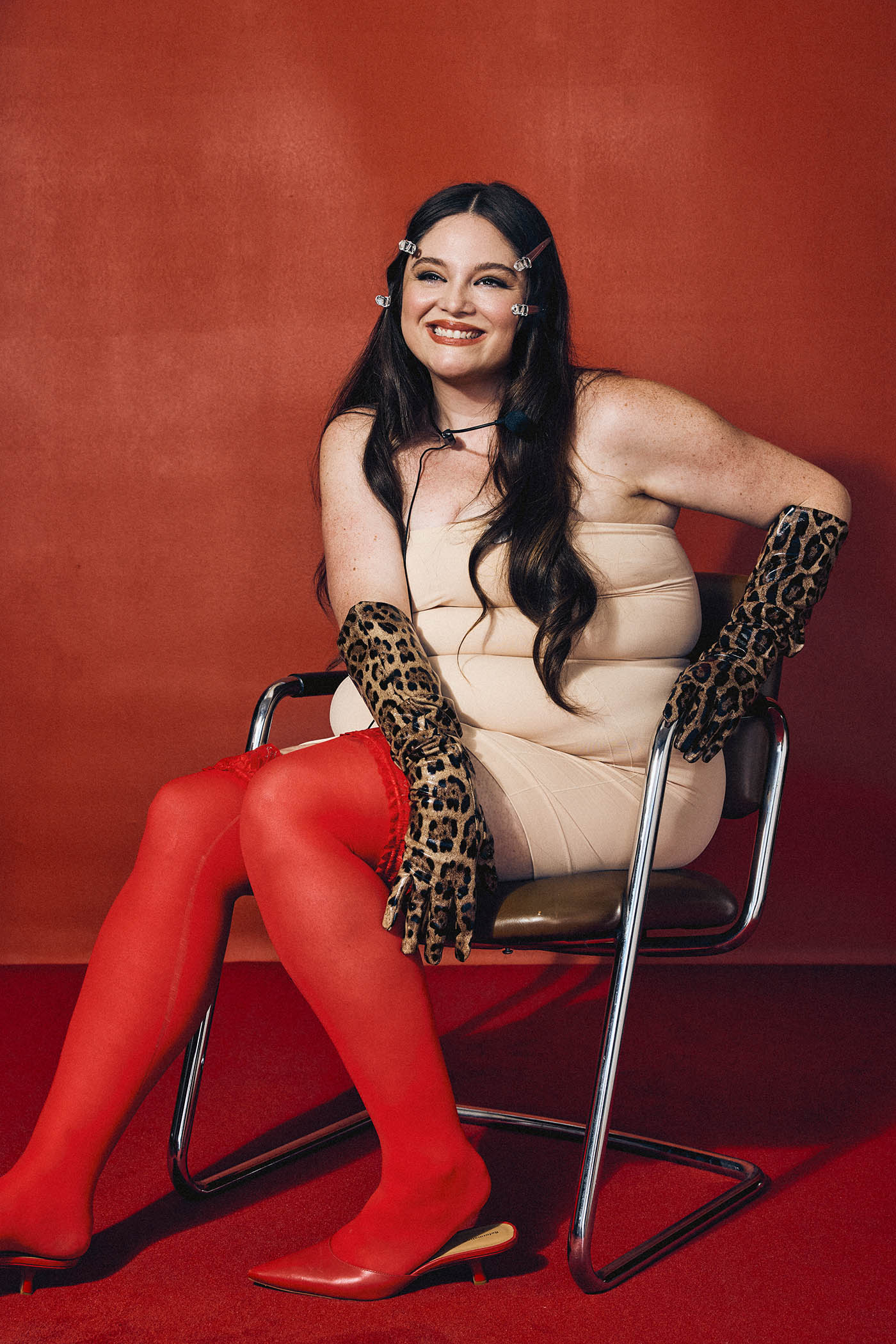
‘If you want to leave a comment on my Instagram that says that I’m fat, let’s face it, you’re in love with me’
I had wondered, as I waited for her camera to switch on, whether our conversation would be awkward, too. In recent interviews and promo bits Stalter has arrived in character. Often she leans into the idea of the bratty starlet, entitled yet adorable, bringing glee and a welcome chaos. In March, while she was meant to be presenting an award with the Hacks’s co-creator Paul W. Downs, Stalter launched into an acceptance speech for their “comedic work” in the tragic blockbuster Hamnet, before Downs quietly told her their scenes had been “cut”. She became rabid, apoplectic… They cut us? The camera panned to director Chloe Zhao’s bewildered smile (neither Stalter nor Downs had ever been part of the project, of course), and then to a celebrity audience witnessing the coronation of a new queen of cringe comedy, fully committing to the bit.
These sorts of events have started to happen regularly: Stalter picking a moment from the cultural lexicon and lambasting it. If superstar couple Timothée Chalamet and Kylie Jenner pose solemnly during awards season in matching tangerine leather, attracting many thousands of column inches, then so do Stalter and Downs, who turned up on the Critics Choice Awards red carpet a few weeks later in hastily made replica outfits. (When reporters asked about the inspiration behind their looks, Stalter said they’d borrowed their outfits from “close friends”.) Bits like this are about performance, attention, the marketing of art, fame and beauty, the absurdity of Hollywood. And they are hilarious.
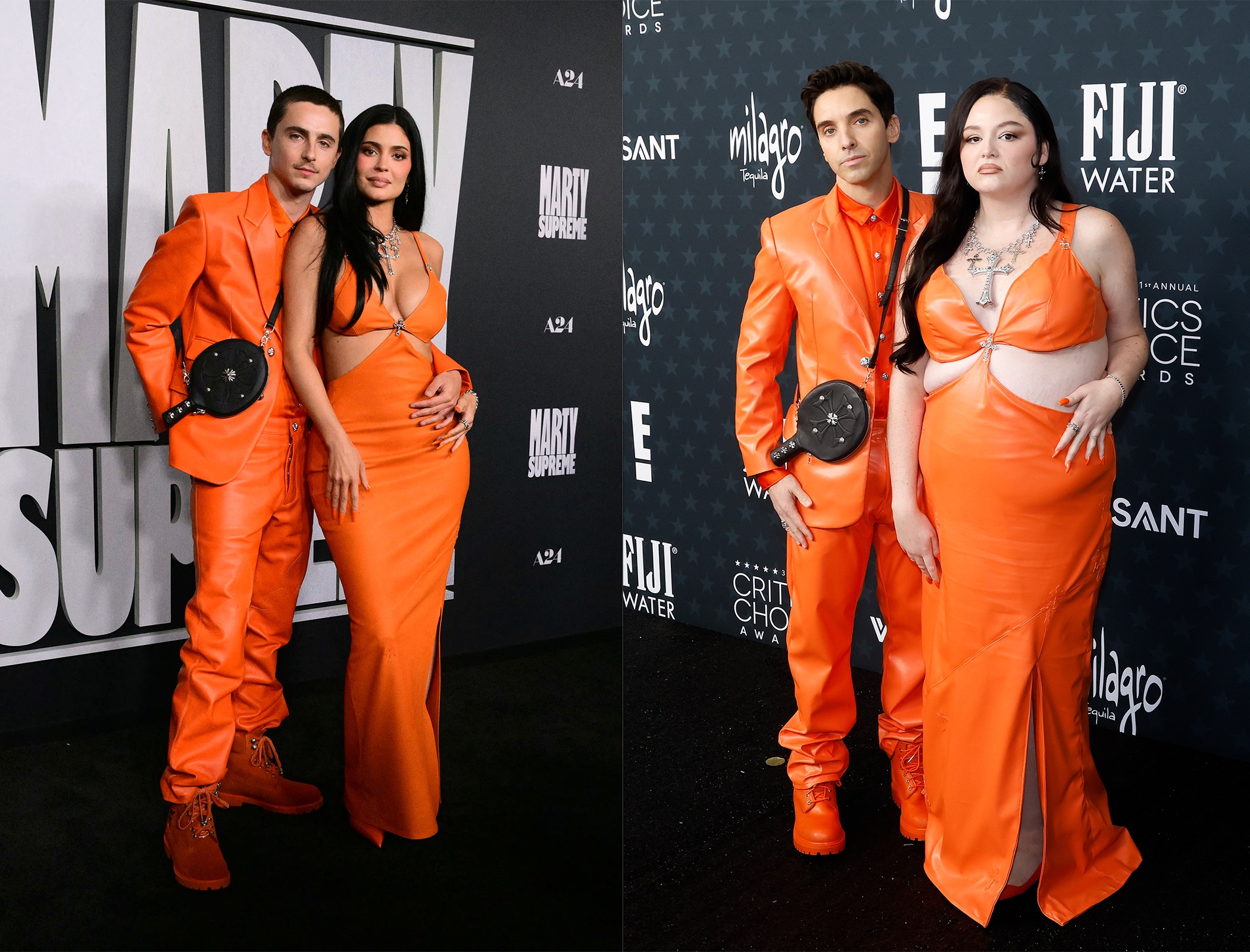
Timothée Chalamet and Kylie Jenner on the red carpet; being parodied by Paul W. Downs and Stalter
Who would I be meeting this LA morning? Would she lean into the awkwardness, or the outlandishness, or give me a sweeter self? I was prepared for comedy, for a character, for a bit. What I got instead, from an actor now famous for her bisexuality, unabashed comedy, and shows titled, for instance, The Wild Wet Freak Nasty X Rated Late Show with Meg Stalter, was infinitely more surprising.
She looks angelic, actually, when she appears from her office in front of long pale curtains that accidentally frame her as if onstage. Winged eyeliner, high ponytail, the broad white smile of a beauty influencer. It’s shocking that Hacks, the final season of which ends next month, was her first real acting job. Through a story about a Las Vegas standup legend (played by Jean Smart) and the young TV writer sent to reinvigorate her career (Hannah Einbinder), this perfect comedy has won Emmys and a Peabody, propelled Smart, Einbinder and Stalter to new levels of fame, and equal parts satirised and validated the industry in which they thrive. So often Stalter steals the show as sweet, delusional talent manager Kayla, who calls her boss and clients “girlie” or, affectionately, “bitch.”
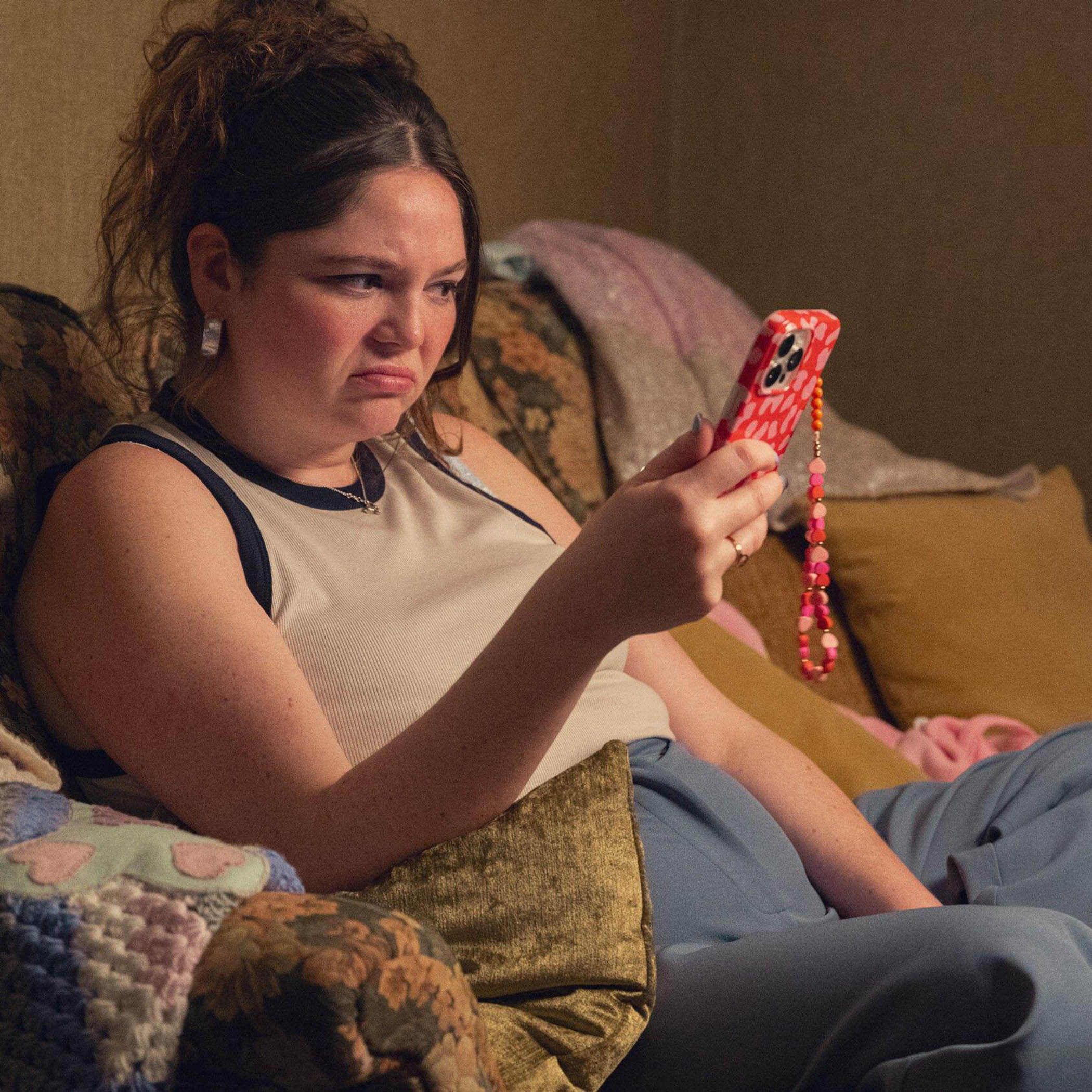
As Jessica, the heartbroken protagonist in Lena Dunham’s Netflix series Too Much
Kayla is recognisably a Stalter creation: impossibly confident yet secretly nervous, a contradiction Stalter contains herself. “I always like to make fun of things that I am,” she says, sunnily. In Hacks, and as Jessica, the lead in Too Much, she plays characters that other people think are “a lot to handle, in completely different ways. In my own life, I know I’m not everyone’s cup of tea” – the awkwardness, the emotion, the goofiness that she believes is welcomed in boys though rarely in girls, seeming to be too much. “But playing someone that’s also that way helps you really fall in love with yourself.”
Growing up in Cleveland, Ohio, her mother a nurse and father a tattooist, she had a lovely time making funny videos at home with her three siblings, but was bullied at school for her nerdiness – the popular girls “tortured” her, she says – eventually finding solace in the drama club. Since she was a baby she’d attended the local Pentecostal church with her grandmother, and as a teenager she joined their six-month mission to Peru. Her group would choreograph dances they’d then perform in the street – “I felt incredibly moved by the performances” – and then take turns getting up in local churches and preaching. I ask if there is a thread between her early preaching and her stand-up. “No?” she says, almost confused, and I wonder for a moment if I’ve offended her. “It’s not a performance, but it is a presentation,” she says. “When I did mine I was in tears! I wasn’t trying to be funny. I was really emotional and trying to share what was in my heart and how God has changed my life. So no, it didn’t feel like stand-up.”
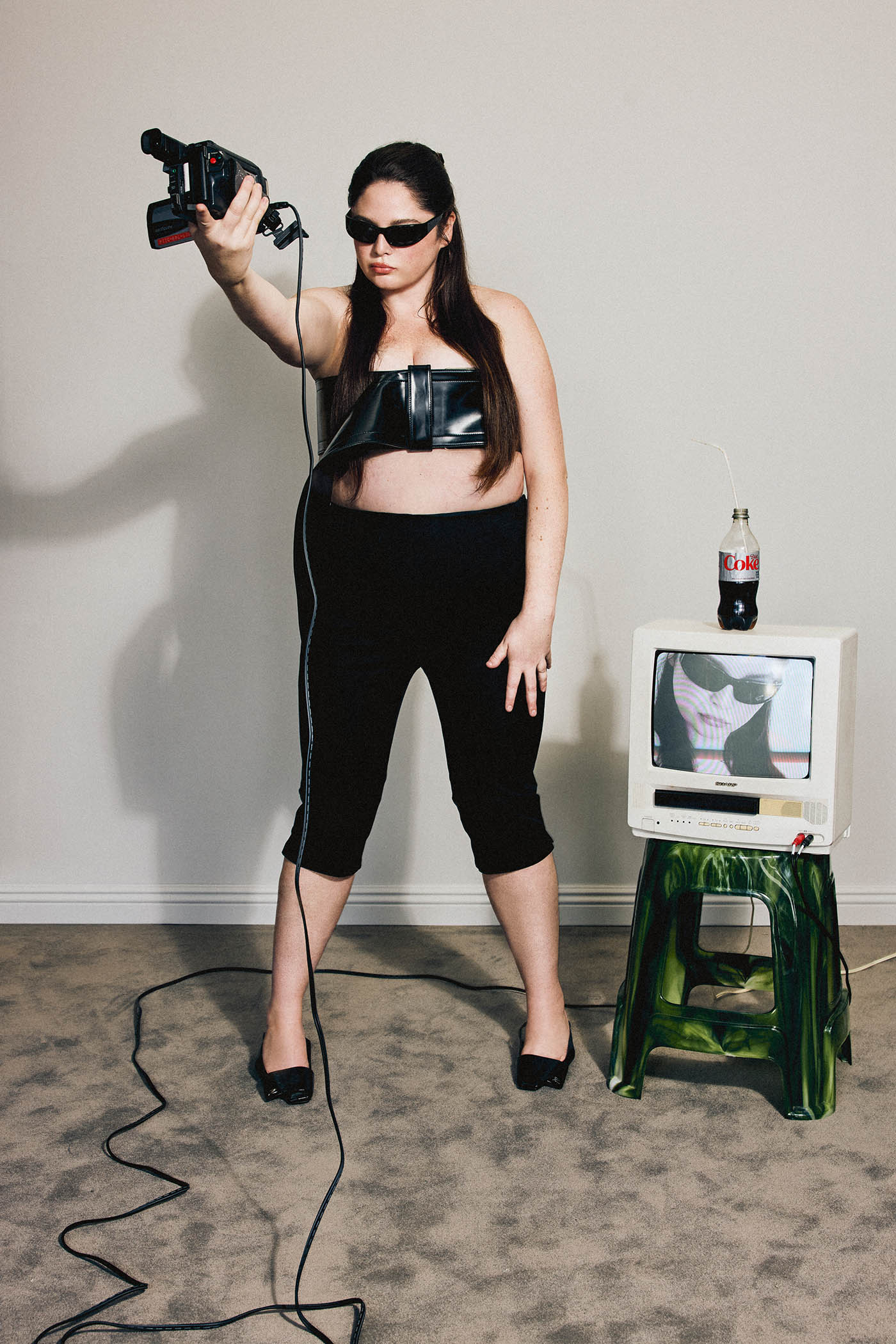
‘I always like to make fun of things that I am. ’
In college Stalter wrote an essay about her relationship with God and her lecturer said it read like a love letter. Stalter remains a proud, vocal “God girl,” which shouldn’t feel like a conflict of course, but for the unsuspecting fan of her anarchic performances (perhaps even more so for the unsuspecting British fan), it can make you stumble. For her, I discover, the choosing of comedy and the choosing of Christianity are intrinsically linked.
Newsletters
Choose the newsletters you want to receive
View more
For information about how The Observer protects your data, read our Privacy Policy
On her return from Peru, Stalter started studying nursing, but it “didn’t click”. She wanted to be on stage. In her early 20s she moved from Ohio to Chicago, where she took improv classes, then to New York, where she immersed herself in the alternative-comedy scene, dipping in and out of different churches on Sundays. “Choosing to do comedy made me feel even closer to God,” she says, “because I felt like that’s what I was meant to do. And then I realised I was a queer person, and I just felt more in love with myself and more accepting.” She met her “hot pretty kind perfect” girlfriend on a dating app, and identifies as bisexual, “but mostly gay”. During the pandemic she found what began as a quiet fame, sharing sketches featuring defensive white women who peppered their speeches with malapropisms, and later of pop stars creating inane content. Her life began to change.
When Paul W. Downs ended up on a standup show in LA with Stalter, he was already a fan of the specificity she brought to her Instagram comedy, but it wasn’t until he saw her live he realised she wasn’t just a comedian, she was “a brilliant performance artist.” Comedy is not only a career for her, he says, “it’s a calling.” He cast her on Hacks as his inept assistant-turned-manager, with the two going on to collaborate off-set on their mischievous red carpet skits. “I have never broken more,” he told me, than “in a scene with Meg.” In January Stalter deleted TikTok, where much of her comedy lives, when it appeared to censor videos calling out ICE, and Downs was awed by her “commitment to justice”. The only thing more special than her comic genius, he said, “is her goodness.”
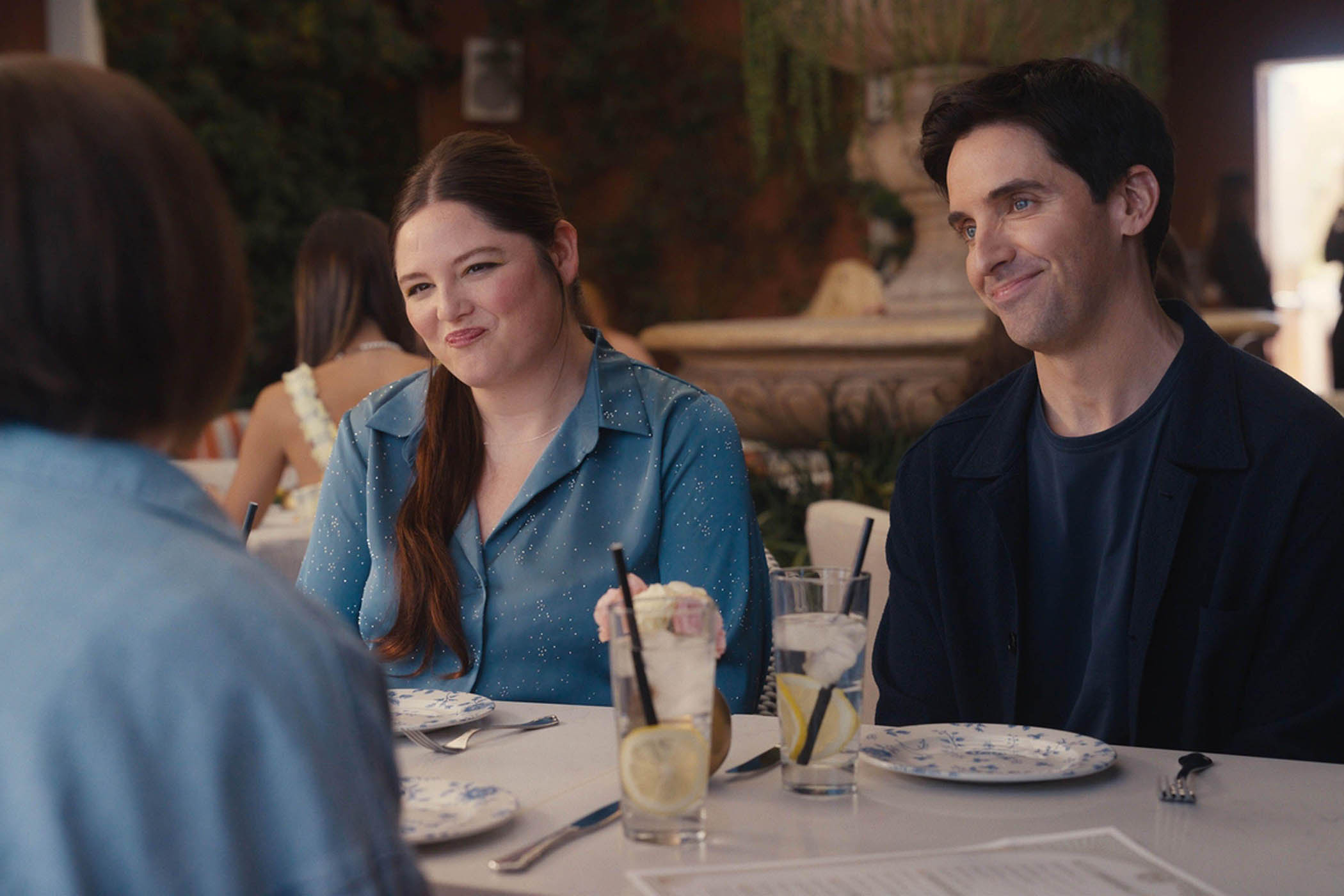
In Hacks, her breakout role, as delusional assistant Kayla, with writer and co-star Paul W. Downs
In amongst her comedy on social media, there’s one video that is not like the rest. Stalter pleads, as “a gay Christian person”, for other people of faith to take a stand against US Immigration and Customs Enforcement following the killings of Alex Pretti, Renee Good and Keith Porter Jr. “If you are someone who identifies as a Christian but supports ICE or the president, I want you to remember that Jesus was executed for challenging the system,” Stalter said, in tears. “His life and teachings directly threatened the religious, economic and political power structures of his time, and he was murdered. If you are a follower of Christ, I strongly urge you to follow what the bible actually says.” Quoting scripture, she read, “‘When a foreigner resides among you in your land, do not mistreat them… Love them as yourself, for you were foreigners in Egypt. I am Lord, your God.’” It was out of character for Stalter in that it was literally not a character, no awkward jokes or stumbling attempts to connect, just a weeping call to arms. “We have to abolish ICE,” she said, “I truly, truly believe that is exactly what Jesus would do.”
Her life, she said, has been made up of deals made with God. This was one of them. “It’s important for people to speak out about their faith, because there’s a lot of Maga people using their Christianity to support evil acts,” she says today. As her profile grows, she adds, it feels increasingly important as, “somebody that is totally against that and against Trump, to say they’re Christian and gay. It’s not fair to use God as a weapon.” After she posted the video in January, she received some hate, yes, but largely support from “queer people that love God”, and she wondered what they could do, how to harness, or overcome the moment. Back then, “I felt like I was kind of having a breakdown over everything that was going on. I was so overwhelmed, feeling like we have to be screaming in the streets about Epstein and ICE, and God is literally my only answer. So that’s why I was called to have a prayer group.”
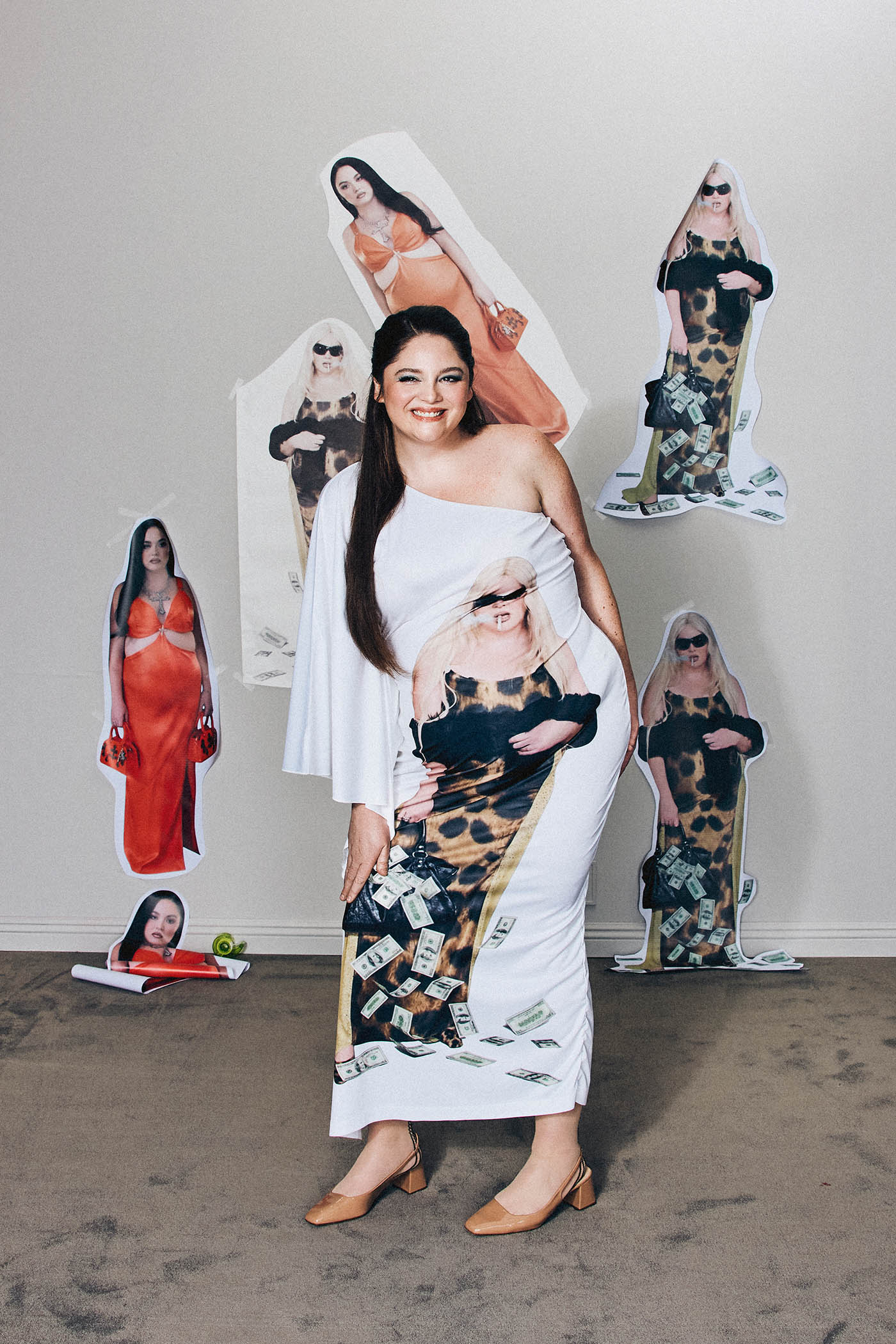
‘People are excited about exploring faith, because ultimately everyone wants community and connection to something bigger than ourselves’
She found a space in LA, and sent out an open invitation to the respondents to her video – sweet, earnest strangers arrived, “and we prayed together. It felt really powerful, but it also felt really healing to see other people that were as frustrated and angry as you and be able to make that into positive energy.” They asked each other, ‘What’s one thing you’re going to do this week to bring positivity?’ They cried together, they embraced.
And how did it feel going from an emotional prayer meeting like that back to her ritzy new Hollywood life? “We talked about that in the group! Sometimes it’s weird to be in two really different worlds, not just the prayer group, but specific to what else is going on in the world. To go on a red carpet and be with people whose lives are so charmed and then see what’s going on in the real world feels insane, like we’re in The Hunger Games.” She strokes her ponytail thoughtfully. “That’s why I like to do something silly on the red carpet – you can fight these things with joy and community, but you also have to acknowledge what’s going on in your privilege.”
The Hollywood stuff is new enough to still feel pleasingly nuts. “It’s so strange!” she says, high pitched, “It’s so weird!” To walk past Chalamet and Jenner in her orange plastic outfit, “and be like, wait, we’re being silly, but they’re right there. And when me and Paul presented at the actor SAG Awards and Gwyneth Paltrow was watching us? It’s weird and funny and bizarre.” Will it ever feel normal? Does she want it to? “I don’t think anybody feels normal in those places. You can’t feel normal when right over there is Leo eating his salad. It’s not that I’m starstruck. It’s more like… you’re on a different planet.”
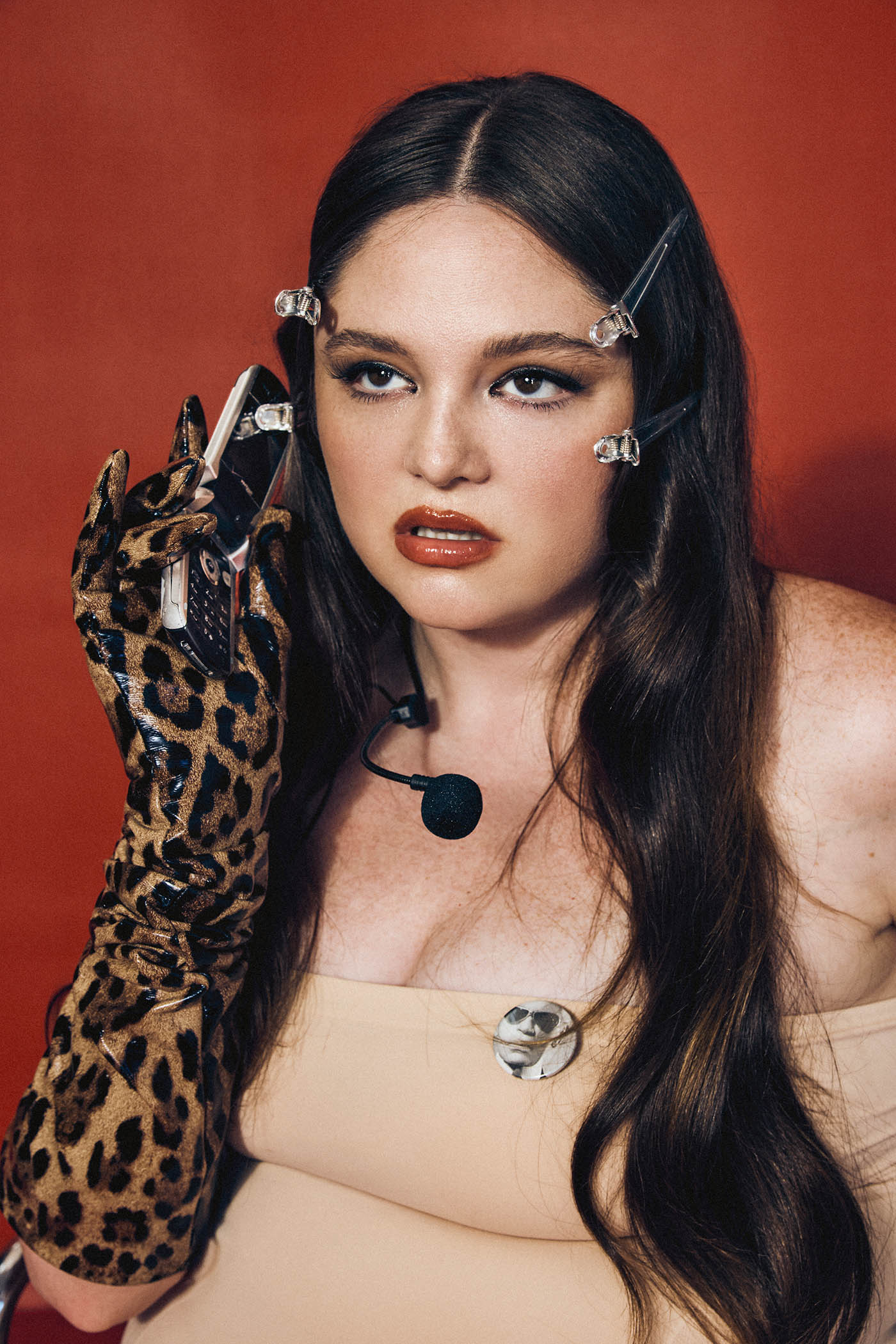
‘That’s why I like to do something silly on the red carpet – you can fight these things with joy and community, but you also have to acknowledge what’s going on in your privilege’
Has it affected the way she returns to earth? A while ago, in a moment of typical wisdom, Tina Fey warned that for people in the public eye, “authenticity is dangerous and expensive.” Opinions? Politics? Faith? Celebrities should keep quiet, Fey said, or their professional relationships and future careers will suffer. Does Stalter, now a celebrity herself, agree? She says she has two modes when engaging with the media. In video interviews or on the red carpet she’ll perform a character, which is fun and silly, and also “me showing parts of who I really am.” But sometimes, in interviews like this one, she decides that “talking about God is me being authentic.” She shrugs. Authenticity “can be expensive, but I think it’s worth it?”
Post-Hacks, Stalter is not ruling out a spin-off (the fans are requesting, no, demanding the Kayla/Jimmy show) but she’s also keen to act in serious drama, as well as produce a project called Church Girls. “Being able to write something really funny that also talks about my love of God and church in a loving light is really important to me. So that’s my biggest dream.” Has she met any resistance when she pitches work like this? “I think there’s some pushback, but I also find that there’s more people that are receptive to it. I feel people are very excited about exploring faith, even if they didn’t grow up that way. Because ultimately everyone wants community and connection to something bigger than ourselves.”
Before Stalter started talking about being a “God girl”, I’d assumed comedy and religion (the former often mocking authority, the latter often imposing it) were opposing obsessions, or at least I’d believed it was surely impossible to be good at the former while in thrall to the latter. Similarly, it’s rare to hear from queer people who, rather than being rejected by the church, felt empowered by it, and from religious people who broadcast Bible readings as acts of defiance against a rightwing administration. Stalter, awkwardly, thrives in contradiction. “I believe in Jesus and God and I’m gay. People definitely find that interesting, and confusing sometimes,” she says, kindly. While I was expecting a raucous character, instead I’m met with kind earnestness that upends my assumptions, and makes me think, ok, Church Girls is going to be amazing.
There were moments in the past when Stalter worried about having chosen a career onstage. When she quit her nursing studies she was conflicted, vaguely tortured – she desperately wanted to be a performer, but she was also intent on finding a career with meaning, on doing good work. As she spent more time in comedy, having wrestled with feelings of selfishness and guilt, the way she felt about performance and art started to change. Now, “I think that comedy helps people,” she says, twinkling. “And I know that because it helps me.”
Hacks Season 5 is available on Sky and NOW in the UK
Set Designer: Two Hawks at Exclusive Artists. Stylist: Kathryn Typaldos