

This article first appeared as part of the Daily Sensemaker newsletter – one story a day to make sense of the world. To receive it in your inbox, featuring content exclusive to the newsletter, sign up for free here.
The UK and France have offered to send troops to Ukraine in the event of a peace deal. Emmanuel Macron said the purpose of the force would be to “provide reassurance” to Kyiv.
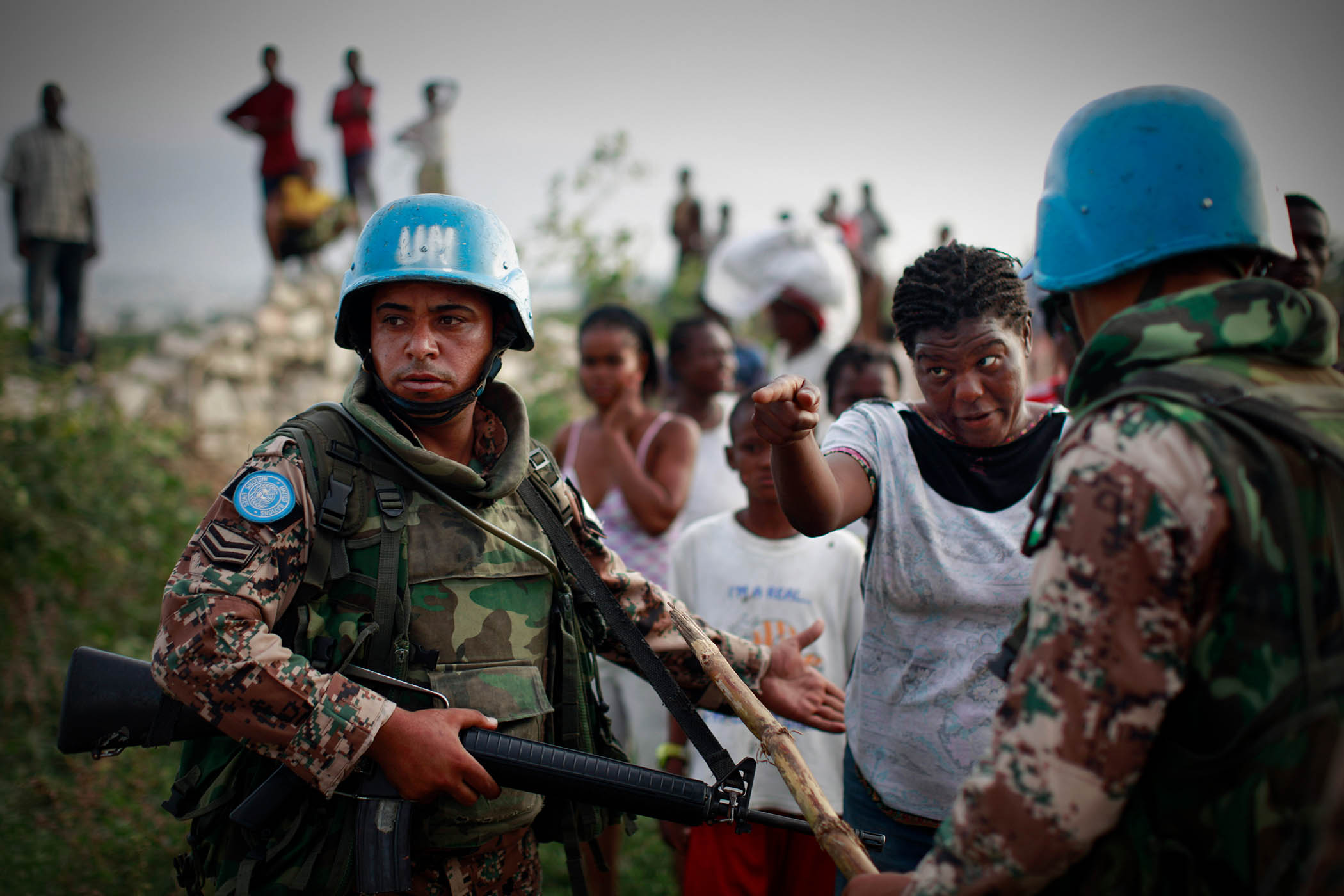
So what? Two decades ago, there might have been talk of sending UN peacekeepers to shore up a ceasefire. But in an era of geopolitical fragmentation, blue helmets are out of fashion and there has not been a new UN force since 2014. The proposal of national troops instead
•
reflects a broader movement towards ad hoc forces;
•
may not have a substantive effect in Ukraine; and
•
shows that multilateralism is ailing but not dead.
With a purpose. Peacekeeping is a core function of the UN, which was set up in the wake of the Second World War to prevent future conflicts. The first mission was formed in 1948, tasked with observing a ceasefire between Israel and Arab states. In subsequent decades, UN peacekeepers were deployed to Lebanon, Cyprus and elsewhere.
Good times. The heyday of the blue helmets was the 1990s, when the end of the Cold War brought a new era of international cooperation and multilateral interventionism. Africa was a focus, but there were also missions in the former Yugoslavia and Cambodia. UN peacekeepers monitored ceasefires, oversaw disarmament programmes and helped refugees return home.
And bad. Nearly 30 years later, the world is a very different place. There are more conflicts globally than at any time since the Second World War, but the UN Security Council, which signs off on deployments, is deadlocked. Its five permanent members have used their veto
•
49 times in the past ten years; compared to
•
19 over the previous decade.
At the seams. One of the Security Council’s members, Russia, is responsible for the biggest European war since 1945. Another, the US, recently captured the president of another sovereign state, and is threatening to annex Greenland. A third, China, has designs on Taiwan. Instead of preventing conflicts, they are helping to foment international instability.
Divide and conquer. With unilateralism and great power rivalry on the rise, the body has been unable to agree new missions. Haiti requested peacekeepers to help it combat gang violence, but China and Russia blocked the Biden administration’s attempts to assemble a force.
Losing purpose. Haiti is something of an outlier, with many countries no longer welcoming blue helmets. Peacekeepers are increasingly perceived as ineffective, on the grounds that
•
UN missions often lack clear mandates;
•
instability persists in nations such as Congo and South Sudan despite lengthy and expensive deployments; and
•
modern conflicts increasingly involve non-state, transnational groups, which blue helmets are ill-equipped to handle.
But still important. A 2024 study found that UN missions are cost-effective ways of reducing violence, preventing its spread and protecting civilians. “No one’s come up with a better way of helping belligerents end their wars when they ask for help,” says Paul Williams from George Washington University, one of the study’s authors.
Newsletters
Choose the newsletters you want to receive
View more
For information about how The Observer protects your data, read our Privacy Policy
Not a fan. During his first term, Donald Trump steeply cut US funding for UN peacekeeping. In his second he has ended virtually all support, forcing the UN to reduce its peacekeeping budget by a quarter. On Wednesday the US withdrew from dozens of UN bodies.
Way of the world. In the absence of UN peacekeepers, countries have pursued new models. Kenyan troops are in Haiti as part of a UN-mandated “gang suppression” force, while in Gaza there is talk of a ‘stabilisation force’ led by Muslim states. The proposed French and British deployment in Ukraine fits into this trend.
It is likely to be small. UK military officials initially floated the idea of sending 10,000 troops as part of a 64,000-person force. The current plan is said to be a contribution of 7,500 British soldiers out of a total of 15,000. France would contribute most of the rest. Reports suggest that the force would be stationed far from the frontline in western Ukraine.
Out of sight. This would limit their ability to impact the situation on the ground. By contrast, UN peacekeepers are neutral and tend to be close to the action as a buffer between belligerents.
What’s more... It remains to be seen whether France and the UK will be able to muster enough troops for even a limited deployment, or whether Russia will agree to it as part of a peace plan.
Photograph by Rodrigo Abd/AP