This article first appeared as part of the Daily Sensemaker newsletter – one story a day to make sense of the world. To receive it in your inbox, featuring content exclusive to the newsletter, sign up for free here.
The 61st edition of the Venice Biennale, one of the biggest dates in the art calendar, is inaugurated on Saturday.
So what? The art is taking a backseat. Even before it officially opens, the Biennale has become ground zero for a wider dispute over whether cultural institutions can remain neutral while wars rage in Ukraine and the Middle East. Questions for the Biennale include whether
•
art should be separated from the states that fund and present it;
•
national pavilions inevitably function as political instruments; and
•
there is a way to adopt a coherent position in a rapidly changing world.
The backdrop. The Biennale presents itself as a meeting point for global artistic exchange, but its structure is deeply national. Countries occupy permanent pavilions in the gardens of Venice, using culture as a form of prestige and international branding.
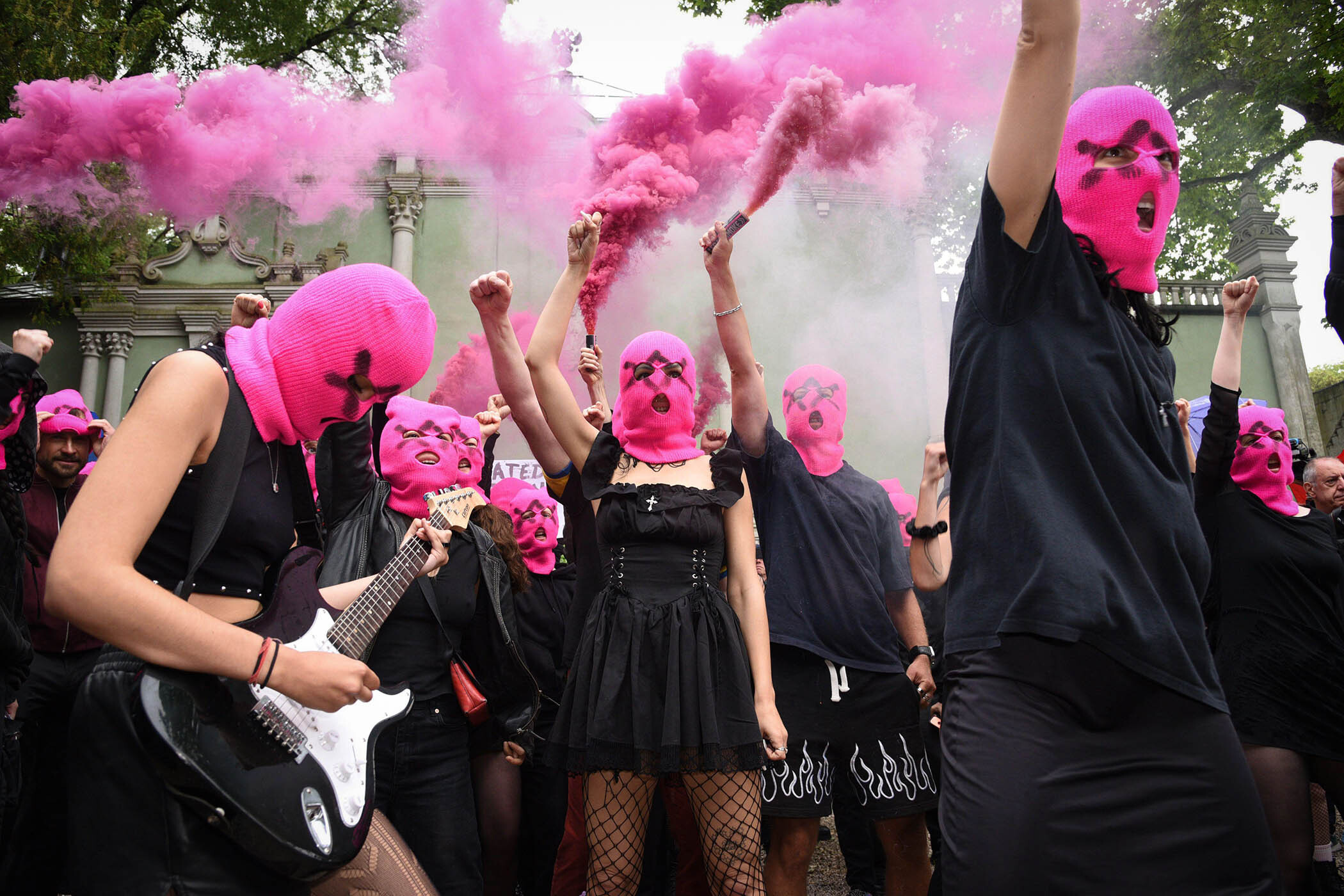
Russia is back. Moscow’s return to the Biennale for the first time since the invasion of Ukraine has triggered widespread backlash. Activists from Pussy Riot and Femen have staged demonstrations outside the Russian pavilion, accusing the exhibition of helping to rehabilitate the image of a state accused of war crimes.
Soft power. Protesters argue that Russia’s war is legitimised through culture and symbolic presence abroad, and that events such as the Biennale confer legitimacy and relevance.
Slippery slope. Others argue that excluding countries from artistic spaces turns culture into a political loyalty test.
The split. European officials have sharply criticised the reinstatement of Russia, with Brussels reportedly threatening to pull €2m in funding for the Biennale. Italy’s own political class is divided. Some ministers have boycotted events tied to the exhibition, while others insist that artistic institutions should stay open regardless of geopolitics.
Not in our name. The Biennale’s international jury stepped down after saying they would refuse to consider pavilions representing countries whose leaders face accusations before the International Criminal Court. The statement was taken to refer to Russia and Israel, which has also been subject to protests at the exhibition’s preview days.
Make up your mind. These resignations have exposed a contradiction at the heart of the Biennale, which sells itself as borderless and cosmopolitan, but remains organised around flags, pavilions and state sponsorship. There is no unified position on whether a pavilion represents artists, citizens, governments, or all three at once.
Give it to the citizens. Without a jury to award the annual Golden Lion prize, a people’s choice award will be chosen by visitors. The prize ceremony has been delayed until November, when it is expected to provide another contentious moment.
View from the organisers. Pietrangelo Buttafuoco, the Biennale president, argues that excluding countries based on political conduct would undermine the exhibition’s purpose.
View from the invaded. Across Venice, unofficial posters have advertised fictional events featuring Ukrainian writers and artists killed during the war. The implication is that Russia’s participation occurs while parts of Ukrainian cultural life no longer exist.
Familiar story. There was similar anger over the restoration of some Russian athletes to the Winter Olympics. Eurovision will take place next week without Slovenia, Ireland, Spain, Iceland and the Netherlands, who are all boycotting the competition over the inclusion of Israel.
Steady on. But turning art institutions, sporting stages and concert halls into moral tribunals creates its own risks. If participation is conditional on political virtue, questions emerge over
•
consistency;
•
who gets to decide the threshold for exclusion; and
•
whether artists and sportspeople should be punished for governments they may oppose.
What’s more… Venice’s Biennale is the ultimate test of the idea that culture can exist outside politics. The coming weeks are likely to show that it cannot.
Photograph by Independent Photo Agency/Alamy
Newsletters
Choose the newsletters you want to receive
View more
For information about how The Observer protects your data, read our Privacy Policy