
This article first appeared as part of the Daily Sensemaker newsletter – one story a day to make sense of the world. To receive it in your inbox, featuring content exclusive to the newsletter, sign up for free here.
Donald Trump says he has held off the “scheduled” bombing of Iran at the request of Gulf leaders, but has warned Tehran that the “clock is ticking”.
So what? It is ticking for the rest of the world too. Every day that the Strait of Hormuz remains closed, the economic pain deepens. News that Iran has cemented control with a body to manage the passage of ships, coupled with rapidly depleting oil stocks, points to
•
energy prices that risk spiralling even if the strait reopens;
•
economic damage that could lead to stagflation and food shortages; and
•
a US president who doesn’t understand that actions have long-term consequences.
How high? It depends. S&P Global Market Intelligence says Brent crude is expected to stay above $100 per barrel this year if Hormuz reopens in June. Others, including Donald Trump, suggest it could go much higher. “I thought oil prices would go to $200 or $250,” he told reporters this month. Wall Street has spent several weeks gaming out worst case scenarios, although the impact is not just about how high the oil price goes, but how long it stays there.
Down the barrel. Even though crude prices briefly reached $138 last month, $200 remains some way off. Analysts say energy supplies are more adaptable than in the 1970s. International Energy Agency member countries also released 400m barrels from oil reserves in March.
That said, the IEA writes, “the world is drawing oil inventories at a record pace as importing countries confront unprecedented disruptions to Middle Eastern supply”. There was a global surplus of oil at the start of this year, but the IEA predicts a major deficit by its end.
Question of timing. Predictions about how bad things will get are based on certain assumptions. S&P and the IEA have made their forecasts in the expectation that Hormuz will reopen in June. Analysts at Morgan Stanley say the oil markets are up against the clock as any measures to curb prices will begin to fall apart if Hormuz is closed into the summer.
Wishful thinking. JP Morgan has been criticised for a note asserting that there will be a resumption of flows in June as oil supplies will get too low. The bank argues that this will “force the reopening of the Strait of Hormuz, one way or another”. But even if you accept the logic of the argument, reopening Hormuz will not be like flicking a switch. Some damaged oil refineries may take months to recover. Risk premiums for crossing Hormuz are likely to remain high out of fear of Iranian threats and renewed hostilities.
Talk ain’t cheap. Besides, negotiations between Washington and Tehran are yet to yield any agreement to restore normal passage, despite Trump’s renewed threats and a US blockade of Iranian ports. The blockade has not been as successful as claimed. Data from shipping analysts at Lloyd’s List shows plenty of Iranian ships are making it through to carry oil, mostly to China.
Plan B. Other countries in the Persian Gulf are building supply routes to avoid the waterway, but these are sticking plasters. Trucks, railways and other shipping channels lack the efficiency and capacity of Hormuz, and some will take time to establish. The UAE recently announced a new oil pipeline to bypass the strait, but this won’t be operational until 2027.
Brace for impact. The continued closure of Hormuz will affect far more than just oil prices. It has the ability to slow growth and increase inflation around the world. Yesterday, in the UK,
•
job vacancies fell to a five-year low;
•
petrol costs rose to their highest levels since late 2022; and
•
the Treasury asked supermarkets to cap prices on basic groceries.
What’s more… Jorge Moreira da Silva, director of the UN’s office for project services, has warned that the closure of Hormuz could push “45m more people into hunger and starvation” if fertiliser doesn’t make it through this month. The world is in a race against time with a US president who says he is in no rush.
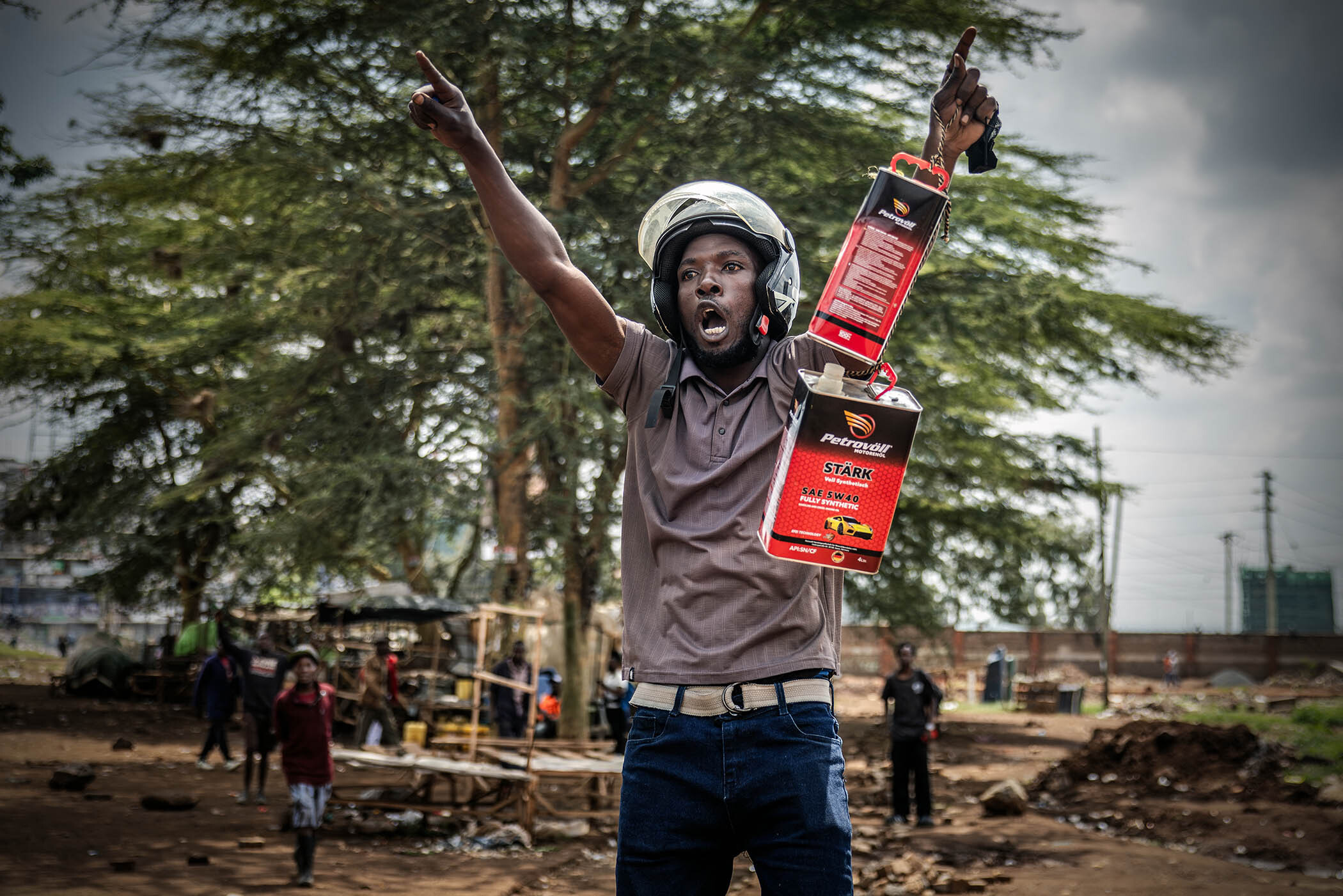
Photograph by Luis Tato / AFP via Getty Images
Newsletters
Choose the newsletters you want to receive
View more
For information about how The Observer protects your data, read our Privacy Policy