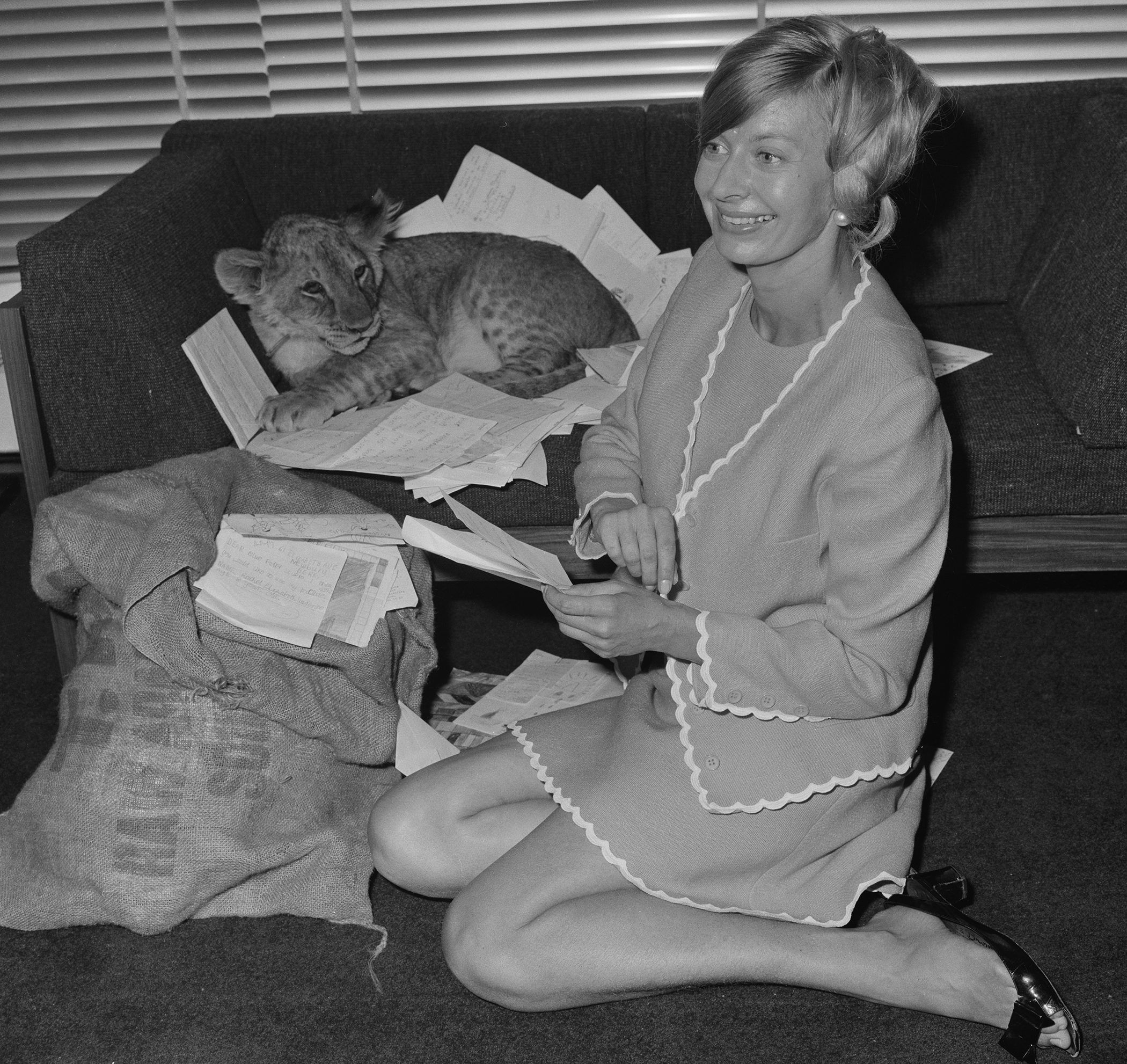

The name Biddy Baxter came up on the screen at the end of every episode of Blue Peter, of course, but she was unique really for being a producer that everybody knew about. I’d always imagined her as a little cardiganned person; slightly cosy and perhaps with spectacles pushed to the top of her head. We met when I auditioned for the programme in 1983, and there was this soigne, rather beautiful woman, with her long blonde hair caught up in a chignon, and gobstopper earrings and pink frosted lipstick and high heels. Not my Biddy Baxter at all!The studio was her real passion. Between the live shows we went off filming across the length and breadth of the land. But to Biddy the studio broadcast was by far the most important element. When I became a Blue Peter presenter in 1983, it was still a very male-dominated place though, so her approach with all these blokes was very much “the velvet glove”. She would say: “Could you be a clever little lighting designer and give me a little more here?”
We didn’t talk about our lives outside the programme and Biddy didn’t ever come to the pub after the programme went out. There was the occasional end of term “do” in the Blue Peter garden, but she never invited us over for Sunday lunch or talked about her life, or asked about ours. At the time it didn’t occur to me that it was weird. I don’t even know if she had hobbies. She might have been a secret poker player; she would have had the chops for it.
She grew up in Leicestershire as Joan Baxter, but when she got to school there were already loads of Joans in her class, so they chose this nickname for her on the spot and she never changed it. She was an only child and probably one of the things you can attribute to her, without being the least bit sexist, is that she was stubborn. She was used to doing things a certain way and if someone challenged her, she would have to think her way around it. Some of the male presenters had problems with her, I know, and I wonder now if they just didn’t like being bossed around by a woman. On screen there was absolutely no sexism allowed, but from time to time Biddy would take me aside and ask if I could make sure “the boys” came back from lunch on time, so I did have a sort of head girl role.
Biddy oversaw the warp and weft of the fabric of all the 80 or 90 shows we put out every year, although other people wrote the scripts and about 75 per cent of the ideas were viewer-generated. It’s a terrible phrase, but it was a happy ship. I was not aware of the bullying other people accused her of later. She was a tough woman, yes, but I’m always careful of my adjectives around her, because other people were just as tough and I don’t want her to be defined by that. It was because she loved the programme so much and it was actually great that she set that high standard. If she did occasionally say “Well done!” to you, it mattered because her praise was incredibly sparing.
The viewer was the most important person and she was always keen that the programme should never look like a party the viewer wasn’t invited to. Our obligation to the audience superseded anything fancy we might feel about ourselves.
I kept up with Biddy afterwards and she sent me a really lovely note when my first book was published. She didn’t have kids and was exactly the same age as my mother. I suppose i t was a sort of “courtesy” relationship really, which was rather nice and not one I’ve had with anyone else.
Not to be too whimsical about it, but I suspect the kind of child she liked best was the little person sitting at home who was like her; her inner Joan – someone who wanted to watch this programme and to receive a special letter if she ever wrote in, because, famously, no child ever got the same note back twice. Whenever Biddy talked about the viewer it was definitely in the singular and she made it clear how important it was to get through the glass screen to them.
She was awarded an MBE. I was always surprised she wasn’t made a dame.
She was extraordinary.
Photograph by Getty Images
Newsletters
Choose the newsletters you want to receive
View more
For information about how The Observer protects your data, read our Privacy Policy