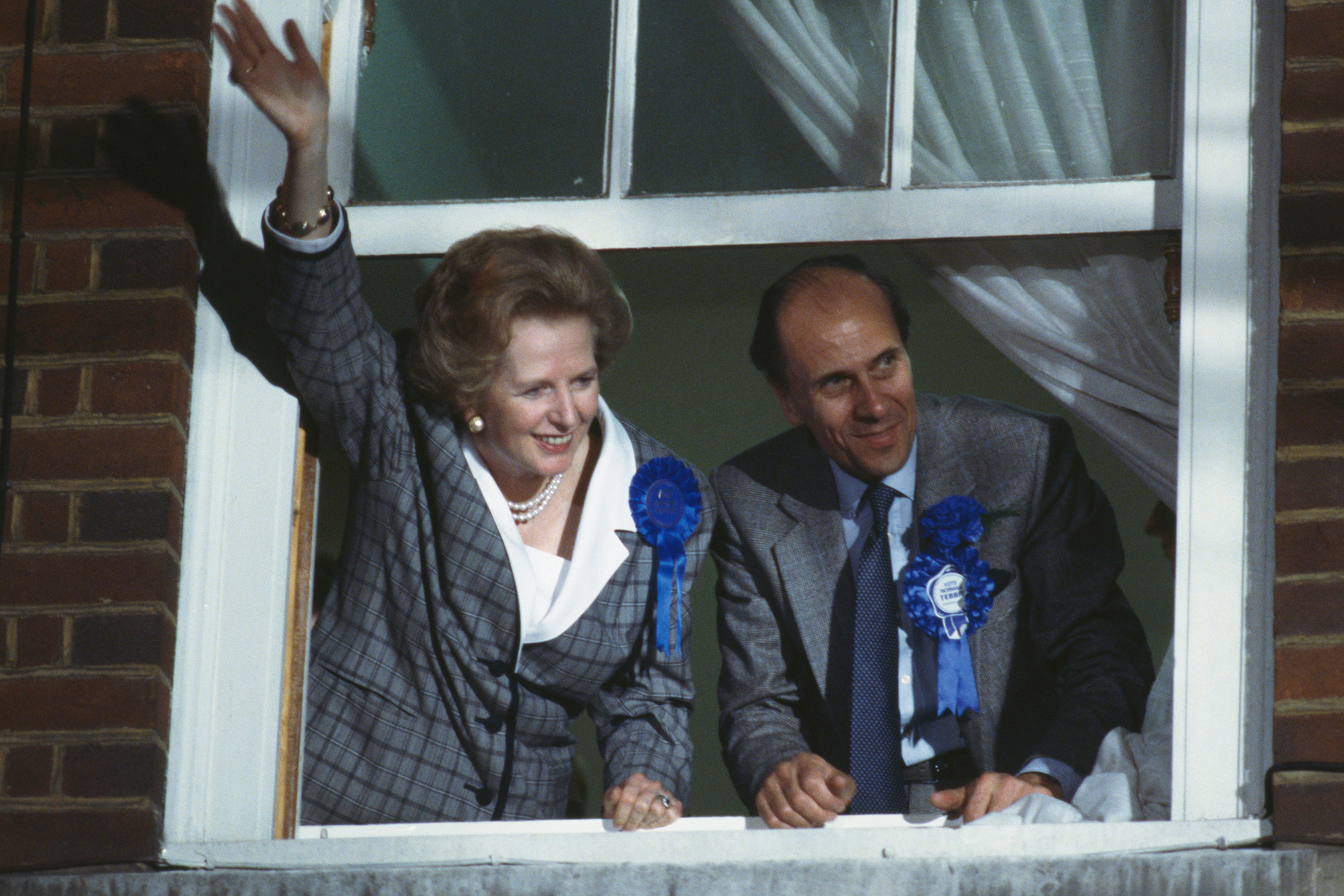
Norman, on first meeting, was almost intimidating, but this was a sort of illusion. The contrast was the way he cared for those people close to him, to soften his popular image. The best example, of course, was the way he looked after his wife, Margaret. Everyone knows he did so after she was injured in the Brighton bomb, but he also did so earlier, when she had serious depression after childbirth. Norman was unbelievably caring; a much gentler person privately. That didn’t mean, though, that if you went out for a boozy lunch with him, he wouldn’t be acerbic and sharp-edged. We got on very well long after he was in government. We had lunch about every six months in a little place in Chelsea and he would be very funny.
Norman didn’t hesitate to tell people when he thought they weren’t right. He had initially supported John Major, as did I, but they quickly fell out, mostly over Europe. I don’t think he thought Major was up to the job, whereas I feel he dealt well with a difficult time. I don’t think Norman liked William Hague much either, but he would also joke at his own expense.
In political terms, he was just as tactical as Margaret Thatcher. When he was the employment minister, he argued fiercely for getting rid of the “closed shop” in union membership, but then was cautious about actually doing it. He carefully “salami-sliced” instead. In common with Thatcher, he was strategically bold and yet tactically cautious.
On Spitting Image he was portrayed as the Chingford Strangler, but you should never think he did not know exactly what he was saying. When he made a vehemently anti-European speech at a party conference during Major’s tenure, I would almost guarantee every word had been honed beforehand. He didn’t mind that the phrase “on yer bike” was associated with him, because in essence it was true: his dad really did have to cycle off and hunt for work. As Norman would have told you, that was not abnormal in the 1930s.
He was a master of the great simplicities and had no difficulty encapsulating his Conservatism. He wanted a low-tax, low-regulation, free-speech nation state – things that, to some extent, Reform have taken over today. They wouldn’t have been able to take that ground away from him. Norman was the patron saint of White Van Man, or Essex Man, and he would love me saying it now. He understood those views on immigration and on pulling yourself up with your bootstraps. He hailed from that world himself, growing up in Ponders End, Middlesex.
He and I had a shared interest in flying. During his national service he had been a fighter pilot and he loved being an airline pilot later on. He became a senior officer in the flying union and at one point even led a work-to-rule action. So he really was a poacher-turned-gamekeeper, given how hard he was on unions.
Norman idolised Thatcher, but my God, he argued with her too. She used him, in a way, to do things no one else would. He was unafraid to say something he knew was hyper-controversial and that would render him very unpopular around the dinner tables of north London
If you were to pick a single epithet for him, it would be “brave”. Such people are also often quietly very kind, and that was him. It is beyond my imagination how he coped with looking after his wife after the bombing. She was completely helpless and I remember him saying in one of our lunches that he never knew whether he should have stayed on and run for leadership. He had made an explicit decision to stand back for Margaret. He then earned, by the standards of the day, quite a lot of money with directorships and so on, but that was all to pay for looking after his wife. He didn’t care much for money; providing that care dominated his thoughts.
Photograph by Getty Images
Newsletters
Choose the newsletters you want to receive
View more
For information about how The Observer protects your data, read our Privacy Policy