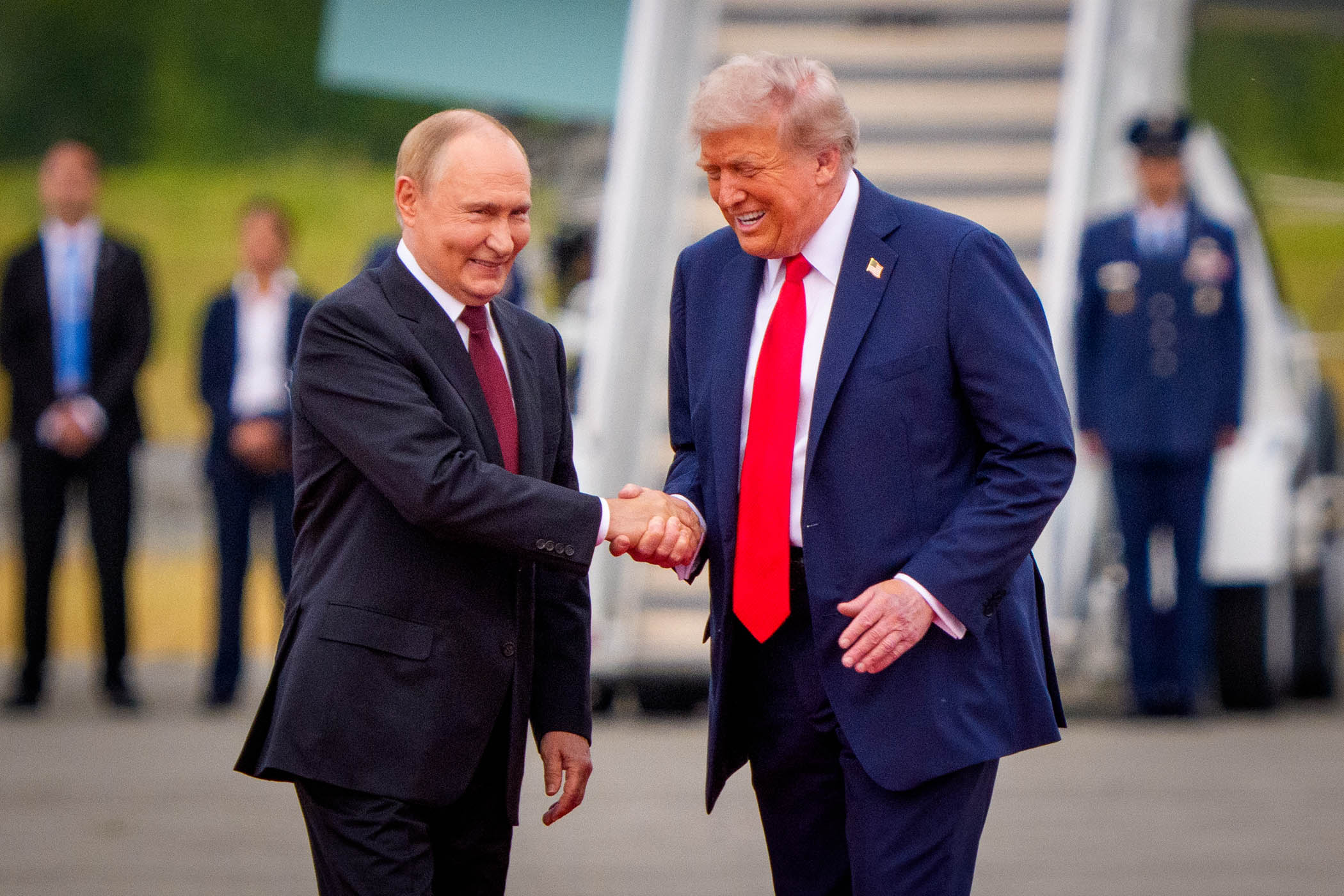
Slowly but surely, Ukraine is losing territory on its eastern front. Russia is taking it. Donald Trump is not helping. His administration is promoting a list of preconditions for peace talks which could have been drafted in Moscow. That is a sad betrayal of American values, but nearly four years into this war, the worst failures of statecraft and strategy are Europe’s.
Ukraine has been the toughest test of Europe’s ability to function as a unit in its own interests since the Soviet collapse. In 2013 there was a chance to bind Kyiv into an association agreement with the EU, but Brussels blew it. A desultory loan offer did not come close to the €20bn Ukraine needed to modernise, or to Russia’s promise of cheap gas.
When Russia annexed Crimea, the EU responded with tepid sanctions and strongly worded letters. When Russian arms massed on Ukraine’s border in early 2022, Europe had no good intelligence about Putin’s intentions. It mounted no effective deterrence before the invasion, failed to agree on a Russian energy embargo (thereby paying for Russia’s war), and failed to see that European security was above all a European problem. It relied instead on the US. That was a mistake.
When Trump began his pursuit of peace on Putin’s terms 10 months ago, Europe again failed to step up. It has allowed one member state – Hungary – to undermine sanctions demanding unanimous support. Another – Belgium – has sabotaged efforts to use frozen sovereign Russian assets held in Brussels as collateral for loans on which Ukraine’s survival as an independent state may depend. On Friday Germany’s Friedrich Merz made a last-ditch effort to win Belgium round. It could work. In the meantime, for all the talk, this is a coalition of the unwilling.
Europe is rich, populous and heavily armed. Its problem from the point of view of collective action is that its wealth is mainly in savings accounts and national silos, not liquid capital markets. Its civilians are not in the habit of defending themselves and while its 27 armies have one unified command, it answers to a commander-in-chief who detests the EU. Any doubt on that score was erased last week with the publication of a new US national security strategy which drips with scorn for the European project. It accuses European governments of censoring free speech and suppressing political opposition, and laments Europe’s “loss of national identities and self-confidence”.
The damage done by Brexit to UK growth, investment and productivity is impossible to ignore, but it has damaged Europe, too
The damage done by Brexit to UK growth, investment and productivity is impossible to ignore, but it has damaged Europe, too
Much of this is echo chamber noise, but it is true that Europe’s self-confidence has taken a knock. That was Brexit, sold on false pretences and acting like a tourniquet on EU-UK trade. The damage done by Brexit to UK growth, investment, employment and productivity is impossible to ignore, but it has damaged Europe, too. London was Europe’s New York. Britain championed its single market. Successive British commissioners were constructive voices for freer trade and less bureaucracy. The EU needs voices like that now. Even more, it needs to mount a life-or-death defence of liberal democratic values under siege from east and west.
Senior Labour figures are for the first time daring to question the wisdom of Brexit in public. Their private discussions are less encouraging. The Observer’s Rachel Sylvester reported on a pre-budget meeting in Downing Street at which the prime minister’s chief economic adviser noted the potential benefits of rejoining the EU customs union only to be shushed; it was politically impossible. That may be true for now, not least because of European reluctance to reopen a poisonous debate. Still, it was a moment Putin would have enjoyed.
Every European government, including Britain’s, needs to recognise the choice the continent faces: decline and irrelevance or cooperation and revival. Before it’s too late, they need to join forces in Ukraine’s defence, and their own. There’s not much time.
Photograph by Andrew Harnik/Getty Images
Newsletters
Choose the newsletters you want to receive
View more
For information about how The Observer protects your data, read our Privacy Policy