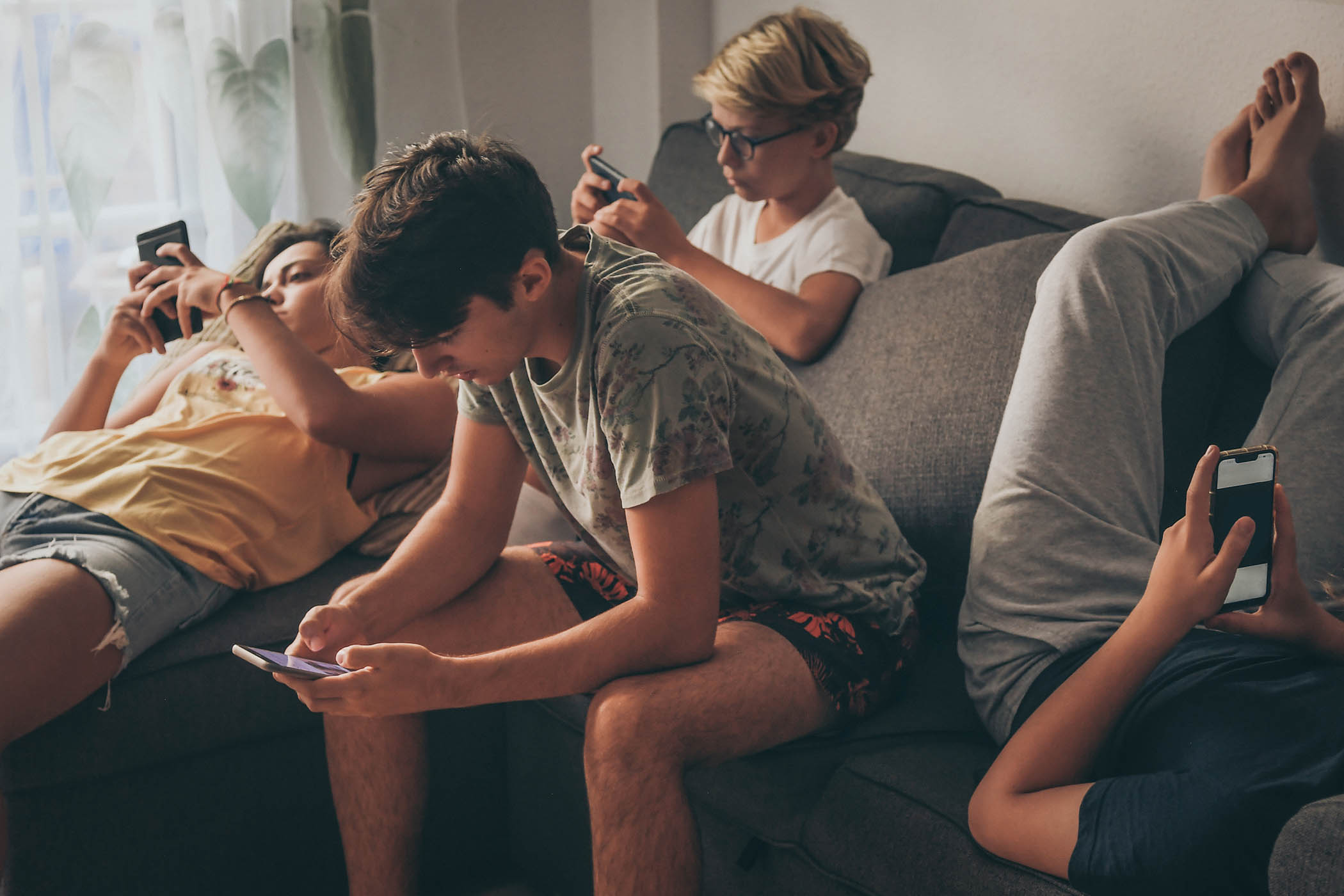



Make the most of the school holidays coming up rather than spending it scrolling on your phone,” says Anthony Albanese, the Australian prime minister, in support of his ban on social media for under-16s, which came into force last week. “Start a new sport, learn a new instrument or read that book that has been sitting there on the shelf for some time.”
Behind Albanese’s homespun language there is radical thinking and decisive action that is needed but lacking in London. Keir Starmer has told The Observer he opposes an Australian-style ban. He says he’d rather find ways to control the content on teenagers’ phones rather than their use of them. That doesn’t meet the moment.
Between a quarter and a third of young people with smartphones show signs of being addicted to them. This is not surprising. Smartphones run on algorithms written precisely to be addictive, to maximise users’ time spent on them and revenues for a small number of staggeringly profitable platforms.
Children in the UK spend an average of three hours and 20 minutes on electronic devices on a school day, according to a survey of their parents. If these devices were harmless, this would be merely a colossal waste of time and opportunity. But as conduits for addictive social media, they are harmful too. Dozens of medical and academic studies show negative impacts on sleep, eyesight, speech, language development, emotional and social growth, eating habits, body image and educational attainment. Excessive smartphone usage has been linked to surging rates of anxiety, depression and criminality, including the murder of 15-year-old Carly Ryan after being groomed online by a 50-year-old man impersonating an 18-year-old. Her death helped to galvanise support for the Australian ban.
Progressive political movements aim to protect citizens, where possible, from social ills. But in their largely uncritical acceptance of social media’s invasion of teenagers’ lives, progressives across the west have been handmaidens to a lethal societal riptide – a 20-year experiment in the delivery of “connectivity” and misery that is about to repeat itself unless governments get serious about guardrails for AI.
There is a counter-argument that prioritises free speech over online safety, but it falls apart when that freedom enables crime and the victims are children. There are studies that suggest teenagers can be quicker than their parents at sorting truth from fantasy and misinformation. But that has not prevented seven out of 10 Australian teenagers being exposed to harmful content online, or a doubling of hospital admissions for mental health emergencies among 11- to 15-year-olds in the UK in the decade to 2022. This could be a function of better diagnosis, which would be positive. It could be unrelated to the tidal wave of social media hitting teenagers over the same period but that is, to put it mildly, implausible.
The Australian ban will be hard to enforce at an individual level because teenagers can get round it with virtual private networks (VPNs), but it sends a signal of intent and so far has the cooperation of platforms, including YouTube and X. Given the risks involved, the ban is sensible anyway on the precautionary principle.
Malaysia, Indonesia, Denmark and Norway are introducing similar measures, in line with popular opinion, not against it. Two-thirds of Australians favour their ban. Two-thirds of adults in the UK would favour one too. Wes Streeting, Pat McFadden and a clutch of junior ministers in Starmer’s cabinet want to explore the idea or at least find ways to get serious about online harms.
The people who run the platforms naturally oppose regulation. That would be the worst possible reason for Starmer to continue to oppose an Australian-style ban. Being on the safe side when it comes to teenagers’ minds and lives is a compelling reason to support one.
Photograph by Getty Images
Newsletters
Choose the newsletters you want to receive
View more
For information about how The Observer protects your data, read our Privacy Policy