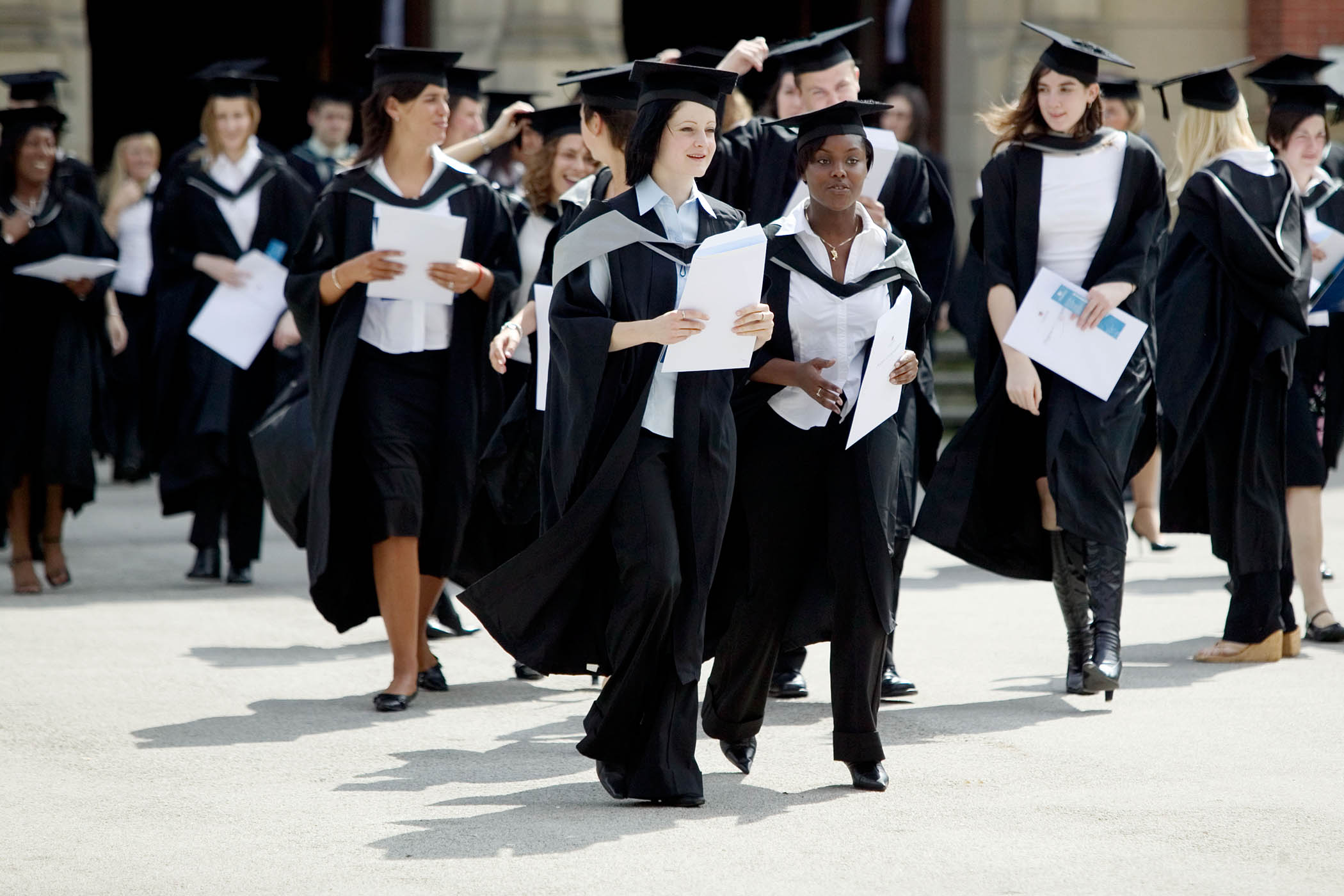



In the early 1990s, fewer than one in five school leavers in England and Wales went on to higher education. Now about half do. In the interim, Labour, coalition and Conservative governments introduced fees and loans to expand access to universities and create a new way of funding them. At first it worked. Not any more. Nearly 6 million graduates are burdened with loans whose interest rates hit middle earners hardest. For two-thirds of this group, their student debt is rising faster than they can pay it off. Two million more graduates are on a new scheme with lower interest rates but a longer and more regressive repayment schedule.
These loans represent income for universities, but not enough. Half are in deficit, laying off lecturers and struggling to maintain standards. High fees from overseas students are a critical part of their business model but the income they provide will be targeted with a new levy of £925 for each student from 2028 and they are becoming harder to recruit because the graduate earnings premium has slumped, especially for holders of non-Stem degrees. According to the government’s own longitudinal education outcomes database, the average graduate premium fell by more than a third in the two decades to 2023.
In that time, a cross-party consensus that the UK would benefit from more people going to university has morphed into a cross-party failure of execution – a failure to make higher education affordable for students, fund universities adequately and shore up their global reputation. The most urgently needed fix is to the debt trap that has ensnared 5.7 million graduates with plan 2 loans taken out between 2012 and 2023 with interest rates of up to 6.2%. Members of this group must earn at least £66,000 a year to start paying off the principal. A senior NHS nurse on £55,000 might only ever pay the interest on a debt pile that could nearly treble in size in 30 years.
A popular solution in parts of the Labour party is a graduate tax that would be progressive and relatively straightforward. But there are reasons no other country funds higher education this way. A graduate tax might be earmarked for education in principle but not in practice. There would be a long lag before it raised significant new revenue. It would not be enforceable abroad and many graduates who stayed in the UK would pay far more over their working lives than their courses cost. Most importantly, as Iain Mansfield of the Policy Exchange notes, such a tax would violate the progressive principle that “we tax people because they’re rich, not because they’re educated”.
The logic of fees for education as a service is more robust, but they have to be affordable. First, the government should unfreeze the £29,385 threshold above which holders of plan 2 loans will have to start repaying from April. They were led to believe this threshold would rise with inflation. That has changed. This isn’t fair. Second, the arbitrary cost structure of inflation plus 3% for plan 2 loans has to be scrapped. Third, these reforms need to be financed with a shift back to balancing the burden of higher education funding between graduates and the state, including with maintenance grants where warranted. Something else will have to give, and that should be the pension triple lock, which for too long has favoured the affluent elderly at the expense of the impoverished young. Keir Starmer has pledged to do right by young people who have been “collateral damage for the failure of past governments”. This is his chance.
“If you think education is expensive,” Barack Obama once said, “wait until you see how much ignorance costs in the 21st century.” Investing in higher education should be a no-brainer, but the UK’s cruel and misshapen loans system is saddling it with high costs and falling benefits.
Photograph by Andrew Fox/Alamy
Newsletters
Choose the newsletters you want to receive
View more
For information about how The Observer protects your data, read our Privacy Policy