

Andrew Hewson had a routine when his most celebrated client was up for the Booker prize. The literary agent would make a close examination of the television cables on the floor to work out which table they headed for. “Unfortunately, they never snaked towards her,” he sighed in 2010 at an event to celebrate Beryl Bainbridge, who was shortlisted five times for the prize without winning.
Hewson and his wife, Margaret, who was also his business partner, had picked up Bainbridge as a client in the 1980s when she was critically acclaimed but poorly rewarded. The agent and the author shared a ripe sense of humour and a dislike of pretension that led Bainbridge to tell the King’s Lynn literary festival in 1999 that her favourite new book was an overlooked masterpiece called As Flies to Wanton Boys by Rhoda F Cornstock. As a ripple of pseudo-approval spread, Bainbridge outlined its plot about incest in rural circles, which some in the Norfolk audience found insulting when she confessed that it was made up.
Hewson had to apologise, insisting: “It was just a jolly old joke.” He won them round with customary charm. There was not an ounce of unkindness in him.
Ed Wilson, a director of Johnson & Alcock, which Hewson chaired, said he was a rarity: a literary agent without ego who refused to put his name on the firm. “Some agents are all about promoting themselves,” he said. “It was never a vanity project for Andrew. For him, the authors were the story. He was an old-school agent with real warmth who cared about his clients and they loved him back.” One author, who had defected to a more ruthless agent, later rang Hewson and asked: “Can I come home, please?”
Charles Andrew Dale Hewson was born in Buckinghamshire in 1942. His mother was the Scottish children’s author Jean Ross and the family returned to Scotland after the war. He attended Glenalmond College before studying at St Andrews, where he met Margaret Watson, who he married in 1969. They had a daughter, Anna.
After a spell front-of-house at the Newcastle Playhouse, he was taken on by the literary agent John Johnson, brother of the Brief Encounter actor Celia, to deal with US publishers and build a playwright portfolio. Another duty was to unfurl the Union Jack outside the Mayfair office on royal birthdays.
One of the firm’s most successful clients was Dick Francis, the former jockey who from 1962 wrote thrillers set in the racing world. Francis produced a book a year until 2000 but lost motivation after the death of his wife. In 2005, Hewson took Francis’s son, Felix, out for lunch and suggested they find another writer to produce a new Dick Francis work to stimulate the back catalogue. Felix, a former teacher, offered to do it himself.
“The only fiction I’d written were school reports,” he admitted. “But to Andrew’s credit he didn’t laugh and gave me two months to write two chapters.” That turned into the 2006 novel Under Orders. Felix has now written 18 more. “Andrew was a great mentor and the wisest counsel,” he said. “He was far more than an agent – he was a true gentleman.”
Hewson took over the agency after Johnson retired in 1977, bringing in Margaret as co-director, whose business nous was said to compliment Hewson’s bonhomie. Among those she championed was Stephen Wiltshire, an autistic architectural artist she first met when he was 11. A TV company made travelogues with Wiltshire, which were turned into books. His third, Floating Cities, topped the Sunday Times bestseller list in 1991.
‘He was revered in the business. You felt that you were part of a very important family to him’
‘He was revered in the business. You felt that you were part of a very important family to him’
Clare Francis
Few things gave Hewson greater joy than spotting new talent. He nurtured DM Thomas, a poet whose third novel, The White Hotel, was pipped to the 1981 Booker prize by Salman Rushdie’s Midnight’s Children. He also represented Maeve Binchy early in her career and Ronald Blythe later on.
Newsletters
Choose the newsletters you want to receive
View more
For information about how The Observer protects your data, read our Privacy Policy
Another find was Clare Francis, who had written three non-fiction books about sailing when she told Hewson she had an idea for a second world war thriller. “He didn’t bat an eyelid, but told me he had a good feeling about it,” she said. “That was enough to encourage me to write Night Sky.”
Hewson auctioned the book in Britain and America, attracting what was a record-breaking advance for a first novel, and it topped the bestseller charts on both sides of the Atlantic. “He was revered in the business,” she said. “You felt that you were part of a very important family to him.”
After Margaret died in 2002, Hewson merged the firm with Michael Alcock Management to form Johnson & Alcock, which he chaired. He was a familiar sight as he whizzed on his folding Brompton bicycle between the office and lunch at the Garrick. He later married Carmela, a family friend.
In 2010 he created the Margaret Hewson prize for new talent, assisted by Andrew Motion, the former poet laureate. The first winner was judged by Bainbridge shortly before her death.
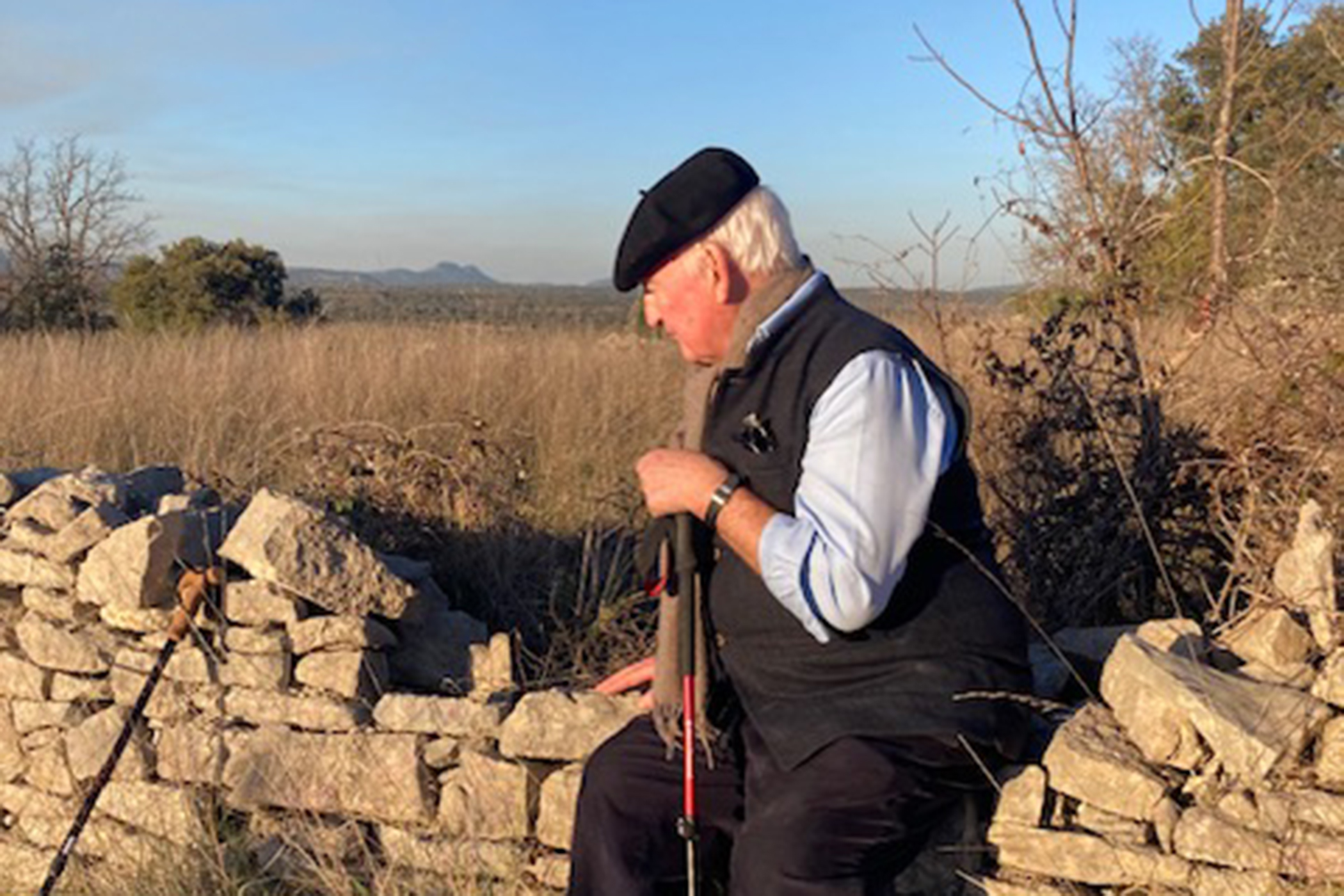
A proud Scot, Hewson retained his mother’s house in Aboyne and invited his authors there on holiday, ignoring protests about the cold and the wet to take them on walks in the Cairngorms. He loved fishing and foraging for wild mushrooms, returning to London with bags of chanterelles he had collected. “He only poisoned himself once,” Wilson said. “Fortunately not fatally.”
Andrew Hewson, literary agent, was born on 30 December 1942 and died on 5 February 2026, aged 83
Photograph: Family handout