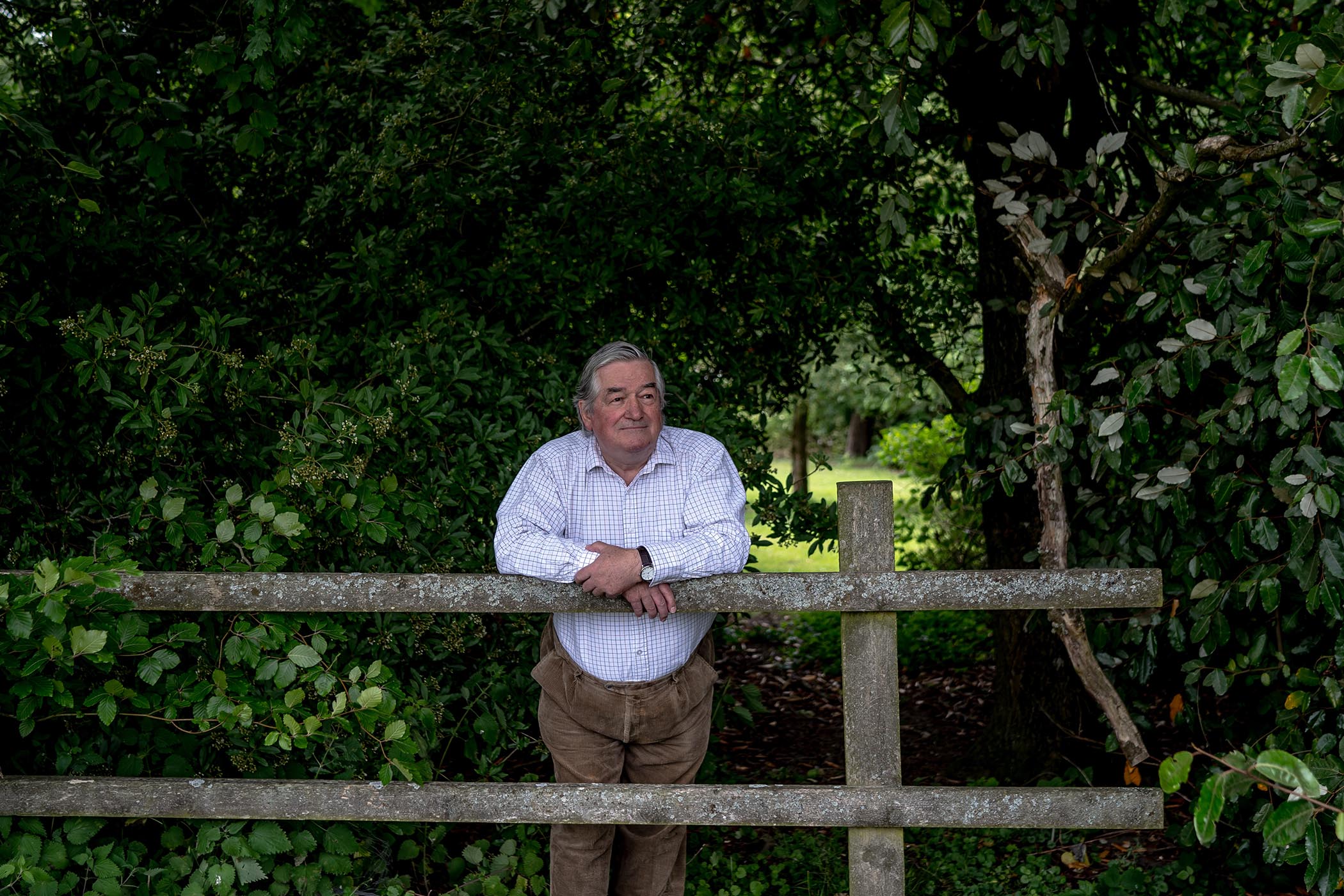


As Britain’s most senior judge in family law, James Munby never forgot the real human lives at the heart of the cases before him. His vast understanding of the law was infused with compassion and motivated by the charge above the entrance to the Old Bailey: “Defend the Children of the Poor.”
“One of the measures of a civilised society is how well it looks after the most vulnerable members,” he said after a case in which he felt the system had badly failed a young woman. In a speech to the Society of Editors in 2013, he explained that since the end of capital punishment, rulings in family law were among the most consequential any judge can make. They should always remember that their decisions can have an impact that lasts a lifetime.
His sense of duty on behalf of the vulnerable led him to be outspoken in his five years as president of the Family Division. He described cuts to legal aid in 2014 as “unprincipled and unconscionable”, while in 2017 he referred to the “disgraceful and utterly shaming” lack of proper services for vulnerable young people while ruling on the case of teenager in youth detention who had made several attempts to kill herself and could do so again without better support. “We will have blood on our hands,” he warned.
In another case, he defied the wishes of a medical team treating a four-year-old child with severe neurological issues, ruling that she be allowed to live. Seven years later, the family sent him a picture of their now 11-year-old daughter, thanking him for saving her. Munby said it was “a chastening reminder of the fallibility of medical science”.
The journalist Camilla Cavendish, who campaigned for transparency in family courts, said: “He was absolutely committed to family justice when others saw it as a legal backwater. To interact with him was to get a tremendous injection of encouragement that things were worth fighting for.”
Munby fully supported transparency, observing: “If there is no basis for injuncting a story expressed in the scholarly language of a legal periodical there can be no basis for injuncting the same story simply because it is expressed in the more robust, colourful or intemperate language of the tabloid press.”
He recently recommended a repeal of the ban on those involved in family cases speaking about what had happened, arguing it was essential for scrutiny and accountability.
James Lawrence Munby was born in 1948. He attended Magdalen College School and Wadham College, Oxford. The former BBC legal correspondent Joshua Rozenberg, a contemporary, recalled that fellow students would add the initials MR after Munby’s name on his entries in the Law Library suggestions book, indicating with tongue only slightly in cheek that they expected he would end up as master of the rolls.
He was called to the bar in 1971, practising first as a Chancery specialist, and took silk in 1988. He married Jennifer in 1977 and they had a son and a daughter. He was appointed to the high court in 2000 and in 2009 became chairman of the Law Commission and a Lord Justice of Appeal. In 2013 he was made president of the Family Division.
Andrew McFarlane, his successor, said: “He was exactly the right man in the right job and at the right time. Anyone who worked with or appeared before him will be aware of his extraordinary intelligence and empathy for those disadvantaged within society.” One of his successes was to cut the average length of a social services childcare case from 60 weeks to 28. McFarlane said Munby led this drive from the front, drawing up a radical programme of change and declaring: “This can be done; this must be done; this will be done!”
Newsletters
Choose the newsletters you want to receive
View more
For information about how The Observer protects your data, read our Privacy Policy
Nicholas Mostyn, a former high court judge, called him “a great leader, a brilliant historian, a remarkable lawyer and a superb writer”. He praised his talent for producing “highly readable” judgments, often deploying a historical nugget or apt literary reference. Mostyn said it was hard to think of anyone with a comparable historical command of the law, though the clarity of Munby’s mind did not match the clutter of his office, which was “unimaginably untidy, like a scene from Gormenghast”.
Mostyn appeared before him when representing Earl (Charles) Spencer, in his second divorce case. Munby refused an application to exclude the press, leading Mostyn, a farmer as well as a lawyer, to send an email to his client joking that he had named seven new piglets James, Munby, Self-regarding, Pompous, Publicity, Seeking and Pillock. To his embarrassment, the email became public but Munby bore no grudge, declaring: “How often have we all come out of court after a long day which has not gone entirely as expected and made some unflattering comment about the judge which we would be mortified to think would ever come to the judge’s ears.” In fact, they were close friends.
A railway enthusiast who described himself as “a passionate ferro-equestrian”, Munby was treated by colleagues to a trip on the Romney, Hythe and Dymchurch railway in Kent as a retirement present, where he was photographed riding a locomotive named The Flying Munby. He was chairman of the Nuffield Family Justice Observatory until 2023.
Louise Tickle, The Observer’s family courts reporter, said he was “extremely generous as well as hugely encouraging to those who sought to improve the system”, adding that he was “a true feminist, simply because it would have offended against his intellect to think otherwise”.
Jo Delahunty, KC, former Gresham professor of law, often worked with him. “He was a thinker, an agitator, a writer, a doer,” she said. “He was the best teacher I could have had.”
Two days before Christmas, he told her he felt his edges were sharpening with age. “I refuse to see myself as one of the old men,” he said: “Many of whom, of course, are very much younger!”
James Munby, president of the Family Division 2013-18, was born on 27 July 1948, and died on 1 January 2026, aged 77
Photograph by Andrew Testa for Tortoise Media