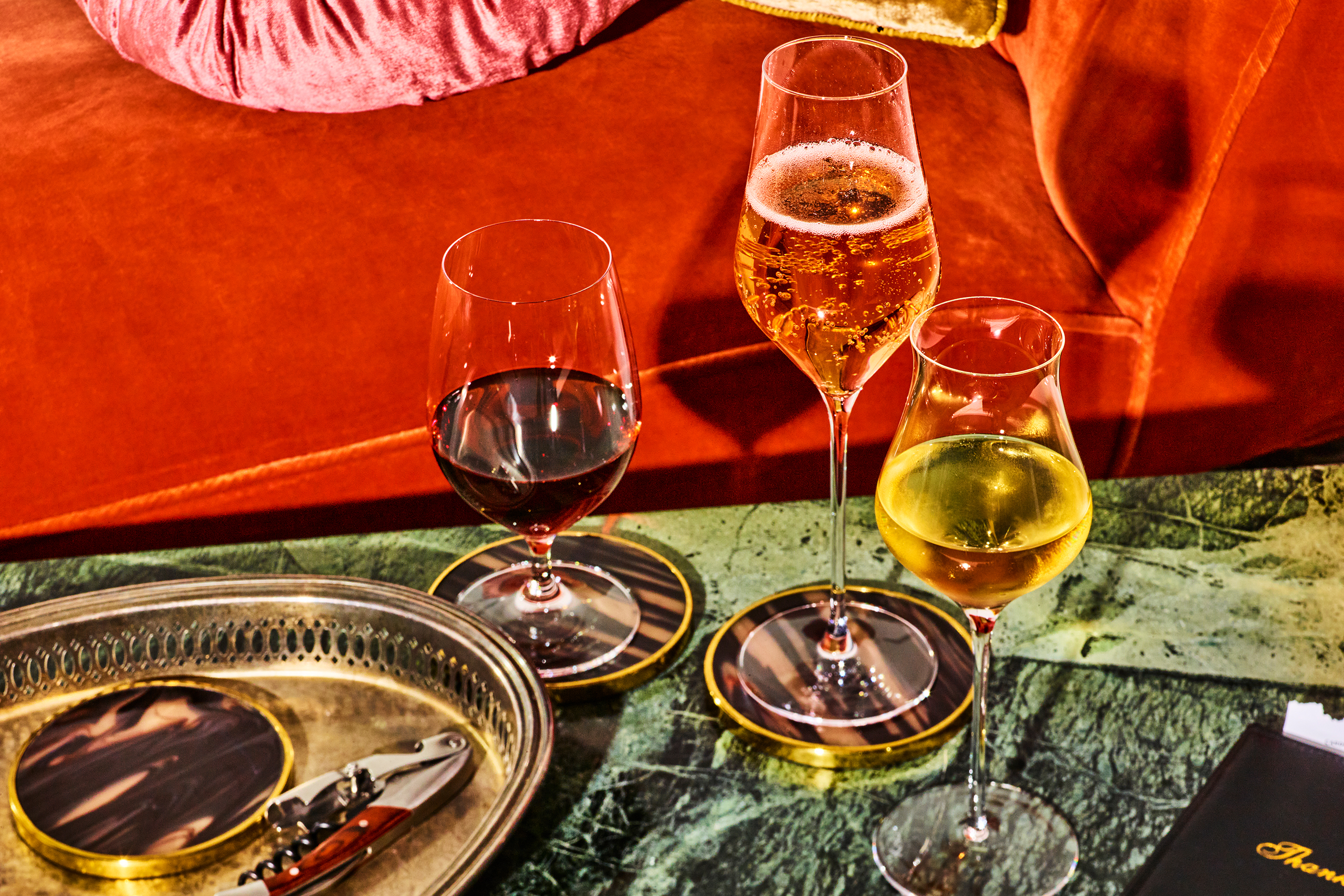




If you love wine and are in London, not only am I sure we know each other, but also that you’ve been to one of the Noble Rot restaurants, where there’s incredible access to all sorts of fresh, new but also old and rare wines. You’ll no doubt know the large blackboards, visible from seats at each of the three restaurants. Scribbled in chalk pen is an ever-expanding list of special by-the-glasses. Scrolling back through my phone, my most recent image of their chalkboards lists contains a £64 glass of Jérôme Prévost champagne, a £117 glass of Château d’Yquem sauternes from 1980 and, right at the top end, a £151 glass of Vosne-Romanée, an extremely sought-after red wine Burgundy appellation in the Côte d’Or.
All this is made possible with a wine-preservation system. These systems are so widely used in the industry, so adored for what tasting opportunities it can afford, one brand has become a verb. Every brand’s dream, no? “We don’t need to open it, we can just Coravin it” or, “Oh, let’s just just Coravin it and save the rest for later.”
It is a preservation system that allows for the keeping of expensive and perhaps slow-selling wines. A great way of understanding many things about wine is how much of its production, ageing and enjoyment is about its controlled exposure to oxygen. But when a wine is exposed to too much of it, if a bottle has been opened and is left out for too long, say, then the wine is vulnerable to oxidation, which makes a wine taste flat, muted and vinegary. How long this takes will differ from wine to wine, but I’d they will all have a max shelf-life of five to six days after being uncorked.
To slow down this process and keep wine fresh for longer, inert gas preservation systems utilise a needle inserted into a bottle through the cork, wax or foil, then an inert gas (often argon) is pumped into a bottle to replace the wine poured. This gas will not interact with the wine as oxygen does, so the wine will last considerably longer in the bottle (some brands claim a lifespan of 20 years).
So it’s little wonder that, as we get more curious about fine wines, and lack the financial elasticity to warrant ordering a bottle of them, preserving wine becomes more of an appealing option to both fledgling hobbyists and restaurants that want to avoid wastage. Preservation allows you to seal a wine by-the-glass you might not otherwise sell enough of to open – which makes it especially attractive for locations with substantial tasting menus with a wine pairing to match, such as the Ritz.
Even pubs are cottoning on: my new sort-of-local the Parakeet in Kentish Town is preserving wine that’s a little posher than its by-the-glass. Maybe not a 40-year-old sauternes, but maybe a £13 glass of English pinot noir. Most recently, I spotted Palestinian winemaker Jascala and USA producer Kistler on the chalkboard. I’ve also been seeing sparkling wines getting the same treatment, with folks using a sparkling wine-preservation system to charge bottles with CO2 and keep fizz good for up to four weeks – it certainly beats the old spoon-in-the-bottleneck routine.
It’s clear that the customer is more curious than ever, and with a more educated young audience than ever (some of whom are taking wine qualifications for fun!) it’s no wonder that venues are expanding their wine list to fine examples, worrying less about wastage with the use of a preservation system.
It’s not just businesses who can buy wine preservation systems, home drinkers with a special bottle might also find use for it. I will say, the gas capsules you put in the machines are not inexpensive, but if you’re in the position to be opening and not drinking all of a Vosne-Romanée in one night, I doubt you’re in the tax bracket to be worrying about such things.
Newsletters
Choose the newsletters you want to receive
View more
For information about how The Observer protects your data, read our Privacy Policy