


A Jewish proverb concerns the elders of Chelm, who travel to a nearby village to find out why they have better bagels. “It’s all in the hole,” the town’s baker informs them. So the sages fill their pockets with bagel holes and make their way back – only to trip along the way. The holes roll off into the forest, where the men chase them to no avail, condemning Chelm to subpar bagels.
Ever since moving to London from New York three years ago, I’ve been chasing holes. Like those men of Chelm (a Yiddish byword for foolishness) I’ve tried in vain to find my perfect bagel. This quest did not begin well: a drunken late-night visit with my partner to the Bagel House in Stoke Newington. I asked him where the seeded varieties and flavoured shmears were, but he looked confused. “I thought they always came plain!”
Bird-like New Yorkers prefer “everything” bagels, liberally coated in sesame and poppy seeds as well as onion and garlic flakes. (Flax and pumpkin seeds are for granola.) For years, my ideal breakfast consisted of a sesame or everything bagel, with plain or scallion cream cheese, laden with lox (smoked salmon), tomato, red onion and capers. I even devised my own commandments: a bagel should be firm but not doughy, soft but not too pillowy, crusty on the outside without much crunch. It’s better fresh from the oven than toasted. Sweet bagels are a modern sacrilege – sorry, no cinnamon raisin. I duly submit this culinary orthodoxy to 1,000 years of debate.
Lena Dunham confessed in the New Yorker that she began to feel like a Londoner when she learned to “settle for bagels that taste like caulk”. But London is chock-a-block with patisseries that could best some of their Parisian competitors. Has it really been stumped by this humble bake? Jews may have been here since 70 CE; bagels are thought to have come via eastern Europe circa 1850. That’s enough time to get them right.
Beigel Bake.
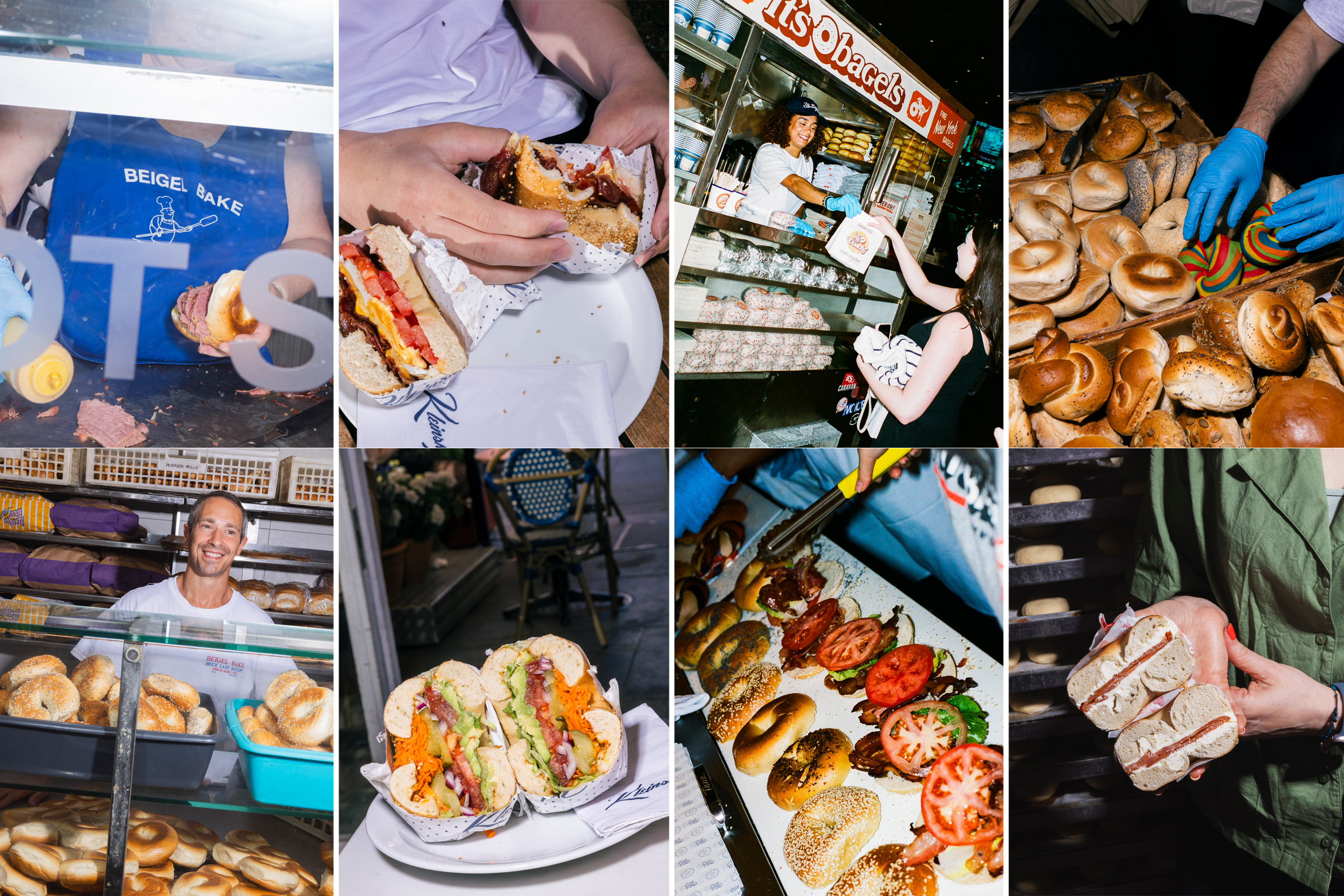
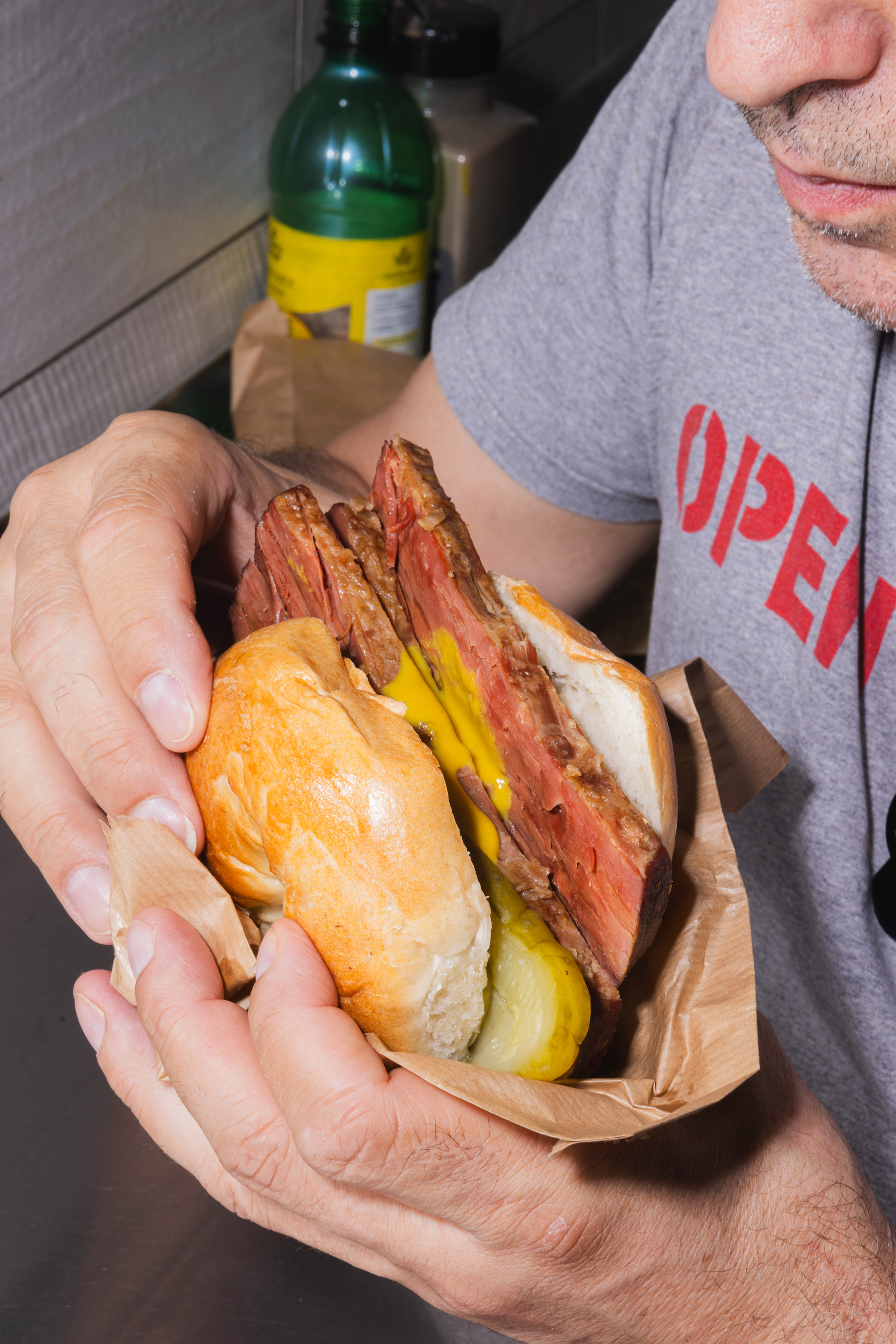
And London is certainly trying. Bagels are having a Big British Moment, from new hotspots to long-running institutions. On a recent Saturday, the queue outside east London’s Beigel Bake snaked down the block but the wait was only five minutes. The well-oiled machine has served the Brick Lane masses 24 hours a day, seven days a week, for 52 years. For a century before that, Whitechapel was the centre of Jewish life, where refugees from pogroms in eastern Europe settled in the late 19th century. Many of them survived by selling bagels in the street. (There’s been a bakery next door since 1855, now called Beigel Shop; its smaller, tougher rolls are less popular.)
My bagel with cream cheese arrived the proper size – fit for a meal – but a bit too fluffy, with the sheen of a polished loafer. The main event at Beigel Bake is the salt-beef bagel, heaped with meat, gherkins and yellow mustard. While salt beef lacks the richness of American pastrami – salt-cured instead of smoked, cut in slabs rather than thin, fatty slices – I am hard-pressed to think of a better under-the-influence meal.
Hilary Duff recently posted her first mukbang TikTok from a black cab on Brick Lane, biting into a salt-beef bagel, then appearing as if she might pass out. It was another sign that bagels are trending: while stalwarts such as Beigel Bake have gone viral, more than a dozen (by my count) hipster bagel shops have opened in the capital over the past few years.
New York expats have received them like manna from America. Weekend crowds queue outside Papo’s, a hotspot in a Hackney railway arch, founded by husband-and-wife team Georgia Fenwick-Gomez and Gabe Gomez, both from New York. Their dense, crusty bagels, covered in tiny air blisters, have a satisfying bite, especially when slathered with the shop’s sour, homemade cream cheese. Much like nearby Paulie’s, and Kuro Bagels in Notting Hill, Papo’s offers a wide range of egg and smoked salmon fillings on seeded bagels, but none of them quite match New York’s in size or taste.
Kleinsky’s.
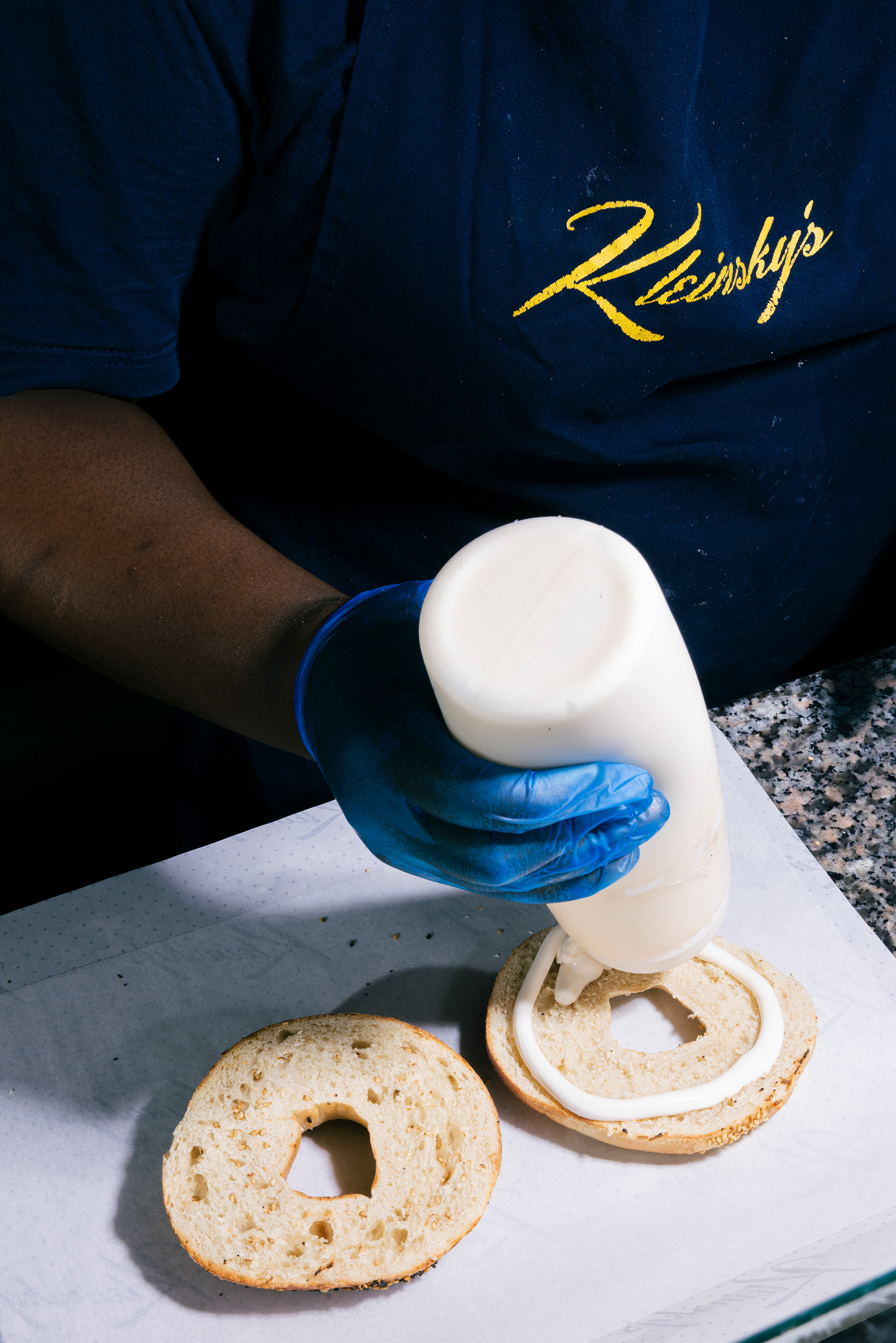
Kleinsky’s, in Mayfair, comes closest. Owner Adam Klein is a transplant from Cape Town, but New York is his model. My crusty everything bagel had just the right seasoning, and perfect give. It had also spent between 24 and 48 hours fermenting in the fridge before being baked, which probably accounts for its richer, yeastier flavour.
“New York bagels tend to be bigger, crustier, chewier… just, like, more,” Dan Martensen told me. A photographer by trade, Martensen moved to London from the Big Apple seven years ago. During the pandemic, he cycled to far-flung shops to satisfy his cravings before trying to bake his own. His version of “Covid sourdough” became It’s Bagels!, which will open a fourth location in Hampstead later this year. I wanted to hate the shop’s slick simulacrum of Brooklyn – its polished interior with New York Mets gear on the walls – but it’s hard to deny the prime quality. While not bigger, they’re perfectly crusty bagels – neither too soft nor too firm on the inside – and come with real pastrami (!) or folded omelettes slathered in gooey American cheese.
Newsletters
Choose the newsletters you want to receive
View more
For information about how The Observer protects your data, read our Privacy Policy
The rich, yeasty flavour of the dough at It’s Bagels! and Kleinsky’s made me doubt a theory I’d long held that London bagels must taste different because of the water. It’s a version of a story often told on the other side of the pond: that the soft Catskills snowmelt that pours from New York City taps makes Brooklyn bagels better. By contrast, the hard calcium carbonate in London water will gunk up your bathtub with limescale.
So durable is the water theory that in 2009 former CNN anchor Larry King opened a shop in Florida called the Original Brooklyn Water Bagel Company. According to its website, the bakery “Brooklynizes” its dough by “filtering local water down to its purest, most natural state, and then adding unique elements [read: minerals] found only” in New York tap water. The bagels are not great, but the myth endures.
Harder water does make for harder dough, according to Jennifer Ahn-Jarvis, a food scientist at the NHS’s Quadram Institute, but it’s far from the most important factor. Key is something called “surface gelatinisation management”, a fancy term for the process by which crust gets made: boiling first, then baking. She says: “How long and how vigorously the bagels are boiled, the pH/alkalinity of the water, and the steam/oven profile all fine tune the gelatinised layer: its thickness, gloss and final chew.”
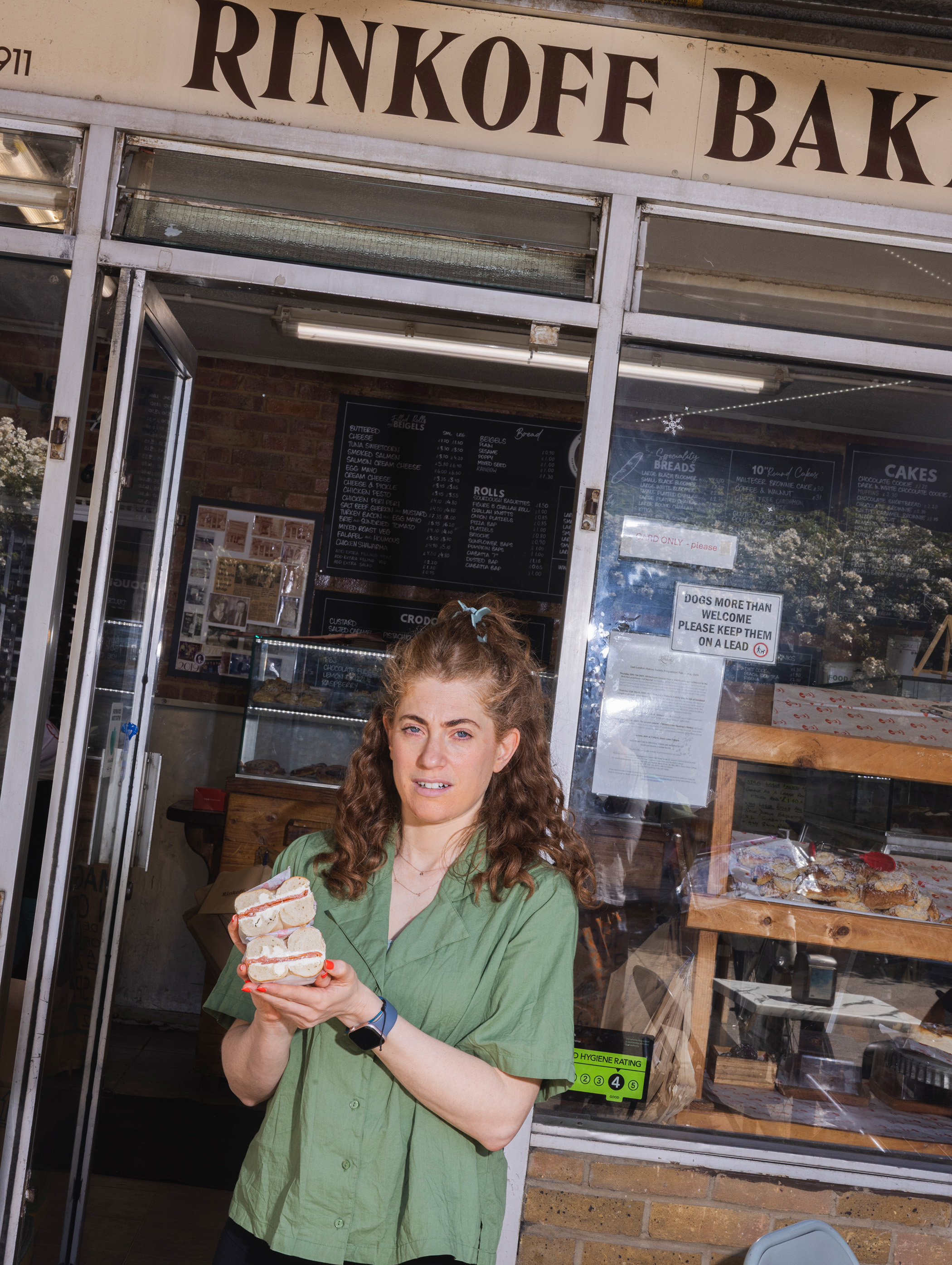
Jennifer Rinkoff.
Martensen had told me: “They’re very good at making bad bagels here, but they’re also good at making their own thing.” Jennifer Rinkoff’s family has been making bagels in Whitechapel for five generations. When I asked her what makes a London bagel unique, she began by correcting my pronunciation: in east London it’s Byegel, not baygel. “London bagels are a bit tighter, and the hole is smaller,” she explained. “Slightly crusty on the outside and then really pillowy in the middle, so they spring back when you touch them.” Rinkoff Bakery boils its bagels in barley water to give them extra sheen. The recipe hasn’t changed much since Jennifer’s great-grandfather opened the bakery in 1911 after arriving in England by boat from Ukraine. (It’ll soon be available in The Jewish Bakery cookbook, due out in August.)
Rinkoff is proof that London bagels are every bit as authentic as New York’s. The two developed in parallel, though they share a few common ancestors. In The Bagel: The Surprising History of a Modest Bread, the historian Maria Balinska identifies some of them: the hard taralli eaten by Pugliese sailors, the girde that Uyghur traders packed on the Silk Road, and, most of all, the obwarzanek prized for centuries in the Polish royal household. Balinska notes that bagels are first mentioned in a Kraków baking regulation from 1610, and that they were given as a good-luck charm to Polish women in labour. The meaning of those holes became an “intellectual feast” for rabbinical scholars.
According to Balinska, much of London’s bagel-baking prowess fled to the suburbs in the 1940s and 50s, when Jews began to abandon Brick Lane. In Golders Green, Carmelli Bakery has preserved some of that historic charm, from its cooler full of smoked fish to the Yiddish on its sign. The beloved neighbourhood institution serves plenty of other things (triangular, jam-filled hamantaschen and chocolate-rolled rugelach), and my sesame bagel remains the most flavourful I’ve tried in London. Still, I had to pluck it with tongs from the wicker basket where it had gone stale.
As I trawled north London, one establishment after another pointed me to their cold case. Following my own commandments, I had to stubbornly insist on a fresh, not refrigerated, bagel. At last my quest brought me to Hendon Bagel Bakery – beyond the parking range of Lime bikes, so I left mine running across the road. There, after much negotiation, the woman behind the till agreed to sell me a sesame bagel from a crate behind the counter, so fresh from the oven it was practically steaming. There was nowhere to sit, so I took it to the kerb, where I devoured it like a wild animal while sheltering from the rain. No schmear or toppings: this bagel didn’t need them. It was perfect in its natural state. Heart and belly full, I cycled home, wondering if the hole I’d been chasing was me.
For a list of Evan’s top London bagels and where to find them, click here.
It’s Bagels photos by Good Brew Inc.