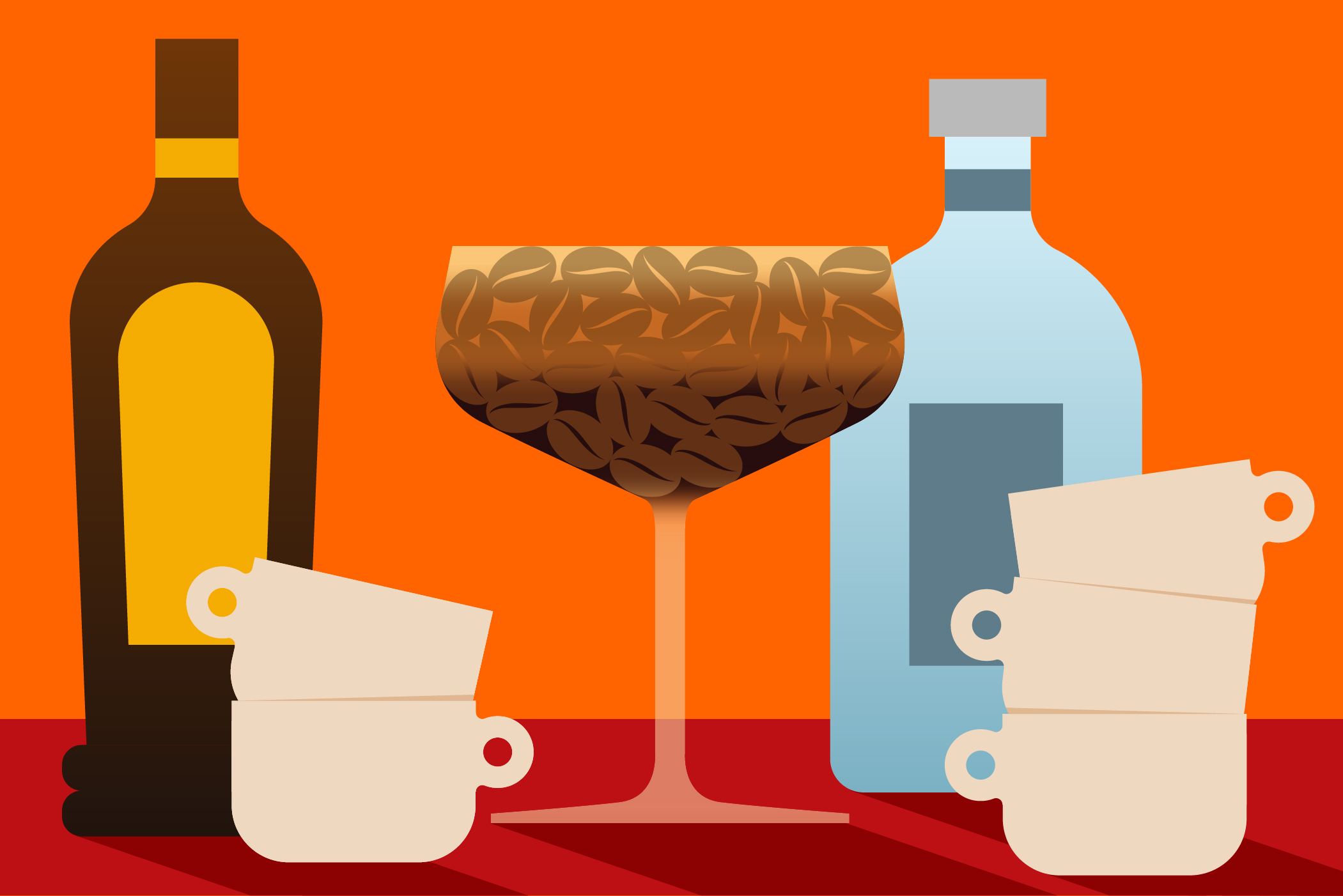



A legendary drink is only ever as good as the tale that accompanies it. I was out and about recently, with a bunch of food types, and one of us ordered an espresso martini. All of us had heard a different version of the origin story for this cocktail. Was it Kate Moss? Was it Naomi? We were all bickering over the minute details, but there was one, romantic detail on which were all agreed: whoever requested the first espresso martini needed a drink with two separate effects: “wake me up, then fuck me up.”
Its invention is largely credited to Dick Bradsell, while he was working at Soho Brasserie in the 1980s. And if there’s one moment in time you want to be woken up then fucked up, it’s Soho in the 80s. In this way, espresso martini can be considered a functional drink; there have certainly been moments in the past when I’ve had one in the middle of a long day of drinking, to wake me up and let me continue to be part of the festivities. But also, the perception is that the effects of caffeine and alcohol also give you an excuse to go a little feral, an act of un-self-conscious escapism some of us need from time to time.
(These effects were culturally recognised most recently in a recent Saturday Night Live sketch, which premised an “Espresso Martini Safe Room”, a place to put those experiencing its effects, complete with a phone full of Instagram stories to react to and a cardboard cut-out of a partner.)
There’s also a certain amount of snobbery surrounding espresso martinis. That they’re not “true martinis”, or even that they’re not proper cocktails which, to me, has always seemed like a thinly veiled way to hate on something with a predominantly female audience. Nothing new there, then.
As they are – sweet, strong, dark – they have an important place in our national drinks canon. But I have wondered, when so much coffee nerdery exists in the world, why more hasn’t been done to unite the coffee and the cocktail devotees and make something that we can all agree on. Perhaps this will convince some of you to come over to the Fun Side. Or, give you some ideas on how to make the best possible version at home.
According to the International Bartenders Association, the constituent parts are as follows: 50ml vodka, 30ml Kahlúa, 10ml sugar syrup and one strong espresso. You’ll notice that there’s only one specified brand on there, Kahlúa, and everything else is up to interpretation. However, Howey Gill, head of coffee at Grind, a chain of cafe-bars, says they don’t even use coffee liqueur in their version. “We literally use sugar syrup, coffee and vodka – so make each one great and you’re basically there.”
Coffee roaster Dumo Mathema says that too often the coffee used is old, extracted or simply far too dark; roasted for intensity rather than to balance with alcohol and sugar: “Everything in the glass should be supporting rather than trying to fight.”
If you’re making an espresso martini at home, the move is to use espresso from medium or medium-dark roasted beans – enough body to stand up to alcohol, but not dark enough to dominate with bitterness. Use a good-quality vodka and a coffee that doesn’t lean too heavily on sugar. Shake with plenty of ice and strain into a coupe glass, before retreating to your nearest Espresso Martini Safe Room, as needed.
Newsletters
Choose the newsletters you want to receive
View more
For information about how The Observer protects your data, read our Privacy Policy