
The fashion designer Foday Dumbuya could no longer ignore the hissing. We had been in his central London studio for 10 minutes, manfully raising our voices above a noise vaguely redolent of a dry cleaner’s, before the din became so comically intrusive that it had to be addressed. “Sorry about this,” Dumbuya said, gesturing up towards an exposed cluster of ductwork. “Something to do with the pipes. It’s actually a nightmare.”
Dumbuya launched his menswear label, Labrum London, 11 years ago, and over the past five years it has emerged as one of the UK’s most distinctive and popular men’s fashion brands. So his professional life has been such a whirlwind you would forgive him for not sorting out this piece of office maintenance. There have been landmark catwalk shows, featuring appearances from avowed fans including Ian Wright, Akala and Pa Salieu; a blizzard of collaborations with brands such as Clarks, Converse, Selfridges and, most recently, John Lewis, and a continuing relationship with Adidas, which has yielded official apparel for Sierra Leone’s Olympics team and, notably, Arsenal football club. A former employee of Nike and DKNY, Dumbuya has dabbled in tailoring and millinery, jewellery and furniture. In 2023 he won the British Fashion Council’s Queen Elizabeth II Award for British Design.
Dumbuya was born in Sierra Leone, raised in Cyprus, and moved to London aged 12. He consistently puts themes of migration and cultural exchange at the centre of his work – the slogan Designed by an Immigrant often appears on his clothes. If the label’s recent output has tended towards the hyperaccessible, that is strategic and not coincidental. It’s a means to disseminate Dumbuya’s inclusive message far and wide.
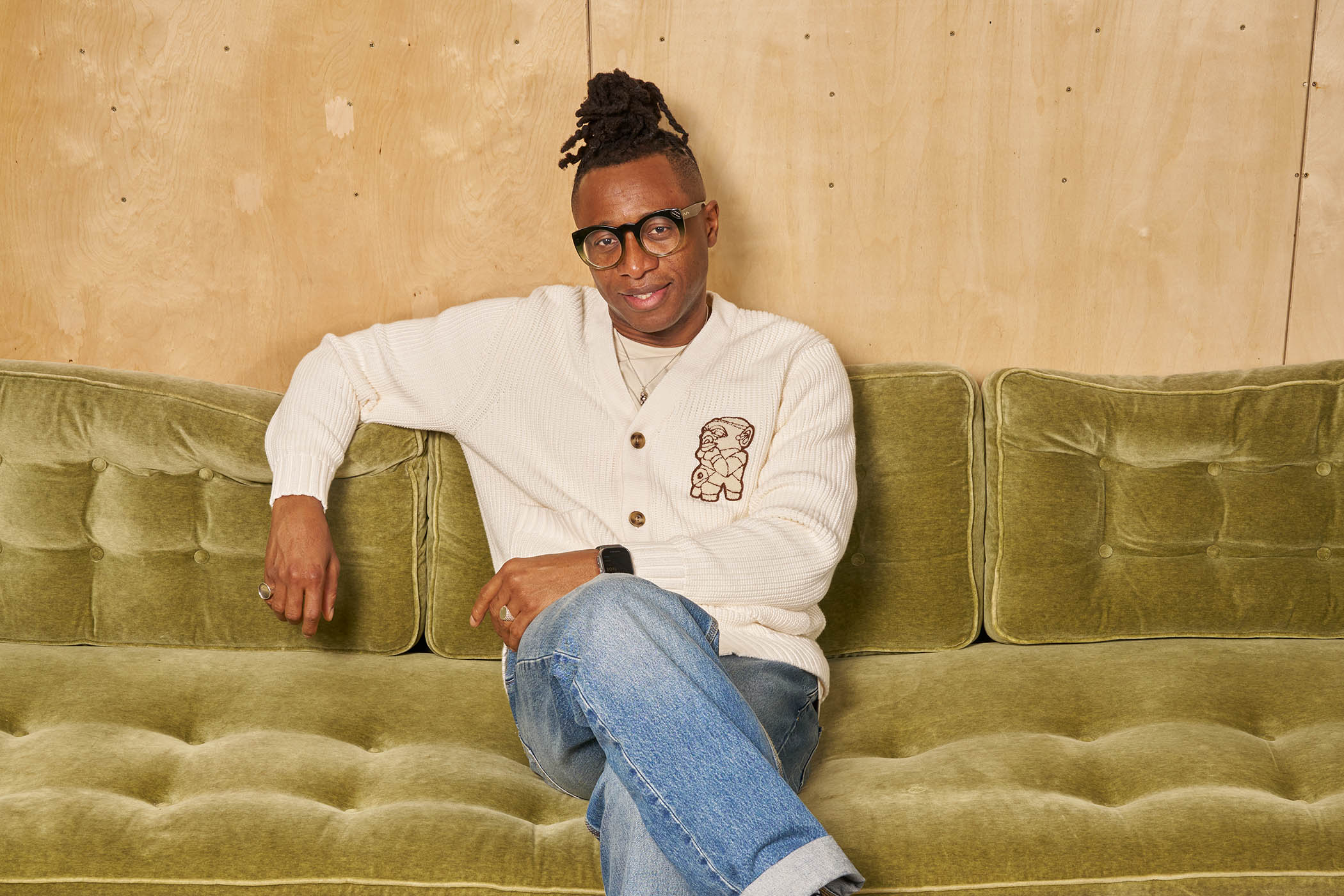
“We use the label as a vehicle to tell the stories that we want to tell and educate people about where we’re from,” he told me in a low, rasping voice that carried an air of halting, West African formality. In Labrum’s compact London HQ, off the Strand, Dumbuya cut a measured, gnomic figure. He sat before a closed laptop, surrounded by tightly wedged racks of clothing samples, stacked shoeboxes and label ephemera. He wore scholarly, statement frames and long dreads tied up in a high, sculptural bun.
“London is this diverse place where culture from all walks of life collides, meets, connects,” he continued. “That’s the amazing thing about the UK. It’s what I want to put out there: that joy, that harmony of cultures coming together and creating something beautiful.”
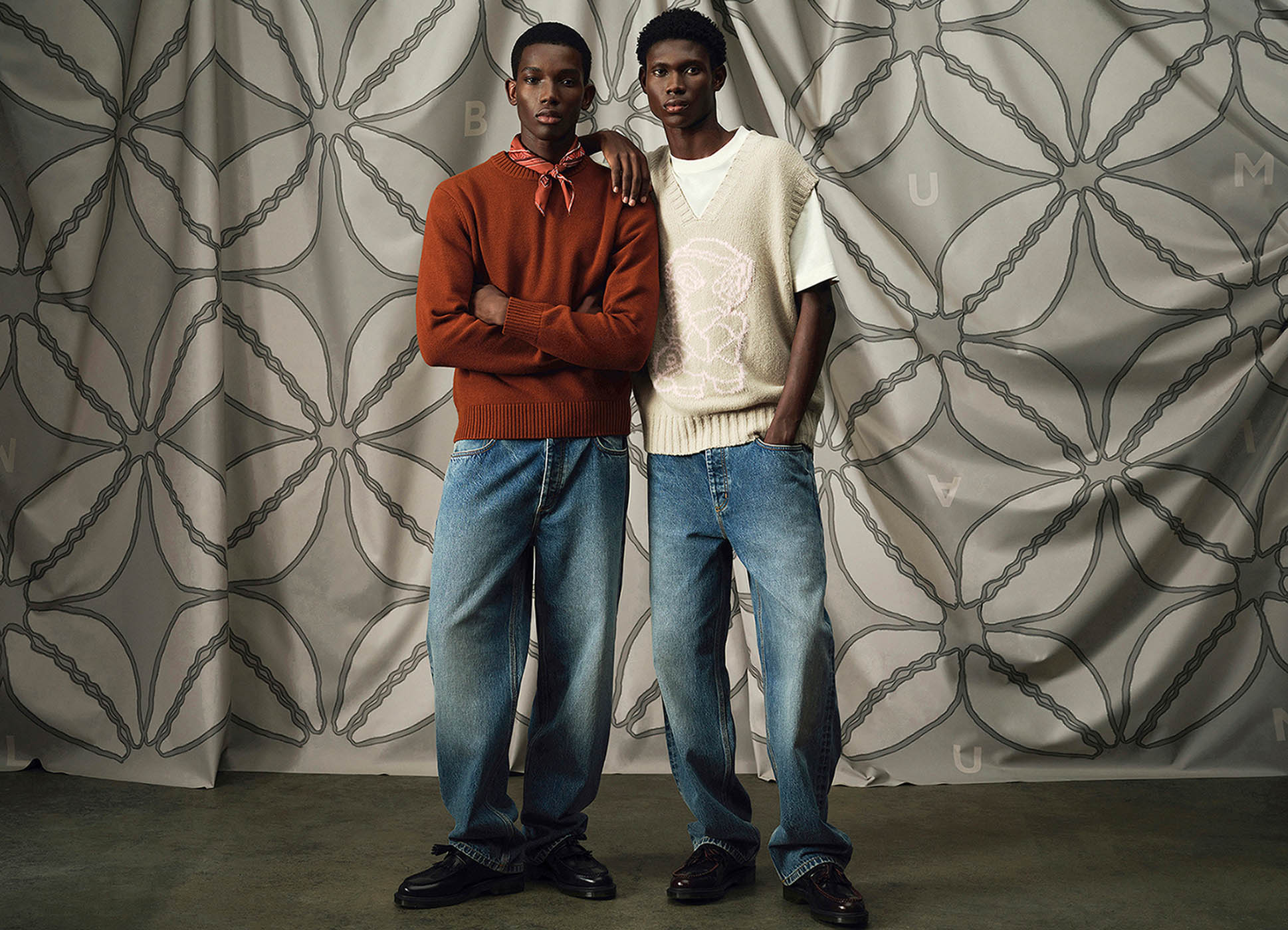
Putting on the style: from Labrum’s new collection for John Lewis
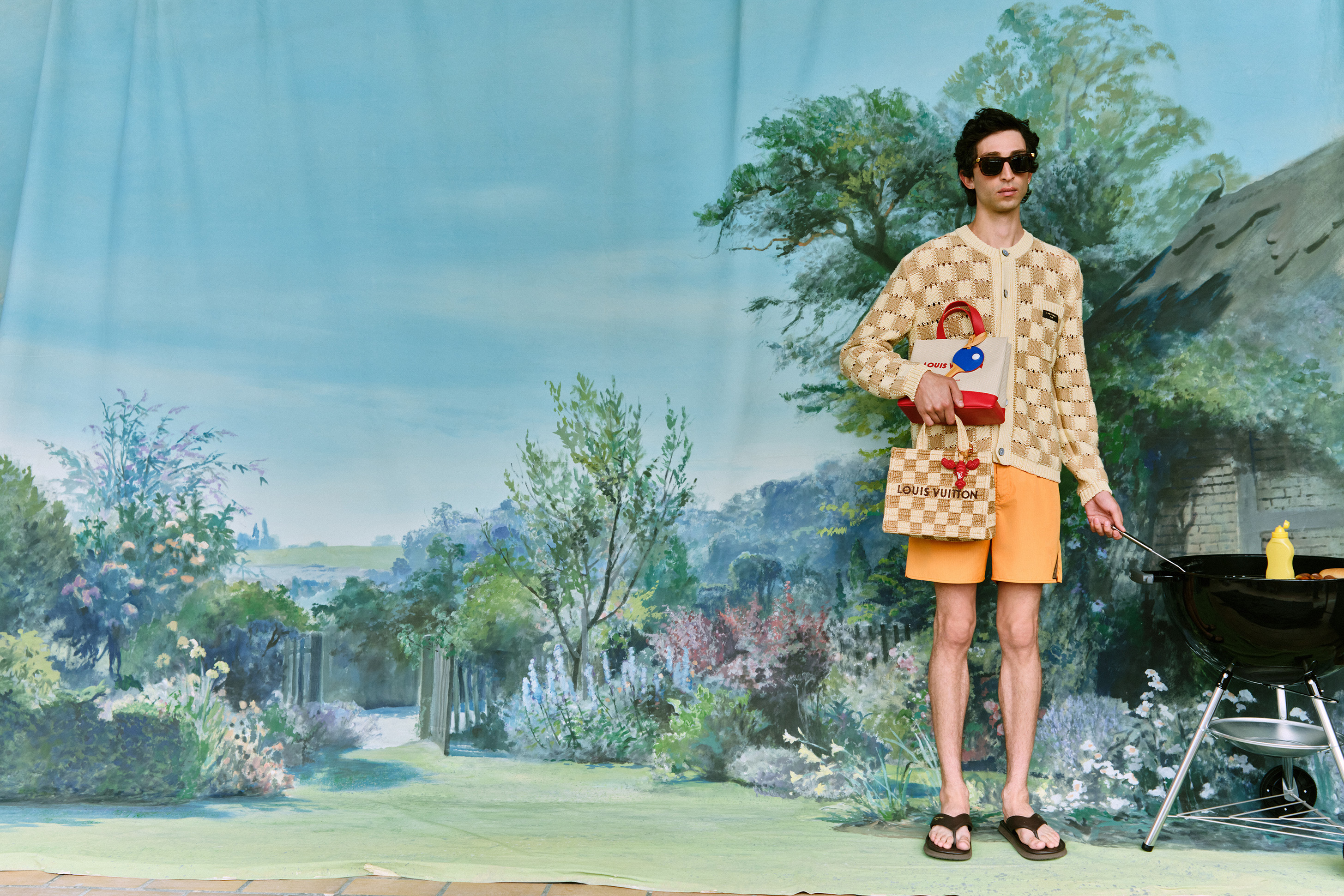
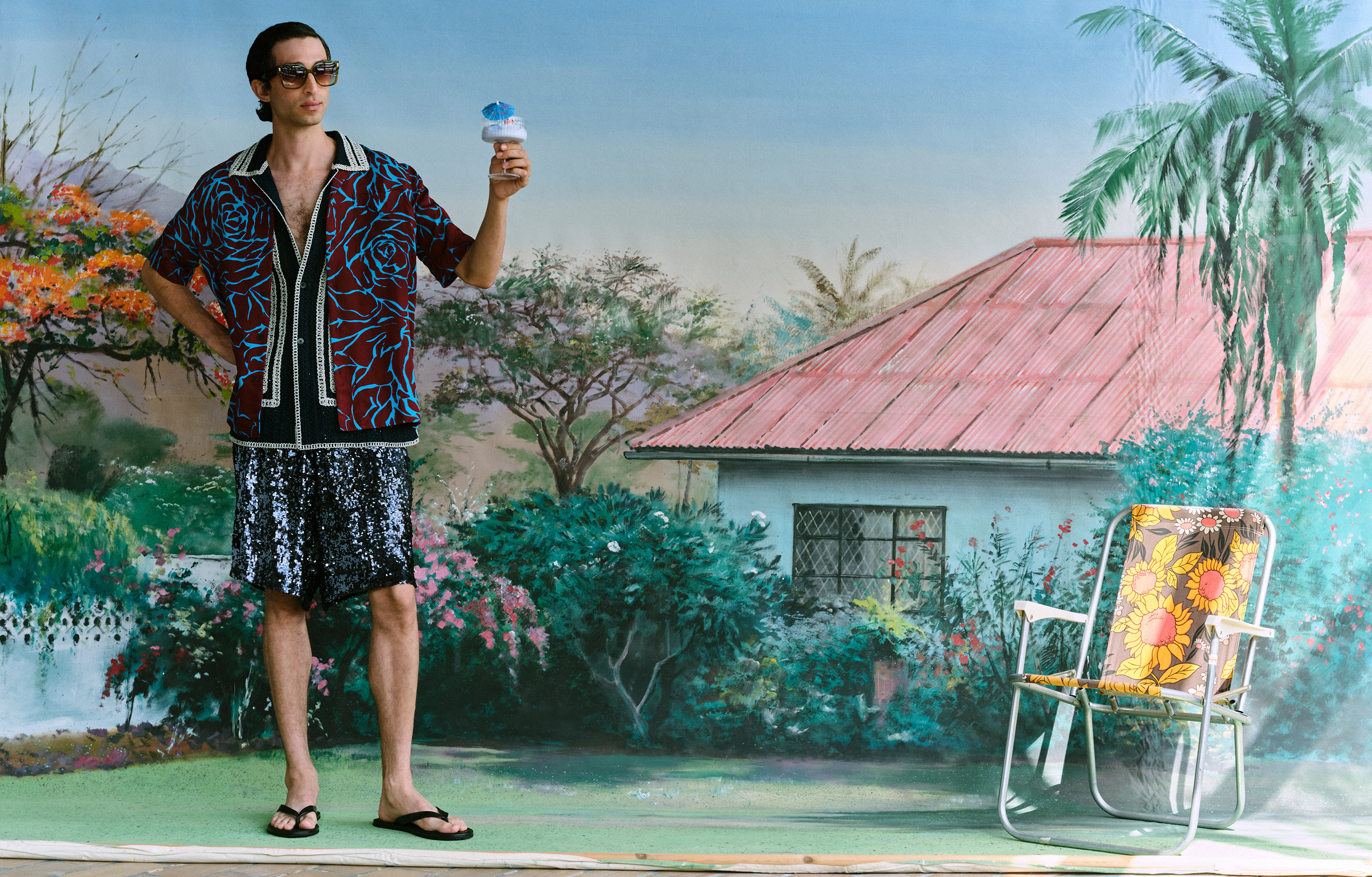
Cultural melding is at the centre of his new project, the 38-item Labrum x John Lewis capsule collection. It offers his trademark voluminous silhouettes, bustling jacquard patterns (often inspired by the cowrie shells that were both jewellery and a precolonial currency across West Africa) and striking fabrics, at a gently premium price point. Dumbuya was drawn to the department store’s traditions of craftsmanship and quality, the “British values” it represents and the way those “intertwined with his African values”. He recalled his late mother, who was “obsessed with the monarchy and British tailoring”, and his meticulously stylish, sharply dressed late father, who “would have his shirt neatly tucked in even when he was at home on a Sunday.” The pertinence of this unexpected partnership at a time of rising Faragism and anti-immigrant rhetoric is not lost on him.
“In England, we have people in the mainstream media trying to separate us,” he said. “There are so many people who are not informed about culture leading us into a very, very dark place that we thought we’d left years ago. I think it’s up to us how much positive messaging we want to put out there.” That a brand as cosily middle-class and quintessentially British as John Lewis is now selling clothing bearing the Nomoli, a Sierra Leonean icon of prosperity and protection that Labrum has co-opted for its logo, feels significant.
A couple of years ago Dumbuya, who grew up in south London as an Arsenal fan, was asked to design the club’s 2024-25 season away kit. He was approached by Adidas to help concoct a positive celebration of the club’s longstanding links to the African community, through players and fans, and he did so by designing a strikingly vivid black, red and green kit that made direct reference to both the Pan-African movement and a flag created by the Jamaican political activist Marcus Garvey.
I wondered if he had faced opposition to this overt Afrocentrism. “At first, some people were like, ‘Why did you have to do that?’” he told me, fiddling with one of the chunky silver rings on his fingers. “But I think the more that people understood how significant the colours are to Black history, the more they embraced it. I did so many talks at local schools, and young kids were proud of it and felt it was a way they could celebrate their culture or their Black friends.”
He recalled a white, Nottingham-based fan of Labrum contacting him directly with a nervous concern. “He said: ‘Can I wear one of your coats, or is it cultural appropriation?’ I was like, ‘No. This is for everyone. It’s not just for Africans.’ I speak to Declan Rice all the time – he wears my stuff. It’s for anyone who is curious about style and storytelling.”
Dumbuya has become the unofficial outfitter of a certain class of prominent Black British celebrity; Munya Chawawa, John Boyega and Idris Elba, with whom he spent a wild, bleary-eyed night partying at this year’s Glastonbury, are all fans. Though running the brand isn’t without challenges. The effect of Brexit on the British fashion industry has forced entrepreneurs such as him to diversify. “We lost 60% of our orders coming from Europe because when we send them to customers, they get charged duty,” he explained. “Some of them actually started refusing the product, sending it back, so we would get charged double. It’s been really difficult.”
Undeterred, he is still committed to London fashion week. He and his team are in the midst of finalising Labrum London’s AW26 show. “London is my home,” he explains, “so I’ve made the conscious effort to stay in the calendar here rather than go and help facilitate Paris to be more powerful.” Dumbuya is also a committed distance runner who unwinds by doing half-marathons. Or by visiting his children, aged five and two, who live in Bristol with their mother.
He hopes to expand soon into homeware, and to produce a collection of Nomoli figurines that, he told me sheepishly, reflect a more private passion. “I’ve always loved toys,” he said. “My dad used to buy me those little army figurines and cars, and I would position them in formation in my room.”
It occurred to me during our meeting that he retains much of that little boy. Blending worlds. Telling stories. Setting things perfectly in place. Dumbuya escorted me to the building’s reception, which was another example of those courteously old-fashioned British and west African values at the core of his work. Or, of course, it could just have been that he fancied a few minutes away from the hissing.
The Labrum x John Lewis collection is available at johnlewis.com
Newsletters
Choose the newsletters you want to receive
View more
For information about how The Observer protects your data, read our Privacy Policy