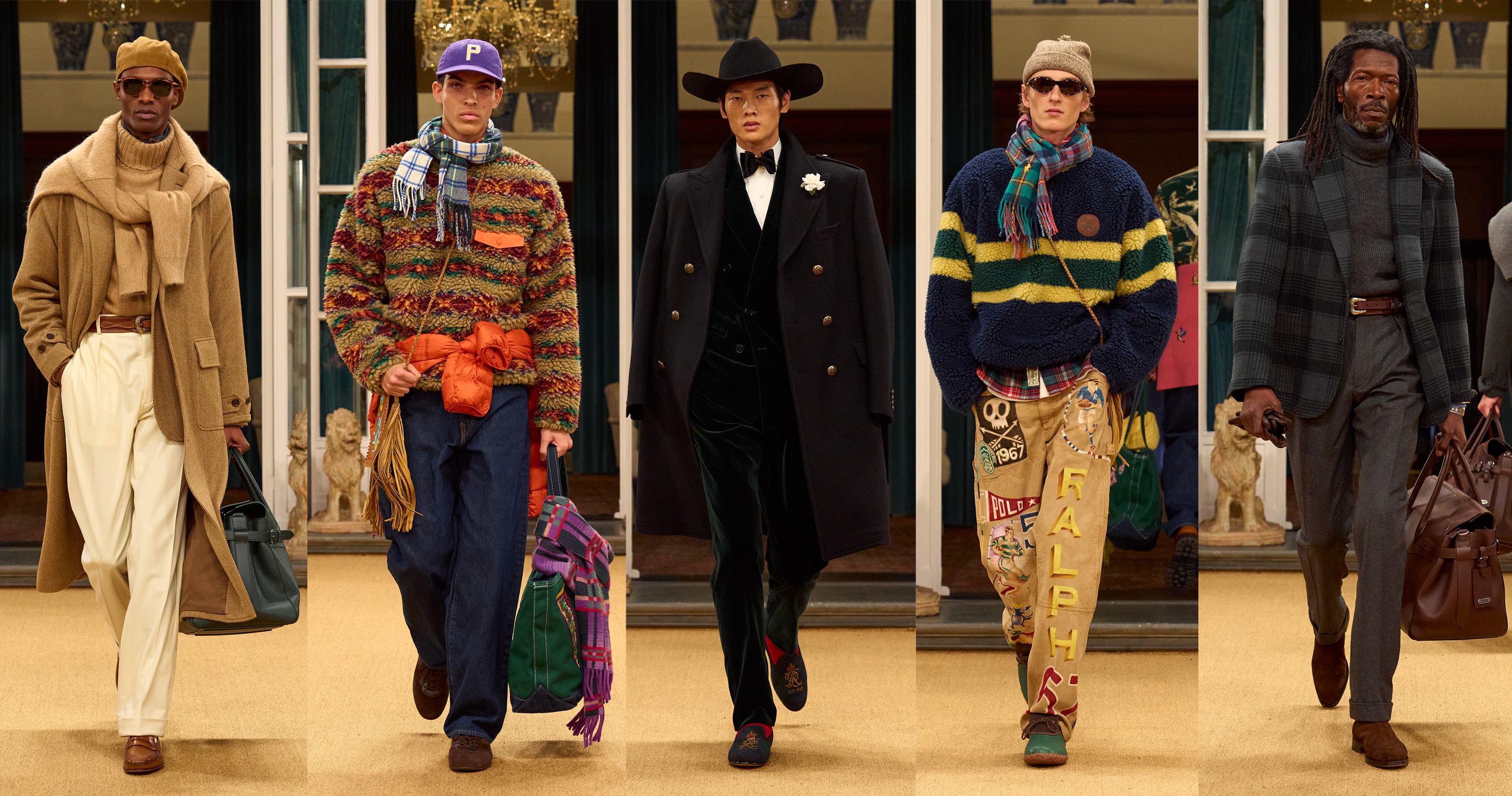
Ralph Lauren AW26
RALPH LAUREN
The designer switched up the usual presentation-cocktail format to an intimate salon catwalk show at his Milan palazzo to unveil his Purple Label and Polo Ralph Lauren AW26 collections. While the man himself stayed in New York working on his upcoming womenswear show, his son David repped him on the front row alongside Tom Hiddleston and Colman Domingo. “When I began designing menswear, I was drawn to timeless tradition but never bound by it.” Lauren said, via show notes on a stiff white card left on guests’ seats, “the Fall 2026 collections are inspired by the different ways men live, their individuality, and personal style.”First out were bold gorpcore looks from Polo, mixing heritage icons and classic American workwear reworked with Gen Z appeal. Orange and purple puffer jackets came styled with textured fleeces, and pieces from the brand’s Artist in Residence programme – by Oceti Sakowin designers Jocy and Trae Little Sky of Tópa – brought authentic Northern Plains artistry and indigenous design to the collection. Meanwhile Purple Label’s effortless elegance came through in fine cashmere sport coats, luxury double-faced finishing, and functional outerwear.
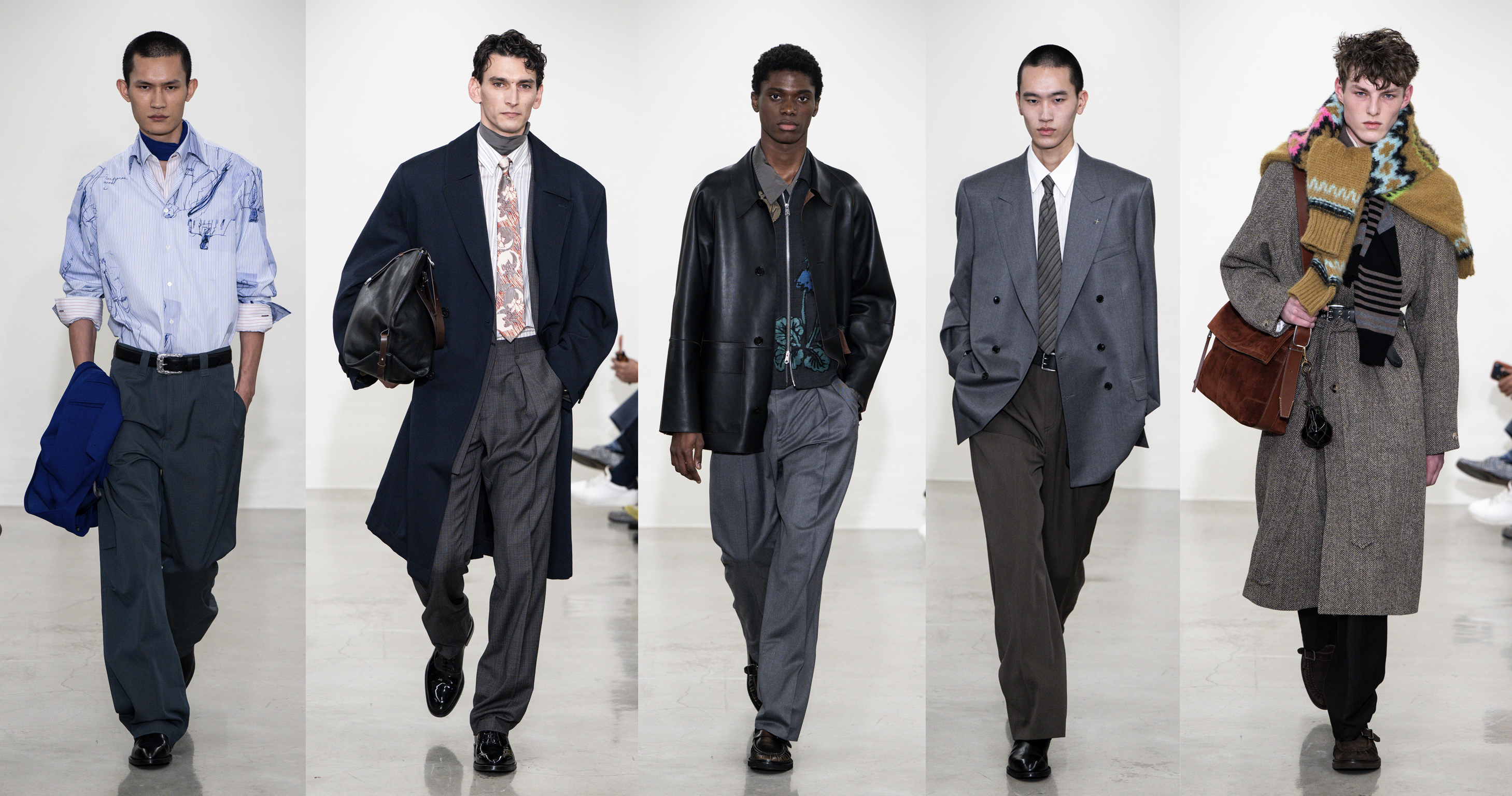
Paul Smith AW26
PAUL SMITH
The designer’s personal archive in his hometown of Nottingham houses 5,000 pieces of clothing spanning his 55-year career. Paul Smith’s young design team – headed up by recently appointed Head of Men’s Design, Sam Cotton (who was previously mentored by Smith when he was one half of London Collections: Men favourites Agi & Sam) – regularly visits the archive. “Their fresh eyes make me see things in a new way,” Smith said during the show’s voiceover. The team referenced shows and campaigns from the 80s and 90s, including an inside-out suit. Further inspiration came from artist Jean Cocteau, who was rarely seen in anything other than his signature shirt and tie. Smith’s ethos is putting classics together in a way that’s irreverent, odd and playful. Think polka-dot shirts under deconstructed tailoring, chunky Fair Isle knit jumpers worn as scarves, and floral applique embroideries on jackets. The collection was a resounding hit for the British powerhouse who celebrates his 80th birthday later this year.
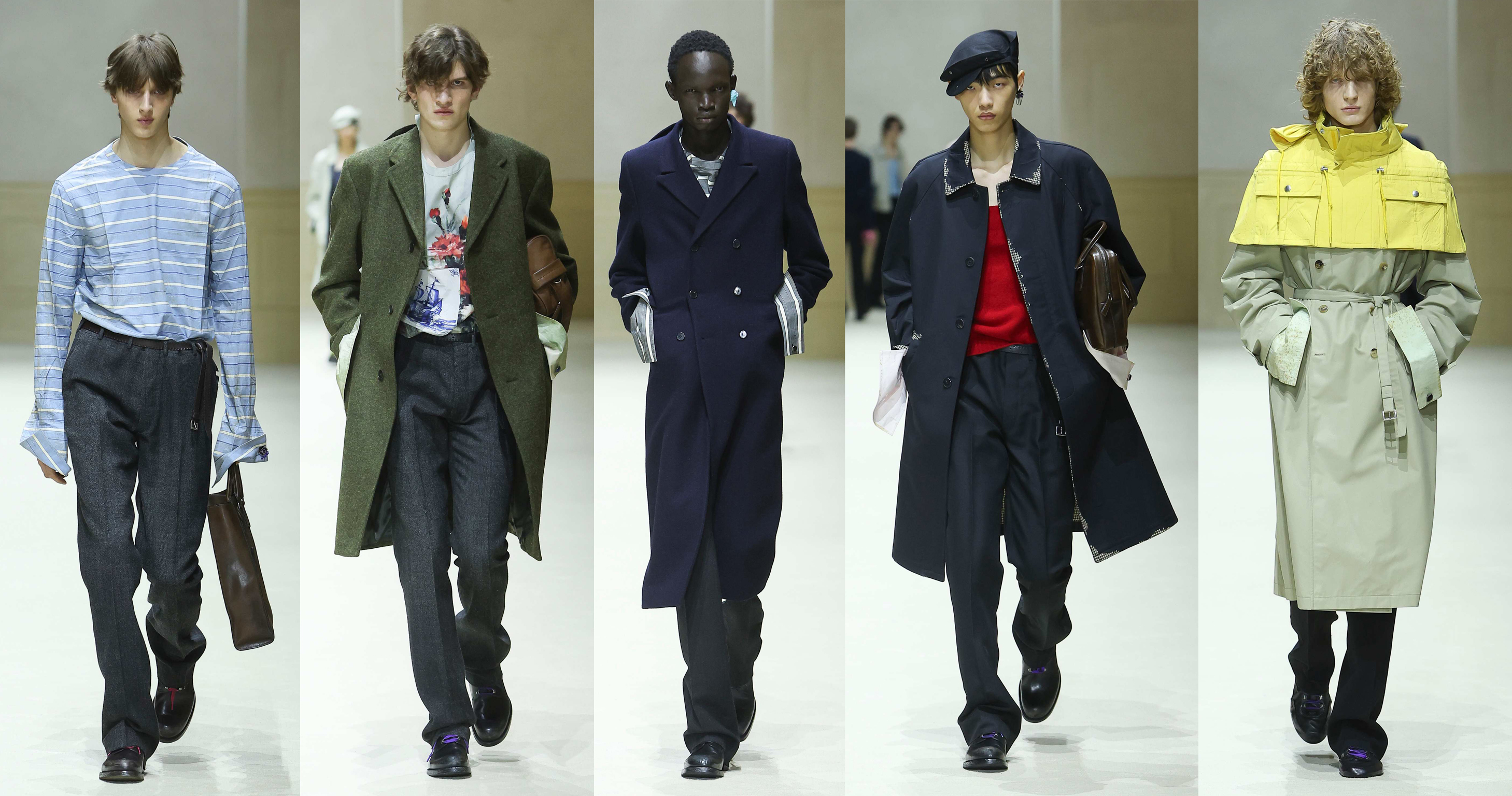
Prada AW26
PRADA
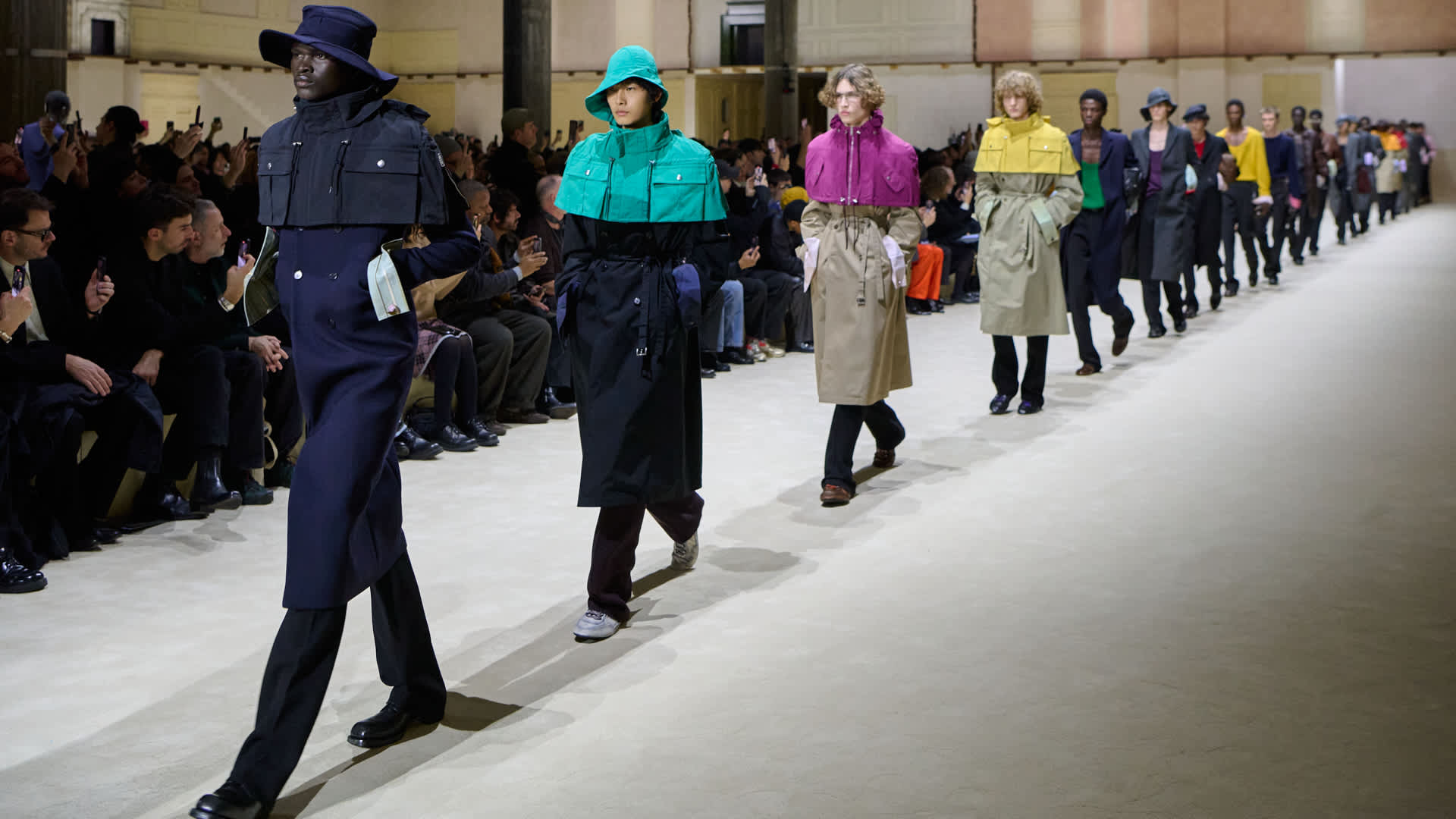
Miuccia Prada and Raf Simons presented a reset for AW26 at Prada. The show notes described how in “uncomfortable, unpredictable times, clarity provides assurance”, a theme elaborated on by the pair backstage post show to the question: what is the fashion designer’s role? “We ask ourselves the question every day,” noted Simons. “There's no real answer to it, but it’s important to ask it – you can’t operate in an ivory tower.” The collection was built on the codes of tradition, pieces composed with familiar elements transformed through a questioning of convention. A new silhouette – elongated, slim and precise – emerged. Icons of menswear such as suits, hats and shirts were reworked and made more comfortable. Hats were presented unstructured and flattened on the back of jackets. Shirt cuffs were a running theme, from the invitation (a hardback office dossier with paper cuffs inside) to the runway, where most looks were presented with shirt cuffs pulled out of jackets with dramatic flourish, splattered with coffee and fastened on one side with ornate cufflinks. (Trend followers take note, cufflinks are the new brooch.) Simons spoke of “transforming the things you love that have the wrong connotations at a certain moment at time”. The shirt worn by businessmen and politicians, a symbol of American corporate masculine power, was transformed by removing the collar, aging the fabric, changing the direction of the stripes – a quiet rebellion against a symbol of authoritarian times.
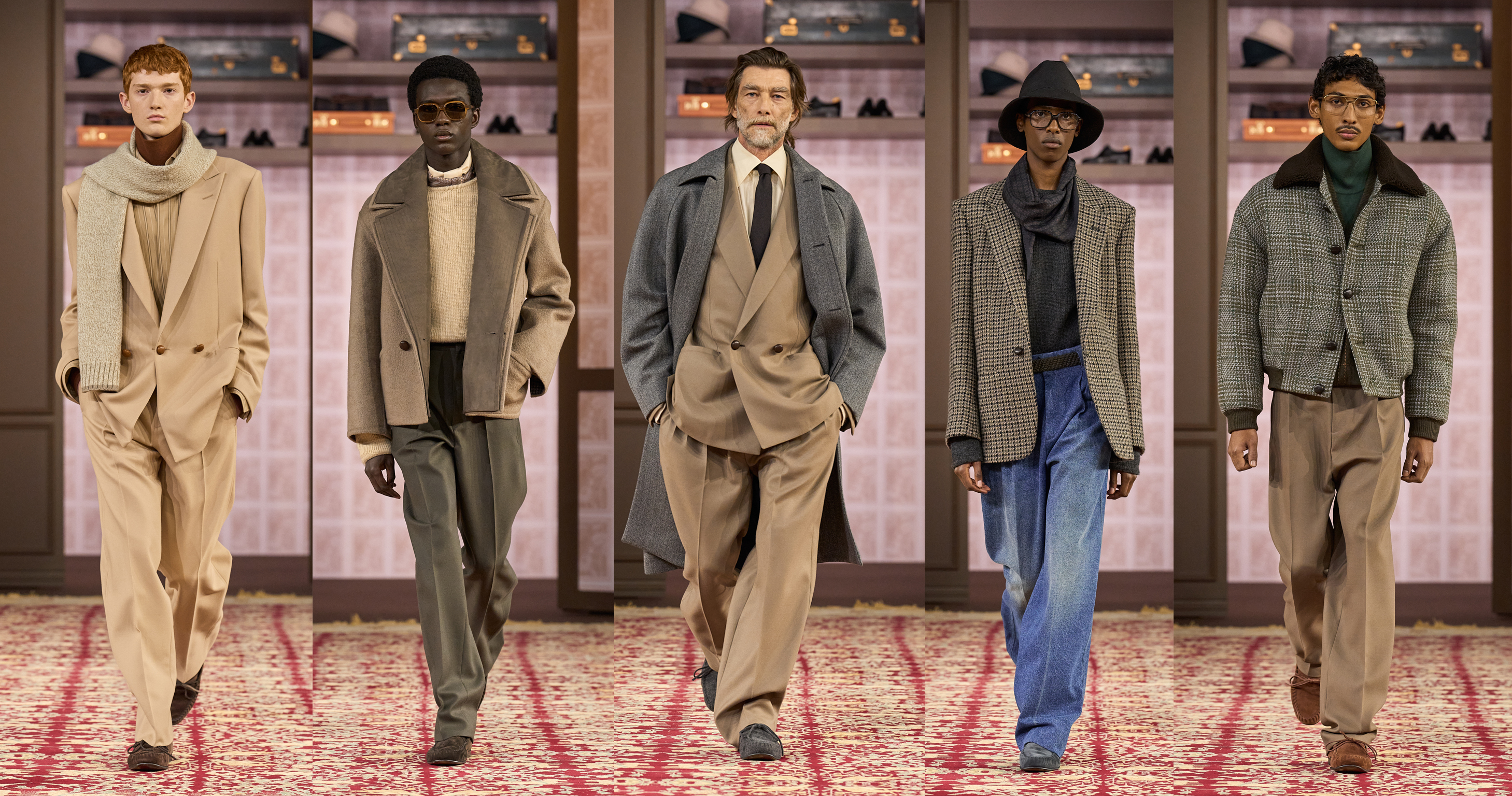
Zegna AW26
ZEGNA
The staging for Zegna AW26 was a huge walk-in wardrobe centre stage, filled with real items owned by, and passed down to Gildo Zegna (the Group Executive Chairman), and Paolo Zegna, both third generation of the Zegna family. As Artistic Director Alessandro Sartori explained in the show notes, he set out to capture “the sense of wonder that happens when one finds a piece that was owned by one's father, grandfather or uncle.” Within this giant closet, a glass display case preserves “ABITO N.1” – the first suit, crafted for Count Ermenegildo Zegnain the 1930s in 100% Australian wool, which looks remarkably contemporary. “We take deep pride and make a lot of effort in doing what we do,” continued Sartori, “so the idea of creating something that can be kept, reused and reinterpreted for a long time energises us.” With that reinterpretation, coats and jackets are longer and larger, with square shoulders and a double set of lapels in a contrast fabric; the full volume of trousers extends from a high, cinched waist. The double-breasted jacket is reworked with the addition of a central button positioned between the traditional closures, allowing the jacket to be worn either as a classic double-breasted or fastened on the additional button, creating a looser, more open fit.
Saul Nash AW26
SAUL NASH
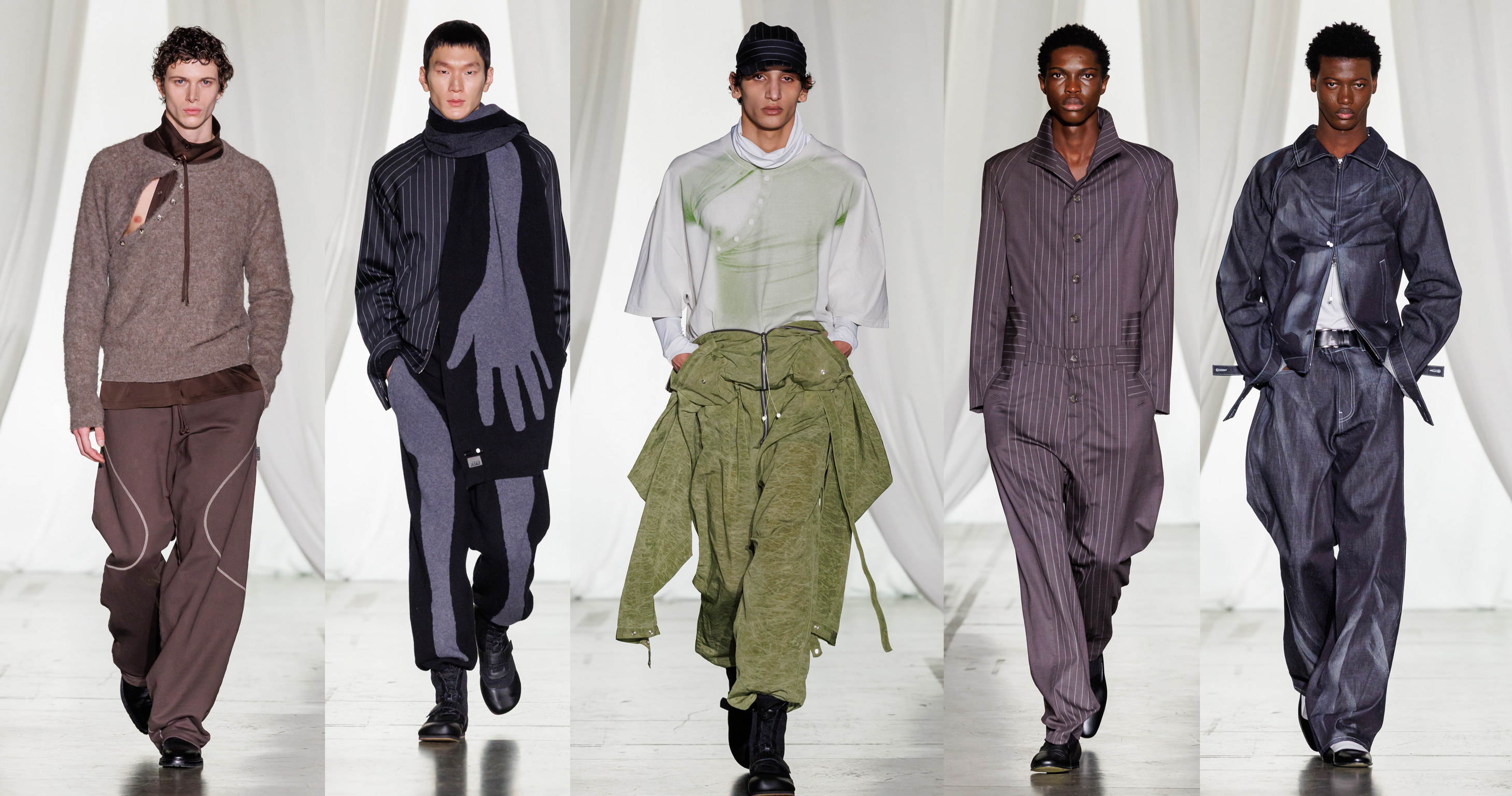
It wouldn’t be a Saul Nash show without an element of performance. AW26 opened with four dancers in black tracksuits, and with faces masked, moving through billowing white fabric. Taking the theme of masquerade, inspired by Notting Hill Carnival, Nash played with the ideas of transformation and disguise through clothing. “I wanted to create a collection that empowers the wearer,” Nash said backstage. “These are clothes that can act as a form of masquerade in your own life; a medium to embody who you want to be.” As with past collections Nash played with the formality of tailoring and ease of casual wear; a technical tracksuit was printed with the silhouette of a suit, and Wall Street tailoring became an all-in-one pinstriped jumpsuit – an alternative answer to formal dress codes. Suit jackets came with built-in hoods and detachable sleeves and compression tops, a signature Nash piece came printed with a hazy body motif. Shout out to the bounciest bow of fashion week.
Giorgio Armani AW26
GIORGIO ARMANI
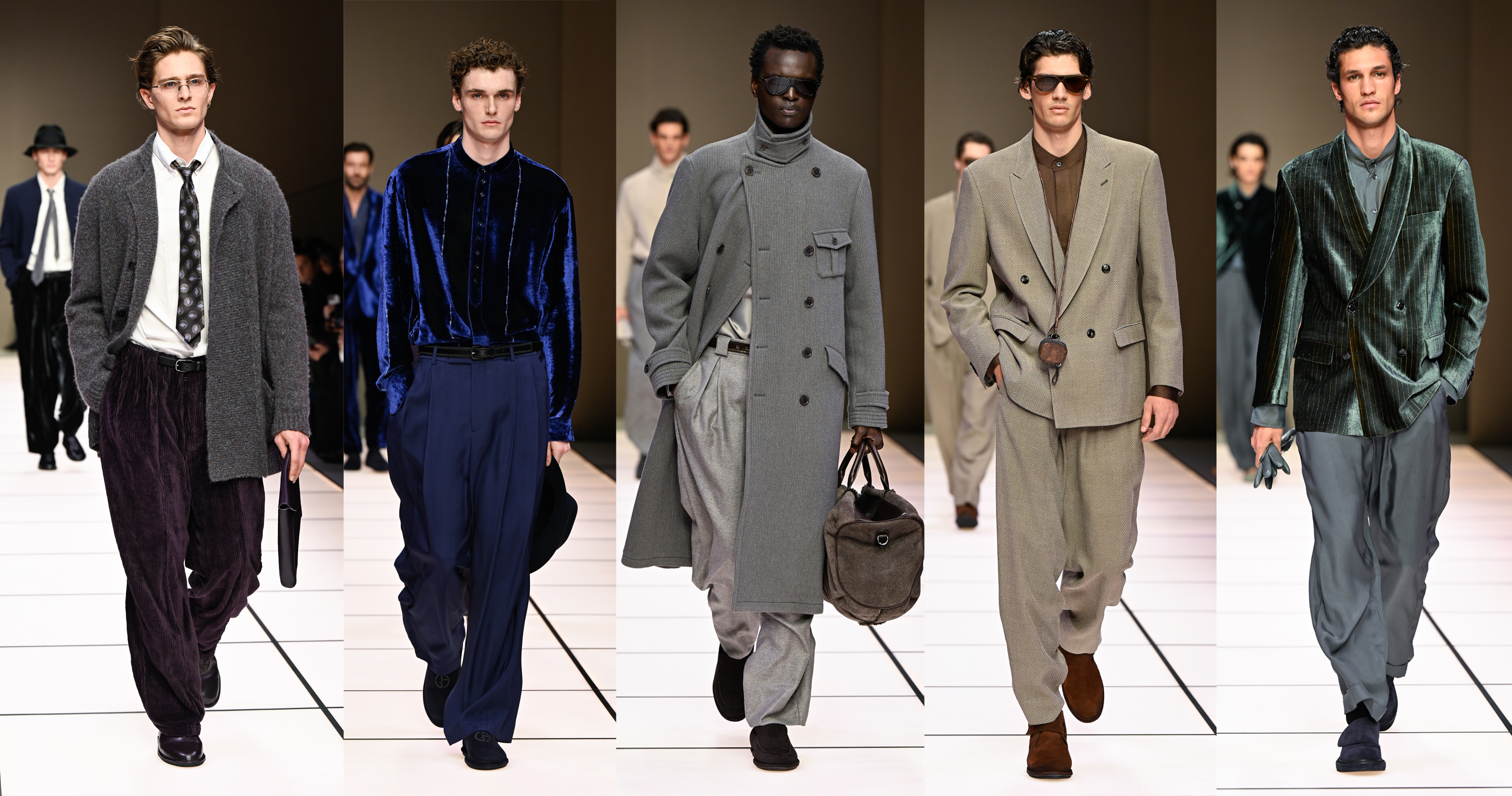
The AW26 Giorgio Armani menswear collection marks Leo Dell’Orco’s solo debut in the top job following the death of Giorgio Armani last September, and with whom he worked alongside for 40 years. Titled Cangiante, in reference to an iridescent glimmering fabric that changes colour, the collection featured velvet, crêpe and chenille deployed with this effect. Luminous but restrained colour was at the centre of the collection. Notes of olive green, amethyst purple and lapis blue stood out against a palette of greiges, neutrals, blacks and deep blues. The silhouette was fluid with relaxed volume: blousons, low-buttoned jackets and enveloping coats. Trousers were wide and puddled over footwear. Fashion’s tie-naissance continued here with relaxed knots on patterned silk ties worn with velvet trousers, cardigans and shirts with the top button undone. A geometric jacquard cardigan was a collaboration with knitwear brand Alanui.
Dolce & Gabbana AW26
DOLCE & GABBANA
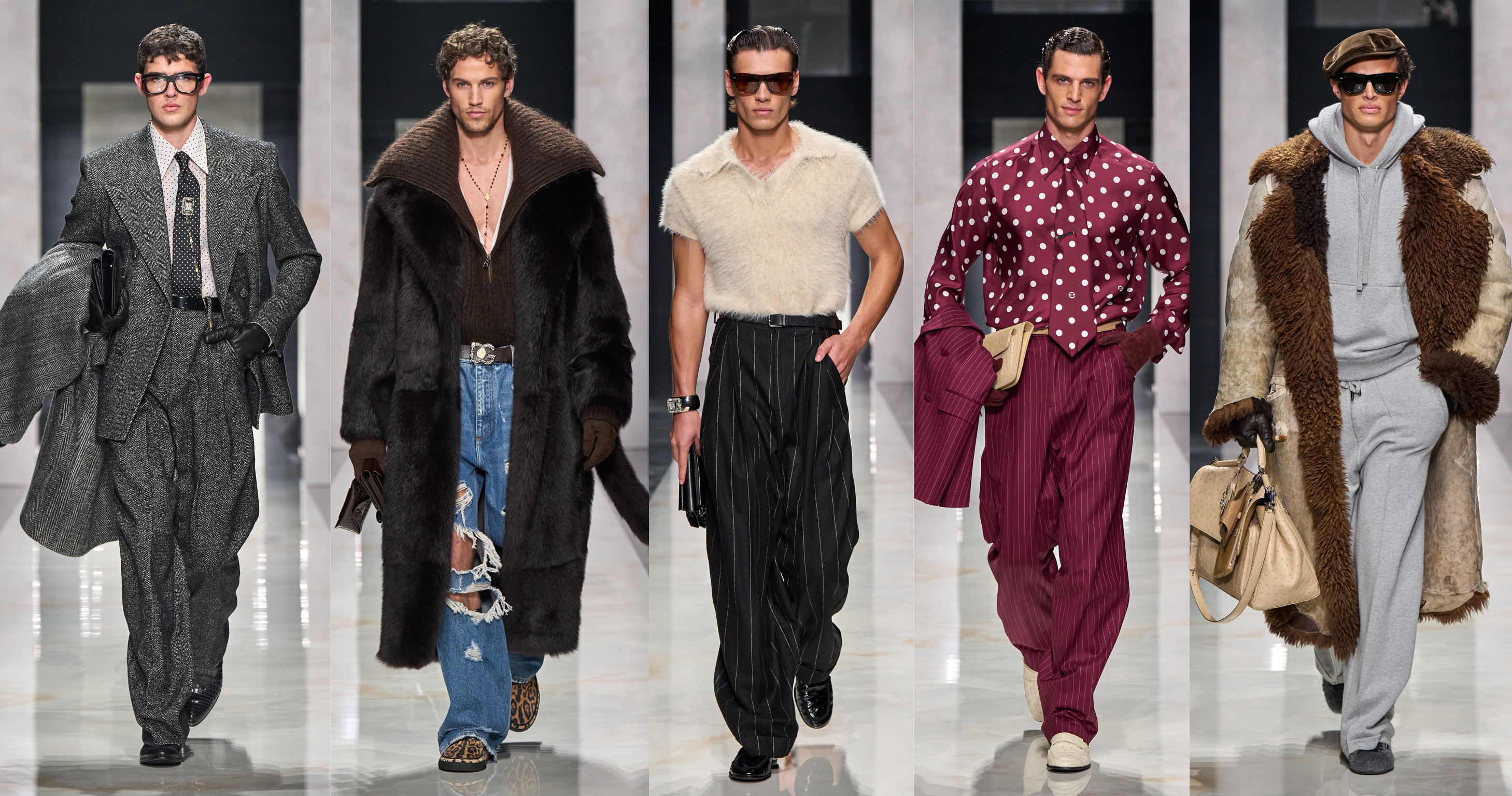
The Portrait of Man, Dolce & Gabbana’s AW26 collection, offered a myriad of wardrobe solutions from faux fur and shearling coats designed to make an entrance, cuddly mohair knits and ripped jeans, while the tailored silhouette came with a strong shoulder and wide-leg, pleat-front trousers in herringbone wool or pinstripe. Blouson leather jackets, belted wool trench coats, polka-dot silk shirts and a tuxedo finale completed the offering. However, the show attracted controversy due to the lack of diversity in its 100-strong model casting. In contrast to the manifesto stated in the show notes – and in the intro narrated film which proclaimed: “There is no single way to be a man, there are infinite possibilities, each one deserves its portrait” – the parade of models represented a singular look: that of a dark haired, white man. Content creator and host of viral fashion-watch parties Elias Medini (known professionally as Lyas) posted a video using the model board as a backdrop, calling out the casting as “50 shades of white”. So far it’s gained support from model Bella Hadid and reached over 2 million views.
Setchu
SETCHU
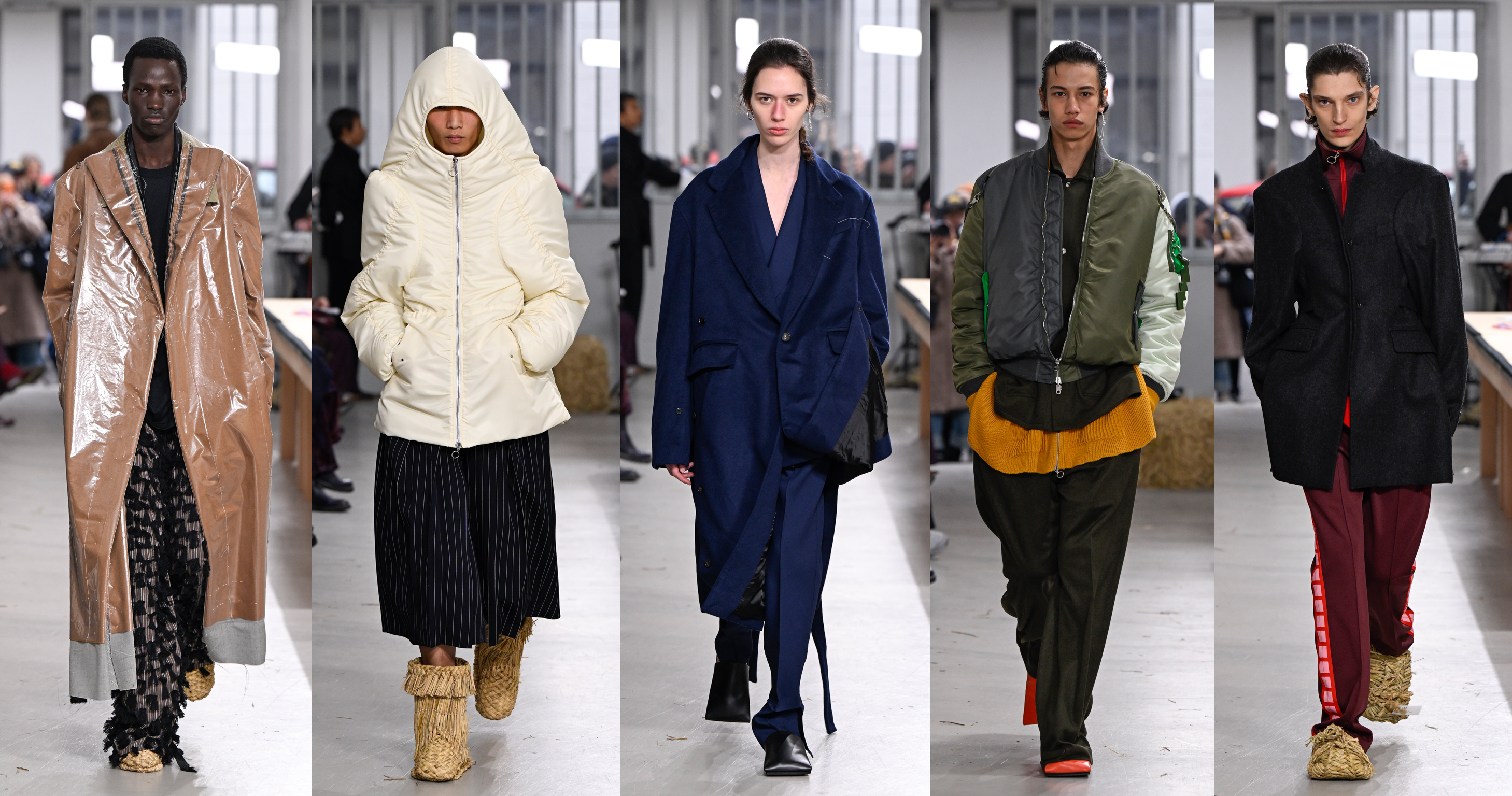
A fishing expedition to Greenland inspired Satoshi Kuwata’s latest Setchu collection. (The name Setchu comes from the Japanese term Wayo Setchu, meaning a Japanese-Western compromise; a meeting of cultures.) The extreme conditions of the Greenland landscape, where very little grows and the wind is intense, as well as references from traditional outfits of the Inuit community, informed the design of transformable garments and cocooning outerwear. Armholes were pitched further forwards to mimic drawing a garment inwards to the body against the cold. Standout pieces included a tote bag that Kuwata demonstrated unzipping and unfolding into a coat.
Opening photograph: Prada
Newsletters
Choose the newsletters you want to receive
View more
For information about how The Observer protects your data, read our Privacy Policy