

Simone Rocha
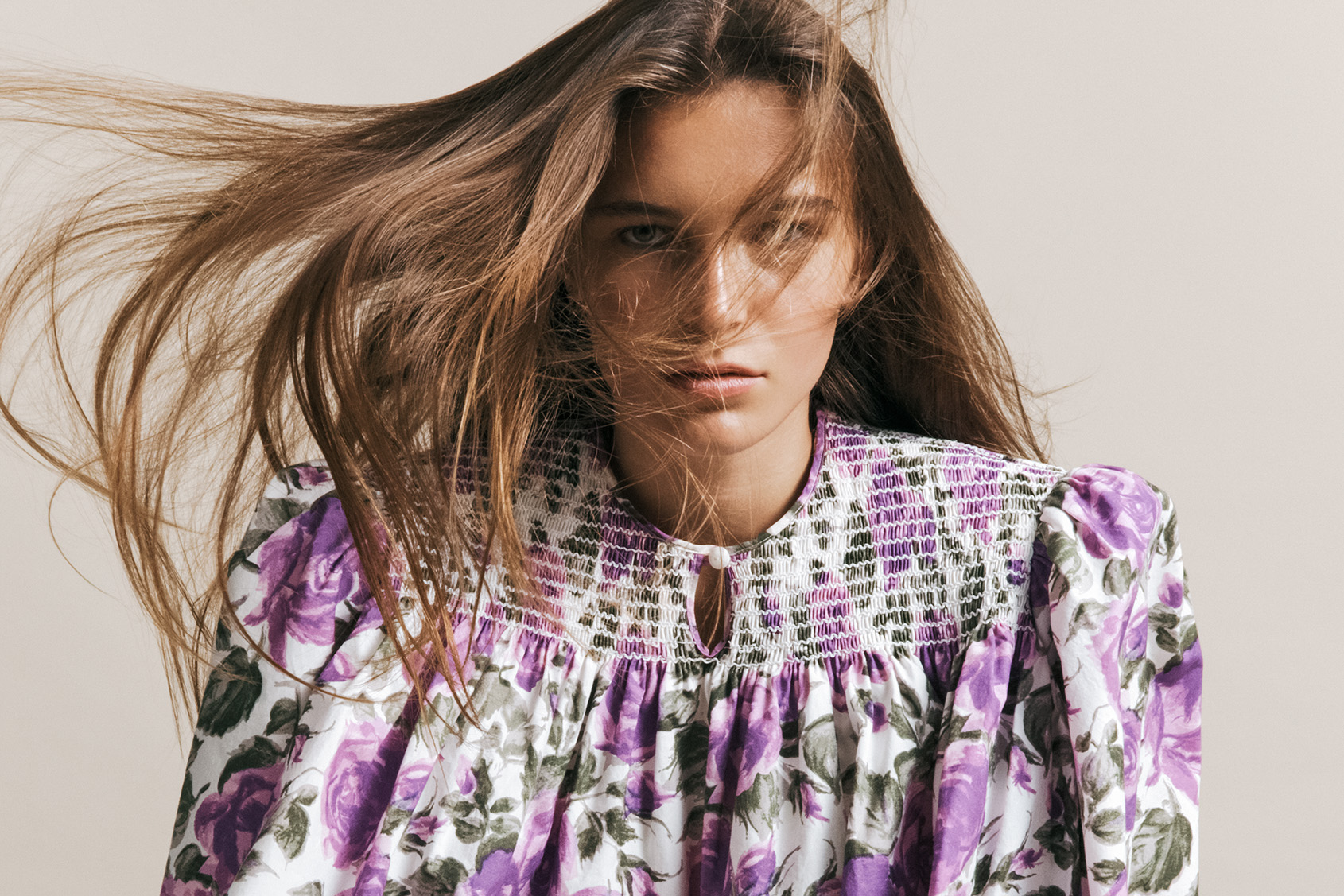
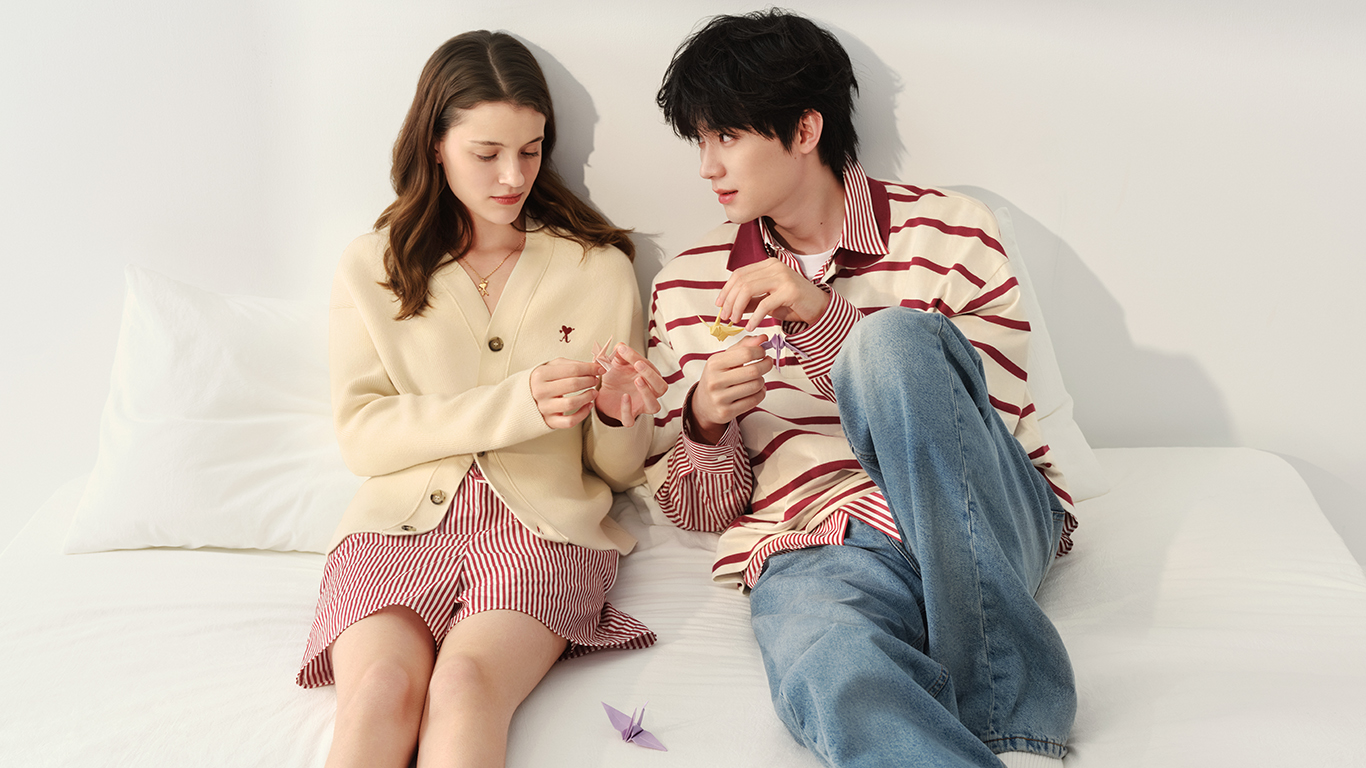
Simone Rocha’s show notes read like a poem, listing her inspirations for this season, which include Tír na nÓg (the land of the young in Irish myth), a magical horse, rose tapestries and tweed tailoring, Irish photographer Perry Ogden’s Pony Kids series and Elizabeth and Lily, WB Yeats’s “weird sisters” (as James Joyce dismissively referred to them in Ulysses), who established the Cuala Press, specialising in handprinted books, and employed only women. Throw in an unexpected (but welcome) collaboration with Adidas Originals and you have a heady mix of track tops and streamlined leotards alongside lace dresses, rose-strewn cotton tops and parkas, and shearling-style jackets that riffed on the Pony Kids look. Tailored pieces in grey flannel and pinstripe span men’s and women's wear. Funnel-neck track jackets featured pearl drop zip-pulls. Dresses, coats, and bags were decorated with dressage ribbons and rosettes. Even the Adidas trefoil logo received a bow makeover. The faded grandeur of Alexandra Palace Theatre provided an atmospheric setting for Rocha's captivating fashion fable.
Erdem
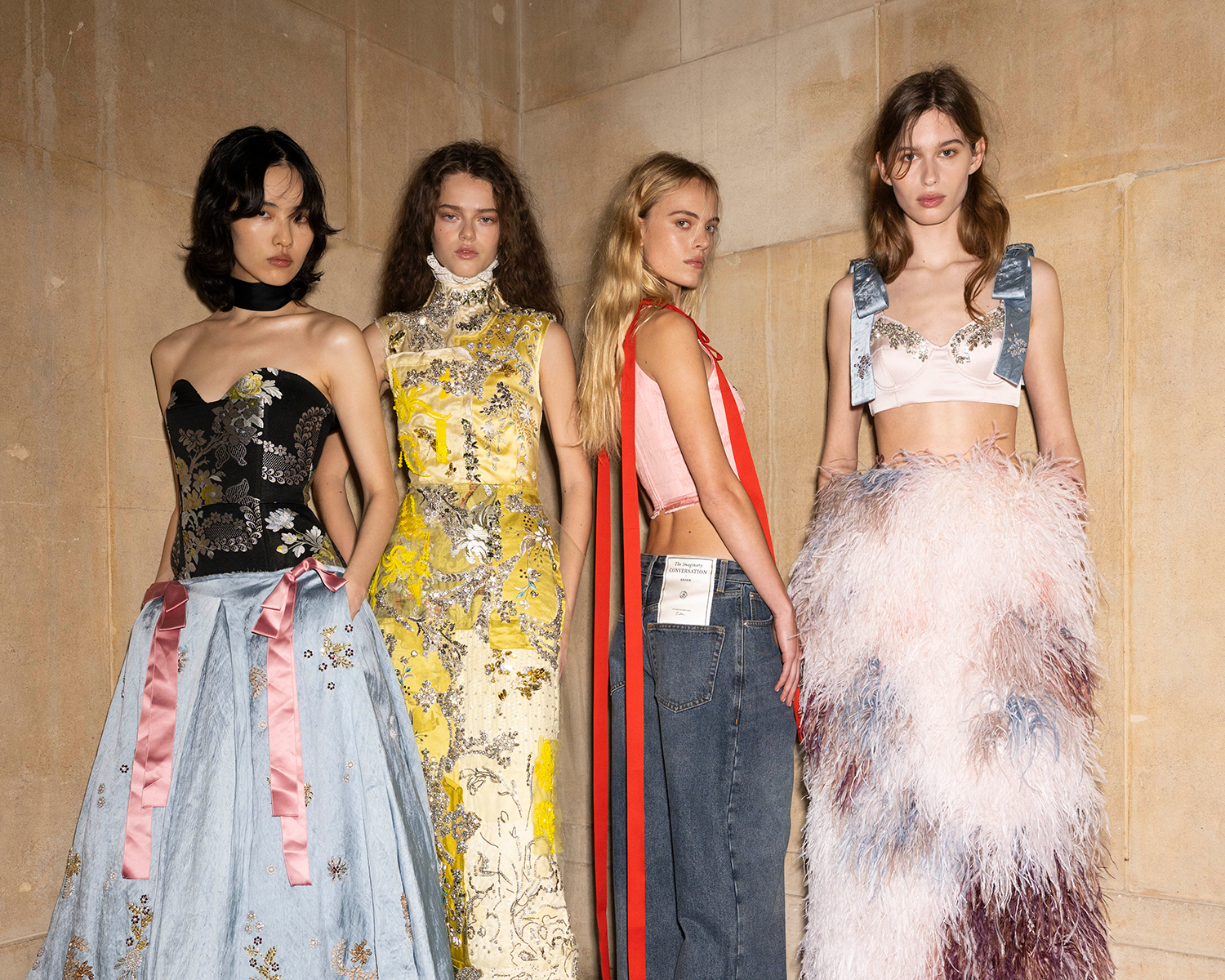
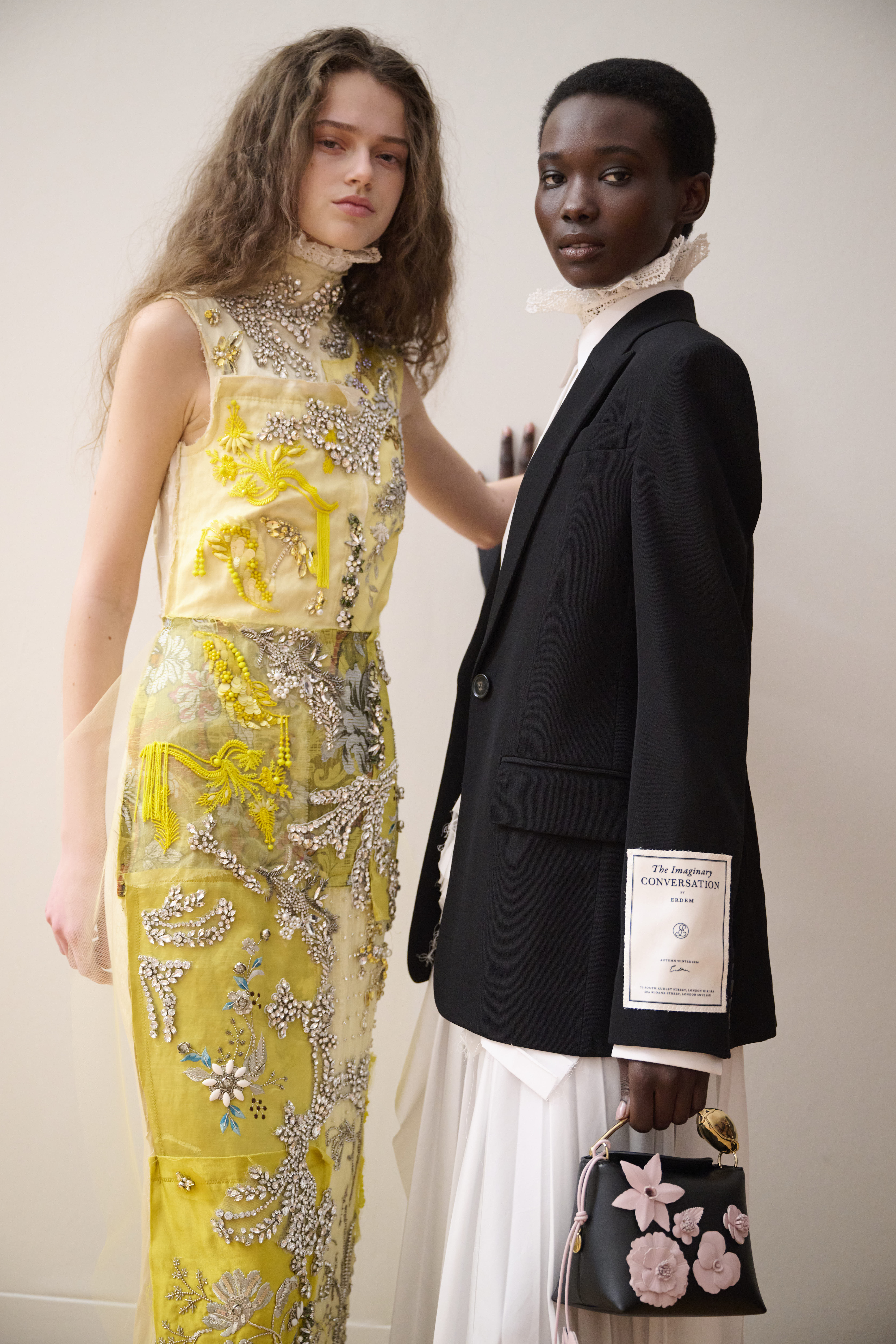
Erdem Moralıoğlu decamped from his regular venue at the British Museum to Tate Britain for his Erdem 20th anniversary show, The Imaginary Conversation. Celebrity fans including Helen Mirren, Keira Knightley and Glenn Close, and designer pals Christopher Kane and Roksanda Ilincic, all turned out to celebrate the independent London house's unique brand of magical romanticism with an edge. The collection recalled many of Erdem’s greatest hits and included a reworked wedding dress from his first show, alongside two one-of-a-kind Barbour showpieces that nodded to his SS25 collection, referencing “Debo”, the Duchess of Devonshire. Moralıoğlu explained via a letter left on guest’s seats that his inspiration has always been “a continuous exchange… with women whose lives and legacies resonate across time and beyond borders.” Past inspirations have come from a wide range of women, from opera singer Maria Callas o poet Radclyffe Hall. Standout pieces included a high-neck canary yellow patchworked sleeveless fitted dress with crystal embellishments worn with yellow feather shoes, and a cropped pink satin top with floor sweeping red bows, worn with jeans and a long-sleeve ballerina skirted red lace dress, modelled by Edie Campbell.

Burberry
The incessant rain in the UK made it to the runway at Burberry. In a life-imitating-art moment the scene outside the Old Billingsgate venue – pavement slick with rain and a twinkling Tower Bridge backdrop – was replicated inside with black resin puddles on the catwalk and a model of Tower Bridge covered in fairy lights centre stage. The collection captured the character and energy of London after dark. Chief creative officer Daniel Lee said the AW26 Burberry collection was about “going out in a particularly London way… We all feel the same buzz of the city at night”. (If there’s one thing Londoners love more than moaning about the weather, it’s a night out). Lee gave outerwear an eveningwear spin with pleated silk poplin and ruffled-collar trench coats cut from fluid faille (as worn by Teyana Taylor at the Baftas on Sunday). Check rainwear in coated jacquard and signature trench elements appear throughout the collection, as belts and cuffs in contrasting leather, throat latches on double-faced wool pea coats and epaulettes on knitwear. Leather played a key role, mirroring the rain-slicked black tarmac. It appeared in long trenches, shirts tucked into pleated skirts, trousers and a belted jumpsuit. Elsewhere, realistic-looking faux fur (a key trend in London this week) came in big collared coats and bomber jackets. All fit for the Queen of the capital’s party girls, Kate Moss, who sat front row with her daughter Lila.

Tolu Coker
For AW26, designer and 2025 LVMH Prize finalist Tolu Coker kickstarted London Fashion Week with King Charles and Little Simz on the front row, flanked by some of British fashion's most esteemed designers: Martine Rose, Priya Ahluwalia and Stella McCartney were all out in force to support the fast-rising star. The London-based British-Nigerian designer is best known for her sustainable and socially conscious approach to fashion, her work often highlighting issues surrounding community and identity. The latest collection, Survivor’s Remorse, was a fusion of music, bright colour and uplifting prints, with Coker reminiscing on the 90s, her formative years. Coker transformed the show space into a west London street scene, complete with street lamps and tube signs. Murals of different generations of Black Londoners were painted on the surrounding walls and a live band accompanied by Little Simz created a carnival atmosphere. The show was upbeat, opening with Coker's signature silhouettes: a waisted mini dress with puffball sleeves; cropped double-breasted jackets with flounced skirts. Crisp coats in pops of colour and bright plaid tailoring were structured with precision. Every now and then came a twist, such as a neckline designed to fold over like it was being shrugged off, a swaying peplum detail or a bright shirt featuring elongated cuff.
Karoline Vitto
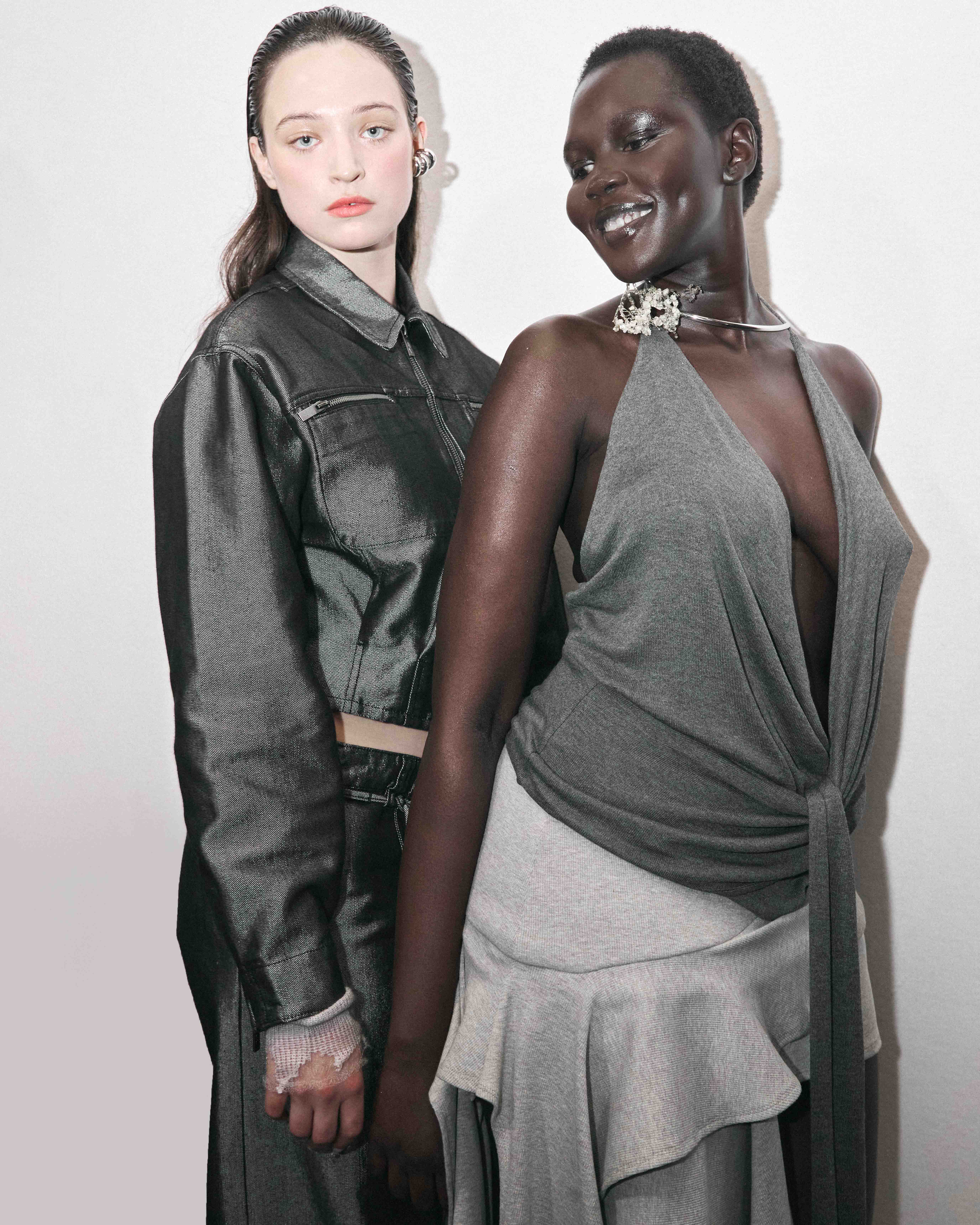
Brazilian-born designer Karoline Vitto's return to the runway schedule saw the designer continue her determination for inclusivity, both in her designs and her shows. Vitto pays close attention to the fit of her clothes, utilising her casting process, where she is exposed to so many bodies. It was refreshing to see plus-size models back on the catwalk as casting has shrunk back to skinniness across the industry. Vitto's design DNA makes curvy girls look sexy and empowered, and judging by the front row, her clients were overjoyed to see her return. The collection featured body-con dresses in light wool with exposed peek-a-boo cut-outs at the waist and shoulders. Halter-neck and sleeveless high-neck blouses worn with figure-hugging skirts ruched high up the thigh. Deadstock jersey was draped around the body every which way, some bias-cut that skimmed the figure. Silhouettes were formed simply and minimally by fabric folds, with clever tucks and pinches of fabric to create shape. Printed and coated denim pieces were peppered throughout. Her collaboration with high street brand Pull&Bear launched on the day of the show.
Raw Mango
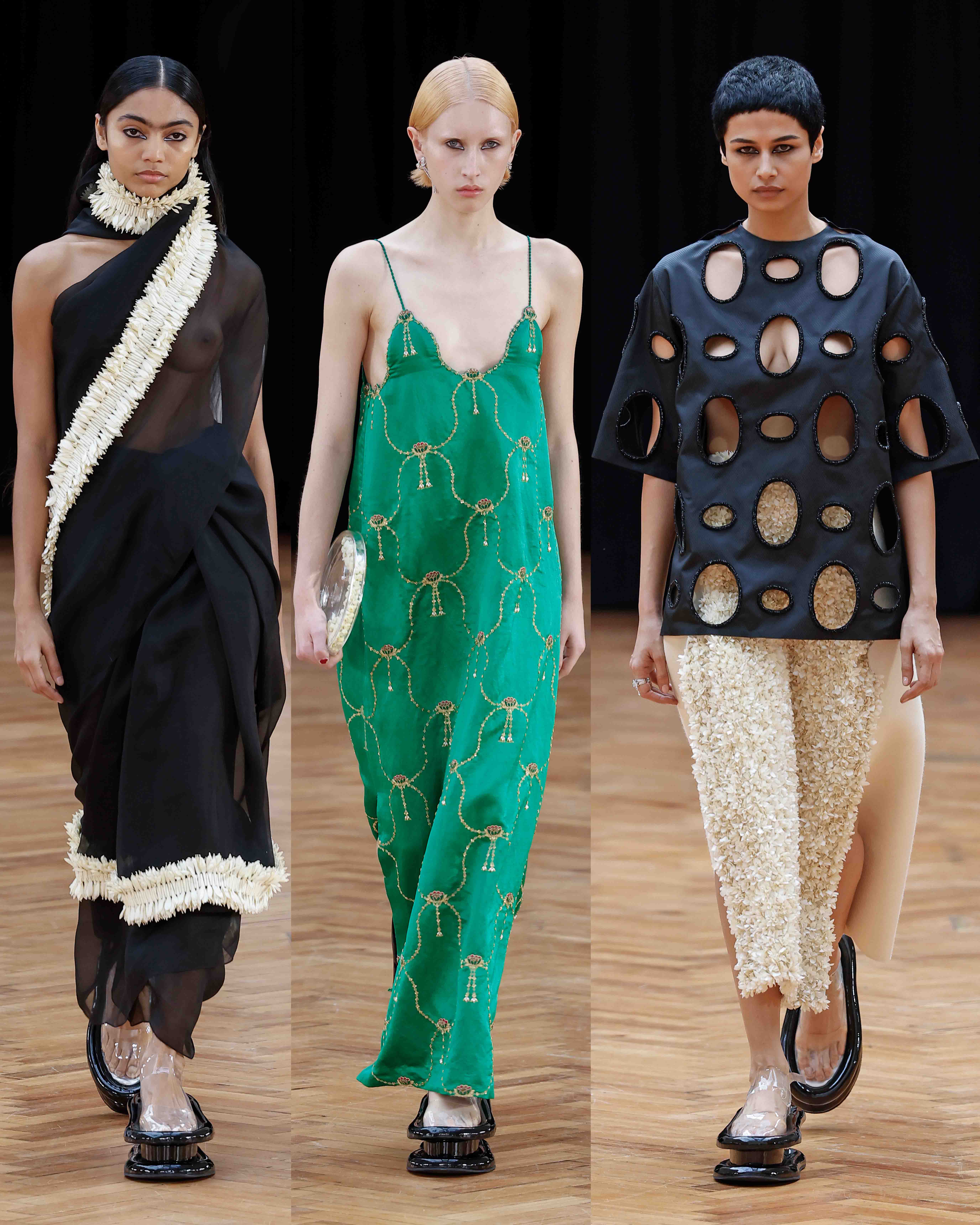
Indian label Raw Mango made its London debut on the final day of fashion week. The collection, called It’s Not About the Flower, was presented at Westminster’s Lindley Hall and explores the significance of the floral garland in Indian culture. Founder Sanjay Garg, a textile designer who started the brand in 2008, working with handloom weavers to produce a line of six saris. This AW26 collection explores how the garland emerges through gathering, becoming a social object which is shaped by landscape, community, season and belief. The clothing created by the brand is shaped through the work of over 1,200 weavers across India – from Rajasthan, Madhya Pradesh, Andhra Pradesh, West Bengal and Varanasi. For AW26 floral structures are reconstructed through handwoven textiles which cascade down from a bralette, carve out the swooped necklace of a cropped vest top or spiral from lapels wrapped around the neck. The collection felt modern and celebratory of the female body with dresses and tops having circle shaped cut-outs or sheer material that revealed the skin of the wearer. Bursts of emerald green and neon yellow were present in a string of vibrant dresses in both traditional and modern more figure hugging shapes, many of which were embroidered with intricate floral motifs. Raw Mango was a welcome addition to London fashion week, a collection that was impeccably constructed and full of energy, we hope it here’s to stay.

Labrum
For AW26 Labrum founder Foday Dumbuya presented Threads of Osmosis, the second chapter in the Labrum trilogy (last season covered sound), exploring how textiles record migration through the way they are made and altered as they move across continents.
The collection's fabrics came from far and wide including, Japan, India, Italy, Scotland, and Sierra Leone. British tailoring remained the foundation, but it became a base for global craft. Labrum's passport print carries new stamps and motifs for AW26 reflecting the changing nature of migration. It appears laser-etched into Japanese indigo denim on a suit and woven into rich jacquards used for dresses, tailoring and the finale trench coat look. Rich with references, the collection was accompanied by an essay by Dumbuya investigating textiles as evidence of cultural exchange. A cord appliqué dress draws from West African braided hairstyles, crocheted bags reference Sierra Leonean pottery and raffia craft and headwear references the accordion-shaped hats of Agadez warriors. As Dumbuya stated in his show notes, “The world is better when we understand each other’s cultures. When we see migration not as a threat, but as exchange.”
Oscar Ouyang
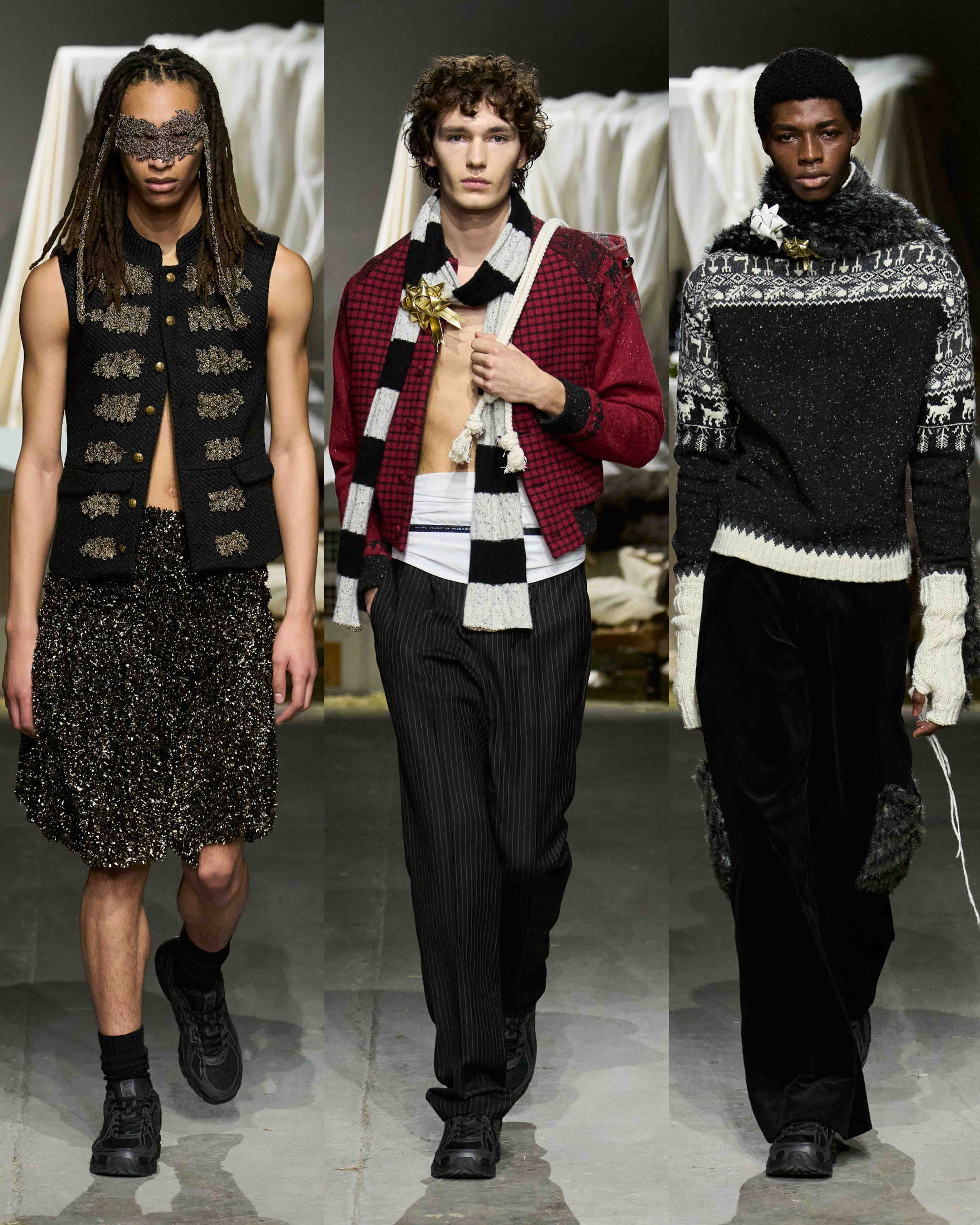
Chinese-born Oscar Ouyang’s The Last Party collection explored the imagined life of an aristocratic family who have become unexpectedly bankrupt. The teenage children, oblivious to the reality of the crippling debt, decide to commemorate their last night of luxury by pulling on the luxurious wardrobe of their elders and throwing a debaucherous party. Ouyang transformed the New Gen show space into a chic but chaotic medieval after-party. Dark wood cabinets and ornate gold mirrors peeped out from underneath large dust sheets whilst the floor was littered with upturned bottles of beer and wine. Silhouettes unpacked traditional British tailoring by way of military safari-style jackets that were luxuriated in a French wool tweed. Similarly to previous collections, the majority of the clothing comes in the form of knitwear, which Ouyang sources from mills in Italy, China, Mongolia and Ireland. Fair Isle knits have an almost iridescent look with panels that seemed to twinkle underneath the catwalk lights. Dress shirts, draped cumberbands and animal masquerade masks felt reminiscent of Emerald Fennell’s Salt Burn and a handful of miniature leather rosettes were pinned to lapels and scarves. We think it's safe to say: there ain’t no party like an Oscar Ouyang party.
Maximilian Raynor
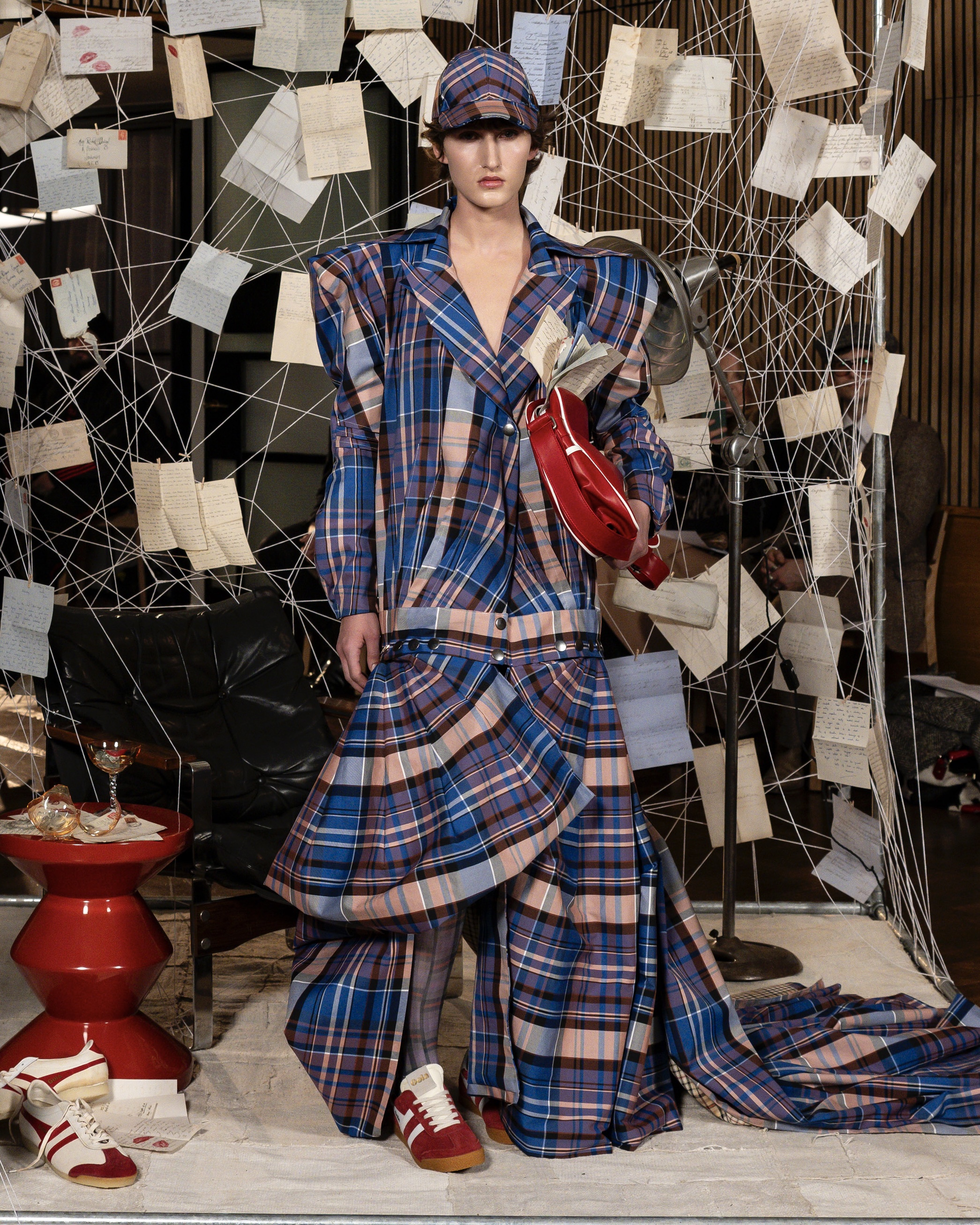
Post Me Your Last Kiss, Maximilian Raynor's AW26 collection, referenced heartbreak. Raynor, best known for his theatrical storytelling and non-conforming designs, channelled this theme throughout the collection, opening with a voluminous checkered tartan jacket and asymmetric skirt, while the model clutched a bag brimming with handwritten letters. Next came a two-piece skirt and jacket whose fabric was reminiscent of crumpled brown parcel paper tied by a string. Raynor's use of upcycled and waste fabrics has brought him both admiration and recognition; his knack for intricately weaving these fabrics into sculptural looks with such precision has elevated the designer to the top of the “ones to watch” list. His tactile signature chunky knotted woven looks came in leather, with the structure's core formed from starch-like bodices. Another green plaid ribbon dress appeared with a Victorian-inspired silhouette, later followed by a lace mourning style gown whose funnelled neckline came reimagined as a contemporary mourning veiling, closing the collection with a deconstructed red velvet gown with exquisitely formed geometric panels.
Pauline Dujancourt
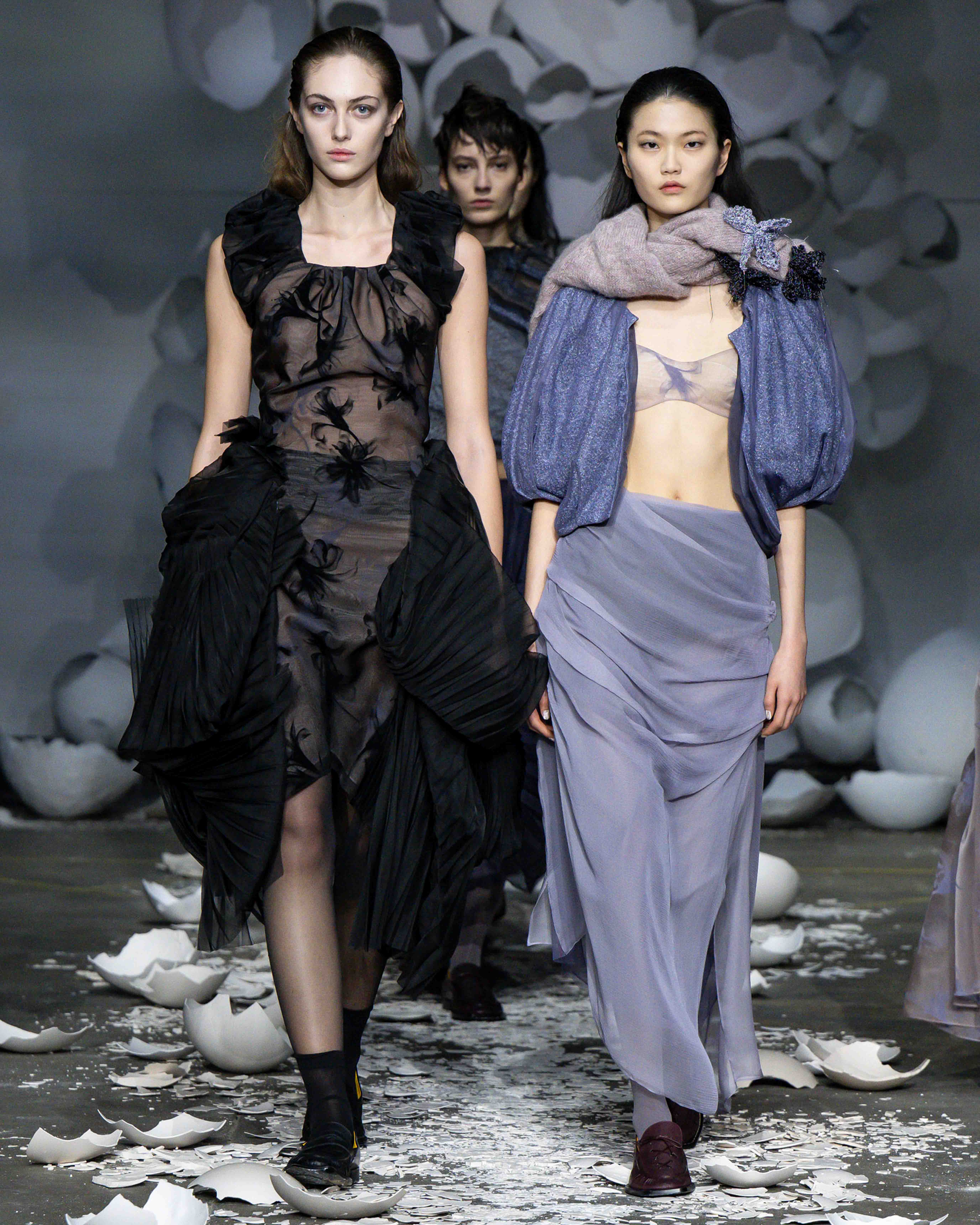
Walking on Eggshells, Dujancourt’s AW26 show, featured a runway of smashed eggshells and sculptures inspired by Maria Bartuszová’s abstract white plaster sculptures. Dujancourt drew from themes of womanhood and witchcraft persecutions, influenced by Mona Chollet’s book, In Defence of Witches: The Legacy of the Witch Hunts and Why Women Are Still on Trial. Dujancourt’s designs reflected that many “witches” throughout history were killed essentially for being part of an all-female community. After seeing images of witches at home in their beds in the dark, making lace with wooden bobbins, the designer realised the comparison to her team and decided to mirror those techniques. Her team works in unison each season, weaving the intricate fabrics that become the collection. Crochet, handknitting and tulle macramé were employed on dresses, shirts and skirts, constructed from over 80 strips of fabric wrapped around and woven together, giving garments a structural framework. There were plenty of all-black looks, a skirt cut from swirls of pleated silk, and a dress with a lace front and knitted bell sleeves. Later came intricately handknitted alpaca outerwear pieces, which featured woven hoods and pockets reminiscent of tulle, followed by chiffon silk looks that create a mystical illusion through pleating and movement. Dujancourt’s skill lies in her ability to make the heaviest of knits appear featherlight and other worldly.
Newsletters
Choose the newsletters you want to receive
View more
For information about how The Observer protects your data, read our Privacy Policy
Denzilpatrick
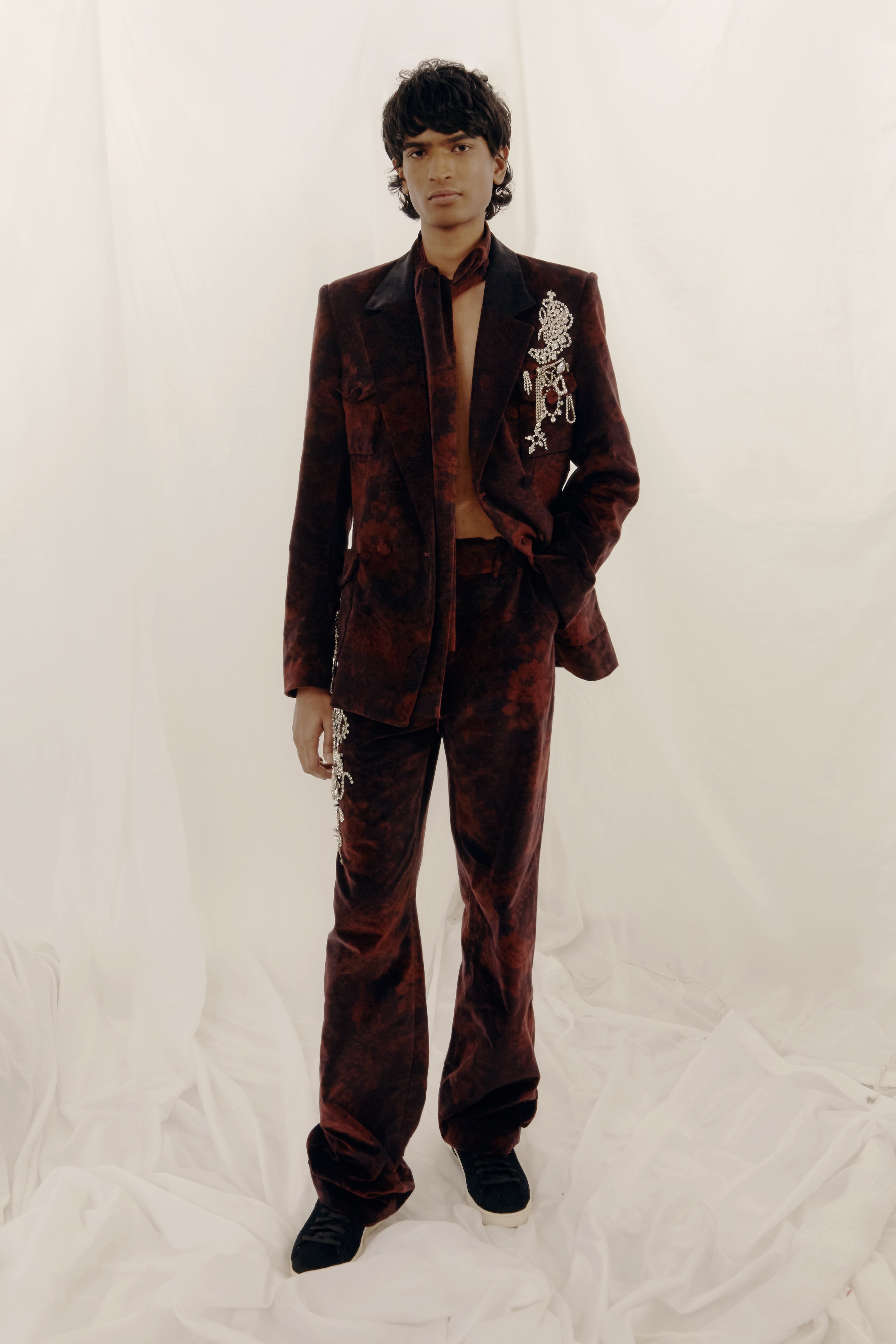
Founder and creative director Daniel Gayle and artistic director James Bosley chose an intimate presentation accompanied by a live piano performance to show their AW26 collection. The south London based duo showed a concise edit of 10 looks drawing on the brand's signature styles including Pearly King and Queen button embellishments, seen on a shirt bib and elevated sportswear – a red nylon bomber jacket had a curved tail coat hem with a majestic black feather trim. Mixing domestic charm and ceremonial regalia has become part of the brand’s handwriting. The print on a velvet suit came from a photo of Gayle’s grandmother's carpet and the crystal embellishments are a nod to childhood raids of his mum's jewellery box. A lace print shirt was made by spray-painting through net curtains. It’s five years since the brand launched and it continues to go from strength to strength, counting a piece in the Costume Institute’s permanent collection following the Met Gala Superfine exhibition among its achievements. Proof that small can be mighty.
Toga
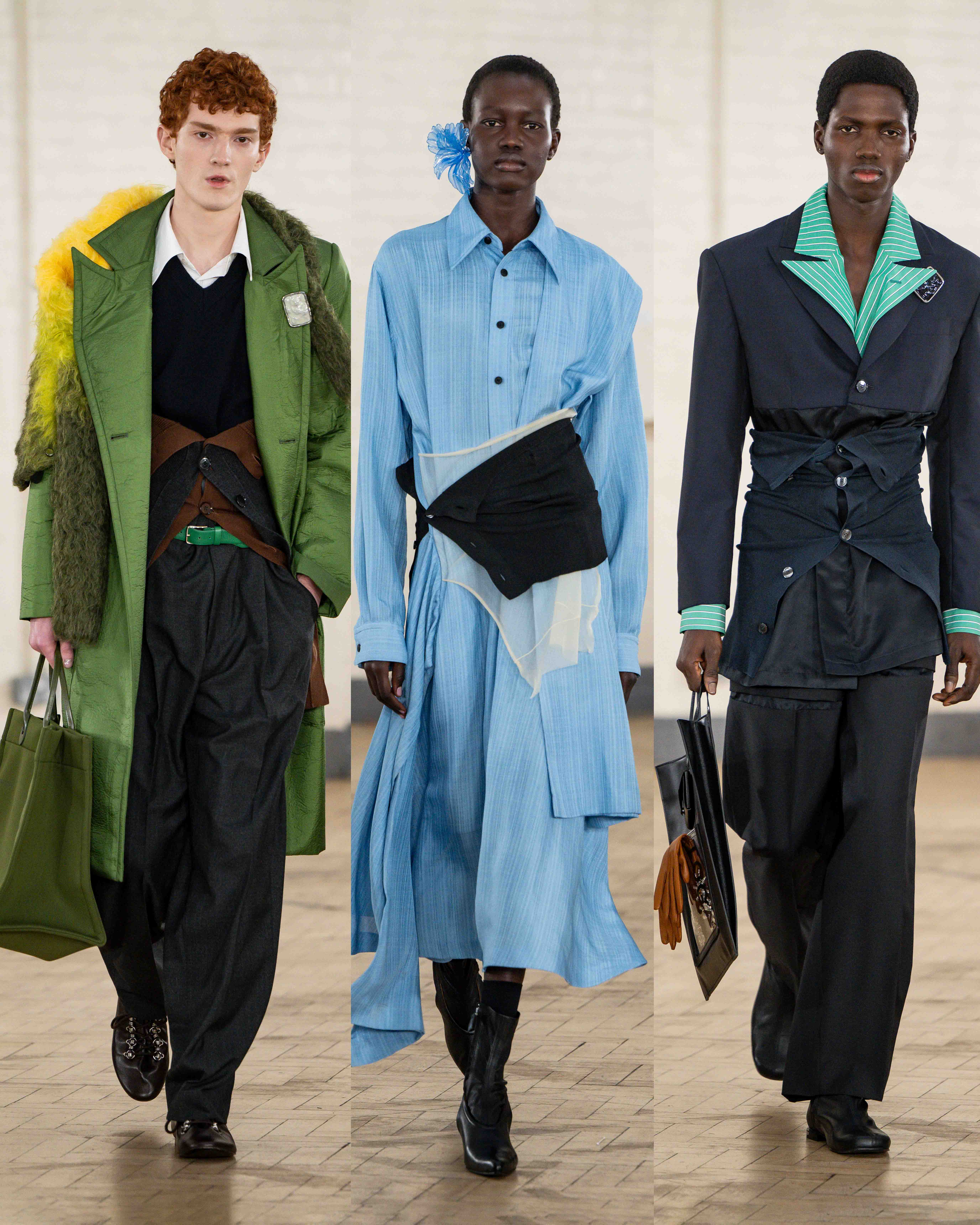
Designed by Yasuko Furuta, Tokyo-based brand Toga has been presenting collections at London fashion week since 2014. Furuta favours the use of three words to inspire and encapsulate each seasonal collection. For AW26: “pull, crumple, pressed”. The designer explores how fabrics develop in different conditions and adapt through different processes, open to chance occurrences and happy accidents within the creation process. A key theme throughout this show presented itself in the form of layering. Both menswear and womenswear suiting was hugged around the waist by layers of knitwear, closely resembling buttoned-up cardigans that created a cinched effect. Skirts and shorts unexpectedly folded upwards or were pinned by large shiny composite brooches that intentionally revealed a pop of colour or layered lining. Dangling, diagonal panels of sequin fabric flanked skirts and dresses, glimmered in the light of the historic Bloomsbury military drill hall as models swept down the runway. 13 different styles of bag were presented during the show, most notably a range of roomy looking tote bags that's exterior were scattered with pockets and compartment wallets. Furuta continues to combine and fuse fabrics in a way that isn't obvious, but within a silhouette that is modern and wearable.
Joseph
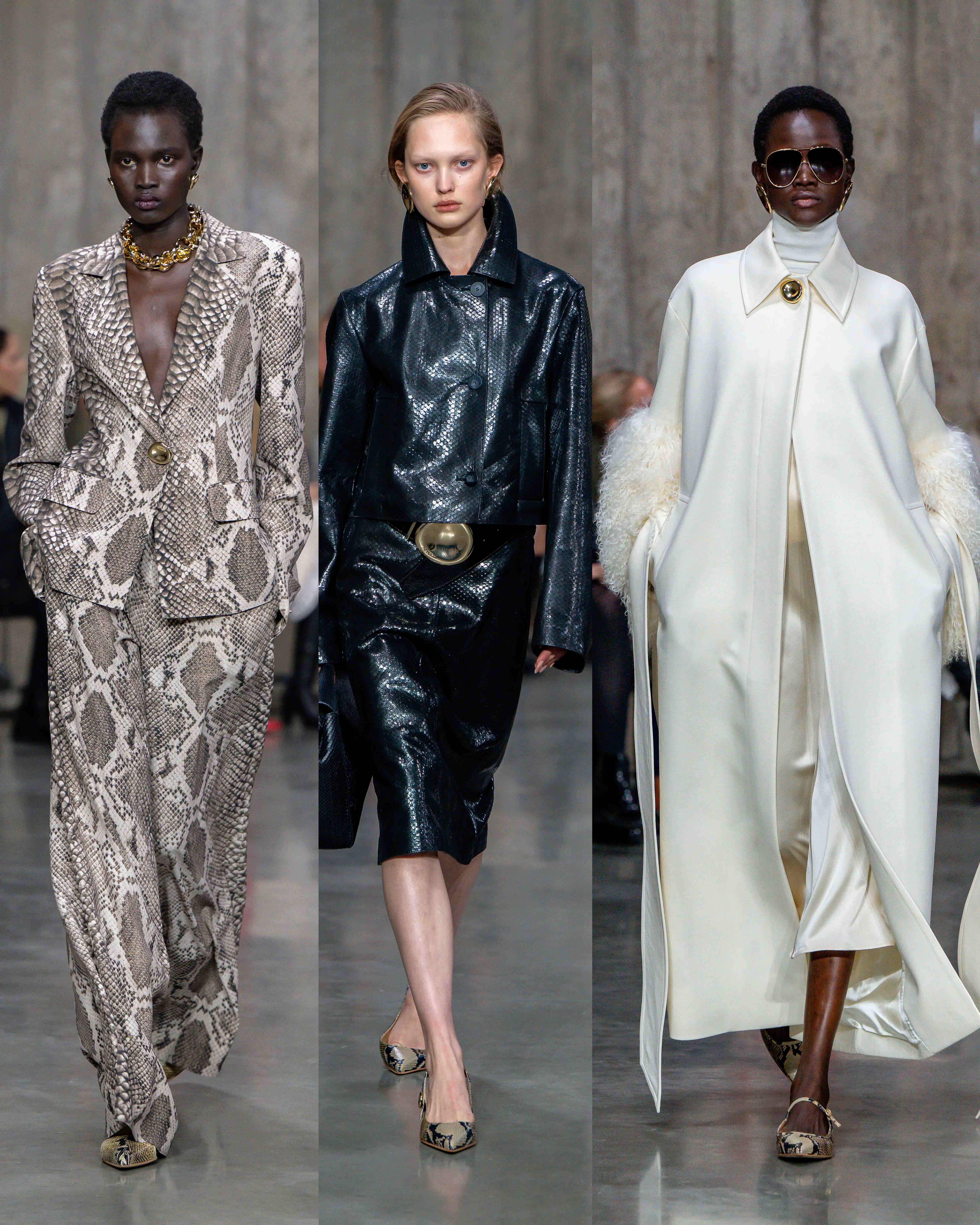
This was Mario Arena’s runway debut for Joseph. Inspired by the skill of sculpture, the collection explored creating a new form, referencing how a block of marble can be reborn as a sculpture. Arena translated this idea into his dramatic shapes, which the designer created with fabric, shearling and wool. Joseph is known for it's quiet luxury, added to this was the attention to craft and detail. The collection was brimming with floor length capes and coats that fell with easy around the body, one in fluid herringbone another in cream wool with fluffy cuffs. Long capes and cape coats in olive and burgundy were peppered throughout. The play on proportion came with oversize knits, noteworthy was a white, double roll-neck sweater, and gigantic leather handbags that added slouchy desirable touches, the perfect weekend away carry-all. Eye-catching details finished the looks, feathery fringing was scattered across the front of knits and suits, while statement jewellery - gold belt buckles and chunky bracelets was an introduction to the new accessories line.
Conner Ives
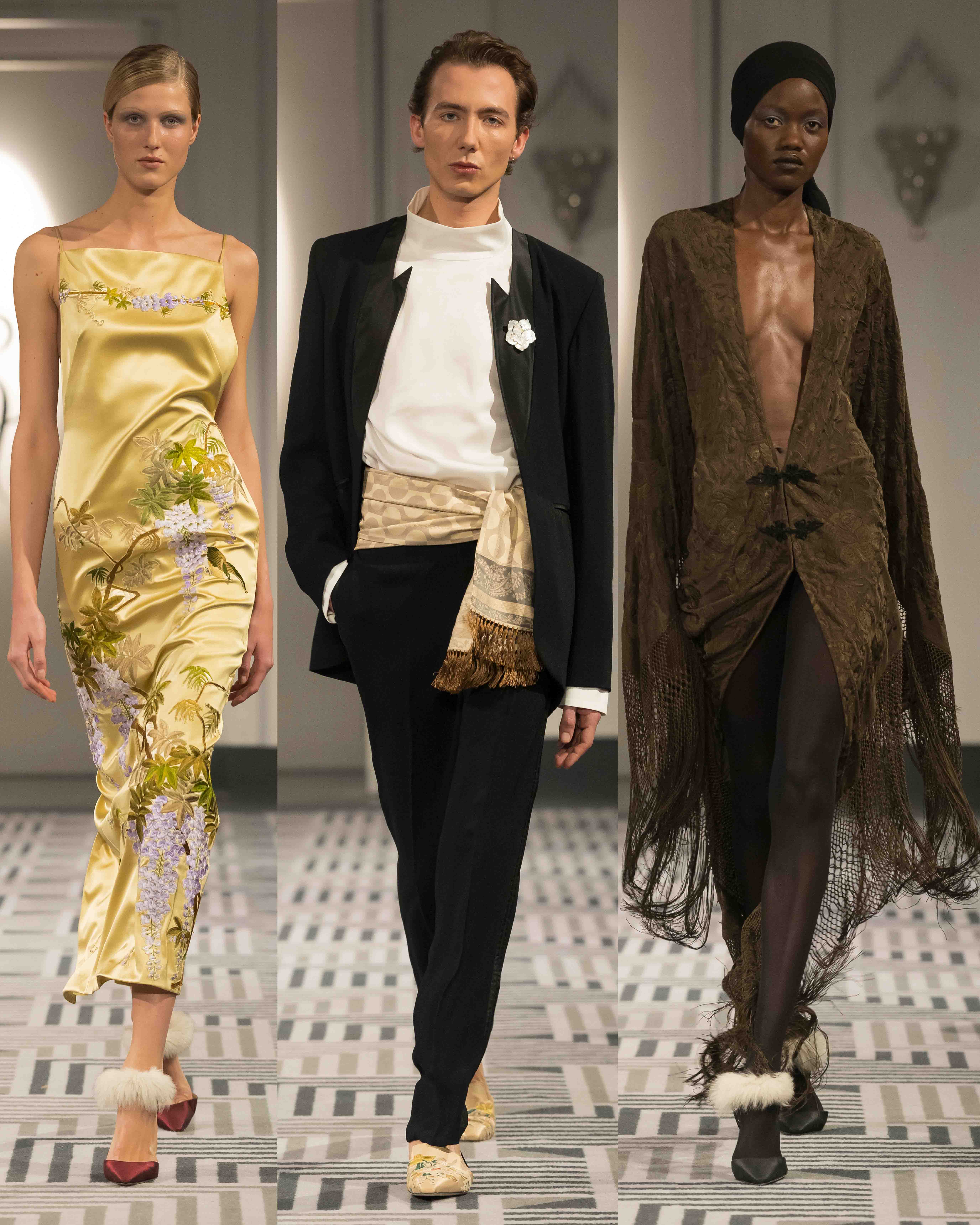
Held in the gilded ballroom at Claridge’s, Conner Ive’s AW26 show featured a cast of familiar faces, including 90s supermodel Debra Shaw and muse Tish Weinstock, as well as the gloriously fabulous, Kim Cattrall the front row. Entitled Eldorado, the collection’s main inspiration was a club in Berlin of the same name, a safe and inclusive space of euphoric hedonism before the Nazis took over in Germany. Gender expression and LGBTQIA+ equality has been something the designer has fiercely supported during his career, most notably with the release of the “Protect the Dolls” T-shirt, which raises money for the Trans Lifeline charity. Ives harkens back to the art deco aesthetic of the 1930s. A muted yellow silk was used for the construction of several pieces, a tailored jacket paired with jeans, a scoop neck vest and midi-dress, which were all embroidered with a luxury Qing Dynasty tapestry. A brown dress with plunging neckline had flowing fringe falling from the sleeves and skirt and menswear ties and scarves sported bold geometric patterns. Tobagonian-American actress, author and activist Dominique Jackson closed the show in a bridal gown made from deadstock silk organza. Ives’s final word via his show notes called out ICE and “the dismantling of democracy”. “Let our presence be a protest,” he declared.

Jawara Alleyne
Caymanian-Jamaican designer and artist Jawara Alleyne’s presentation reimagined the runway as an immersive art exhibition. Instead of live models, the designer presented his collection in a gallery space in Bethnal Green, where clothing and accessories were incorporated into sculptural installations, stretched across chairs or arranged like they were in frozen motion. The inspiration for his AW26 collection is centred around nightlife. “There was a time when going out meant dressing up, finding your people, escaping the pressures of daily life. Now, as nightlife and third spaces contract, we’re asking what that ritual becomes and how we carry that spirit forward” Alleyne said via his press release. The designer's signature shredding technique and safety-pin construction mainly appeared in the form of belts, which hung to the side of wide-leg trousers in metallic gold and multicoloured floral fabric. A cropped trench jacket, woollen hoodie and black hooded snood look like the perfect warm layer to stumble home in, whilst injections of bright pinks, yellows and oranges reflect those high-energy and vibrant nights you just don’t want to end. The corresponding look book for this collection features models and friends of the designer who he “had shared incredible nights out with”.