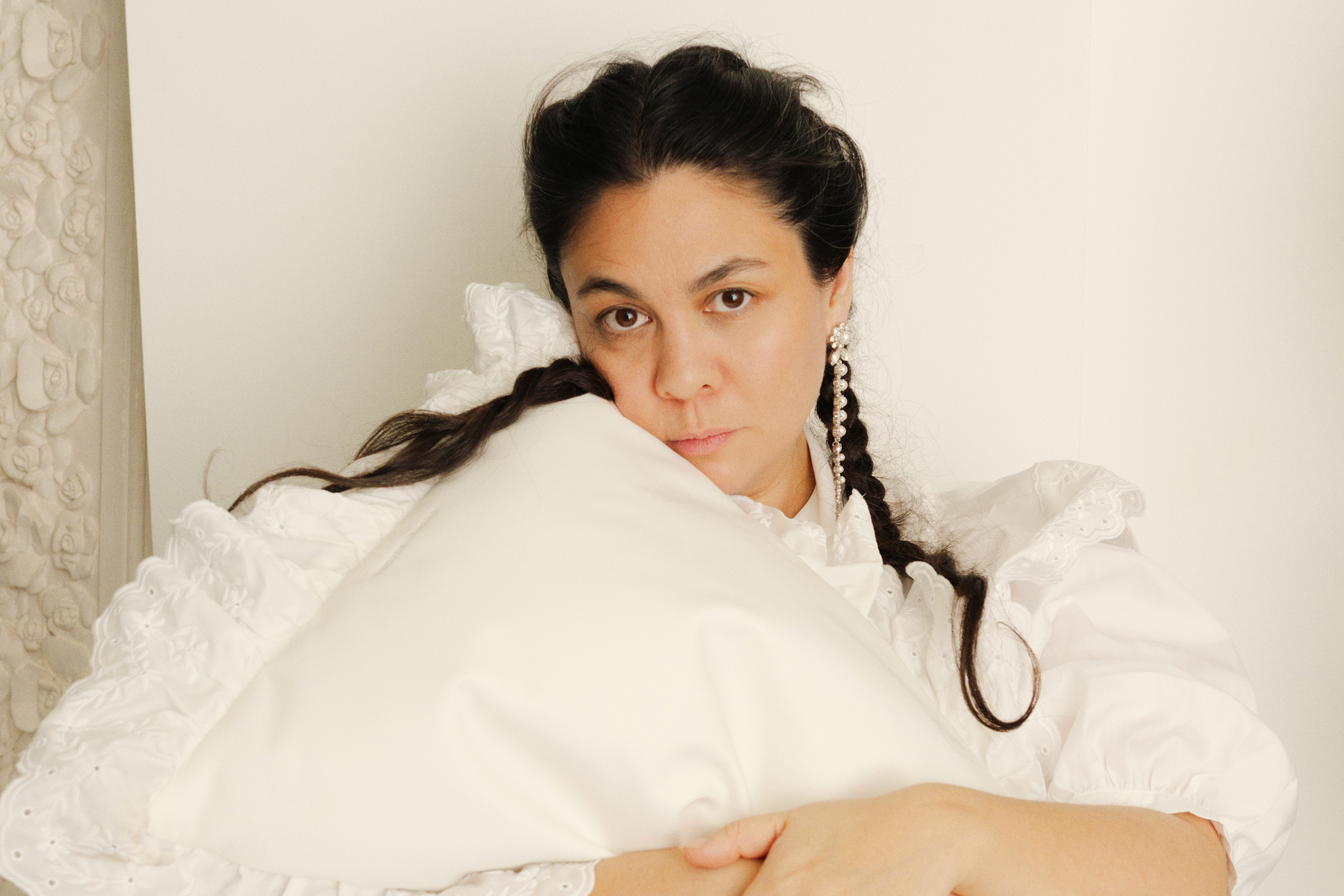


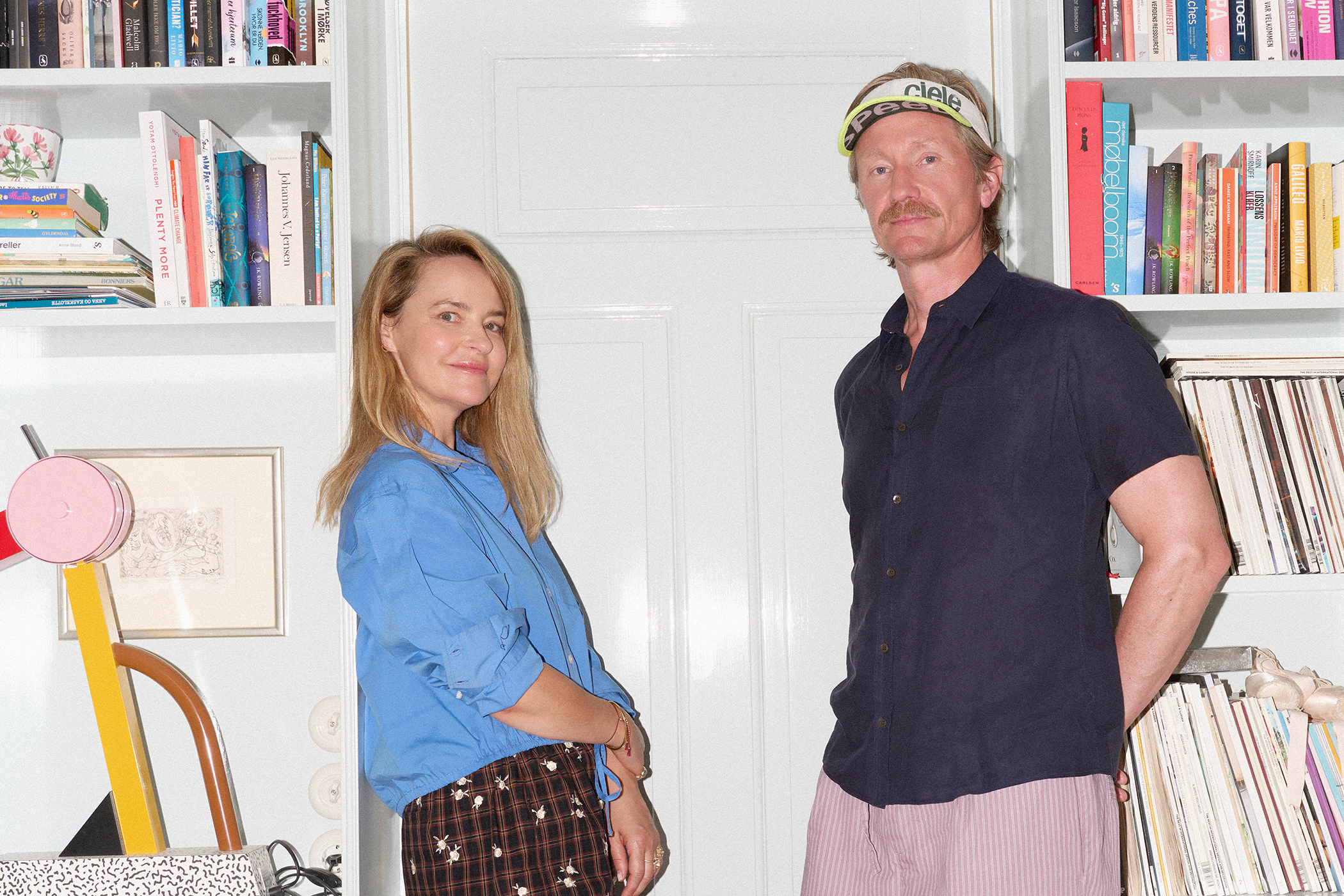

In the lobby of Simone Rocha’s London headquarters hangs a huge photograph of Francis Bacon’s studio, a vivid, cacophonous mess. Last year Rocha, who is the most successful independent designer showing at London Fashion Week this month, moved her growing business into this vast office unit in east London. Banks of elegant employees chatter discreetly; a concrete courtyard above the atelier is planted neatly; all is white and clean and spotlit, and out on to this serenity gazes the photo, Bacon’s paint-daubed studio where he worked in dusty chaos, knee-deep in books and photos and the rubble of his obsessions. The picture, by Perry Ogden, was on Rocha’s bedroom wall while she was growing up in Dublin. She brought it here to make the office feel more like home and to “cut through” the industrialism of the studio. But it has another effect: of portraying artistic chaos lurking within an ordered mind, one of a series of contradictions that’s led, slowly and then all of a sudden, to Rocha becoming the fashion world’s favourite designer.
Rocha and I meet as she is preparing for her AW26 show, which will be presented at the end of February. She clops purposefully ahead of me on heeled mules in a skirt made of unravelling ribbons and a cropped satin bomber jacket, her hair in two fine plaits. Here is the atelier, where scissors slice through moss-green silk, and here are rails holding the new collection, dresses with brown pelts that feel like cockapoo fur, voluminous sequinned dresses like imploded ruby slippers, white dresses that hang chastely like cotton nightgowns, or ghosts. Downstairs is an archive that stretches back to her 2010 graduate collection, and a brief cache of vintage pieces, including delicate leather gloves and a white suit designed by her father John Rocha, embellished with pearls.
We settle in her office at a long glass desk, our teacups resting on squat lace doilies. Rocha is 39 now, and her partner is the cinematographer Eoin McLoughlin, with whom she has two young daughters. She wakes early on weekdays to drop them at school and will, if the weather is fine, swim in a nearby reservoir, before zipping to her desk where, among meetings about leather or music, the day dissolves around her. In her teens, Rocha worked at her father’s studio, skipping school to accompany her parents to his catwalk shows in London. John, who was made a CBE in 2002 for his work as a designer, closed his label in 2014, just as his daughter’s was taking off. Her mother, Odette, who was also John’s business partner, promptly came to work with her. “My parents instilled in me such a level of hard work, determination, creativity and dedication that I wouldn’t be here without them,” Rocha says. “I have built this with them. It’s an impossible thing without them, really.” How do they feel about her success? I ask. “I think I drive them mad.”
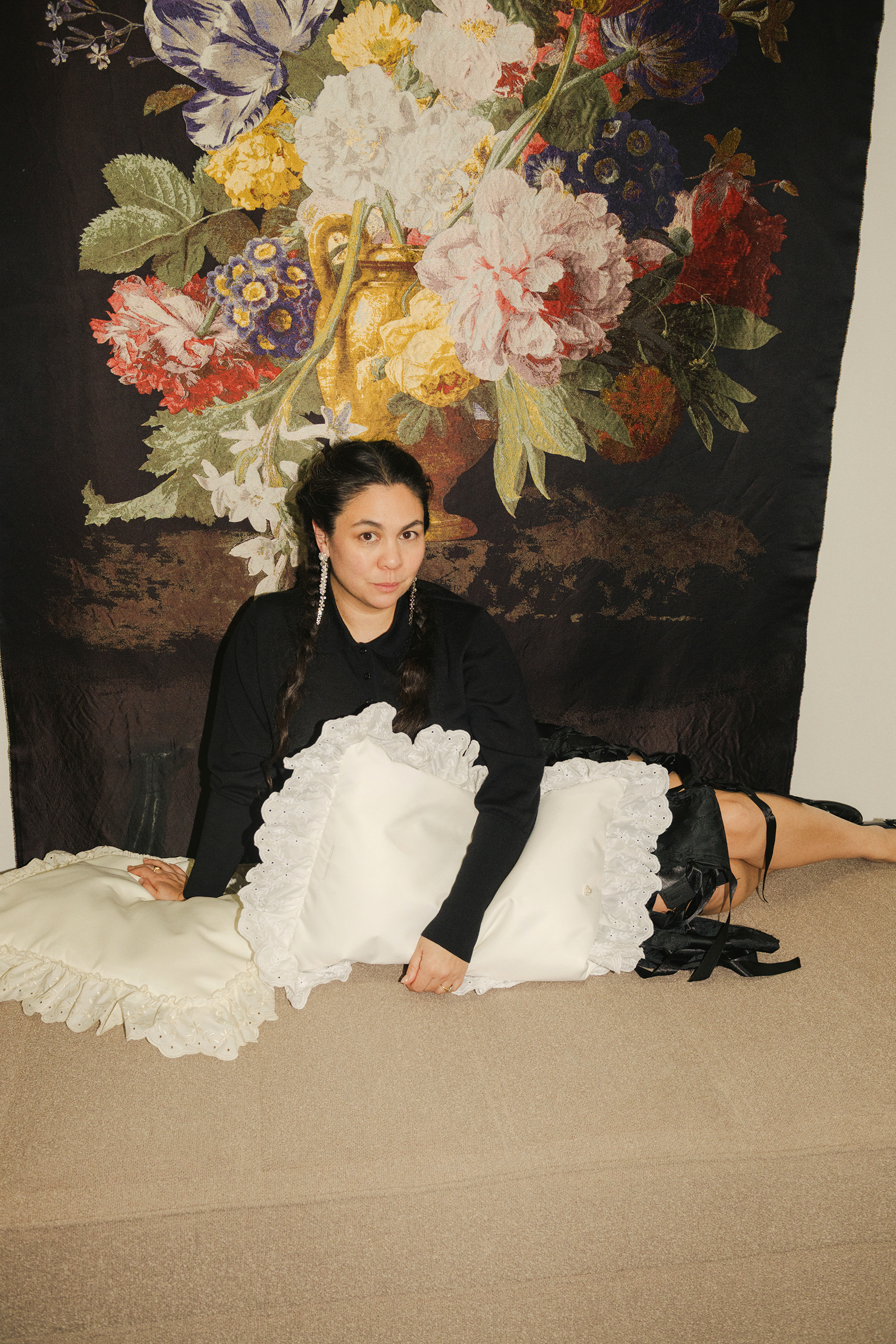
‘Femininity doesn’t mean fragile or soft. You still have to be quite tough’: Simone Rocha at her studio in London
Rocha grew up in Dublin, one of three girls in a class of boys. As a child she developed a particular kind of femininity, both in “how I am as a person and also with my work. Femininity that doesn’t mean fragile or soft. You still have to be quite tough.” As a teenager, Rocha would buy vintage petticoats from markets, which she’d pull up under her armpits and wear as dresses. “And I was obsessed with wearing men’s brogues,” she says. “That was the first time I thought about fashion and clothing, how it can make you feel different.” Pulling up the petticoat, adding the men’s shoe, “I always felt very protected. I always liked the idea of the volume, playing with this kind of silhouette, but then being quite grounded with the heaviness of the brogue. But in school, boys would be like, ‘Why are you wearing your grandad’s shoes?’” This is still how Rocha approaches clothing and design – could she already articulate an aesthetic back then? “Oh no,” she says. “No. I think I was just very fortunate to feel comfortable in my own skin. It didn’t feel rebellious. It just felt me.”
Rocha’s parents married in 1990 after her father moved from Hong Kong to Ireland, where Rocha was born (he told her he was the first Chinese man the locals had met, let alone a Chinese man with long hair). As a child, Rocha enjoyed being mixed race, which to her meant being “different”. “I always felt relieved that I didn’t have to be in one camp or the other. I could just be my own person,” she insists. “I’ve always felt a little bit more comfortable on the outside.”
When she arrived at Central Saint Martins for her fashion MA she was confronted by the late Louise Wilson, the legendary professor who’d previously moulded the careers of Alexander McQueen and Phoebe Philo. “I came to her thinking I was resolved,” Rocha remembers. “I had all these ideas about myself – coming from Ireland, being from two different places, being interested in craft, storytelling, femininity. But she was like” – she sighs – “I get it.” The first thing Wilson told Rocha, who had arrived with her folk tales and fine lace, was, “You need to go and look at some porn.” She said, “Look at things you’ve never looked at before. You need to be challenged.” It’s advice Rocha still thinks of when she feels stuck – not the porn, perhaps, but similarly destabilising influences: difficult films, art, music, things intended to “knock you off centre to pull you back in”.
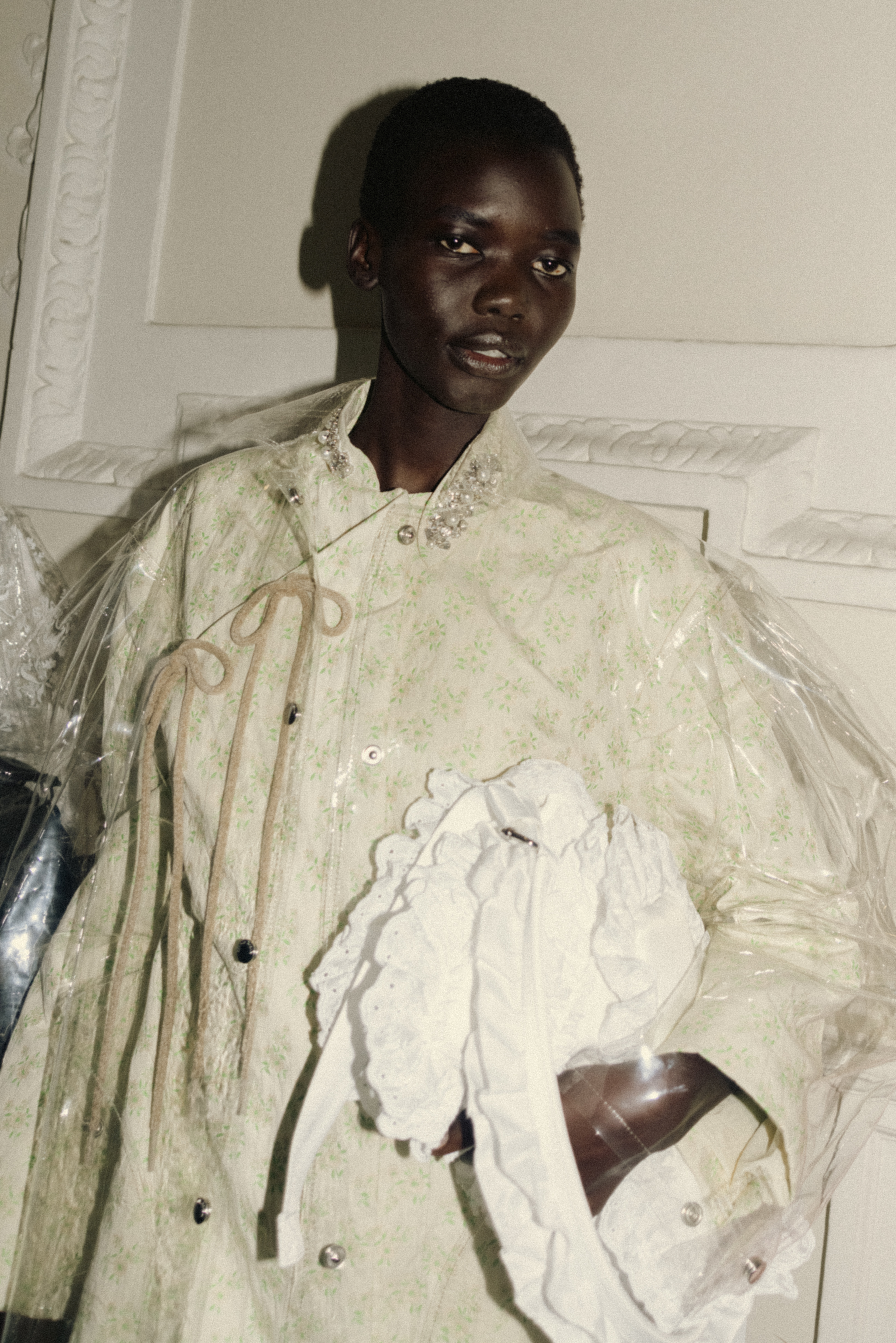
Backstage SS26
Chioma Nnadi, head of editorial content at British Vogue, met Rocha when she was just starting out – her collection was “like nothing I’d ever seen before,” Nnadi told me. “Back then nobody was really talking about craft and tradition in the same way, and she’s always had the ability to make the time-honoured and folkloric feel fresh and new.” Rocha quickly developed a reputation both for clothes that felt darkly romantic, and for fashion shows that felt like art. This was the stuff that fashion editors were buying and, following an H&M collaboration in 2021, their daughters, too. A collision of stars walked in her shows: Chloë Sevigny (who also wore Rocha for her wedding), Jessie Buckley, Fiona Shaw and Alexa Chung, who told me recently, chuckling, “Wearing a Simone Rocha design makes you look like you’ve read a book and been to a gallery.” Rocha dressed Billie Eilish for the Met Gala in 2023, and found fans in artists like Cindy Sherman, whose first Rocha purchase was a pair of transparent heels studded with pearls. The actor Ruth Negga once said, “I want to either be married or buried” in one of Rocha’s sheer embellished skirts. These women, Rocha tells me, are “content in themselves. They’re strong, but also have a tenderness, and a beauty.” By 2024, with a new menswear line, a role as Jean Paul Gaultier’s “guest couturier” and the publication of a pink bound coffee table book retrospective, Rocha had become code for sophisticated fashion that suggested distorted girlhood and tragic fairy tales (as GQ once wrote, “The grimmer side of the Brothers Grimm”), and inspired enduring trends, specifically for bows and pearls.
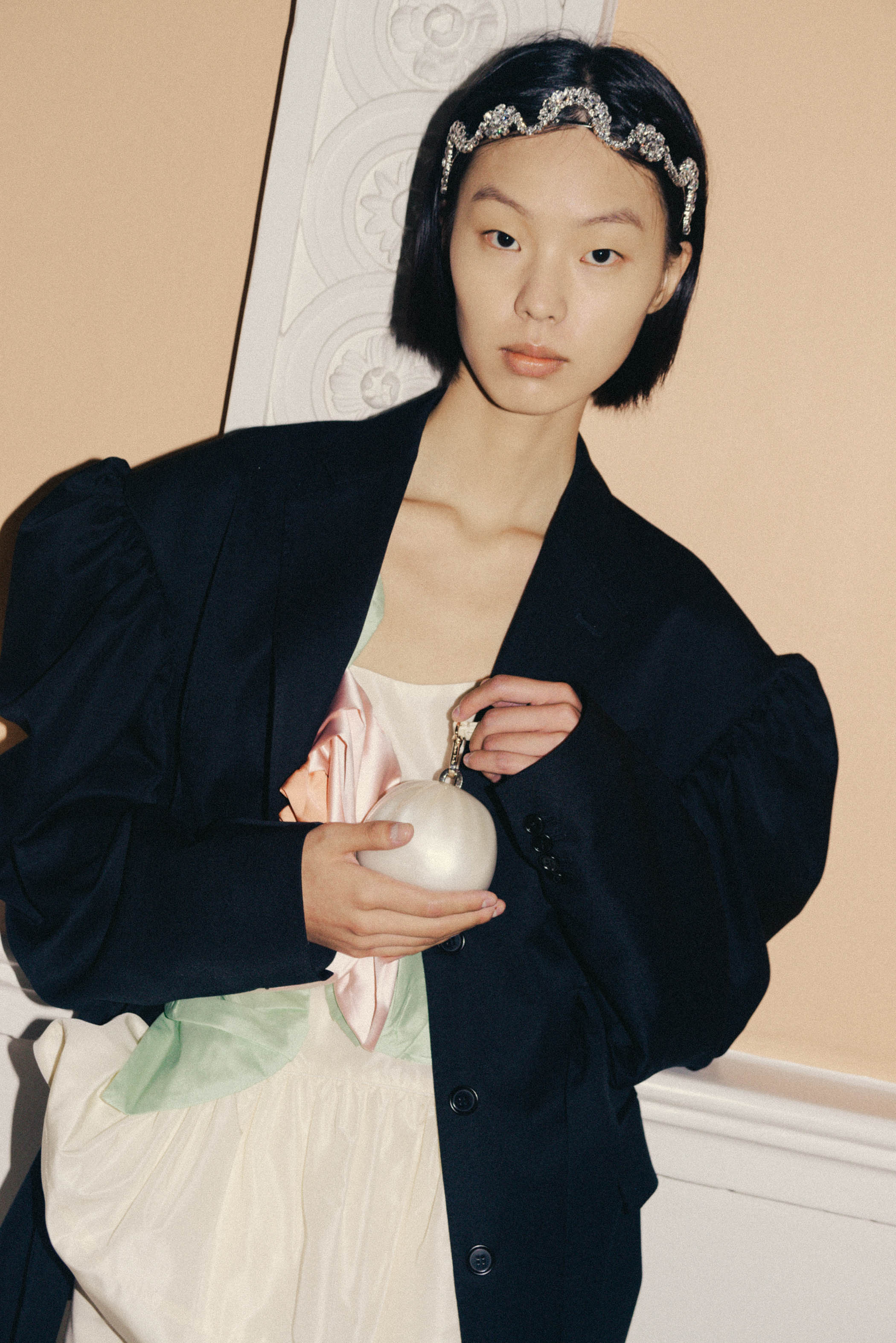
A model wears Simone Rocha SS26
In Rocha’s hands these pretty things became subversive symbols of femininity. But as her ideas hit the air and went mainstream, appearing on high street dresses and handbags, they were largely defanged – in a typical piece, the Daily Mail recommended pearls as a “new neck protector for weddings”. Groundbreaking! “You never go out there wanting to create a trend,” Rocha says now. “You go out there wanting to be authentic to yourself. And for me, it was looking at these very historically feminine pretty things and giving them a strength and resilience, or a satire, and integrating that into my work.” To see them suddenly becoming a girly trend, “Well, in one way it’s flattering, but you never want it to cannibalise the original idea. Obviously,” she says, strictly, “I did not invent the pearl. It’s not like I invented a three-legged pair of trousers that everyone’s suddenly wearing. It’s a perspective, essentially, on something that might historically have been neglected as frivolous.”
The benefit of Rocha’s subversive aesthetic going mainstream is that “it’s given licence to so many girls or women like me who feel in between a girly girl and a tomboy. Or in between their childhood and their retirement.” She giggles. “So, I am kind of glad it opened that door.” A pearl is formed, of course, from its oyster’s grit.

Details backstage at SS26
The filmmaker Lena Dunham has long enjoyed the way Rocha’s clothes offer a balance of playfulness and restraint. Her designs attract people who might not have “previously felt seen and held by high fashion,” Dunham told me recently. “And, of course, there’s always a little comedy.” Like the bouquet clutch bag that looks uncannily like a cellophane-wrapped bunch of petrol station carnations. “She doesn’t take herself – or fashion – too seriously,” Nnadi added. “She’s a giggle and a caring friend. Real to her bones.” Rocha’s designs are similarly welcoming to all women. “There’s an intrinsic power to Simone’s clothes because they refuse to shrink and they encourage the wearer to take up space,” Dunham said. “She is equally committed to having her wearer feel comfortable – there is no sucking in, no Spanx, no demand that you contort your body to feel beautiful. It’s freeing.”
Last season, a fashion editor told me weight-loss drugs have become so common that between London Fashion Week and Paris her colleagues appeared to have dropped two dress sizes. Rocha has noticed it, too. “Maybe it’s a reflection of the times. Everything’s a little bit distressed and a lot of things feel out of control. So,” she shrugs, “what can you control?” Women across the world continue to face a political fight over control of their own bodies – some are attempting to harness that control by resculpting their faces or losing weight, while certain designers, Rocha included, are reshaping silhouettes, exaggerating hips and playing with corsetry. “I’ve always been interested in historical dress and the way these voluminous or padded pieces would take up space in a room at a time when maybe you didn’t have the voice to be able to speak up. I’ve always seen these shapes as kind of empowering.” She likes to accentuate the hips or the breast with a garment, and see how the body reacts. “It’s a lot easier said than done,” she adds, quietly, “to say, ‘Just be comfortable in your own skin.’”
A couple of days after showing a collection, Rocha will find herself sitting bolt upright in bed with the idea for the next one already in her head. She used to get up in the middle of the night and run a bath, but now that the house is so full of family she forces herself to stay in bed for fear of waking them. In the notes app on her phone, she’ll quietly start to type. “It can be a specific body of text. It can be a silhouette. It could be a turn of phrase,” she says.
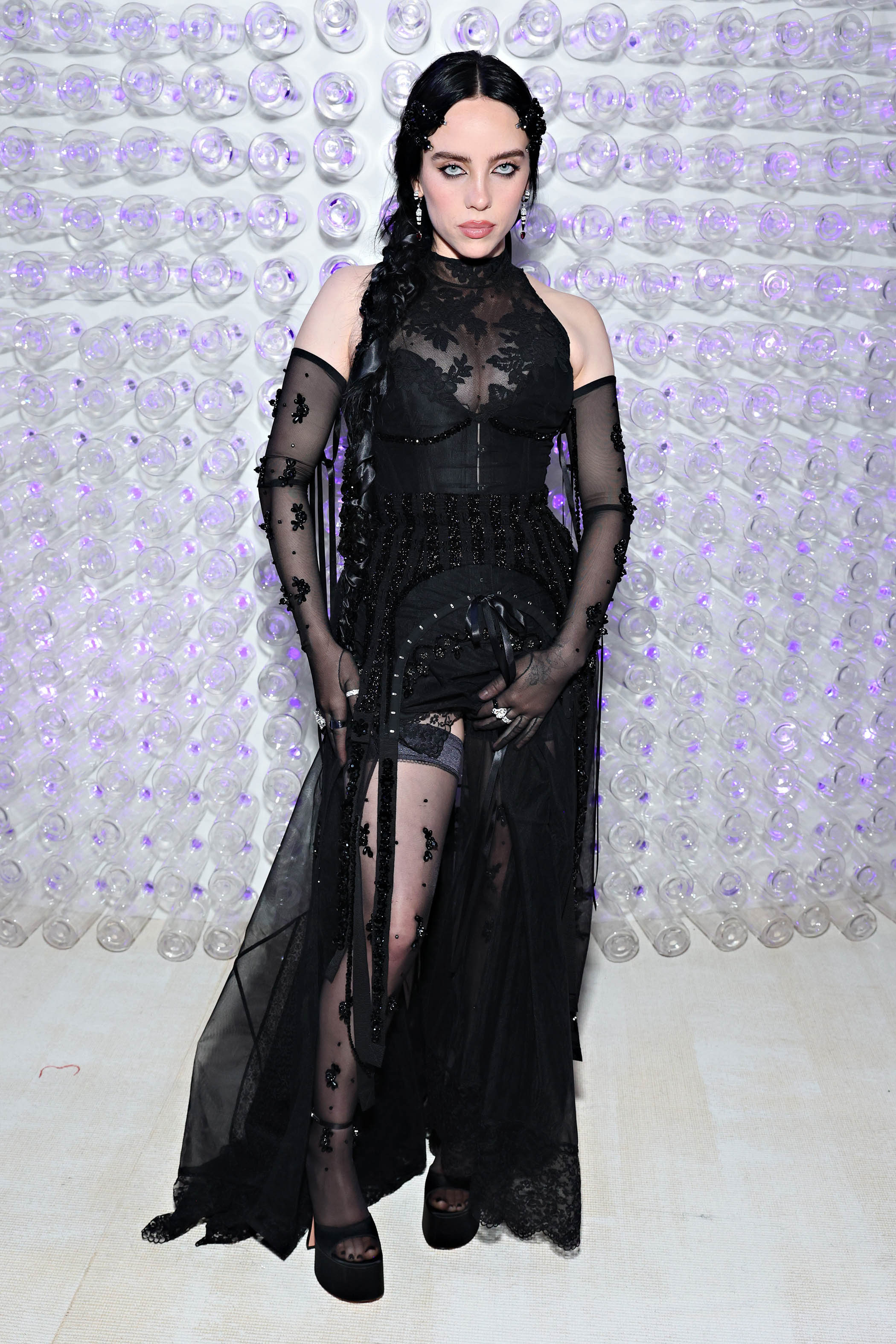
Billie Eilish attends the 2023 Met Gala Celebrating ‘Karl Lagerfeld: a Line of Beauty’ wearing a Simone Rocha design
She scrolls through her phone to show me an example and reads her notes fast and soft as if a poem:
“Slits, spit, frill, touching, dark, lyrical, Tír na nÓg represented in a pony, into the well... The Yeats sisters, the Arts and Crafts movement in Ireland, weaving through the collection, from revealing to protecting… blue bonnet with sequin, black bonnet with frills… dress in organza with separate hood, curly fuzzy scarves. Slit hem coat. Hold the gold sequin…”
She looks up, her eyes vaguely sparkling. “I kind of see the garments,” she says. “I see a lot of the fabric. I see a lot of the silhouettes, and the feeling, and the emotion.”
And now it’s all here, hanging in the studio, a collection inspired by Tír na nÓg, an Irish fable about the land of eternal youth symbolised by a white horse, and interpreted in PVC and sequins.
After Rocha’s last show, musician friends looked for her to say hello, only to discover she was surrounded by press. “They’re like, ‘But you just did the show?’ They were shocked. You wouldn’t play a gig and then have everybody ask you what all the songs were about. You know what I mean? It’s…” she squirms, “quite extreme.” This discomfort is why a lot of the accessories she designs, like a bag in the shape of a pillow, “feel like little tiny security blankets. I feel much more confident behind these things.”
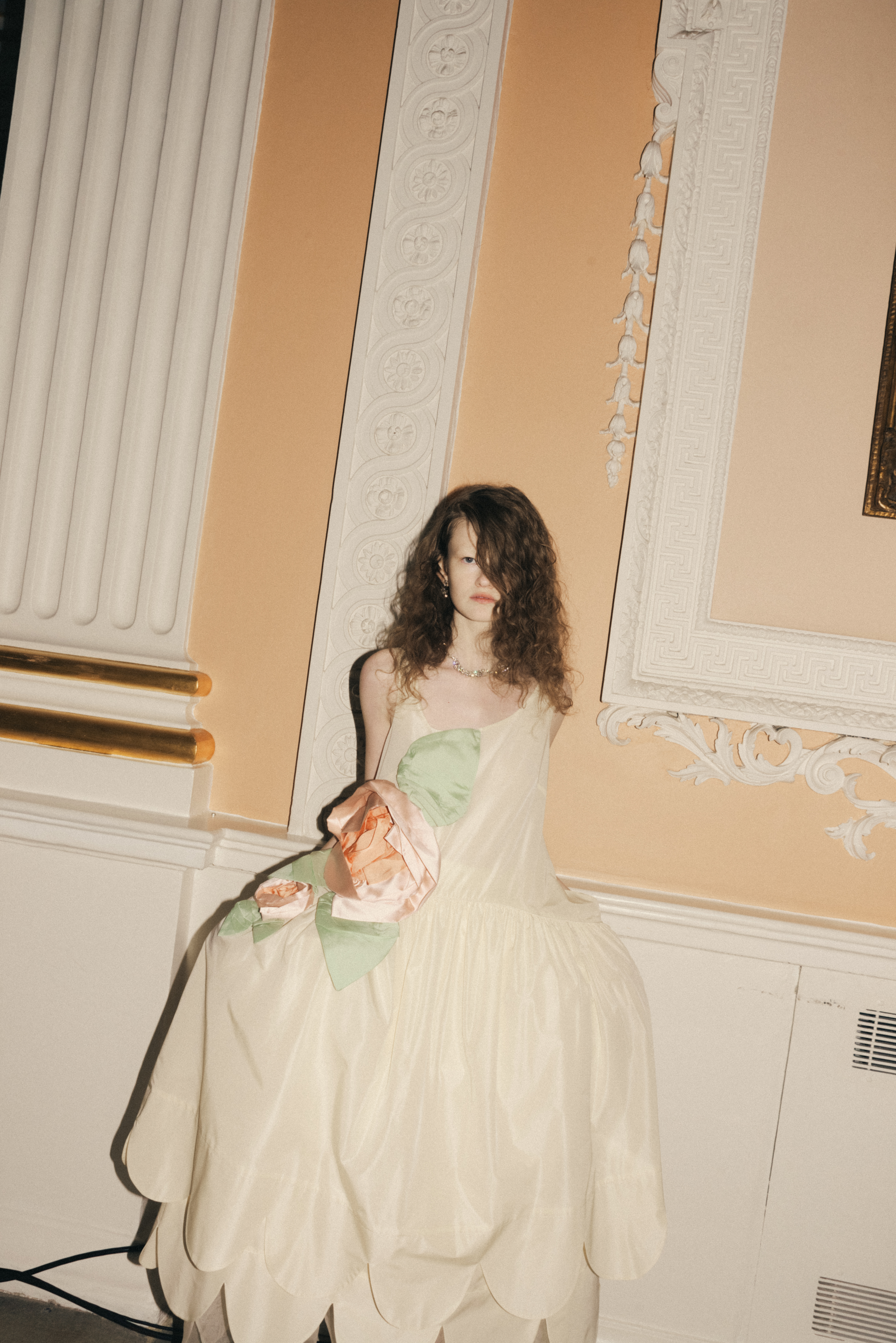
Model backstage at SS26
Metal extraction units are humming above our heads, and behind us her team of more than 60 employees quietly buzzes – there is the feeling that the studio is a hive. As somebody who thrives on feeling like a misfit, how does it feel to now be considered fashion royalty, with 190 stockists worldwide, and profits rising every year and, in 2024, Anna Wintour praising her for creating a “love letter to women”?
“I still feel like an outsider,” she shrugs, “but I feel like myself.”
The skirt she’s wearing today is part of an exploration into unravelling. There’s a dress that, at first glance looks sweet, delicate, a series of tiny little raw-edged bows. “I love the fact that, because of the way that we construct them, the whole thing can come undone and fade away, just like that.” Some people will see it as a perfect ribboned dress, “but I know that there’s a tipping point where it can just all… disappear.”
After her first daughter was born and Rocha was sleep-deprived and overwhelmed, she designed a collection inspired by swaddling and nursing. “I’ve always enjoyed exploring a more grounded, sometimes grotesque femininity,” she says, so birth, in some ways, was a fantasy. She made a blood-drip earring, long and ruby-studded, that appeared to bleed on to an embellishment on the dress. “And it was just so beautiful, but it came from what someone else would potentially think is scary. I love finding the beauty in those places. I like to touch on them, like they’re a bruise.” She twists her fingers together and her voice drops. “I sometimes feel like I’m playing a trick on people.” Where she sees wounds and perversions, and stories layered awkwardly over memory, she smiles darkly, the trick is making us see “just… a beautiful dress.”
Makeup by Molly Lynch; hair by Nicola Harrowell at Premier Hair and Makeup
Photographs by Getty images

Backstage SS26
Newsletters
Choose the newsletters you want to receive
View more
For information about how The Observer protects your data, read our Privacy Policy