
WILLY CHAVARRIA
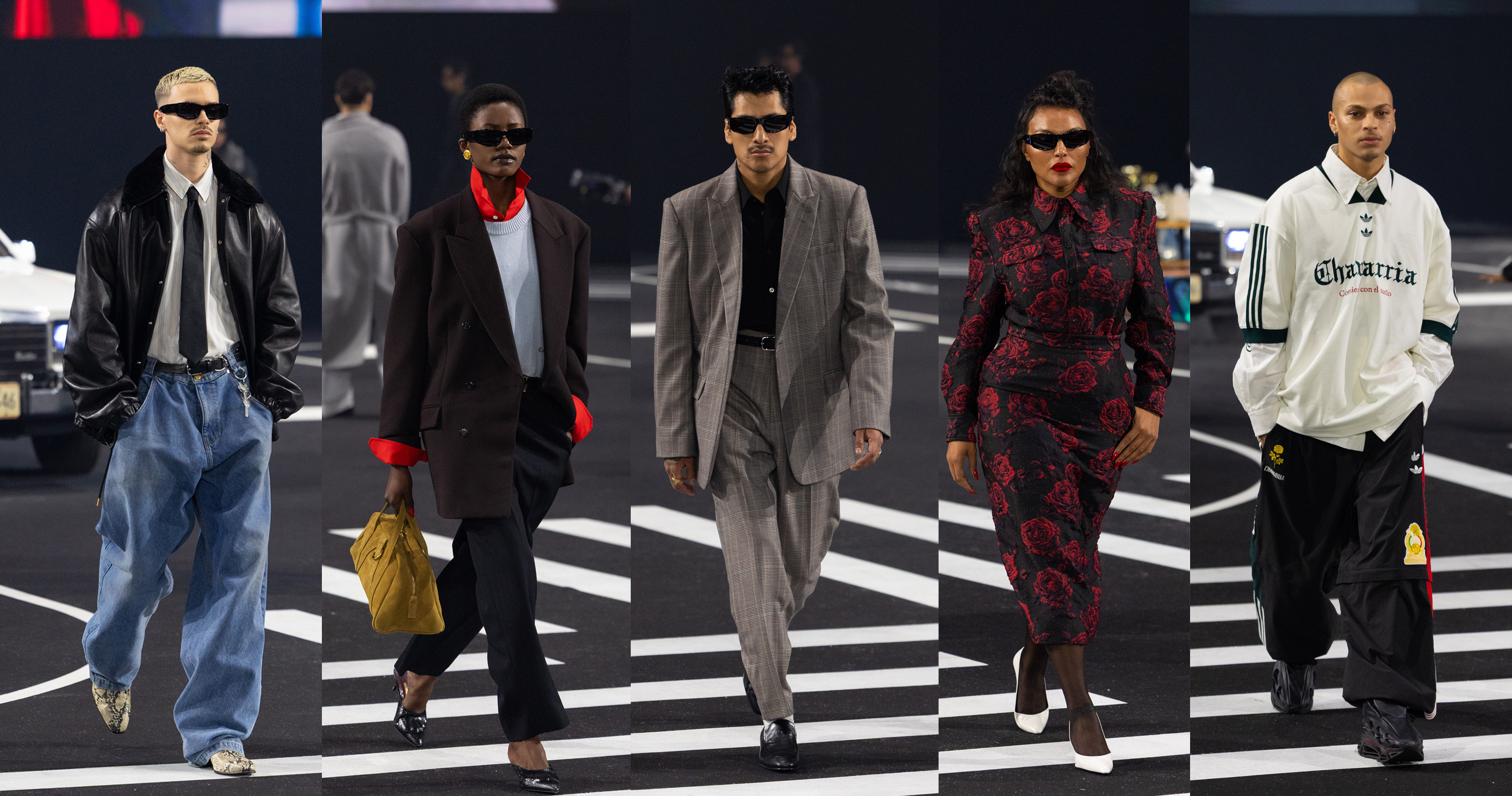
The blockbuster show, staged at the Dojo de Paris, gave us the fashion moment of the season. The arena floor was decked out as an American street scene, dotted with parts of a film set, including two beds, a bus stop and a phone box. “I live in New York City, street level, corner apartment, big windows. There’s barely any separation between the city outside and the world inside my home. I think there. I watch people,” he explained via his show notes, “I feel connected to all of them.” The three-act show was a cinematic blend of music, theatre, and film. A musical melodrama-cum-live-action music video. The cast of performers included Mexican-Chilean singer Mon Laferte as the female lead, Puerto Rican singer Lunay, and Latin American boyband Santos Bravos, who Chavarria described as “a breath of fresh air – a celebration of Latino voices when the oppression against Latino people is uglier than ever”. The shows moved from sharp tailoring, to sportswear and streetwear, into cocktail looks that culminated in red-carpet drama. Key pieces include cropped suits with loose hips, sateen full-skirts, layered knits, and the “sandwich gown,” combining a cloqué hourglass front with a trailing champagne silk back, worn by Erin O’Connor. His ongoing and highly successful collaboration with Adidas continued (the limited-edition Paris drop to coincide with the show sold out immediately) and a new underwear partnership with Grindr was debuted. Chavarria’s last uplifting word – projected on the huge screen at the back of the arena as guests filed out, declared the show – “dedicated to all of us that believe in the power of love”.
DRIES VAN NOTEN
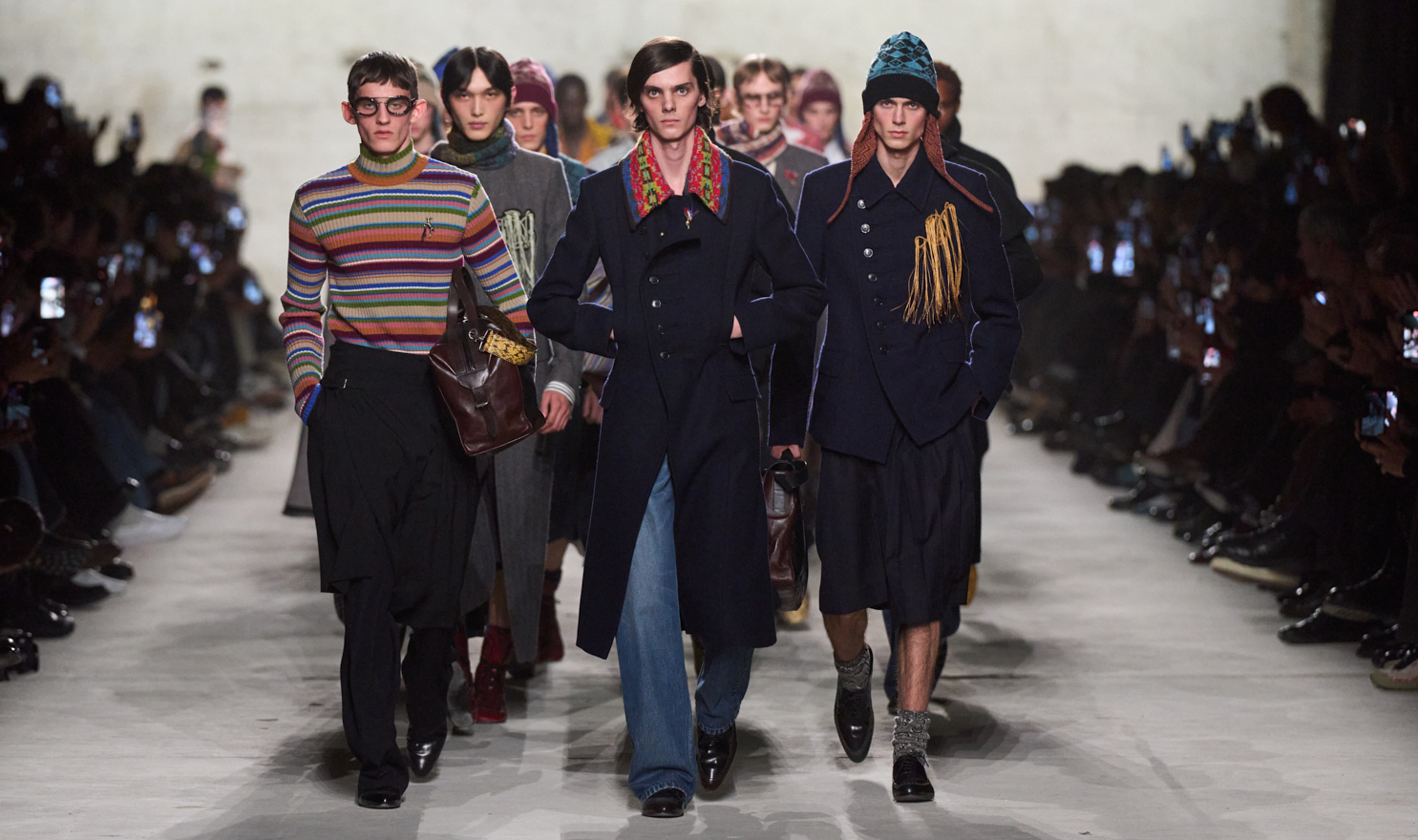
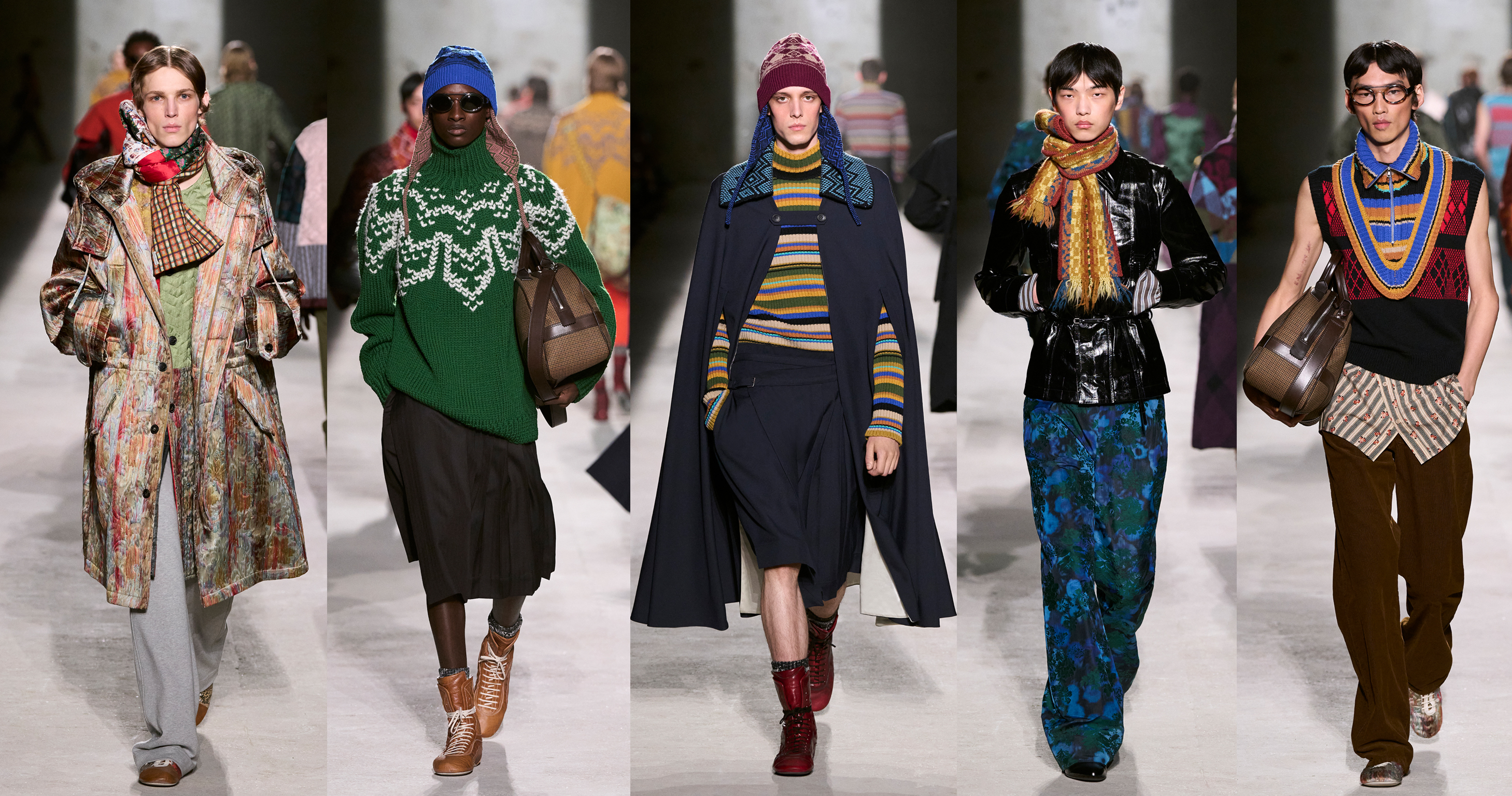
Creative director Julian Klausner took us back to starting university. “I wanted to explore the idea of coming of age, the joy of new beginnings, the unfolding of possibilities; leaving home: university, new adventures” he said. In collection terms that meant the wardrobe you take with you when you embark on a new chapter of your life; clothes with a sentimental attachment. Metaphorical comfort blankets and souvenirs of home: father’s coat, mother’s florals, siblings’ scarves, a favourite jumper. The knitwear is central to the collection, in sweaters and details including collars and socks. A joyous cornucopia of styles and colours from fair isle patterns and argyles to stripes and cable knits. Elsewhere, polaroids of flowers, sent as invitations, were the basis of the floral prints on separates. Knits were styled with kilt skorts featuring the same signature contrast white lining as the underside of the coat collars. On the subject of coats, these had a take on a school crest in uncut flowing golden threads, or came with capelet details. Patchwork quilt jackets bought the desired nostalgic note. For the finale models lined up at the end of the runway, school-photo style.
DIOR
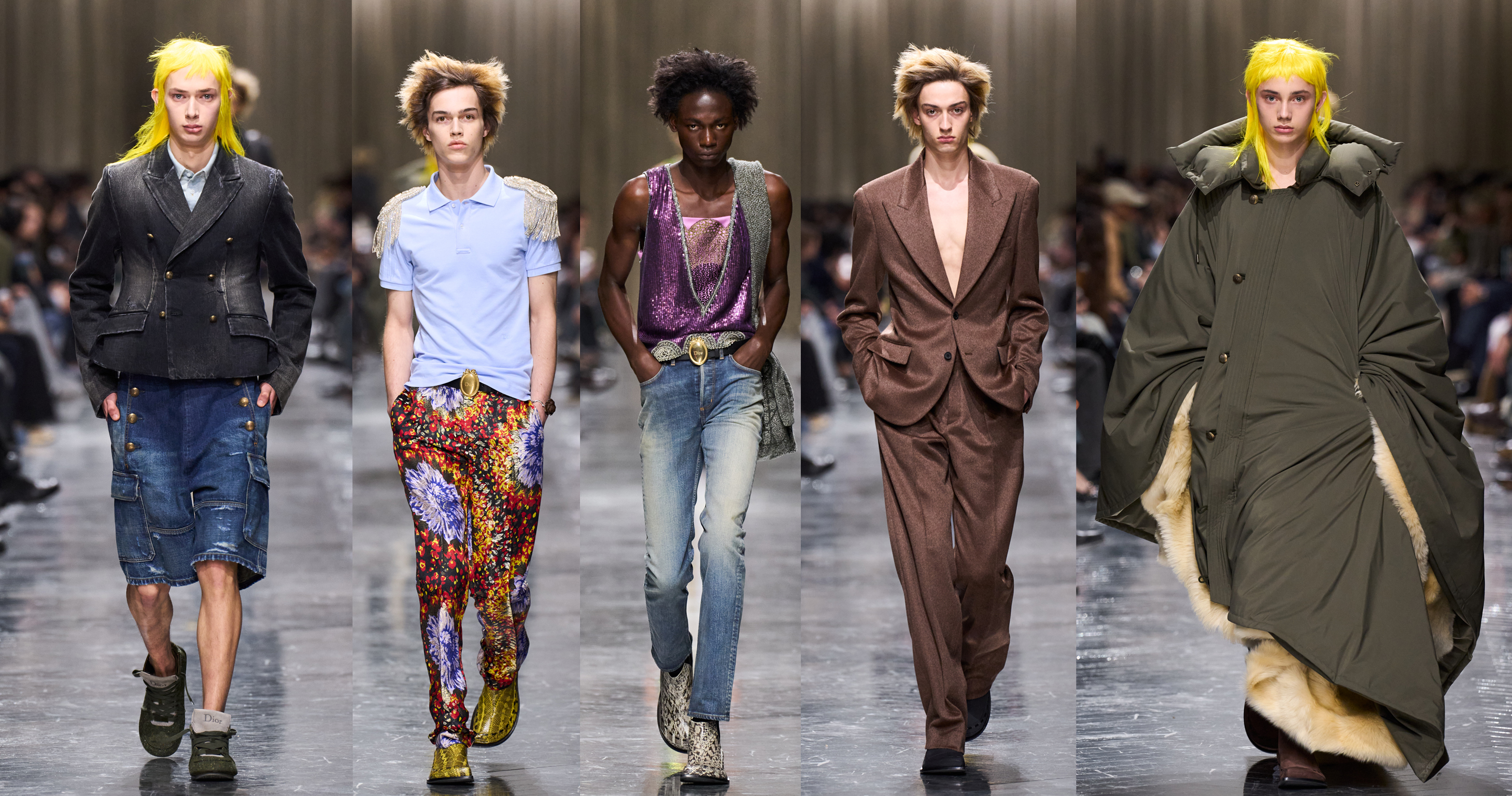
Jonathan Anderson’s AW26 menswear collection for Dior picked up where SS26 left off, but with a more relaxed, bohemian vibe. The stiff collars and bows were swapped for cascading untied neck ruffs (also sent out as invitations to show guests) and all the models wore punky wigs. Inspired by an imaginary meeting between Christian Dior and pioneering couturier Paul Poiret, who was credited with ditching the corset in the Belle Époque era, the collection opened with a trio of tops based on a Poiret dress, worn with slim, not-quite-skinny jeans and Cuban-heeled boots. “I don’t want normality,” Anderson declared, “I want it to be a character, where this punkishness meets Poiret.” This new era mood of Dior harks back to the youthfulness of Hedi Slimane’s tenure; tailoring was still key but presented with a Gen Z slant – the bar jacket came in aged denim with brass buttons and cropped versions worn with cigarette pants or knitted leggings. Further Poiret references came through in the cocoon coats that fused opera coats with parkas, the voluminous top half and skinny bottom silhouette inspired by MK Gee – one of Anderson’s favourite musicians.
KARTIK RESEARCH
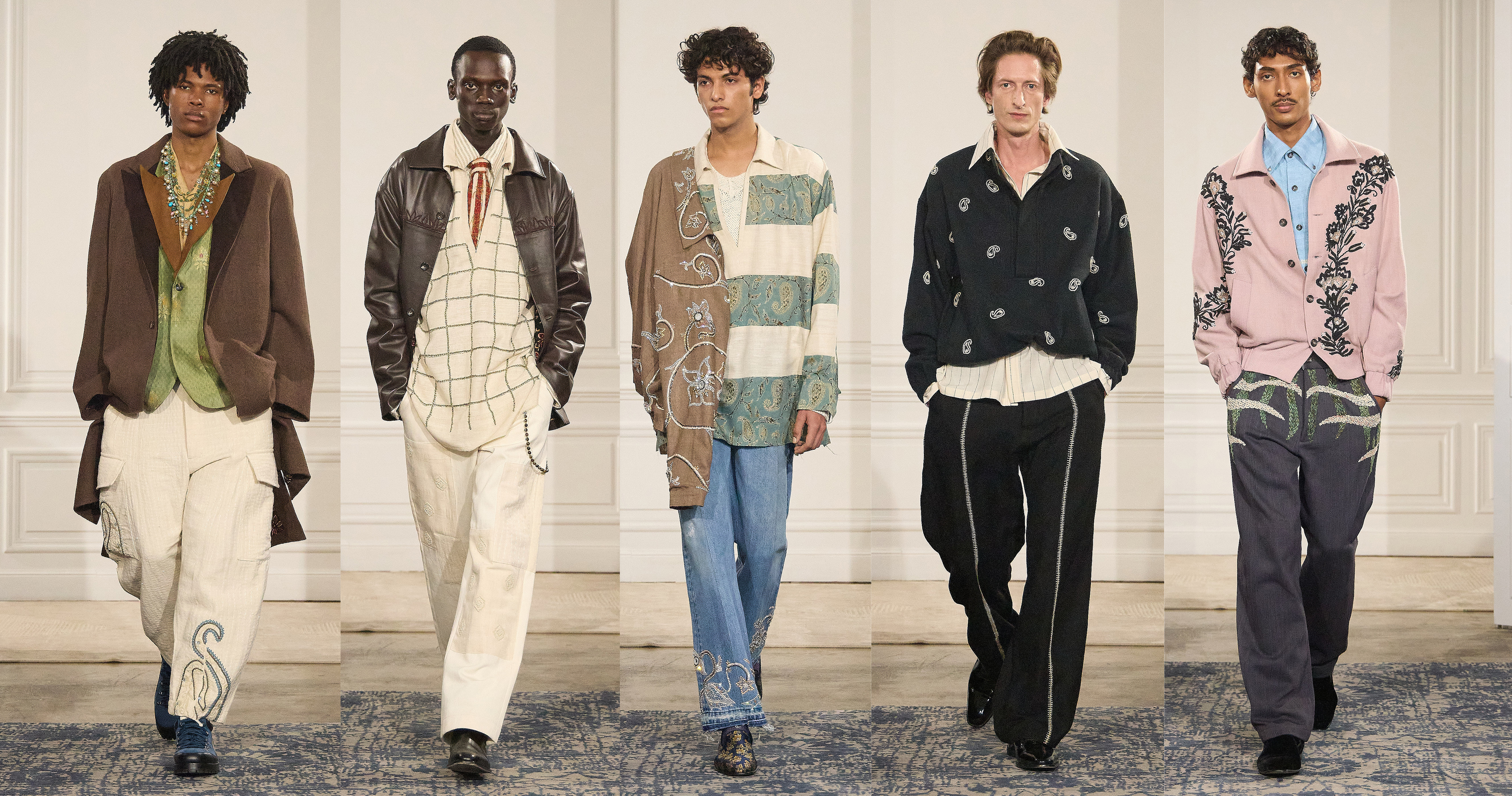
Kartik Kumra founded his label Kartik Research in 2021, in 2024 he became the first Indian designer to present on the Paris schedule, he counts progressive politician Zohran Mamdani as a fan, in January this year new mayor of New York wore one of Kumra’s embroidered ties to his swearing-in ceremony. However, the current US administration’s decision to impose a 50% tariff on India has shaped Kumra’s focus going into this season. “In response to the ongoing instability of the moment, economic, political, and logistical, we chose to double down on craft,” he said in his show notes. The aim is to build something back home in India that is not dictated to by western policy’s swings and demand cycles. Inspired in part by Asha Sarabhai’s brand, Raag – rooted in handwoven textiles, Raag was established in the 1980s in Ahmedabad – this collection is more intricate, with “more obsessive” textile development and “slower and more deliberate processes”. The collection showcased the skills of the artisans he works with; embroidery and beadwork, beautifully decorated barn jackets and loose trousers. A tunic with rugby jersey stripes in paisley print, worn with a beaded jacket draped nonchalantly over one shoulder, and jeans with embellished details at the hem looked fresh and modern.
HERMÈS
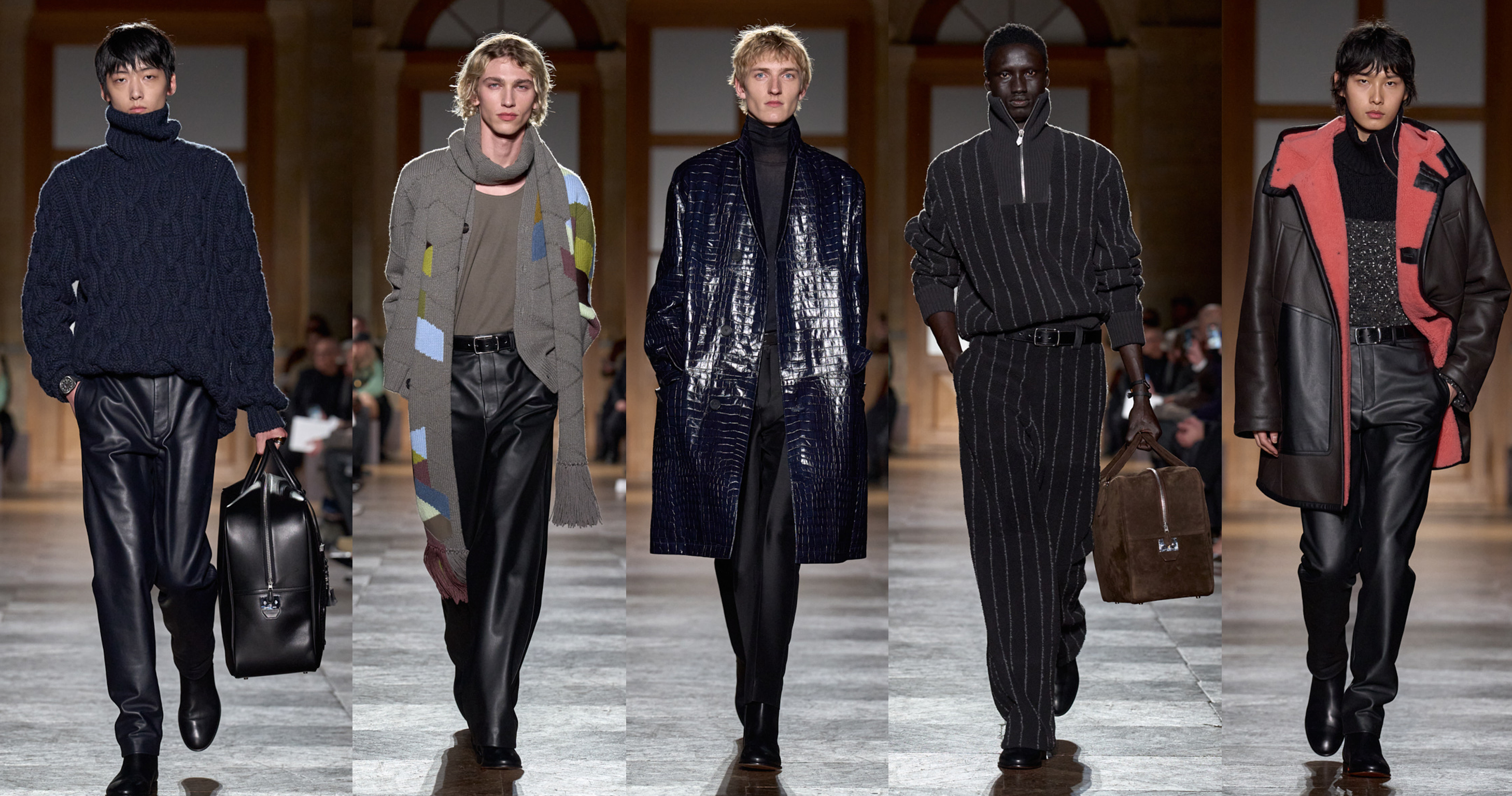
Véronique Nichanian took her final bow at Hermès on Saturday night after an impressive 37-year career, she will be succeeded by British designer Grace Wales Bonner, who will show her first collection in January 2027. Nichanian signed off with the same elegant, poised rendition of the Hermès man’s wardrobe she has always stood true to, letting the quality of luxury materials speak for itself. The collection was punctuated with looks from previous collections, including a navy cable-knit roll-neck and leather-pants look from 2011, a leather suit with topstitched pinstripes from 2003, and a leather jumpsuit from 1991 – everything worked seamlessly together, underlining the timeless style of her work. Leather played a key role in AW26, seen in coats, shirts and trousers. The hushed and intense palette of inky blue, prunoir, peat, and burnt grey was interspersed with flashes of coral shearling and cumin technical satin, both deployed in outerwear. As the models completed the final lap, screens overhead played a montage of Nichanian’s past runway bows in a touching tribute to an accomplished tenure.
LOUIS VUITTON
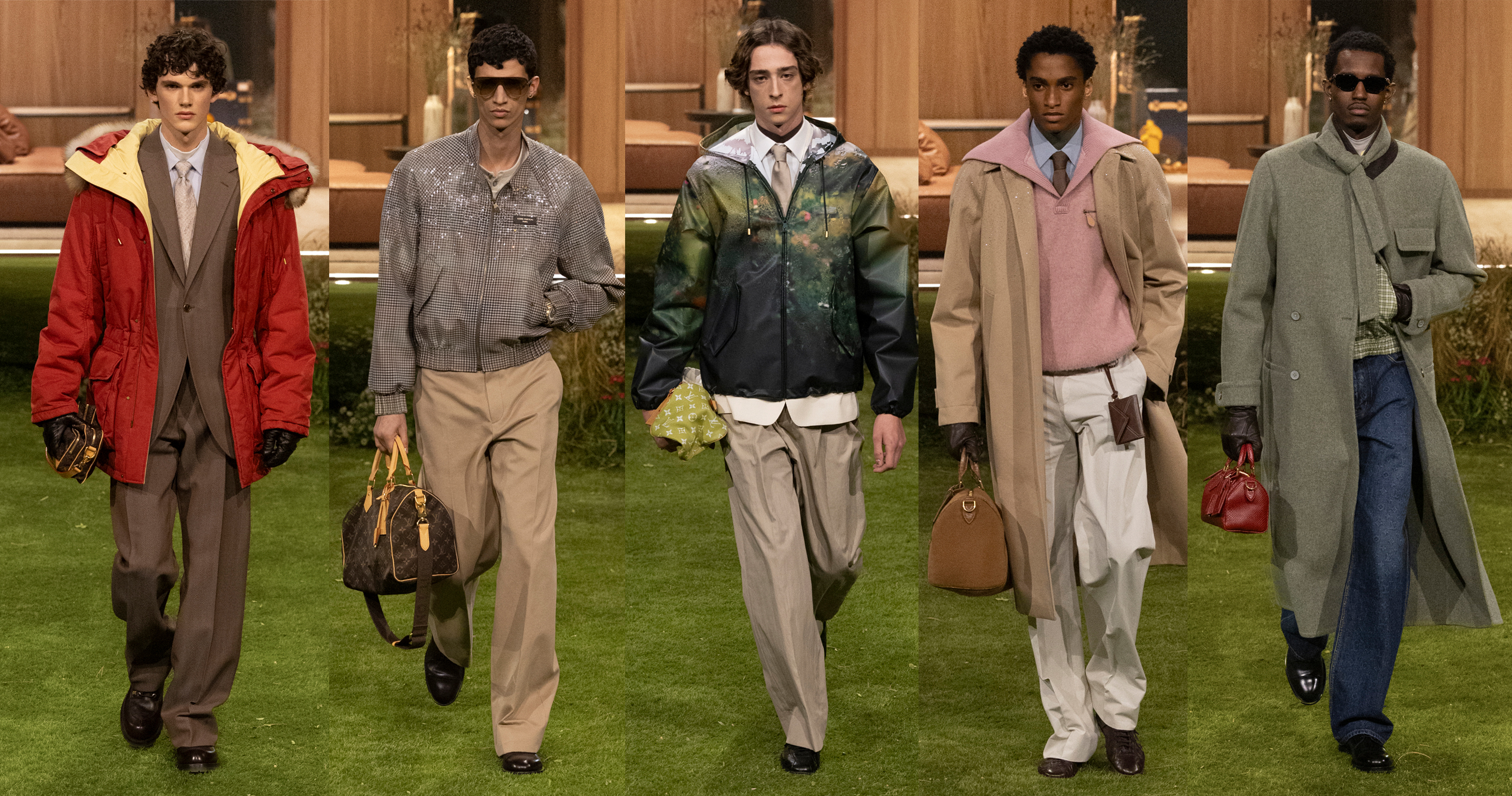
Guests entered the Louis Vuitton show via a supersized shipping crate… Inside they were greeted by “the Drophaus” – a stylish midcentury modern-inspired prefabricated house designed by Pharrell Williams, in collaboration with architectural firm Not A Hotel, as “a timeless space for future living”. Timeless became the watchword for the AW26 collection. Williams reframed futuristic dressing as functional, not abstract: “it’s not super avant-garde or alien,” he told Vogue. “What you’re going to see is what feels familiar, classic. But it performs.” Models strolled around and through the Drophaus, pausing to read a book or sit on the sofa, wearing outfits that seemed pretty classic at first glance. But the details were plentiful: technical-tailoring textiles presented as traditional houndstooths, herringbones and checks turned reflective under light. Thermo-adaptive textiles were employed in silk or chambray shell jackets constructed with innovative seaming and membranes that make them waterproof or water-repellent. Trompe l’oeil effects turned silk outerwear into nylon twill, wool was crafted like scuba, and knitwear as technical mesh, while Midnight Flash bags turned iridescent silver under a camera flash.
IM MEN
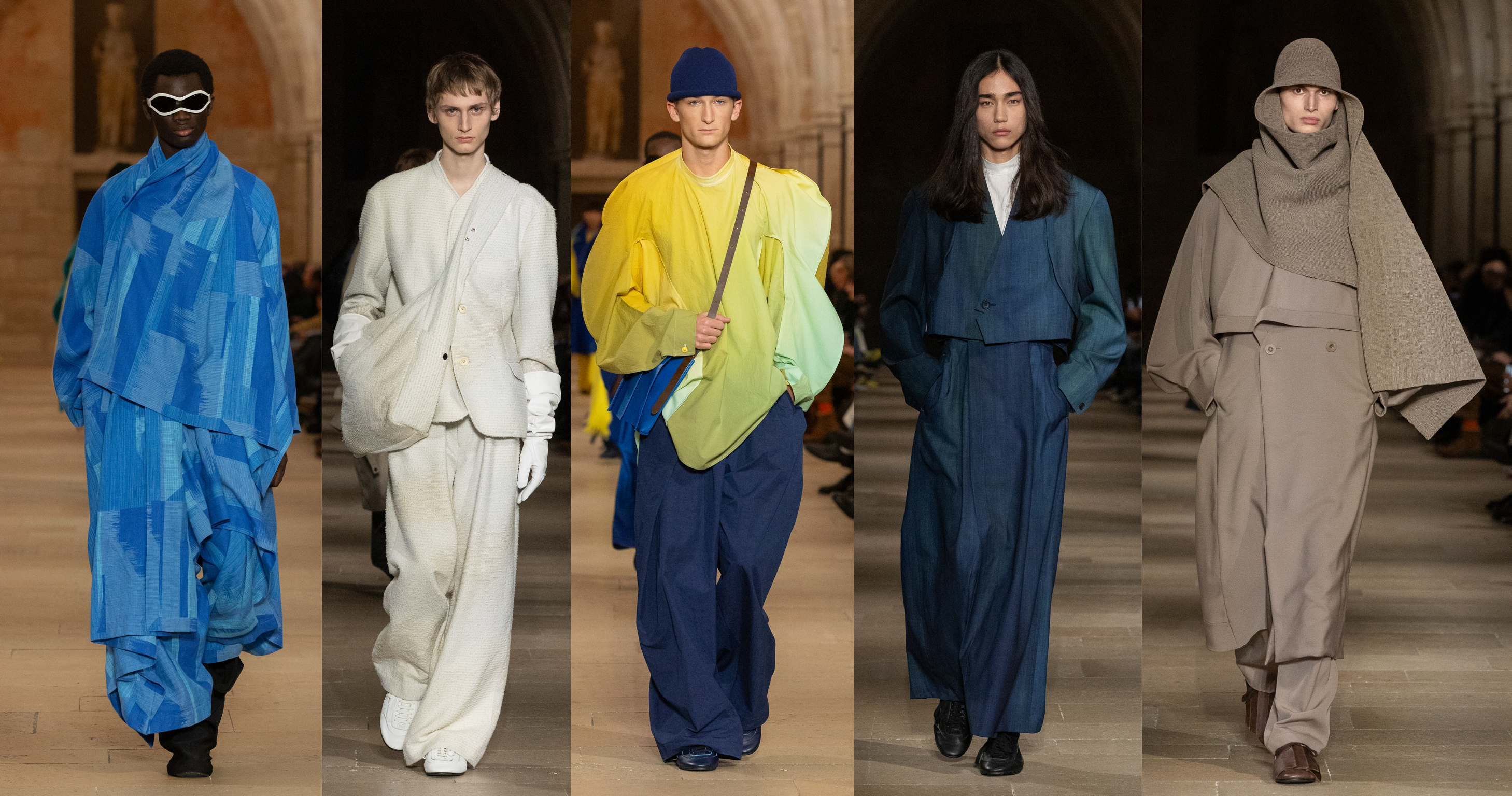
Presented at Collège des Bernardins, a former school built in the 13th century in Paris's 5th arrondissement, the IM MEN collection for AW26 uses single pieces of cloth to create effortlessly elegant contemporary draped garments. Presented in chapters that ran dawn to dusk (with a colour palette from midnight black to a rousing yellow of sunrise), the collection included a “front back” series where the coat and jacket are constructed using a continuous pattern extending from the body to the sleeves – it can be worn as a sleeveless style transforming into a long vest, while the sleeves can be elegantly draped like a hood or stole. Another series uses a dyeing technique where each roll of fabric is individually poured with dye, resulting in distinctive colours and unique patterns, seen in billowing trousers and tailored jackets. Also featured on a duo of lightly draped looks was the traditional Kasuri weaving technique that arranges partly pre-dyed yarn on a loom to create gradiants of patterns or colours. Innovative accessories came in the shape of the leather “to go” cup bags and satchels with built-in pockets to hug the bag to your body, for both security and comfort.
JUNYA WATANABE
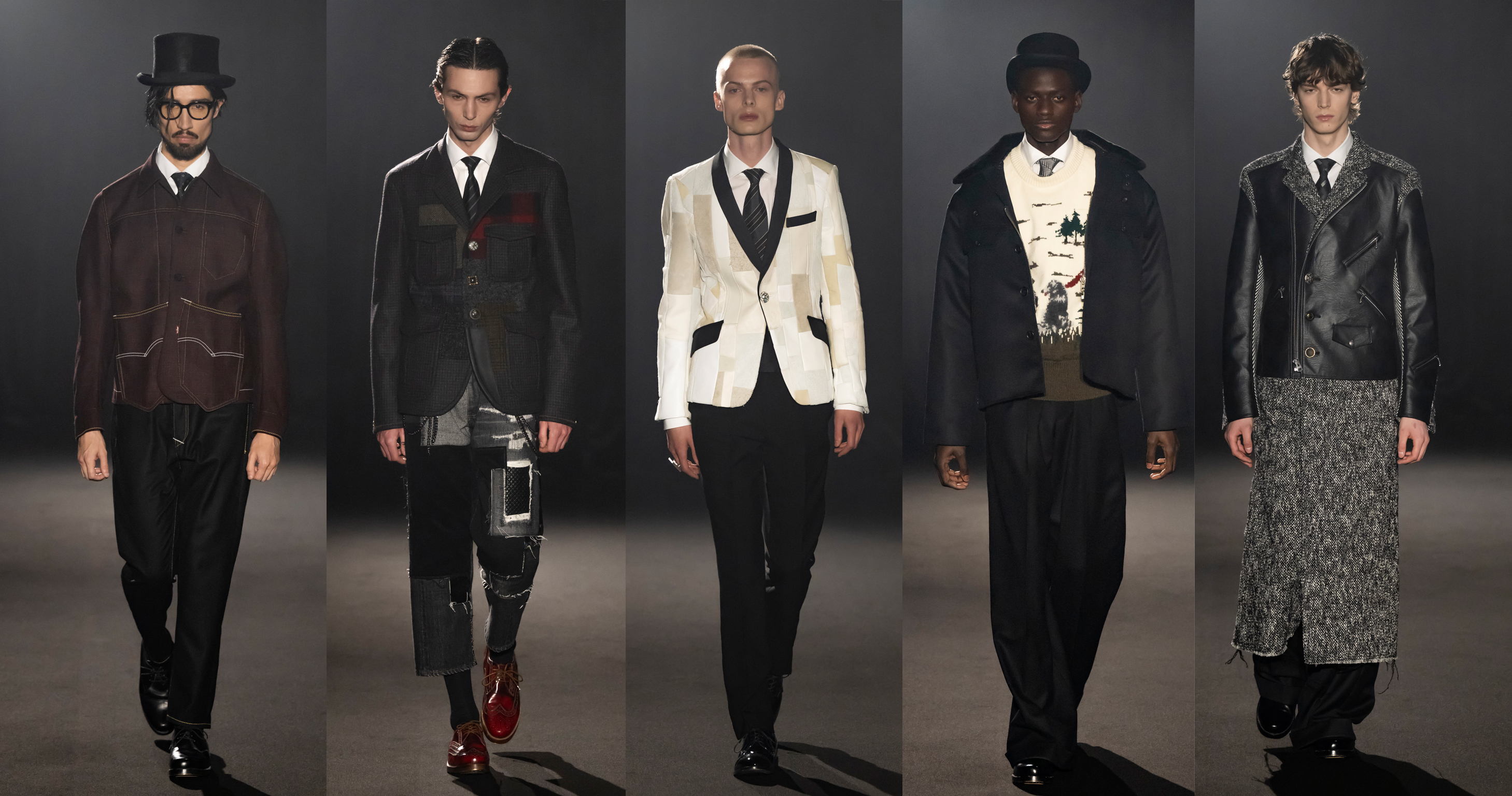
Models paraded almost forlornly around a dimly lit room set with cafe tables, the jazz-bar vibe confirmed with Miles Davis on the soundtrack. Titled The Best, Dressed, the show’s first two exits were a patchwork-leather take on a dinner jacket in shades of off-white and black: “Something that has history, that has a traditional shape”, read a note on the invitation, “our way of originality”. The collection offered an update to Junya Watanabe MAN’s established style through a black-tie lens. A collaboration with Levi’s resulted in a formal workwear project – think black preppy blazer with a Western denim top-stitching, complete with red-tab label, and trucker jackets cut in black cloth for a more dressy spin. The devil is in the detail with Watanabe; you need to look closely and look twice, and the darkness of the room honed focus. Other familiar Watanabe tropes such as the biker jacket came reworked onto tweed coats, and a herringbone overcoat had a parka hood added to give a capelet effect. (Call it the Traitors effect, but capes have emerged as an unlikely trend this season.)
AMIRI
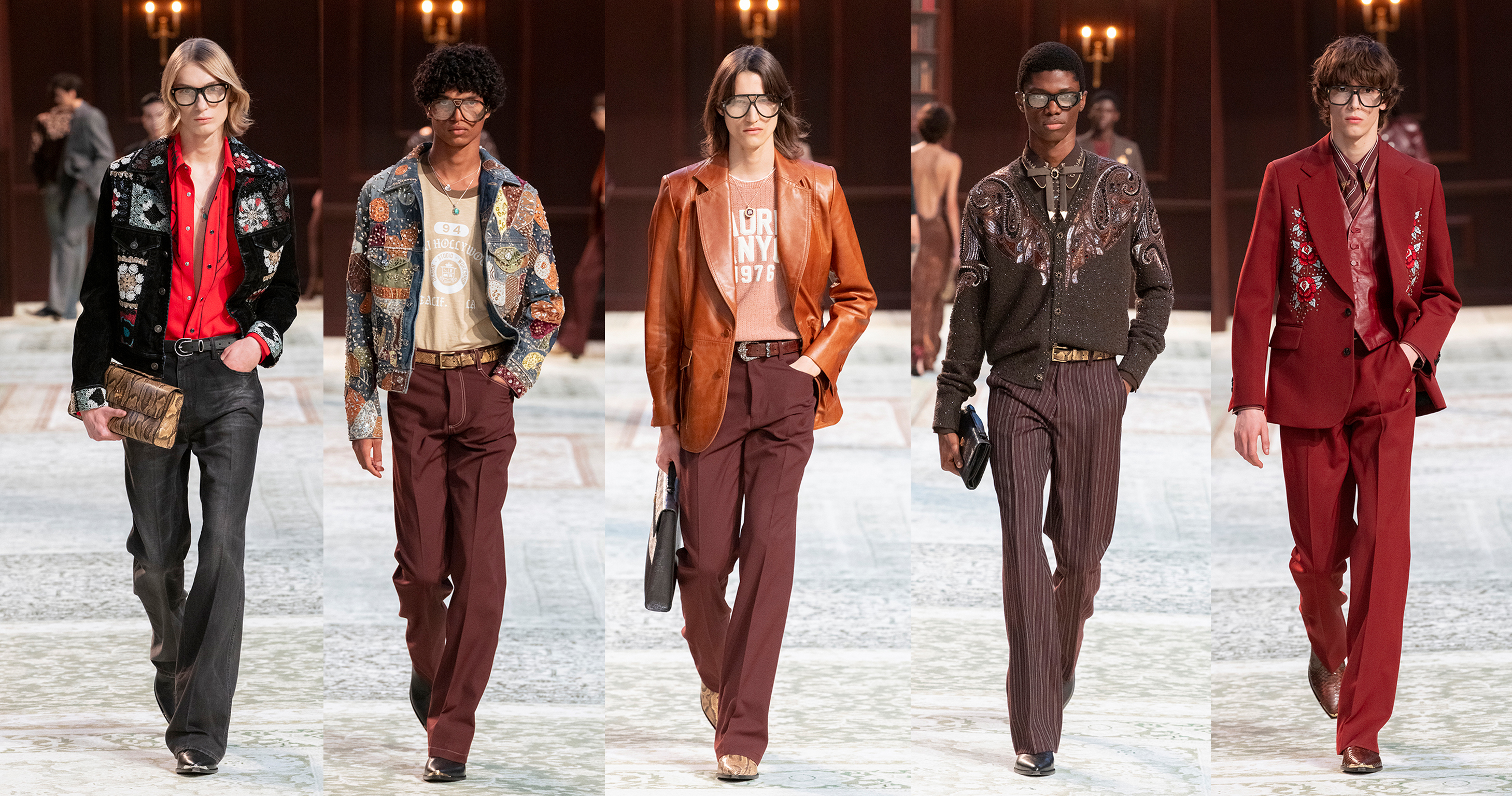
Amiri is intrinsically linked with both the Hollywood golden age and Los Angeles music culture. Founder Mike Amiri grew up watching classic American movies with his dad, and his background in the music industry led him to fashion via stage-wear. “For me, men’s formal wear is most interesting when it feels effortless and personal. I love the idea of artists wearing tailoring in an informal way,” he noted backstage. “That balance is the sweet spot for Amiri: something that can exist on stage but also walk right off into real life.” He has forged a meaningful connection with celebrity talent: the front row included the godfather of style Jeff Goldblum in an intricately beaded blazer, and Mexican boxer and Amiri ambassador Canelo Alvarez wearing a snakeprint jacket. Inspiration for AW26 came from the 1970s Laurel Canyon movement that saw stage-wear and formal wear be interchangeable. The set evoked an imaginary, idealised Laurel Canyon home with opulent rugs and plush armchairs for lounging. On the runway, a wardrobe of modern American classics – western wear, officer’s jackets, leather, and classic denim – were mixed with retro tailoring. Up-close details like crocheted “granny squares” rendered in intricate beading are seen on jackets and embroidered details on blazers, ties and knitwear that hark back to Nudie Cohn suits.
Newsletters
Choose the newsletters you want to receive
View more
For information about how The Observer protects your data, read our Privacy Policy