


During a heatwave in the summer of 2021, Sophie Kinross had surgery on her shoulder, and was sent home by the hospital wearing a sling that didn’t fit. “It was boiling hot, itchy and the plastic dug into my neck,” she remembers. “And I couldn’t get the thing on by myself.”
A former commercial fashion brand director, Kinross decided that the ill-fitting sling was a problem requiring a remedy. And four years later she launched Tonic, a medical design house that makes clothes and accessories for patients undergoing hospital treatment or in recovery. With Kelly Townsend, a former designer at Temperley and founder of Paper London, at the creative helm, the range is both cheerful and cool, with pleasing colours and patterns and a range of fabrics that include everyday cotton and luxurious cashmere.
But Tonic is more than trendy things to wear on the ward. Its hospital socks, arm slings and patient gowns are all Class 1 medical devices, and many other considerations have been taken on board. While conventional hospital slings are unisex – simply sized up or down for men and women respectively – Tonic’s are designed according to the differently evolved anatomies.
Women’s slings, for example, have smaller fastening clasps to accommodate a smaller grip, and padding to provide better support around the breast. Its chemotherapy-care range is designed with the treatment pathway in mind. “We think about what you might need at the beginning,” says Kinross. “Comfort, access points for ports or feeding tubes; zips or poppers along the arms so you can get a cannula into a sleeve with ease.”
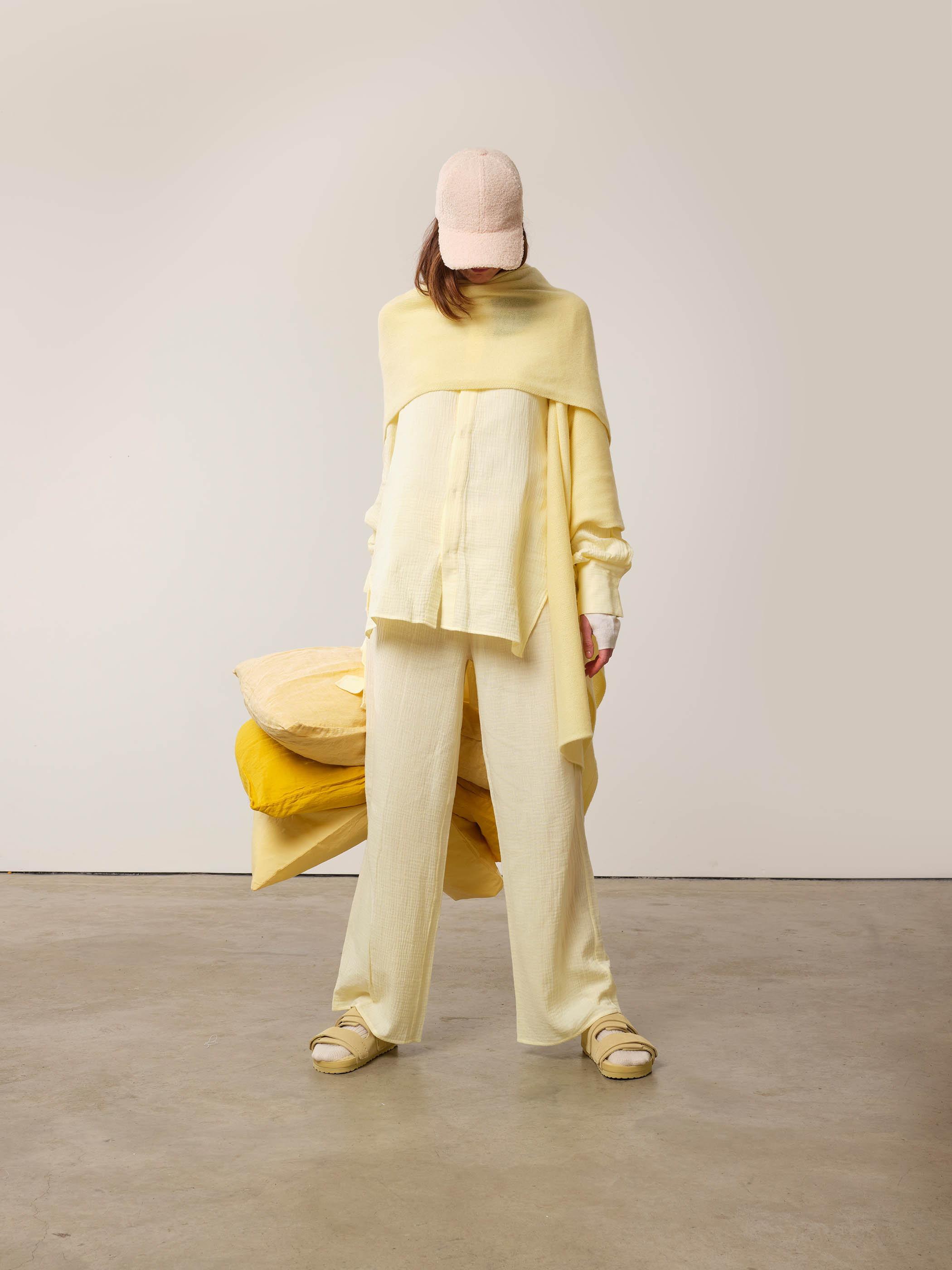
Orderly fashion: Tonic make slings in a variety of styles and fabrics to suit life during recovery (top), while sleepwear, shawls and socks make treatment more comfortable for greater comfort during treatment, above
The science of post-surgery recovery has certainly changed. Since the early 1900s the recommendation was bed rest – the dreaded hospital gown with its flapping rear opening was designed to accommodate the use of bed pans. In the late 1990s, the ERAS – Enhanced Recovery After Surgery – model, in which early mobilisation of the patient plays a key part, was widely adopted. “We see it as clinical infrastructure; a way of getting people up and about getting them back to their lives, helping them advocate for themselves,” Kinross says. “You get given a lot of information when you’re ill, and if you’re sitting freezing in a cubicle with your bottom exposed it’s harder to receive that. If you’re struggling to get out of bed and not trip over a long hem, or can’t get back into your trousers because your hip is so swollen, it’s another barrier to recovery.”
The collection is available online and for bedside delivery at a small number of private London hospitals. Kinross’s ambition is to roll it out to hospitals around the country.
“Medi-wear is a new category,” she says. “We need to prove it’s a good thing for society, giving dignity and joy and helping people back into the workforce.” The road to recovery has never looked better.
For more information, go to your-tonic.com
Newsletters
Choose the newsletters you want to receive
View more
For information about how The Observer protects your data, read our Privacy Policy