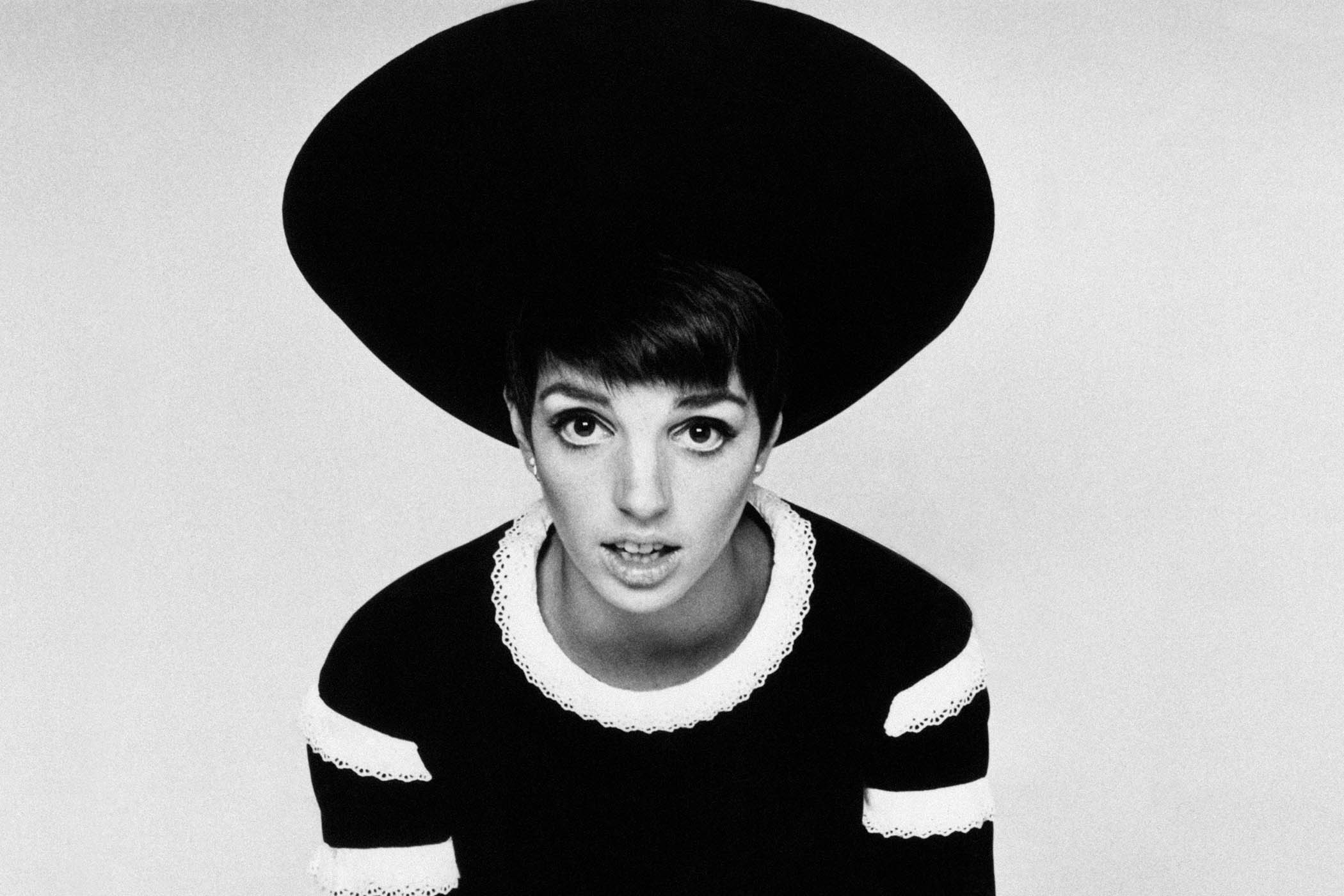



Last week, I read Liza Minnelli’s new memoir, Kids, Wait Till You Hear This! (The exclamation mark is obligatory; this is the land of spurious exclamation.) The problem with writing on Liza is also Liza’s problem. It is, basically: how much Judy? Liza’s mother, Judy Garland, the best woman in film musicals, and later the best concert performer, has a way of marauding all over Liza’s stage, which only exists – is only needed – because of Judy’s stage. Musical theatre is a deeply feminist art form, considering what else is out there, and it is also functionally chaotic. We need to believe in their pain; and we need them to survive it. For the matinee.
Liza’s parents met on the set of Meet Me in St Louis: Vincente Minnelli directed Garland. Both worked for MGM, the home of film musicals; Liza was playing In the Good Old Summertime at three years old. The title hints that nostalgia – the hunger for the elysium that never was, because it happened on film, and nowhere else – was always part of the destiny chosen for her. Liza was paid $47.50 – the Screen Actors Guild daily rate – to stand between Van Johnson and Garland, who was both her real mother and, here, her screen mother.
When Garland heard about the wage, she said: “That’s a lot of money for a three-year-old. I never forgave myself for letting her hang around the house for the first two years of her life doing nothing.” Garland was forced on to the stage by her monstrous mother, Ethel, but she was yet more ambitious for her daughter: she chose the name Liza to fit on a film marquee. Pregnant, Garland sat up in bed and shouted: “Vincente – Liza, like the Gershwin song. Liza Minnelli! Liza Minnelli!”
Musicals are about the ordinary becoming sublime. Garland’s story – and Liza’s story – is also our story: the story of those of us addicted to musicals, and how they survived us. The most interesting thing Liza has said in any interview is that she has perfect peripheral vision. “I grew up watching,” she said, “to protect Ma. You know. I can see them coming.”
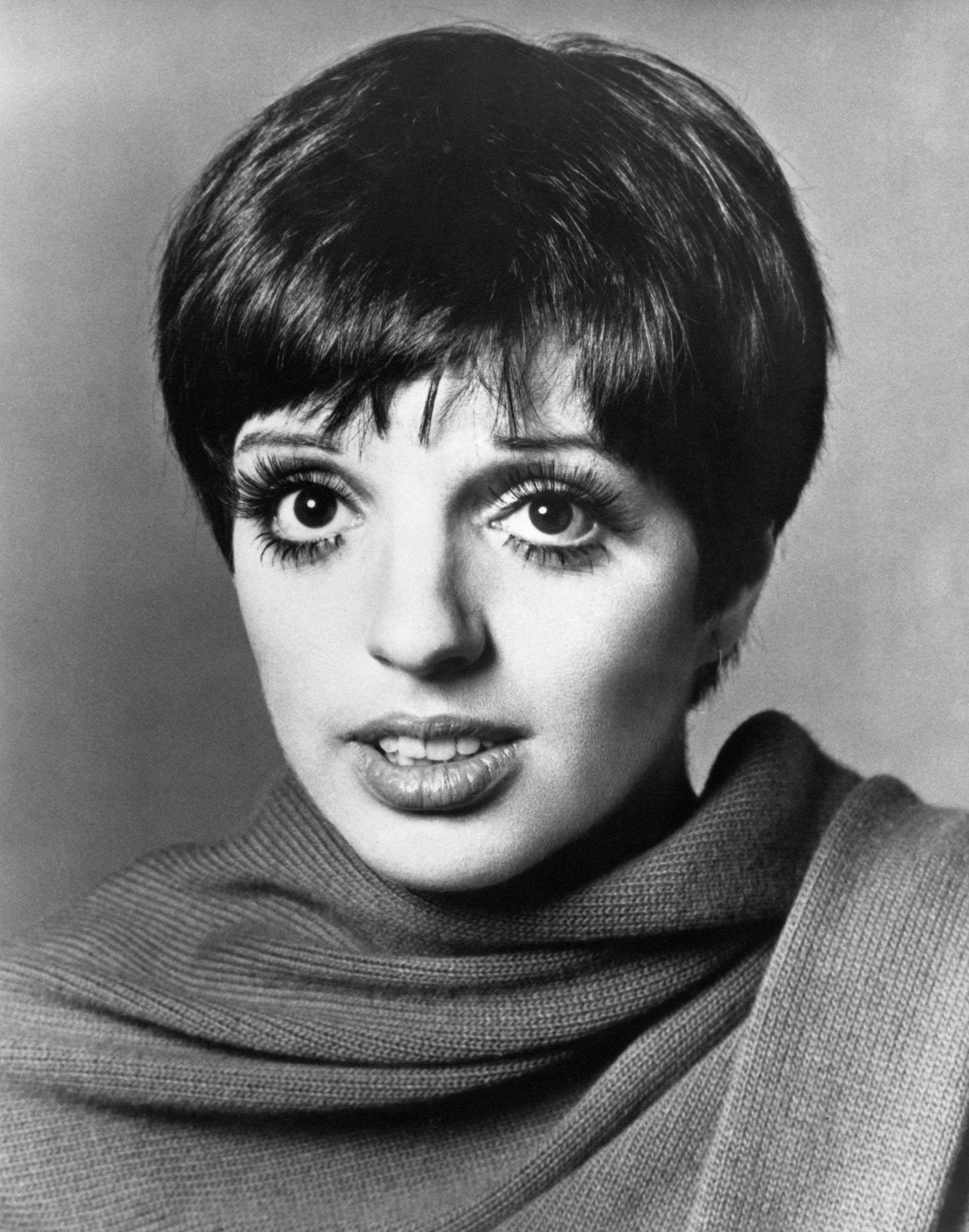
Liza Minnelli in 1967
I don’t doubt Garland loved her daughter, but she was a drug addict from childhood, and all drug addicts are mad. When Liza was five, trying to do a backflip, she accidentally kicked her mother in the head. “She screamed and screamed, and it seemed as if the yelling went on for hours,” Liza remembers. “From that moment on, my fear of her never went away. I had hurt my precious Mama. And I’d never get over it. I’d never stop believing that I needed to protect her.” Even today, she writes: “I have only one trigger for trauma. And that’s a horror of screaming voices.” And yet she is a singer: the art of controlled screaming.
She was not allowed to be a child. Vincente was affectionate and functional – “a rock made out of honey”, who spoilt her – but after the couple divorced, he left Liza to Garland. Days after Liza’s sister Lorna was born, Garland slashed her own throat. “This was my first experience of Mama attempting suicide,” Liza writes in her memoir. “And because she always rallied, I fooled myself into believing she was immortal and could never die.” But, raised at MGM, Liza was not just a daughter, she was also a critic. (As Garland was not just a mother, she was also a critic.) “If you factor in the blood and drama, this was a brilliant performance,” Liza writes of Garland’s suicide attempt. “Attention would be paid.” When these stories hit the press, Garland told her: “Baby, I don’t care. Let them rant and rave. That’ll sell tickets. Sympathy is part of my business.”
Garland’s cynicism was a repudiation of cinema – her kind of cinema – itself. Liza asked her: “What happens after happily ever after?” She said: “You’ll find out.” Or she would say: “This is what they want to see, and that’s what I give them.”
She went on the road with Liza and her younger siblings. Liza went to 22 schools: do that and you will end up a pleaser, which she is. “If my mother’s superpower was wringing sympathy from a crisis, mine was trying to make everyone feel better,” she writes. “At 13, I was my mother’s caretaker – a nurse, doctor, pharmacologist, and psychiatrist rolled into one.” She would feed her mother the drugs she needed to function. “I lost count of the times I called doctors to say she’d run out of pills. They often told me they couldn’t give her another prescription. It was too soon. I’d say: ‘I’m a kid! Please fill my Mama’s prescription!’” You are invited to think: this was a brilliant performance. Attention would be paid.
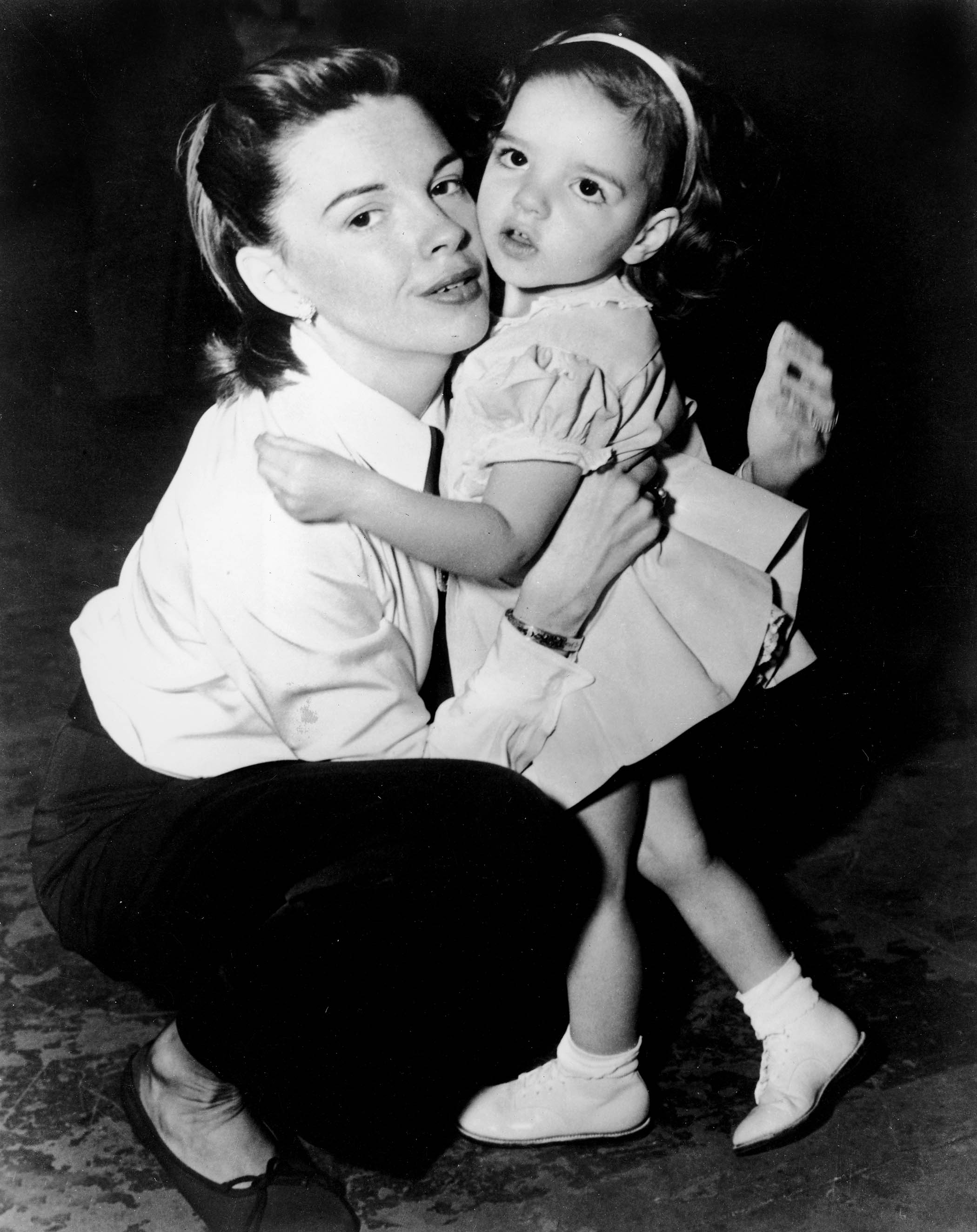
The actor with her mother, Judy Garland, in 1948
The strangest thing Garland did to Liza happened on New Year’s Eve in 1957 in the Flamingo hotel, Las Vegas. Liza was in the wings, watching Garland sing. She was wearing a bathrobe and slippers. Garland called her daughter on stage and said: “Ladies and gentlemen – Liza Minnelli.” Then she walked off, saying: “Take it.” Liza sang The Man That Got Away. She was 11.
At 16, Liza ran away to New York. Garland still did terrible things to her. She didn’t show up for her daughter’s opening night Off-Broadway in Best Foot Forward, later apologising, Liza writes, “with a violin section of Judy Garland tears”. But she did give her daughter advice when she broke her ankle. “‘Liza,’ she said, ‘everyone needs a gimmick, and now you have one!’” Sympathy was part of the business. Or she would try to get on stage, apparently to hand her daughter flowers. Or jump on the piano at the cast party. At Liza’s first gig at the Cocoanut Grove in Los Angeles, she was introduced: “Ladies and gentlemen – Miss Judy Garland! I’m sorry, I mean Miss Liza Minnelli!” In her first TV show, Liza was introduced as an Armenian Gypsy named Dyju Langard: an anagram of Judy Garland. This all reads as if they inhabit some terrible musical comedy, which they did. This book – this life – is an attempt to inhabit a family that only speaks the truth in song. One of the headings in Kids, Wait Till You Hear This! is “Mama, Please Give It a Rest!” It’s a line from Hairspray.
In 1964, Garland said they should perform together at the London Palladium. Liza said no. It didn’t matter. “The next day I woke up and read a news story that blew my mind: ‘Judy Garland and Liza Minnelli will be appearing together in November at the London Palladium!’”
Liza gave in, but she was too good that night. She heard Garland whisper to the producer: “Harold, get her off my fucking stage!” “I heard it! I just kept singing to wild applause as Mama fumed. Our eyes locked. She walked back on stage, and we sang the hit Broadway song from Hello, Dolly! – now retitled Hello, Liza!” She recalls that her mother “kept reaching out to push my arm down, as if she was teaching me how to use a mic. She was protecting her turf, the stage, and I was invading her sacred space. It took me several years ... no, decades ... before I understood that her competition with me was a compliment to the performer I was becoming.” Judy would not be erased.
Mama, I can’t make it to your wedding. I’m making a movie. But I promise I’ll come to the next one
Mama, I can’t make it to your wedding. I’m making a movie. But I promise I’ll come to the next one
When Liza was cast in The Sterile Cuckoo, her third film, Garland said: “Why would you want to be such an unhappy, friendless person?” (Yet Garland appeared in Judgment at Nuremberg.) In her early film roles, Liza was drawn to play broken women, and she did it brilliantly: she seemed so open to it. Young Liza had more sensibility than anyone: even Judy, from whom she inherited it. In performance, she vibrates. It’s both impossible to watch, and impossible to ignore. In The Sterile Cuckoo – Garland wasn’t wrong; what a name! – she played a college student under the boot of a worthless man. It’s agony to watch again. In Tell Me That You Love Me, Junie Moon, an abusive lover throws battery acid on her face: here Liza is, quite literally, covered in bandages. These parts are about unresolved trauma and, as Junie Moon, her scream is extraordinary. Liza isn’t her mother, but I think she is playing her.
Throughout her career, you find Liza speaking to her mother in film and song – bandaged or not. There is the extraordinary song Say Lisa (Liza with a “Z”), which became the name of her 1972 concert film. It’s by her lifelong collaborators, the songwriters Fred Ebb and John Kander. It’s as if she is addressing the announcer at the Cocoanut Grove: “It’s Liza with a “Z” not Lisa with an “S” / ’Cause Lisa with an “S” goes snoz / It’s “Z” instead of “S”, “Li” instead of “Lee” / It’s simple as could be, see Liza!”
She loved Ebb and Kander because they let her shout her name. The pair wrote Chicago and when the star dropped out after a musical theatre injury – she inhaled confetti – Liza stepped in at a week’s notice, though she was already an Oscar winner.
In life, Liza had her own ways of fighting back. When Garland became engaged to her fifth husband, Mickey Deans, she invited her daughter to the wedding in London. “I blurted out: ‘Mama, I can’t make it to your wedding. I’m making a movie for Otto Preminger!” By this time, Garland’s film career was over. “And Mama, you know what he’s like. But I promise to come to the next one!’”
Garland died of a drug overdose in London in 1969. Liza organised the funeral with her godmother Kay Thompson, a superb musician who deserved a bigger part in the history of musicals but never got one: she was not broken enough. Thompson wanted a white coffin for Garland – another exclamation mark – but the funeral director resisted. He had none, he said. “We’re from MGM,” Thompson told him. “Spray it!”
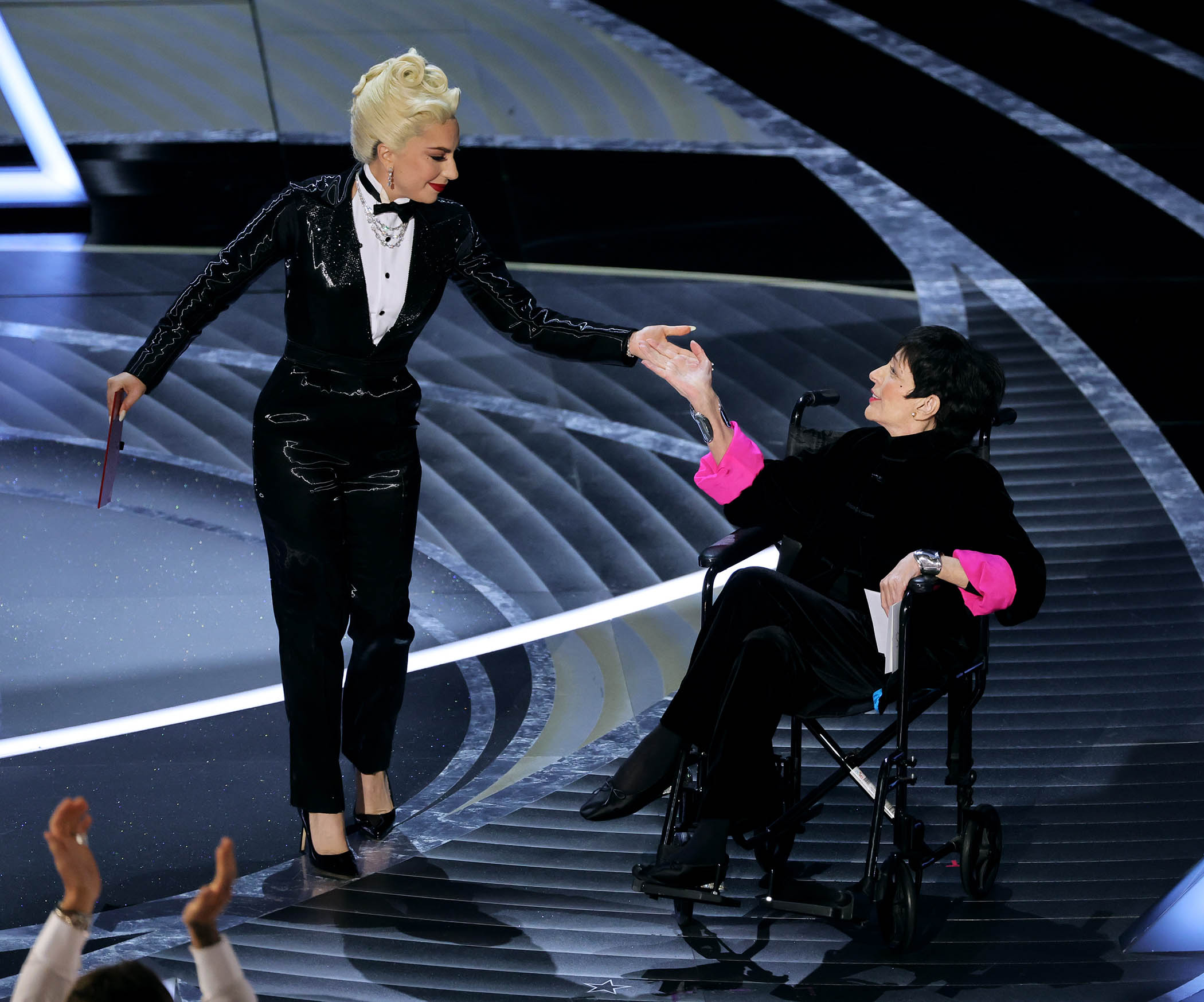
Minnelli at the 2022 Oscars with Lady Gaga
Now that Garland needed no care, Liza became a drug addict. I suspect it was a way of feeling close to her mother. “I was reeling,” Liza writes, “and a doctor prescribed Valium to help me relax just before the funeral. It was the first time I took any such drug, and I marvelled at how quickly it took the edge off. Where had it been all my life? It was a final gift … from Mama.”
This is perhaps why she never fulfilled her promise as a dramatic actor – and misogyny, of course. Good roles for women are rare. Rather, she excelled at singing on stage – she calls herself an actress who sings – because she held nothing back. Once, the police had to come on stage at the end of a Carnegie Hall concert and tell everyone to go home. There would be no more Liza that night; there was none left. Martin Scorsese’s New York, New York is absurd, because Liza and Scorsese were doing so much cocaine – you can see it on the screen, in the way the film slides about, seeming to be about something other than the movie itself – and were having an affair.
Men do not seem very real to Liza, who married four times, and wed at least one gay man by mistake. She even had a love affair with the monstrous Peter Sellers and tore off his hairpiece in public. I think she reserved her truest love for her piano players. Even so, only a drugged Scorsese would give her 26 takes for a scene and try to make Liza and Robert De Niro ad-lib a musical. A Matter of Time, directed by her father, is interesting but bizarre; she was very good in Arthur, but it was beneath her; Stepping Out is like an episode of Inspector Morse in tap shoes.
Then there is Sally Bowles in Cabaret, such an incredible performance that I initially named this article “Sally” on my laptop. I confused the mask with the face, and I felt bad. Although Liza was not cast in the Broadway version, she knew she’d get Sally in the end. And she stood up to Bob Fosse, the director.
Fosse: “Would you consider full nudity in the movie?”
Liza: “Absolutely not.”
Fosse: “What about going topless?”
Liza: “No way.”
Fosse: “What if the script calls for it?”
Liza: “It can call for something else.”
Fosse took a long pause.
Liza: “Right?”
Fosse took another long pause.
Fosse: “I was just wondering.”
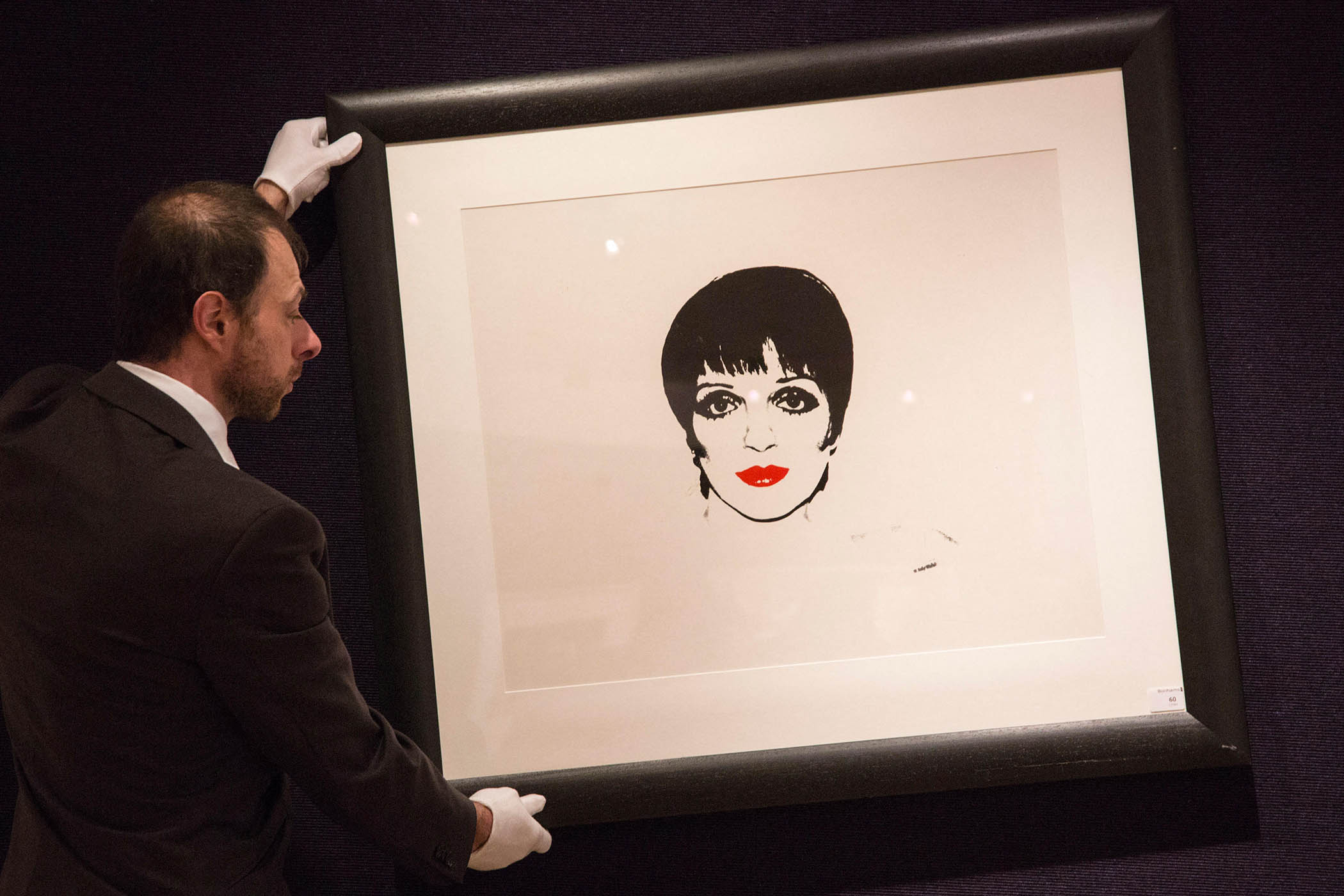
Andy Warhol’s screen print
And there is Liza’s sanity, which I believe in because I need her to be mad only on screen. That is the myth I choose: to expiate myself. As an infant, she said to Vincente: “I want you to direct me. I want you to get mad at me and shout! Just like you get mad at other people!” Control is half her inheritance then; sensibility – from Garland – is the rest. I remember seeing her apartment in a documentary, and on the wall are two Warhols of her parents with two Lizas between them. Liza is bigger, and they are smaller. It’s Liza with a “Z” on the wall – twice – and in paint.
Cabaret is set in a nightclub in Weimar Germany. It is the least fantastical, most truthful and greatest of all musicals: anti-MGM. There is no woman in the street accompanied by a full orchestra. Just the singer and her cynicism and lust, which Liza plays guilelessly: she’s the devil in her dancing shoes. “I’m going to be a great film star,” Sally says. “That is, if booze and sex don’t get me first.” All the songs are performed in the Kit Kat Club, except for one, which remakes the form itself: Tomorrow Belongs to Me, a call to Nazism. Liza is brilliant as Bowles: the performance holds all her anguish – and hope. That’s the polite phrasing. It’s a call to sex.
Liza never writes about sex, though she quotes a line from the Gershwin song Lorelei, and it feels heartfelt. “Oh, I just can’t hold myself in check / I’m lecherous, yeah, yeah / I want to bite my initials on a sailor’s neck.”
She won the Academy Award for Cabaret, and you can only be thankful that Garland, denied an Oscar for A Star Is Born – it went to Grace Kelly, which still makes me want to scream – was already dead. Liza said: “Thank you for giving me this award.”
Unlike Garland, Liza recovered from addiction; in Kids, Wait Till You Hear This! she sweetly provides recovery materials for readers. Sometimes she dips into madness in print, but I don’t think her heart is in it. I don’t think, for instance, that when she collapsed in 2012 with seizures, musical theatre brought her back to life. Her friend sang Love Is Here to Stay by Ira Gershwin, her godfather, in her ear. But musical theatre is, in its bones, stigmata: and sympathy is part of the business.
Kids, Wait Till You Hear This! by Liza Minnelli is published by Hodder & Stoughton (£25). Order a copy at The Observer Shop for £25. Delivery charges may apply.
Newsletters
Choose the newsletters you want to receive
View more
For information about how The Observer protects your data, read our Privacy Policy
Photographs by Alexis Waldeck/Conde Nast/Getty Images, Hulton Archive/Getty Images, Neilson Barnard/Getty Images, Alamy