
My daughter was three months old the day my back went. It was the day before the King’s coronation, which I watched from the carpet, supine and furious. “Went” is a funny turn of phrase, I suppose, suggesting that my back absented itself, when it was the opposite – a body part that ought to be anonymous was suddenly and unignorably here. I’d had a few warning aches, but still, it was a shock to casually reach for a muslin and feel something snap like a frayed rubber band. The pain was blinding. I couldn’t walk, or make it to the toilet, which led to a situation involving my husband and some empty Carte d’Or tubs far more visceral than anything we’d experienced in childbirth. I spent an entire day on the floor, and that day has been followed by three years in recovery – so far.
But this story is boring. You probably have a dodgy back, too. Or if not a back, then a knee, or a shoulder. A neck that seizes up in protest at some audacious activity like sleeping. Some 43% of UK adults are thought to live with a degree of chronic pain, and it affects more women than men, in part because our bodies do the wild, shapeshifting work of childbearing and often the lion’s share of manual labour that follows. And while it was heartbreaking not to be able to dance with, comfortably snuggle, or even freely hold my child when she was very young, it has been of at least some solace to know that I’m not the only mother wincing my way through Rhyme Time sessions at the library.
As for the question of how to get better, I have been on my own. I’ve experienced back pain in the past, but always recovered, usually inside a week. This time the standard-issue NHS advice – some dutiful, rather pitiful stretching – only worked enough to bring me upright. An MRI revealed no structural damage, which were words that should have been cheering but inevitably read like a dismissal.
So I began an odyssey, hobbling from osteopath to physio to deep-tissue masseuse in search of relief. Sometimes these things helped a little. Sometimes they seemed to make things worse. Weeks turned into months, which turned into grim resignation that this might be my new normal. To mark the anniversary of that first painful event, my daughter learned to say, “Mummy’s back hurts.” And all the time, I couldn’t escape the vague sense that this was all my fault. For not being stronger. For not being fitter. Instead of bouncing back, I had broken.
This time the standard-issue NHS advice – some dutiful, rather pitiful stretching – only worked enough to bring me upright
This time the standard-issue NHS advice – some dutiful, rather pitiful stretching – only worked enough to bring me upright
I’ve never been a natural athlete. Big fan of sitting, mortally afraid of sweating (I have a fringe). The only physical activity I enjoyed during my formative years was organised dancing: ballet, tap. I flung myself around a stage to communicate some profound message, such as “War is bad”. Unlike PE, dance felt instinctive and joyful, a brief escape from the agonising tyranny of living inside a teenage body. Then I went to university and never did a plié again.
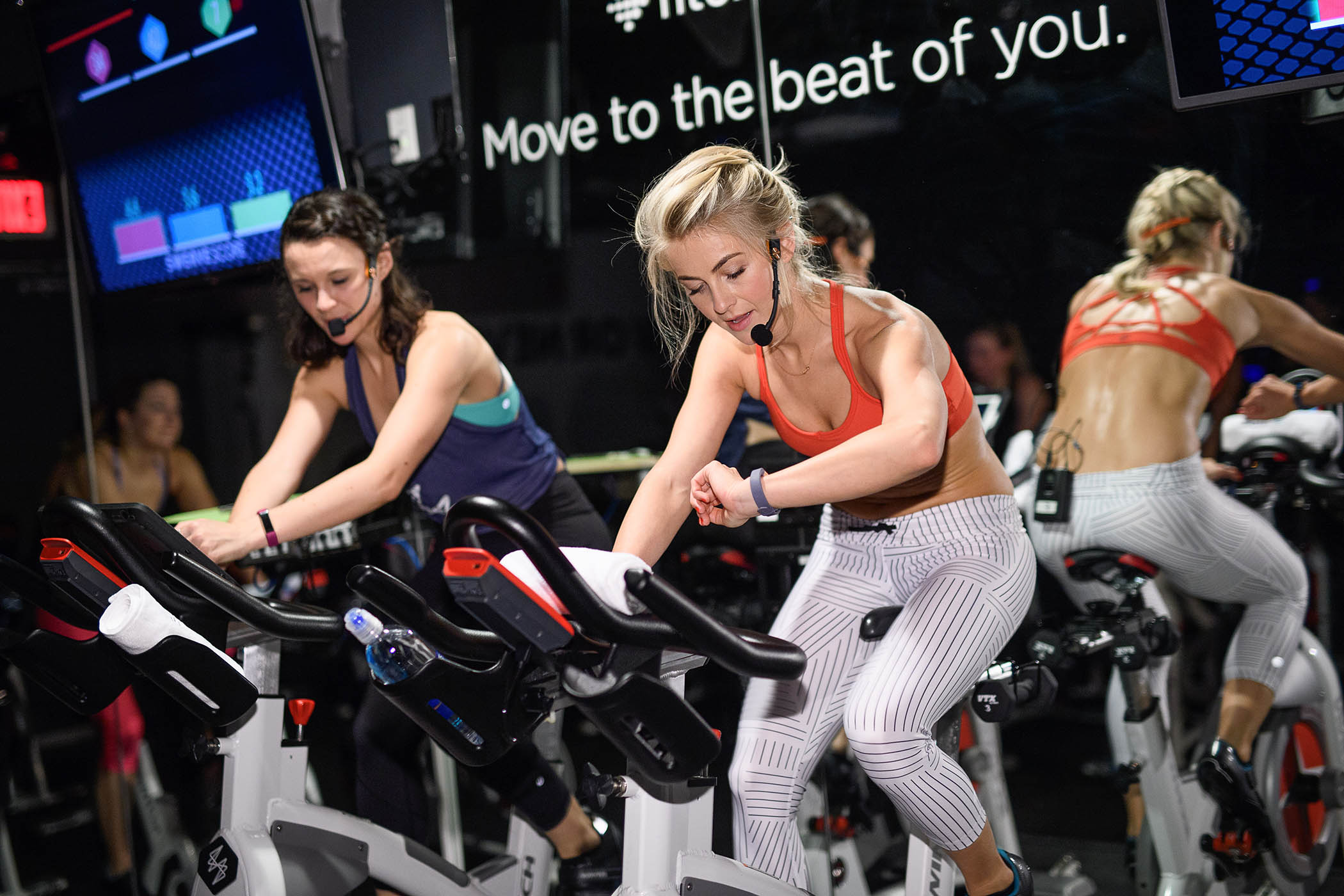
But while I was grinding to a halt, the fitness industrial complex was gathering pace. In recent decades, exercise has moved from habit to hobby to identity; from something you could do in an old T-shirt to something that required tonal Lycra separates and a vat of creatine. The boom in boutique studios and premium classes has glamorised the sweaty business of fitness, but has also priced many people out of working out. Worse, they have intimidated the still-healthy masses into believing fitness isn’t for them. According to a 2023 study, 68% of Brits who don’t exercise feel too embarrassed to go to the gym, for fear they don’t fit the mould of a “typical” exerciser.
And yet a backlash is afoot. Not against exercise itself, but against the idea that it has to be siloed, prescriptive, expensive – as though humans haven’t moved their bodies for the hundreds of thousands of years that passed before the perverse invention of the HIIT class. Clawing fitness back from capitalism, if you like. Trojan horsing it into our lives, if you prefer.
Evidence has grown of late in support of “snacktivity”: tiny bursts of informal exercise scattered throughout your day, which researchers say could have as many health benefits as a punishing gym session. “Lack of time is often perceived as a barrier to physical activity,” Dr Alexis Marcotte-Chénard, associate professor at the University of Quebec and a leading expert in exercise “snacks”, told me recently. “The good news is that health benefits occur even if we don’t meet the traditional guideline of 150 minutes of moderate-to-vigorous physical activity per week.” He pointed to several large-scale epidemiological studies, such as data collected last year by the UK Biobank, which found that brief bouts of vigorous activity – even as little as four minutes per day – are linked with a 26-30% lower risk of all-cause and cancer mortality and a 32-34% lower risk of cardiovascular disease mortality.
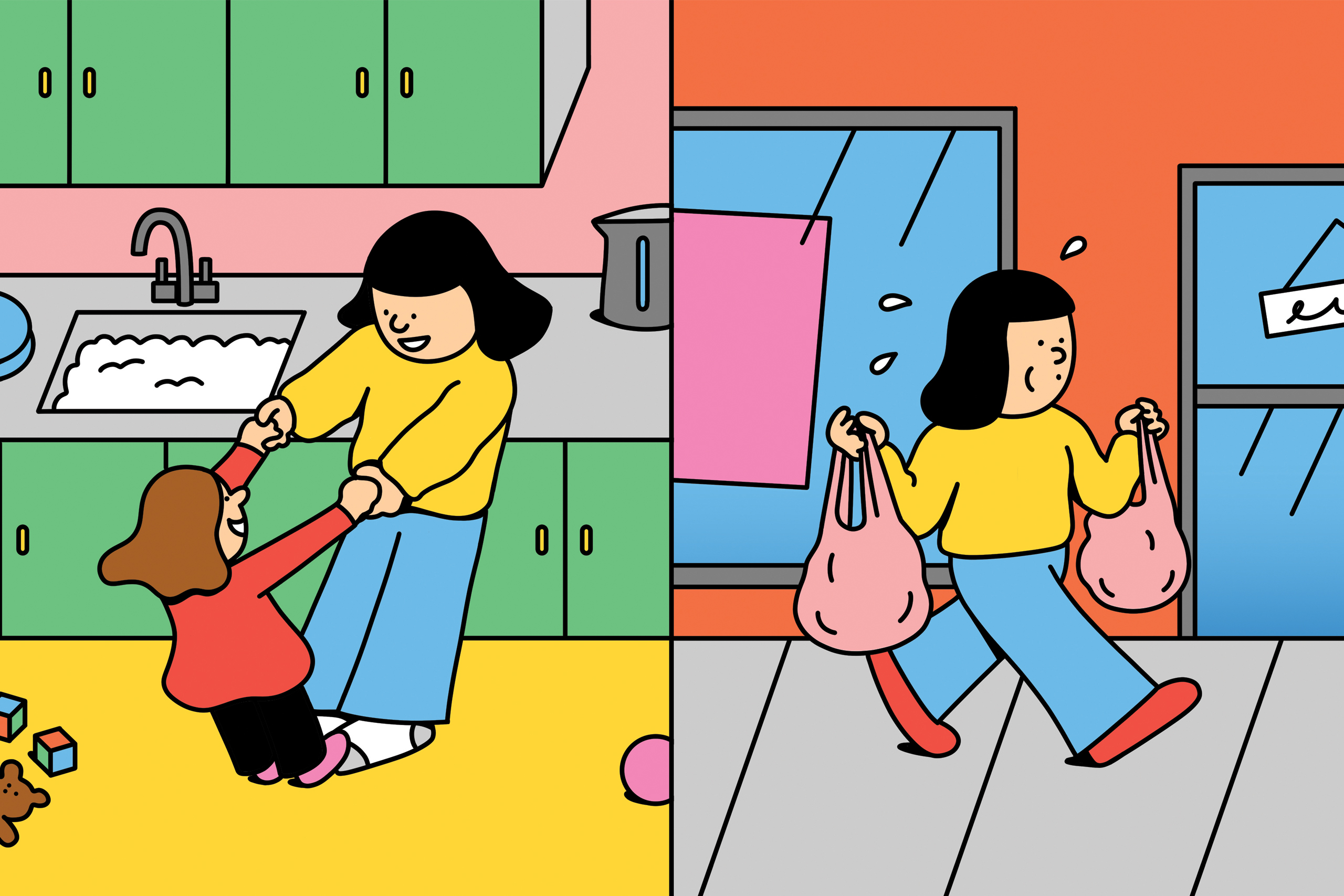
Some opportunities are obvious. You take the stairs. You walk rather than drive. You squat while waiting for the kettle to boil. Many dovetail nicely with the internet’s latest pithy branding exercise, “friction-maxxing”, meaning to purposely reintroduce effort where the convenience of modern life has stripped it out. Chop your own vegetables. Pick up your own takeaway. Skip the online shop and carry your bucket of peanut butter back from the supermarket.
“One caveat here is that the activity needs to be performed at vigorous intensity,” Marcotte-Chénard told me. “Physiological cues include huffing and puffing, being out of breath, unable to speak more than a few words without pausing.”
Make that two buckets of peanut butter.
When the two-year anniversary of the Big Snap limped by, I was more mobile than I had been but still moving cautiously, living in fear of Big Snap Two. All medical advice told me the way to ease my back pain was to keep moving – but during the sacred slivers of time when my baby was asleep, all I wanted to do was lie down.
But then I read Move Well for Life, a kind of fitness self-help book authored by the natural movement therapy coach Wendy Welpton and published by Hachette. Once a keen runner and active mum-of-three, Welpton woke up one day, aged 40, with debilitating hip pain that had seemingly come from nowhere. The first chapter detailed the achingly familiar push-pull between mothering and recovery. “What should I do?” she wonders, when her son wants to play. “Disappoint my child or risk being in pain?” The book’s sub-title reads: “Unlock the life-changing power of everyday movement.”
Welpton’s book had such an effect on me that I now begin all sentences: “Wendy says…” Like mine, her recovery was slow and frustrating. Like me, she experienced dismissive doctors and contradictory messages. Two steps forward, one stumble back. Eventually, Welpton realised her pain wasn’t caused by a single event, but by every injury, habit and pattern her body had ever experienced, all of which had piled up “like the layers of an onion,” and which led her to Natural Movement, a fitness philosophy rooted in everyday life and evolutionary biology.
Like so many wellness trends, Natural Movement holds Neanderthals up as poster children for health and vitality. And yet, unlike, say, the paleo diet, it isn’t a miserable way to live. “Think of movement like a language you once knew fluently and never had to guess, but that you haven’t spoken fully in years,” Welpton writes. “Our ancestors spoke it fluently. Their daily lives were filled with climbing, squatting, scrambling and lifting.”
‘Think of movement like a language you once knew…’ Welpton writes. ‘Our ancestors spoke it fluently. Their daily lives were filled with climbing, squatting, scrambling and lifting’
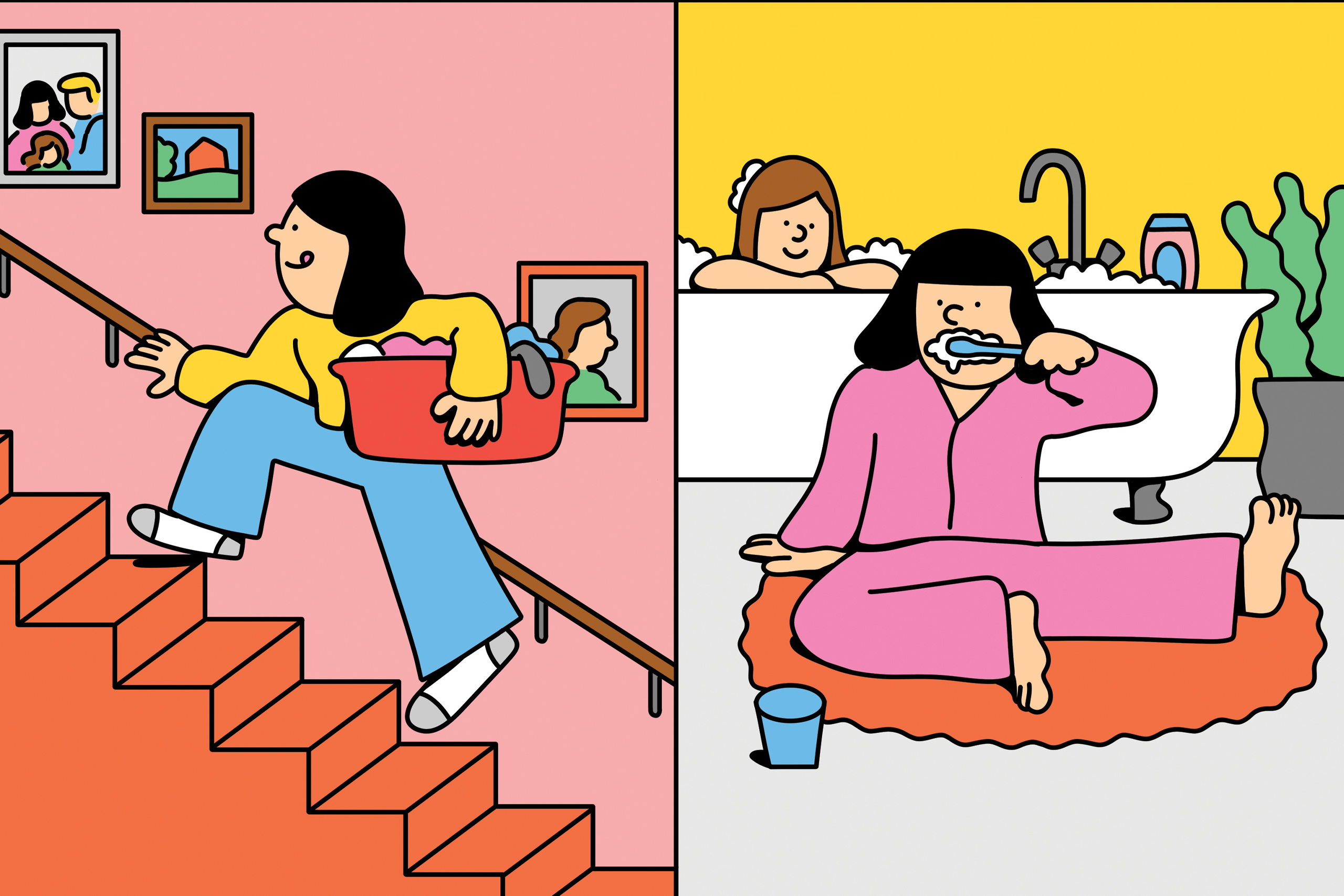
Welpton is 51 now, enviably sprightly, with qualifications in anatomy, Natural Movement, menopause movement and the even artsier-sounding “Human Movement Restoration”, among others. She is nonetheless a humble kind of guru. Devotees of the Natural Movement movement are predominantly topless Tarzan bros. In contrast, Welpton is refreshingly domestic. For proof, see her Instagram feed. Watch her squat in front of the washing machine. Watch her weed her garden. Watch her walk sideways up her stairs like a crab. It’s aspirational fitness, for those of us who aspire to put our socks on without yelping.
Welpton’s approach champions exercise snacks – she calls them “movement breaks” – as well as something called Non-Exercise Activity Thermogenesis (Neat), which means all the micro-movements we accumulate throughout the day: the pottering about. She is equally interested in unpicking the kinds of mental shifts that occur during decades of cultural conditioning that encourages us to think of exercise and movement as a chore – a thing that happens only in designated time slots, places, outfits – rather than a day-to-day form of play.
When I read Welpton’s book, my first reaction was to lecture my parents, which I’m almost certain they enjoyed. Wendy says never sit down to put your shoes on! Balance is one of the biggest predictors of life expectancy! Wendy says stiffness is a sign you need to move more, not less! Wendy says sit on the floor whenever you can, because it’s great for your hips!
Wendy says I’m bracing myself against pain.
We are sitting on the floor of a borrowed flat in London for a private session, which she runs alongside online courses ranging from £33 to £297. I am suppressing my urge to ask for a selfie. Wendy is asking for a potted biography of my body.
“I’ve never been a natural athlete,” I begin, and she kindly rolls her eyes.
“Everyone says that,” she says. “But how many people of your age do you know who do sport regularly? It’s a tiny proportion! Sport is just one of many, many ways of moving.”
I expected to exert myself at least a little bit – I have worn tracksuit bottoms, in public – but our appointment skews more therapy session than bootcamp. Talking her through my history with movement and lack thereof, we quickly go deep. She suggests that my early ballet years, coupled with my textbook high-achieving, high-neuroses, all-girls education, may have combined to make me hold myself rigidly, too afraid of moving in a way that is “wrong” – or worse, unflattering. I think about my deeply held belief that I could be amazing at tennis if only I never had to pick up the balls, and admit she may have a point.
“You need to give yourself permission,” she says, and suddenly I find myself oddly tearful. “Permission to sweat,” she says. “To make the shapes your body wants to make. We restrict our shapes so much as adults in the modern world.”
We restrict even more when we’re scared of pain, staying within a narrow range of movements and positions that feel “safe”.
“You’re doing it now,” Wendy says.
I am sitting cross-legged in my best approximation of “good” posture, stomach sucked in, shoulders pulled back. I ask if slouching is the crime I always believed it was.
“Slouching is great!” she says. “Slouching, stretching, slumping – everything is great. The human body was made to move like that. It’s only one out of 6,000 bazillion positions, but none of them are wrong.”
Variety is the spice of life. Variety is the backbone of Welpton’s approach. No movement, position or load is wrong, as long as you’re changing it frequently and paying attention to how your body responds.
‘Never sit down to put your shoes on! Sit on the floor whenever you can! Walk sideways up the stairs!’
‘Never sit down to put your shoes on! Sit on the floor whenever you can! Walk sideways up the stairs!’
Together we practise twisting awkwardly and picking things up by bending from the hips, not the knees, which feels illicit but also delicious.
“Humans aren’t meant to be stuck in one position,” she says. “We wouldn’t have survived. The tiger would have got us.”
There are no magical rules to follow. No life-changing TikToks. No “one weird trick” that cures it all. Just the full experience of being a person in a body, good and bad. Death, taxes, lower-back pain.
“I never use the word fix,” Welpton says.
And I’m forced to accept that if I’m really going to change anything, I might have to start paying in sweat.
In recent years, rest – like movement, and, I suppose, like so many basic necessities before it – has been commodified. Staying in and doing nothing used to make you a loser. Now it’s a lifestyle flex – are you not swaddled in cashmere and anointed by 12-step skincare routines? Rest is vital, yes. And sometimes it is radical. But have we over-corrected? Cancelling plans is not a proven remedy for pain, but leaving the house might be. Or as my friend, the author and podcaster Caroline O’Donoghue likes to put it: “90% of the time, when we think we need rest, what we actually need is fun.”
Which is my fitness goal for now: the fun. And which is how I started dancing in the kitchen again, tentative at first, like the mother of the bride at a hen party, and then with earnest lunges and great embarrassing leaps. A brief escape from the agonising tyranny of living inside a 38-year-old body.
Sometimes my daughter joins in. Sometimes she yells “Stop dancing, Mummy” through a mouthful of Weetabix. But I will not, cannot, be stopped.
In my mission to make Wendy proud, I have begun skipping the bus and walking to my office each day instead, which it turns out only takes 10 minutes longer and also lets me cosplay as Belle from Beauty and the Beast, waving at shopkeepers, seagulls and suchlike. Once there, I challenge myself to use a toilet on a different floor each time I need the loo, which is often, because – surprise! – I never did my pelvic floor exercises.
In the evenings, during the window of time in which I normally fall into my phone for several hours and have to be dragged out again by my husband, I’ve started playing with my daughter’s ludicrously expensive, German-made ergonomic stepping stones instead. While writing this article, I have hauled myself out of my chair for movement breaks and squat breaks and little trips to the postbox, basking in the watery spring sun. I’ve typed part of it sitting on the floor and dictated part of it while panting my way back up the hill. When I sink into bed at night, my body groans a sigh of relief that feels ever so slightly different to the one it groaned before.
I still wake up most mornings with back pain. But the pain no longer spirals into panic , because I don’t see it as a warning alarm any more, but as a request from my body, like the light that tells you the dishwasher needs salt.
Move please! More, please! Thank you!
Newsletters
Choose the newsletters you want to receive
View more
For information about how The Observer protects your data, read our Privacy Policy