

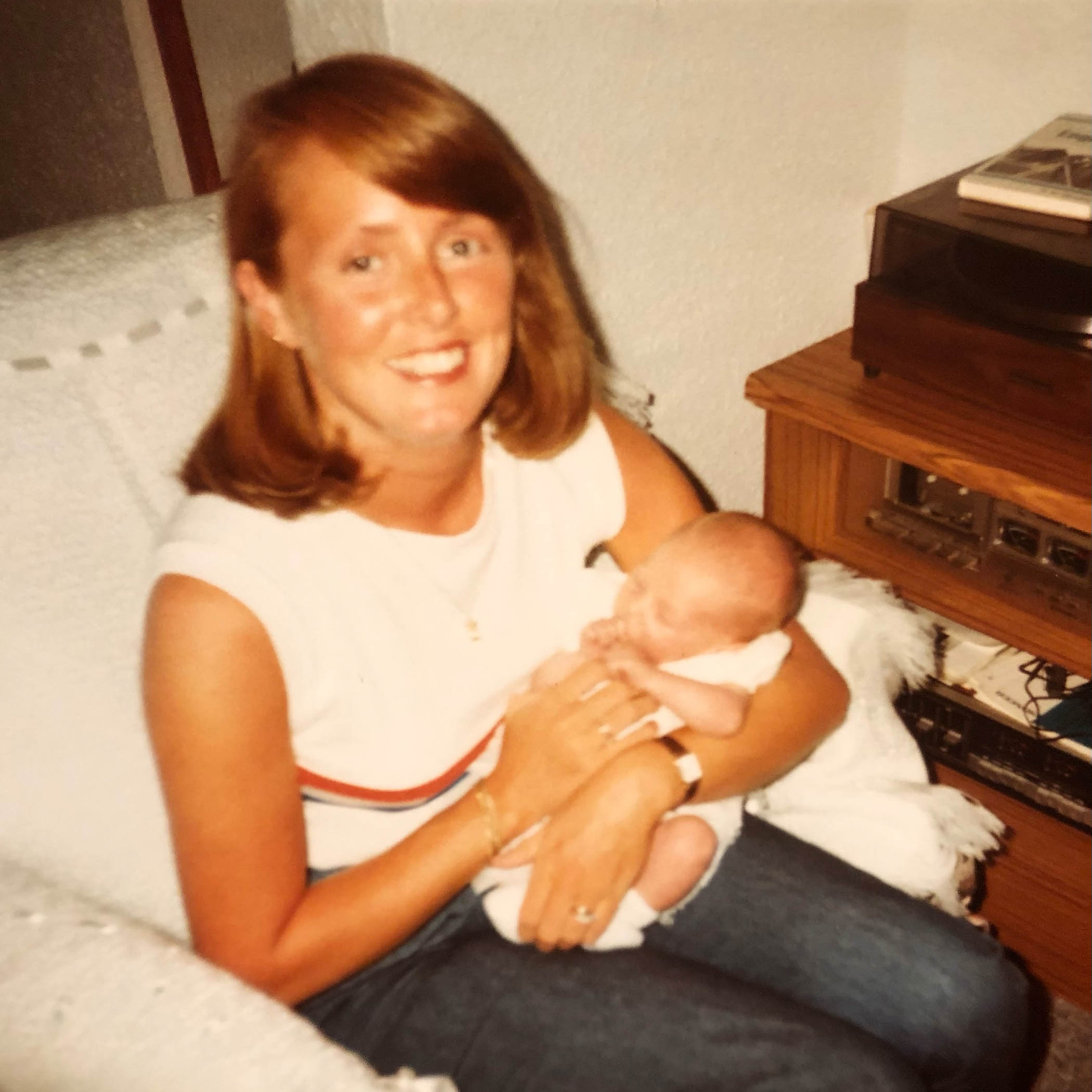
Towards the end of 2019, I found a notebook at my mother’s home in Llanelli, South Wales, in which she had listed the names of actors, television shows and films: Brad Pitt. Happy Valley. Legends of the Fall. On a separate visit I discovered a list of countries she’d toured, and another with the names of her closest friends. The following year I found yet more. Cardiff was scrawled several times, as were the names and birthdays of all of her grandchildren. One day, while watching TV at her home, I asked what she thought of a particular show, and she seemed suddenly confused. I realised then she had no idea what I was talking about.
My mother always had a thick, full-bodied, guttural laugh, and she was either laughing or talking – she was never quiet. She could make a conversation about rice cakes interesting and funny and memorable. When her words began to muddle, around the same time she began writing the lists, I noticed. Instead of saying “garden”, she would say, “I need to go to the place at the back of the house.” She started using the word “dodgy” a lot: the weather was dodgy, her banking app was dodgy, the daily Covid briefing was dodgy. I thought the word-finding difficulties were related to stress. We were in the midst of a global pandemic. She was living alone in South Wales, unable to visit her children and grandchildren in London. She’d recently separated from my father, after 38 years of marriage.
But when Covid restrictions lifted, my mother showed no interest in seeing her friends. She had always been the last person standing at the party. Now, she seemed distant and apathetic, vacant and pensive, and everything became an effort. When my second novel was published, in July 2021, she failed to call, which I found devastating – we had always spoken multiple times a day. And there were more days like this, days during which we didn’t connect.
With my mother’s blessing, we spoke with her doctor, and she was sent to the memory clinic at her local hospital for an assessment, during which they asked about her family history and mental health, and requested she recall a list of items, solve simple maths problems and answer orientation questions, such as “What town are we in?” She did well with the maths. But she required prompts in order to answer the orientation questions correctly. This was December 2021, about two years after we first noticed the changes. My mother was 66 years old.
There’s a note on my phone from 20 January 2022. “Mild cognitive impairment. Slightly more than expected at her age.” A nurse from the memory clinic had explained that the word-finding difficulties signalled cognitive decline, but that the decline wasn’t related to dementia, and she relayed advice to eat a healthy diet, to get outside more, and to keep her brain active with puzzles and crosswords. We were referred to Age Cymru, a national charity for older people, who offered a befriending service, someone for my mother to talk to about her recent experiences. She was told she would be contacted by her GP about antidepressants for her low mood.
Soon, the word-finding difficulties became more noticeable. When I asked her to recall something, she could only do so if provided with a choice of answers. In restaurants I’d need to scan the menu, work out what she might like, then offer her options. She began to find reading more and more difficult, which led to the misreading of labels – she once mistook foot cream for face wash, vodka for wine. She lost weight, but at the same time she started eating boxes of chocolates every day. I recall feeling it must have been exhausting for her to keep up with conversations and that she must have felt so terribly lonely. But she didn’t seem fazed by what was happening. On the outside, she seemed fine. There’s a medical term for this: anosognosia, a condition “where your brain can’t recognise one or more health conditions,” according to the Cleveland Clinic. It is common in stroke victims. It is also estimated that it “affects more than 80% of people with Alzheimer’s disease.”
Over the following months it became increasingly hard to understand her and so, in December 2022, a year after the first cognitive tests, her doctor advised that she return to the memory clinic. Her best friend of 60 years went with her. They asked my mother about her mood, if she’d noticed any changes. She said she hadn’t. There were a series of mental ability tests, similar to the ones she’d taken previously. She was asked to describe a £10 note, to name the current prime minister, to confirm what month Christmas fell in. She didn’t know any of the answers. They asked about travel: how did she manage to get to London to see my me and my sister? She said she carried notes in her wallet.
Only a third of people with dementia felt their experience of the diagnosis process was positive
Only a third of people with dementia felt their experience of the diagnosis process was positive
In January 2023, my mother received a letter informing her that she had vascular dementia, a form of the condition caused by reduced blood flow to the brain, and that she would be contacted soon about the diagnosis and prognosis. My mother, not understanding the contents of the letter, sent a photo of it to me and my sister on our WhatsApp group. I was incandescent with rage and called the hospital immediately to ask how they could be so sure when all they’d done was ask her a series of banal questions. A doctor told me she scored 21/100 in the mental ability test, and that 82 is the threshold. The only way to get a more accurate diagnosis would be to get an MRI of the brain, which could be used as part of a wider assessment, they said, but the local waiting list for an MRI was two years. When I asked what my mother should do in the meantime, the doctor suggested journalling, reading and talking therapy.
One of the biggest barriers to receiving a correct dementia diagnosis in the UK is access to specialist testing. “The goal, of course, is to try and diagnose people early,” Professor Jonathan Rohrer, the FTD clinical lead at University College London’s Dementia Research Centre, told me recently. But early diagnosis is often difficult to achieve. According to Professor Fiona Carragher, chief policy and research officer at the Alzheimer’s Society, “only a third of people with dementia felt their experience of the diagnosis process was positive,” while many reported “being afraid of receiving a diagnosis”. As a result, “dementia is too often diagnosed late, limiting access to support, treatment and opportunities to plan ahead.”
This was our experience: little support, no treatment, no planning ahead. When we were told my mother would have to wait two years for an MRI, I booked her an appointment with a neurologist in London, who organised a private scan and diagnosed her with the semantic variant of Primary Progressive Aphasia, a rare neurodegenerative disorder and a subtype of frontotemporal dementia (FTD). The symptoms of FTD are “difficulty remembering, finding or understanding words”, a “gradual loss of vocabulary” and an increase in “forgetting what everyday objects are and what they do, eg kettle, toaster, keys”. Like all dementias, there is no cure – it is progressive and “life-limiting”, a doctor said – but the various types of dementia present themselves in different ways and getting the right diagnosis means getting access to the right support.
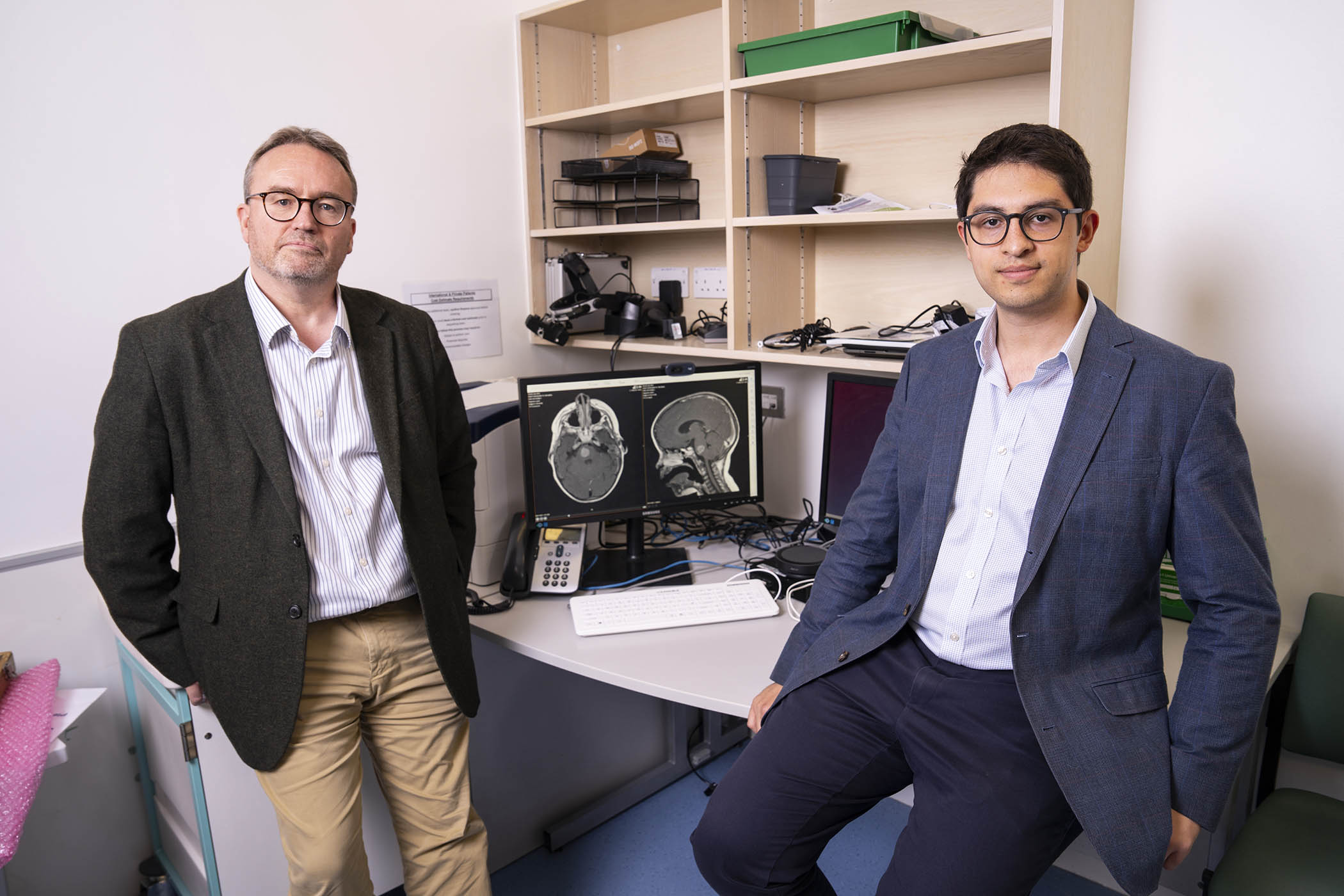
There is research being conducted at UCL to cut the standard length of diagnostic MRI scans for dementia by one third. Professor Nick Fox, director of the Dementia Research Centre at the Queen Square Institute of Neurology, told me, “As more treatments that can slow or change the course of dementia are being developed, it’s important to make sure MRI scans are available to everyone.” But he added, “People living with dementia often need an MRI scan as part of their diagnosis before they can access these treatments.”
My mother was correctly diagnosed in February 2023. I spent the weeks leading up to her diagnosis in a drunken haze, desperate to numb myself. I had begun to go out four times a week. I’d start drinking after work and wouldn’t stop until three or four in the morning. During the day my mind would race: I thought about how the disease would take hold of her, the level of care she’d need, how we’d manage with her in Wales and my sister and I in London. When I was sober I was sad and stressed and anxious. But drinking gave me confidence and a false sense of security.
One night, while drunk, I convinced myself that the doctor’s use of the phrase “life-limiting” meant that while her life might be restricted by dementia, she’d still get to see her grandchildren grow up. I couldn’t fathom the reality of the situation: that the disease would take hold of every part of her body, and that there was nothing anyone could do about it. My husband sat me down several times and pleaded with me to look after myself. My sister went quiet: she was four months postpartum and not yet able to face the magnitude of our mother’s diagnosis. I had such severe headaches from drinking so much and sleeping so little that I ended up on an IV drip in hospital. I didn’t tell my mother any of this. I didn’t want her to worry. I was worrying enough for both of us.
A month later I was signed off from work with stress and the same week I discovered I was pregnant with my son. I became so anxious I didn’t want to leave the house, so I stayed at home and threw myself into managing my mother’s life. I researched dementia support groups and contacted every single one in South Wales. I booked her sessions with a speech and language therapist who specialised in semantic dementia. I joined Rare Dementia Support. I had meetings with local reps from Alzheimer’s UK, Dementia UK and Admiral Nurses. Even though my mother was being seen by the Queen Square Institute of Neurology, where we’d be able to speak to a dementia specialist, get access to more scans and be put forward for medical trials, appointments were only every six months, which seemed not enough. The silence that falls after a dementia diagnosis is both deafening and destructive: you sit and wait for the next phase of the disease to take its hold.
The silence that falls after a dementia diagnosis is both deafening and destructive
The silence that falls after a dementia diagnosis is both deafening and destructive
We tried to remain as normal as possible. My mother and I visited friends in Boston and spent a weekend in New York. My husband and I briefly rented a house with my mother and my sister’s family in France. But new and increasingly strange behaviours were beginning to creep in. Sometimes my mother would try to eat cereal with a knife. She once used foundation as toothpaste. If you brushed past her, she would cry out in pain. She had to have the heating on 25C at all times. My sister and I bought a camera and installed it in the house and would watch as she went to bed at 4pm, woke at 9pm, and tried to put sunglasses on her feet while struggling to turn on the TV. I watched her put hundreds of receipts into her handbag. She’d fall asleep on the sofa, and when I’d call her to tell her to go to bed, she wouldn’t know what time of day it was. I’d try to help her, but words were becoming more and more confusing. I felt powerless.
I saw an interview with the director Chloé Zhao who said that the boundary between “deep grief and ecstatic joy is a fine line”. She instructed the cast of Hamnet to dance after particularly gruelling scenes, in order to help them relinquish troubling emotions. The year my mother was diagnosed with dementia, the year I fell pregnant, was one long dance party. I danced in the kitchen on my own to Harry Styles and LCD Soundsystem and Bicep. Falling pregnant a month after her diagnosis was a particular sort of cruelty. I would have used alcohol to numb myself from the pain of watching the person closest to me die a slow and undignified death, but I couldn’t do that, so instead I danced, and as I danced I thought about all the dances I wouldn’t get to do with her.
I gave birth to my son, Frank, in December 2023. In January 2024, my mother was formally diagnosed with Alzheimer’s disease, the most common cause of dementia. Having an Alzheimer’s diagnosis meant she was finally eligible for medication to help manage the symptoms. We needed additional support but, despite the diagnosis, three private care companies said she didn’t meet the threshold for at-home care. She was eating and drinking, albeit only microwave meals, chocolate and orange squash. Her house was clean. She could dress herself and get out of the door. To an outsider, it seemed like she could manage. We tried to explain that things were changing rapidly, but nobody would help us. We were able to access support from the council, beginning at four hours a week. But my mother’s illness changed so often and so quickly that as soon as a care plan was signed off, we needed to put in a request for more hours, for which we were required to provide documentation and evidence.
It was never enough. One week she could lock up the house, the next she had no idea how to use her keys. She stopped showering and bathing. She didn’t know what to do with a toothbrush. I went to workshops and seminars to educate myself on FTD, but everyone’s experience of the disease was different. We had no idea how to manage the changes in her behaviour, and they were getting worse by the week. She became increasingly agitated. She’d burst into tears for no apparent reason. Several times she grabbed me so hard I came out in bruises. She’d get so frustrated she’d hit out at us. Once, we forced her into the bath while she threw bottles at our heads. I arrived home one day to find her walking out of the house with nothing on besides a jumper. Our only option was to admit her to a respite home in London while we tried to work out what to do long-term. The home cost £2,200 a week.
Eight weeks later, my mother was taken to A&E in an ambulance with suspected delirium, a condition often triggered by underlying issues such as infection, pain or dehydration, and which is common for people living with dementia. She’d been refusing medication and food for days. She wouldn’t let anyone enter her room. When my sister forced herself in, she found faeces smeared across the wall. She was violent to everyone around her. The care home said they had no option but to send her to A&E, despite our protestations.
At hospital my mother was sedated with lorazepam, a prescription benzodiazepine used to treat severe anxiety, to the point where she was incomprehensible and unresponsive. She was told that a psychiatric team would review her, in order to find a suitable course of medication, but they couldn’t review her until all other medical causes had been excluded. Over two weeks she was moved to three different wards for different tests, none of which revealed a physical cause for the delirium. Every day she was sedated. Every day she drifted more and more into the abyss.
One day a friend of mine suggested we have my mother sectioned under Section 2 of the Mental Health Act, which allows for a person to stay in hospital for up to 28 days for assessment, and treatment if needed, of a mental disorder. I learnt that if she was sectioned, she would be looked after by an around-the-clock psych team, who could try several different medications and monitor her for any improvements.
I spoke to the doctor about this on a Tuesday. Two days later we were informed of availability of room on a dementia-specialist, female-only ward at a psychiatric hospital in east London. I wasn’t allowed to drive her myself, but I could travel with her. We went in a van, which was fitted with metal rails and a human guard.
I learnt that if she was sectioned, she would be looked after by an around-the-clock psych team who could monitor her
I learnt that if she was sectioned, she would be looked after by an around-the-clock psych team who could monitor her
The sign-in process to the hospital was long and arduous. We were taken through three sets of locked doors into the female-only ward, where I met with the staff and talked them through the past few weeks. The ward was big and open-plan, with en-suite bedrooms around the back. There were nurses in uniform milling about. A couple of patients who looked the same age as my mother were talking to themselves. There was a TV on in the lounge, but nobody was watching it. The place was hot and sticky and it felt like the walls were caving in. My mother was barely awake, and I’m grateful for this. I don’t know how I would’ve found the words to describe what was happening.
After two months, my mother was established on a cocktail of drugs: mirtazapine, lorazepam and risperidone, antipsychotic drugs to help manage the changes in mood and behaviour brought about by the dementia; memantine, to treat the Alzheimer’s disease; and melatonin to help her sleep. She became suddenly more engaged, and she wanted to move. Often she would be found dancing in the halls.
When my mother was signed off as medically fit to leave, she had nowhere to go. We were assigned a social worker and told they would work with us to find a care home, but nobody wanted to take her. They questioned her medication; her mobility; her moods. They’d read her charts and say they couldn’t accommodate her: her condition was too complex and too difficult to manage. Some said they already had residents living with FTD, so couldn’t take on another – they didn’t have the staff. But if a care home advertising itself as a safe place for someone with complex dementia couldn’t handle her, who could? I found myself pleading with care home managers, crying down the phone, begging them to take her in. We heard stories on the psychiatric ward of women who’d been there for two years because they were unable to find suitable homes. I didn’t dare ask what happened to them, or where they eventually went.
The staff took excellent care of her. They made her laugh a lot. They had a piano, which she played, despite not knowing how. But the environment was hard and harsh, and we were desperate to get her out. We had to make an appointment every time we wanted to see her. We could only visit at certain times of day, and mealtimes were to be avoided. We weren’t allowed to sit in her room or in the communal areas in case our presence upset the other women on her ward, so our visits were confined to a stark room, where we’d huddle together on pleather chairs and watch videos of her grandchildren on my phone. Sometimes we would go to the café to give her a change of scenery, but the café was shared with the other patients in the hospital, a lot of whom were young men in states of severe distress. We’d be ordering tea and suddenly someone would kick off and my mother would be startled and get upset. Every Friday on my day off work I’d visit another care home, watch people half-dead in bed, and go over the same story.
This fight has come at great personal cost. I’m not the person I was 18 months ago. I’m less forgiving, less patient. Like my mother, I’ve always loved being in a crowd. I feed off other people’s energy; it makes me feel alive. Now my idea of fun is to sit in silence and stare at a blank wall. I want another baby, but I worry what my grief and stress will trigger in the womb. I do all the things you’re meant to do in order to process an experience like this. I journal every night. I lift weights three times a week. I meditate. I write gratitude lists. I’m in three types of therapy: talking, couples and coaching. People have said it will get better, but I think: how?
Sometimes, when I’m with my mother, I close my eyes. We’re back sitting on the sofa together, at our family home in Llanelli. We’re sharing a box of chocolates, a bottle of champagne from Aldi, Graham Norton is on the TV. I’ll walk her up to bed and we’ll put our face creams on together. Before saying goodnight, she’ll cup my face and tell me I’m beautiful.
After nine months, 34 rejections and more phone calls than I can count, we found my mother a care home. It’s in southeast London, a 10-minute drive from my house, and I see her several times a week. They were the first and only home we spoke to who understood the complexities of FTD and weren’t frightened by it. She’s settled in well, but the dementia has advanced so much that we only get 15 minutes or so out of her before she’s asleep again. I take Frank to see her weekly. Her face lights up when she sees us. Sometimes she will cry at me. Most of the time we sit holding hands, and I tell her how much I love her.
Nobody should have to spend months searching for a care home willing to take their mother. Nobody should receive a life-limiting diagnosis in a letter. Nobody should be discharged from a memory clinic with the advice to eat well and make friends.
Dementia is the leading cause of death in the UK. It is misdiagnosed and misunderstood – and the people carrying the weight of that failure are exhausted family members, fighting in the dark. My mother was lucky; in the end, she had daughters who fought. But some families don’t have that, and the outcome for them is worse. She deserved better and so did we.
Newsletters
Choose the newsletters you want to receive
View more
For information about how The Observer protects your data, read our Privacy Policy