
When Nelson “Nels” Abbey was a child he wanted to become a pharmacist. At university, in London, he decided instead to become a banker and spent several years at PwC and BlackRock. In the early 2010s he transitioned again, becoming a cultural commentator for newspapers including the London Standard, before joining the BBC, in 2015, as part of a senior leadership scheme designed to improve Black and Asian representation.
At the BBC, Abbey spent months developing a new online platform targeted at Black audiences. “It would have shown us as well-rounded people,” he told me recently. “It was video, some text and audio, that spoke to Black people across borders.” But as plans were beginning to fall into place, one of his supervisors “just says to me verbatim, ‘It’s not going to work.’” The supervisor wasn’t comfortable with Abbey “being the face of it,” he recalled. “He said: ‘You’re not what we consider to be a Black person. You’re intelligent, you’re middle class, you’re successful. You’re what we consider to be a Radio 4 listener.” Abbey was shocked. “It felt like a slap in the face.”
Abbey left the BBC a year later and in the time since has established Uppity, a current-affairs event series named for a term historically used by white Americans against Black people they thought had airs above their station. Uppity had been a nugget of an idea in Abbey’s mind for many years, but it began to fully coalesce in the early 2020s. Following the death of George Floyd, several right-wing newspapers and television programmes began to heavily promote contrarian Black British voices. Commentators such as Calvin Robinson and Dominique Samuels spoke out against critical race theory, criticised the gesture of taking a knee, which had become common at the start of professional football games, and defended the use of blackface on the 2000s sketch comedy show Little Britain.
In late 2023, Samuels posted a lengthy thread on X disavowing her past media appearances and taking aim at “agendas that are intentionally harmful to humanity”. The comments went viral, and Samuels was praised for criticising a media environment that had become tainted by the culture wars, and where young people from minority groups were plucked out of obscurity and encouraged to push divisive opinions for clicks and views.
Abbey followed the online discussion avidly. “I wanted Uppity to be about current affairs,” he recalled, and he was keen to turn what had until then been an exclusively online debate into real life. “I thought, why not just do the ‘trial’ of Dominique?”
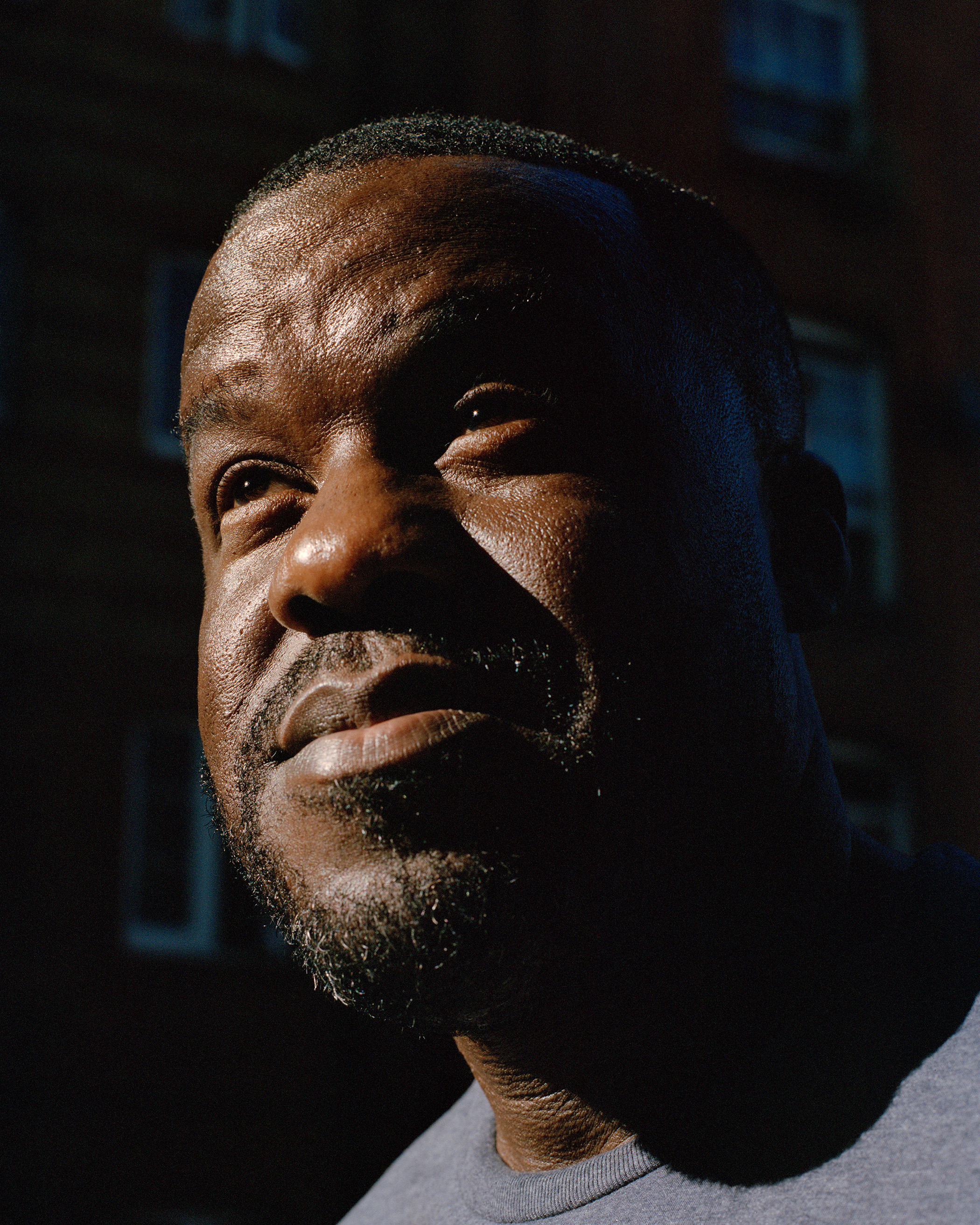
Abbey and I were speaking in a Café Nero just outside London’s Broadcasting House, the longtime BBC headquarters, where his mother used to work as a cleaner. He is charming and disarming and sometimes speaks at x2 speed which means occasionally even he forgets what he is talking about. Along the way to discussing Uppity, we somehow also discussed the activist Marcus Garvey, the Pan-African meme-machine Dr Umar and his well-known philosophy (“Black queens forever, snow bunnies never!”), and how bizarre it was that, for a time, the Daily Mail appeared to have paid Black people to put their names on bombastic articles about race that had, in fact, been written by white people.
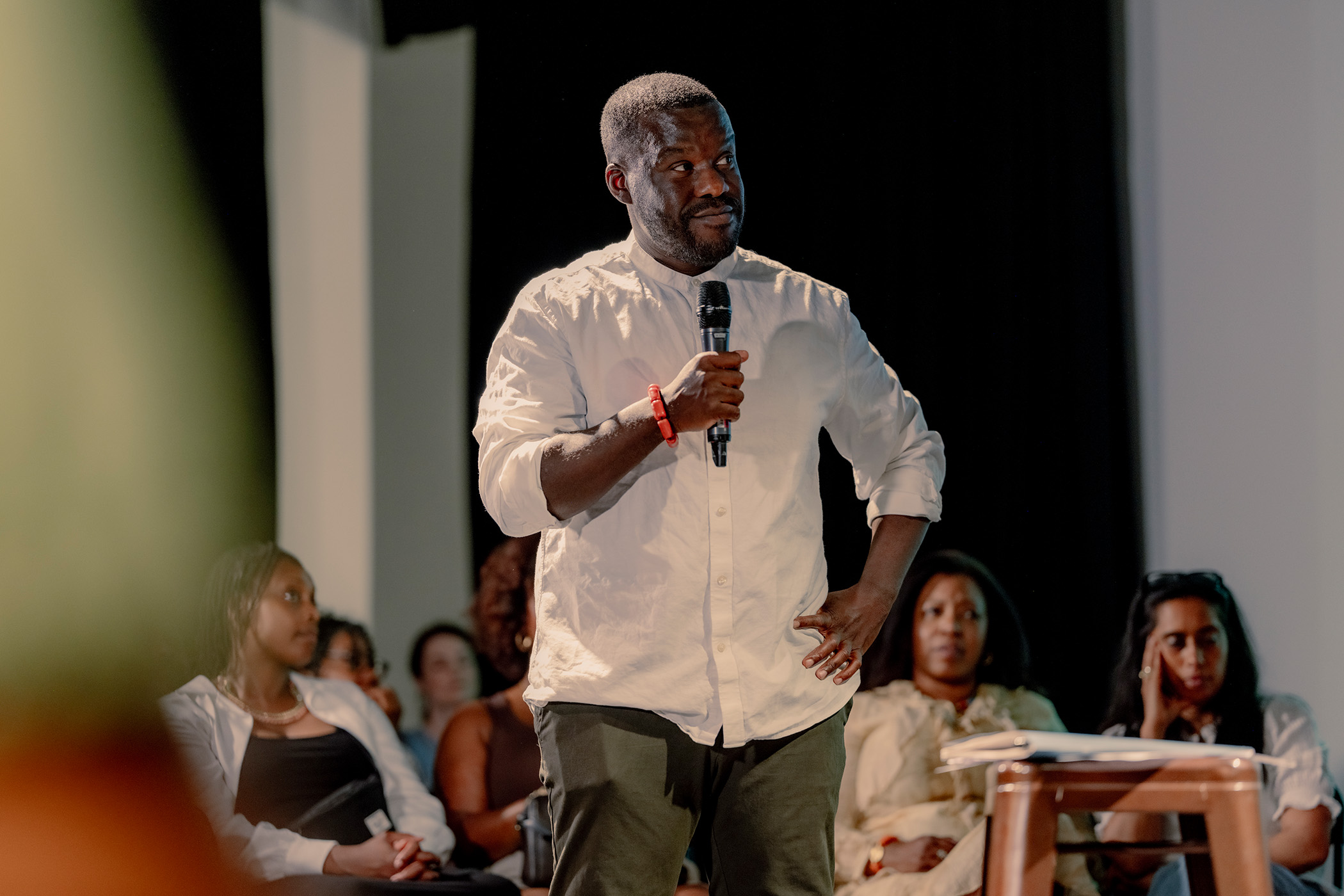
Abbey’s first Uppity event took place in November 2023. I went with a friend, intrigued by a poster that described it as an “intellectual playground” and “deep fried in unapologetic Blackness”. We sat in a packed room at the Africa Centre, in central London, alongside 70 others, men and women, ranging in age from late teens to early 60s. Most were Black, although there were a handful of South Asian and white people in the crowd, too. Many in the audience were people you might recognise if you read the Guardian or spent time on Black British Twitter: academics, authors, lawyers, media commentators, journalists, actors, activists, the mother of an internationally renowned Grime MC, and an MP.
I recall there being a quiet excitement about what the night might bring. To begin, Abbey invited an audience member to play a game and asked them to place five Black public figures – the MPs Diane Abbott, Bell Ribeiro-Addy and David Lammy, the MC Wiley, and the broadcaster Trevor Phillips – on the “Bernie-Badenoch Scale of Black Politics”. Abbey pulled up a PowerPoint slide to illustrate the scale; it had an image of Bernie Grant, one of Britain’s first post-war Black MPs, at one end, and a picture of Kemi Badenoch at the other. The implications were clear: it was a good thing to be on the Grant side and a terrible, horrible, no good thing to be next to Badenoch. The audience member decided where each person should go on the scale. Certain choices caused contentious debate among the audience while others had the crowd humming in agreement.
Related articles:
Then the trial began. Samuels had agreed to appear for it. (She and Abbey had had a lengthy phone conversation.) But, hours before the event was due to begin, she got cold feet, nervous about how the crowd might receive her. The trial continued regardless. The standup comedian Curtis Walker acted as judge while fellow comedians Athena Kugblenu and Njambi McGrath appeared as the prosecution. The conservative commentator Albie Amankona appeared for the defendant.

The crowd laughed, clapped and tutted. If a member of the audience wanted to interrupt, they first had to stand up and say “point of Blackness”, before making their rebuttal. We carried on this way for about an hour before the audience was called to vote on whether Samuels should be forgiven for her transgressions.
Newsletters
Choose the newsletters you want to receive
View more
For information about how The Observer protects your data, read our Privacy Policy
“When we announced the result, there was a moment of silence,” Abbey told me. “Then, unexpectedly, Dominique wins.” Abbey recalled thinking that the result confirmed that Uppity could hold its own as a space for discussing hot-button issues, and that the “trial” worked effectively as a debate format. “What happened that evening was magic.”
At the following event, the debate focused on whether a pregnant South Asian school teacher should have faced criminal prosecution for attending a pro-Palestine demonstration holding a placard that referred to Rishi Sunak and Suella Braverman as coconuts. Uppity doubled its audience. It has put on an event at the end of each month ever since and “almost every time it’s sold out”, Verina Burt, a former television producer who now helps Abbey with Uppity events, told me. Burt’s role is fluid, but she most often assists with selecting speakers and ensures Abbey sticks to schedule. “I don’t believe in ‘Black people time’,” she explained.
Whatever you do, take your blood-pressure tablets before you go to Uppity
Whatever you do, take your blood-pressure tablets before you go to Uppity
Debates at Uppity remain as spicy as ever; a recent event was titled, “Who actually achieved more for Black liberation: Mandela or Mugabe?” And the audience remains majority Black, with a noticeable presence of other people of colour, as well as Jewish and white people, though at the beginning of every event Abbey proclaims that everyone is “Black for the night”. The only thing that’s changed is the venue: Uppity is now based at Rich Mix, in Shoreditch, east London – newer and rougher-around-the-edges than the Africa Centre.
In just under three years, Uppity has developed a large and committed audience. Nadine White, the journalist, filmmaker, and founder of independent news platform Black Current News, told me she always makes time to attend, because the atmosphere at Uppity is singular. “You’ve got sharp political discussion, cultural critique, humour and live performance all in the same room, and somehow it never feels forced, and you walk out feeling you’re part of a community.” White explained that “a lot of that comes down to Nels himself.” The Channel 4 correspondent Symeon Brown, another Uppity regular, added, “Nels is a creative provocateur. Uppity is the opposite of dry: it’s cheeky and performative. Only he could have made it the way it is.” He went on, “People feel comfortable speaking openly in a way you certainly would hesitate to do in predominantly white spaces.”
Uppity provides a space for Black people to debate while avoiding bad-faith criticism for expressing commonly held views among people of African descent – that, for example, European colonialism did a lot of bad in Africa and the Caribbean and that anti-Black racism is still very much a problem in Britain. The actor, writer and director Adjani Salmon put it to me this way, “There are few spaces where the left and right can have a genuine exchange. At Uppity, there’s an actual discussion.”
This is not always the case. At an Uppity edition last month, the Reform candidate for the London mayoralty, Laila Cunningham, spent an hour and a half shouting back and forth with the audience about immigration and Pakistani grooming gangs, before calling Abbey “a tosser” and walking out. Still, it’s clear that for many, Uppity is a safe space. “A question you could ask me is, ‘Do you ever worry about what would happen if all the footage from Uppity made its way into a Daily Mail inbox?’,” Femi Oluwole, the anti-Brexit campaigner and daytime TV talking-head told me. “I stand by everything I say in the Uppity spaces, but I definitely say stuff in those spaces I would not say on Good Morning Britain.”
For the most part, what happens at Uppity stays at Uppity. Although many events have been recorded by Abbey’s team, and clips can be found online for those determined to find them, Abbey is keen for Uppity to remain “IRL over URL”. “I want people to come and experience it,” he told me. He is also aware that, given the provocative nature of conversations at Uppity, an out-of-context clip could end up with certain media outlets printing someone’s name in an all-caps headline. When, at one event, I told a regular audience member I planned to report on Uppity, she narrowed her eyes and said, “Is this going to be a takedown piece?” before adding, “Never trust the press.”
As a child, Abbey and his siblings moved around rural England before settling in Derby, in the care of “an English-presenting Scotsman and a German Jewish mother”. Their experience was not unusual: between 1950-90, tens of thousands of West African children were privately fostered in the UK, among them future celebrities including the Olympic athlete Kriss Akabusi and the actor Adewale Akinnuoye-Agbaje. West African parents once thought it normal to leave their children in the care of white families while they made time to study or earn money elsewhere in Britain.
After 10 years in private care, Abbey and his siblings were sent to west London to live with their Nigerian mother. Abbey was then dispatched to a Nigerian boarding school, in a move his family hoped would help instil in him some discipline. Given the walks of life Abbey has experienced, I was surprised when he said something that appeared closed-minded. “Uppity is a dynamic organisation rooted firmly in Blackness,” he explained, but “we’re not Blackness from a C2/D-E perspective. We’re not ‘road’, we’re not ‘hood’… You can go to 1Xtra for that.”
I interrupted him. Weren’t his comments classist? Wasn’t this an appeal to a “Talented Tenth” idea of Blackness? The concept that, in the words of 20th-century African American scholar WEB Du Bois, the Black middle class ought to be the “leaders of thought and missionaries of culture” within Black communities?
“I am a working- class person,” Abbey replied, incredulously. “Roadmen are welcome at Uppity. You can talk “road”, you can talk however you want to talk. But it’s [intellectual] nourishment that people come to Uppity for… We know it’s bleak for some people, but I wanted to do something different. Why don’t we just show the part of ourselves that we don’t normally get to see on TV? Why do we always have to replicate the most vicious things?” He stopped and smiled. “Do I still sound classist?”
Abbey turned to Black representation on the small screen. “If you’re from a Black criminal element of society, you’re very well catered-to in the media,” he said, thinking of Top Boy, a show (conceived by a white Irishman) about drug gangs in the housing estates of east London. “But university-educated professionals, from a Black perspective, aren’t catered to at all.”
Abbey’s view about media representation is one many Black Brits have shared online for years – that it has focused on negative stereotypes: gangs and guns. But in 2026 that view may be myopic. The Netflix series Bridgerton has cast several Black British leads over the years, none of whom have played criminal offenders. And smaller shows, like the award-winning Black Ops, and BBC3 comedy Boarders and Dreaming Whilst Black, have done the same.
Still, there is work to be done. When I mentioned Boarders to Salmon, the creator of Dreaming Whilst Black, he said, “Is that the show where, in the pilot, one of the main characters gets pissed on, beat up and spat on?” – a nod to the fact that even in a series many point to as an example of positive representation, Black actors are put in humiliating positions. “After Black Lives Matter,” Salmon went on, “16 Black shows came out across all UK networks, including streamers. But how many of those got a season two? In the past five years there has been loads of representation, but I think it would be disingenuous to not acknowledge what sparked that burst.”
TV commissioning tends to follow the zeitgeist, and contemporary trends appear to be moving away from racial diversity. Things were different in the recent past. In the 1990s, we had the Black British sitcom Desmond’s, and in the 1980s an all-Black panel show, produced by Trevor Phillips, called Black on Black. Even in 1982, Phillips explained he produced it because “British audiences are used to seeing Blacks as rebels, criminals or victims. We make a positive impact as statesmen, writers, artists, musicians and just real people.”
When I told Symeon Brown about Abbey’s comments on who Uppity is designed for, he recommended a book, Black Middle-Class Britannia, by the Cambridge academic Ali Meghji. In it, Meghji argues there are three core types of Black British middle-class people: those who think racism is not an issue and find they have more in common with their class group than their racial group; those who believe racism is a big issue and are unabashedly pro-Black; and “strategic assimilators”, who believe racism is an issue, but try and play the system to get ahead.
Abbey seems to want to appeal to group two, but Symeon – who will soon publish his own book on Britain’s Black middle class, The Good, the Black and the Boujee – doesn’t “buy the idea” that Uppity is a middle-class space. “I think there is an ambition for it to be a space for what they used to call the Black intelligentsia,” he said, “but the kind of people I’ve seen there…” He paused. “This points back to Uppity being made in the image of Abbey. I think his comments speak to his sensibilities and aspirations and the things he wants to project… But I definitely see Uppity as a bit more inclusive.”
Symeon and I talked about how Brits of all colours, who grew up working-class, often tightly grip onto their working-class identities, despite their payslips suggesting that may no longer be their reality. Bell Riberio-Addy, the MP for Brixton and Clapham Hill, who occasionally attends Uppity events, told me the same thing, and reminded me that Black Brits born with silver spoons – “speaky-spokey” posh people with ties to wealthy families abroad – are often out of touch in a way those, like Abbey, who have earned their way into a higher tax bracket through employment or education never will be.
When I attended an Uppity event at the end of March, I didn’t see a particularly posh crowd. Most were wearing tracksuits and jeans. A young woman with tooth gems recorded Abbey on Snapchat as he kicked off the event by reminding us that “everyone is welcome”. The event was due to include a mock trial of David Lammy, a reappraisal of the 26-year career of the most powerful Black politician in Britain, followed by a Q&A with Zack Polanski, leader of the Green Party. For the trial, two women stepped up from the audience for the prosecution, while a man unenthusiastically strolled on stage to defend the deputy prime minister’s record. Things got heated when an audience member raised a point of Blackness to label the Lammy-defender a “disgrace”. I’m reminded of a warning Festus Akinbusoye, Britain’s first Black police and crime commissioner, gave to me before I went: “Whatever you do, if you take blood-pressure tablets, do take them before you go to Uppity.” But then one of the prosecuting team started loudly singing African- American spiritual Wade in the Water, and the audience descended into giggles.
Any anger dissipated. And the night got back on track.
At the end of the trial, Abbey gifted the Lammy-defender a book – Defending the Undefendable, by the US economist Walter Block – before guiding Polanski on stage for the Q&A. Polanski bobbed and weaved successfully, while the audience passed around a tin of Celebrations like it was a collection box at church. Some of the Green-Party-curious stayed behind to get a picture with Polanski, while others leapt to grab contact information from people who raised points of Blackness that changed their minds. I made my exit, walking behind an animated group still debating issues that were raised on the Uppity stage.