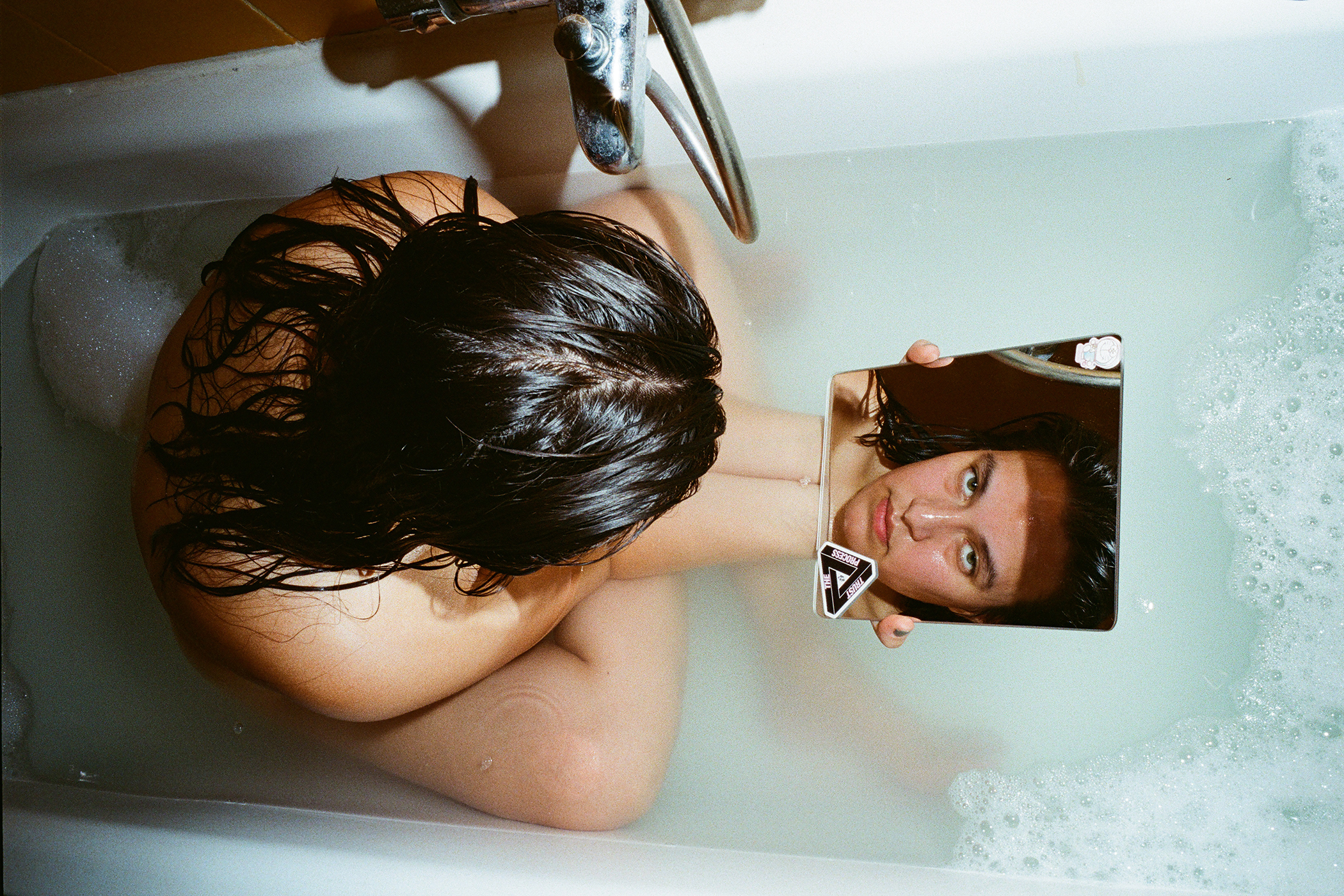



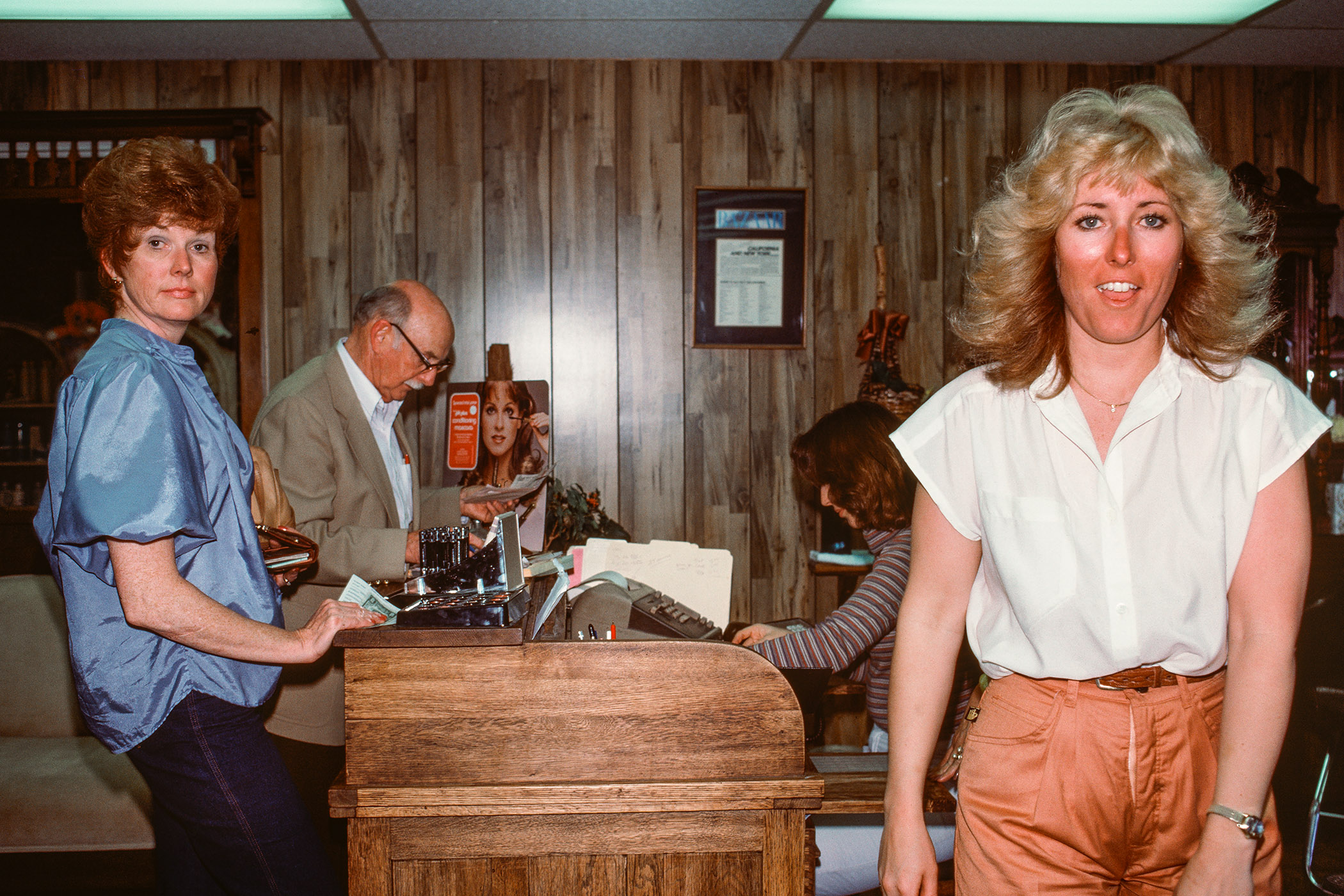
At the end of last year, while the photographer Jodi Rogers was assisting on a street photo- graphy workshop in London, he met a woman named Andrea who had travelled from Belgium to take part. Andrea was a sex worker and and wanted to learn how to “document my work” – the highs and lows of an unlikely career – in pictures. Rogers and Andrea got on, and they arranged to meet the next day, before Andrea returned home. A short time later, the pair began dating. And soon enough, Rogers and Andrea began to create a photo essay about their relationship. “We started shooting straight away,” Rogers recalled recently, “and after four rolls of film we felt we already had enough to tell our story.”
The photographs became a series, Almost Done, some of which you can see here, that document both the pair’s relationship and offer a counterpoint to common stereotypes. All of the pictures are candid, but few are gratuitous in a way viewers might expect. Rather, they form a very human insight into the sometimes relatable, sometimes glamorous, sometimes unnerving realities of sex work, of the intimacy, trust, jealousy, routine, economics and identity issues that arise in any relationship, and how to build a loving partnership around it.
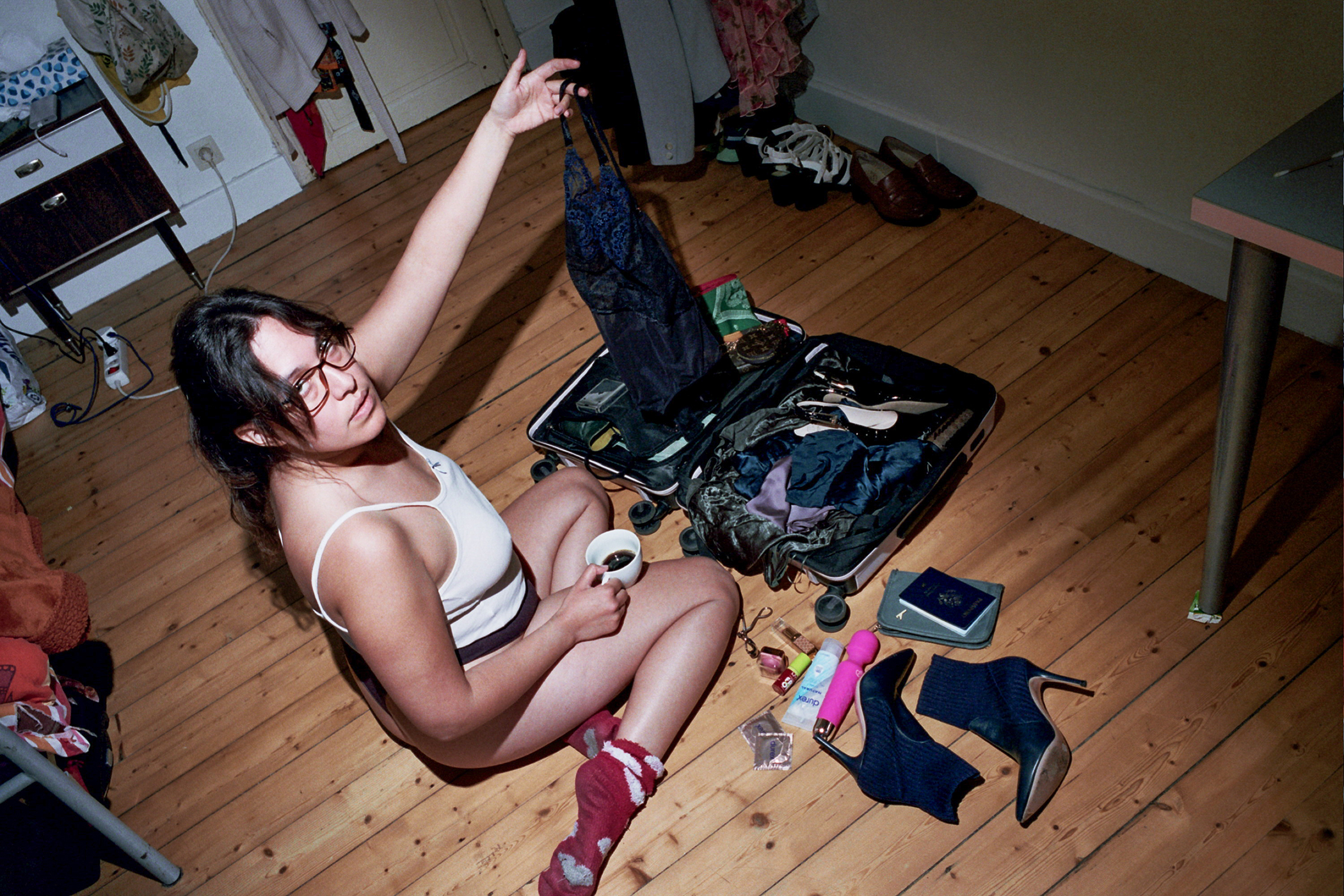
Some of Rogers’ pictures act as a timeline of a typical shift. In one, Andrea kneels on the floor in her underwear and thick bed socks, makeup-free, holding up lingerie to the camera, as if to show both Rogers and us. Next to her, ready to be packed in a small travel case, are ankle boots, makeup, condoms, lube and a vibrator.
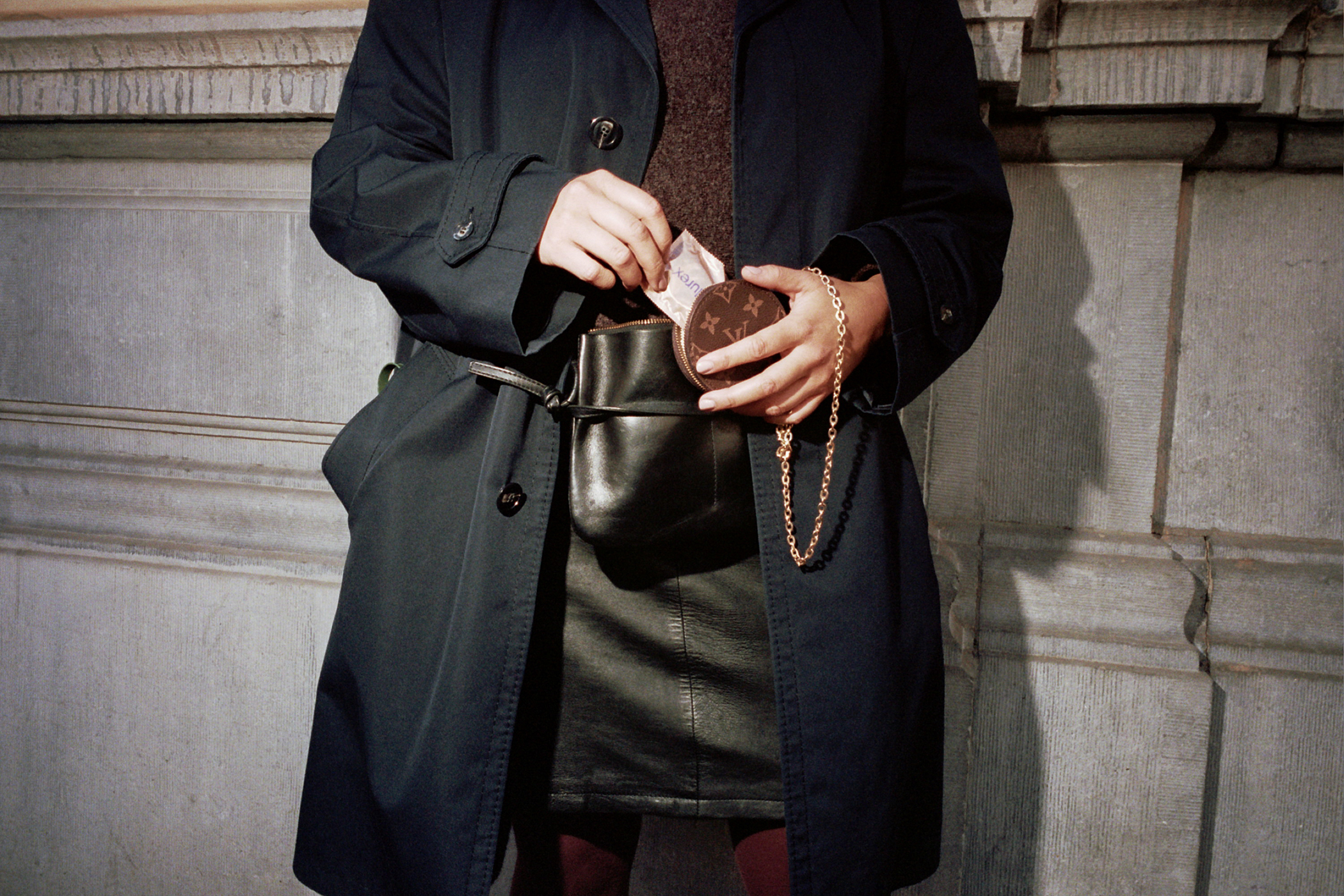
In another, Andrea stands in front of a bathroom mirror, spraying perfume on her décolletage from a height. Elsewhere she is pictured outside in a leather skirt and smart winter coat, sliding a Durex into a Louis Vuitton purse, or counting considerable heaps of banknotes while wearing a knitted jumper and tracksuit bottoms.
“I wanted to capture the fragile moments of me getting ready, coming back, and everything in between,” Andrea said.
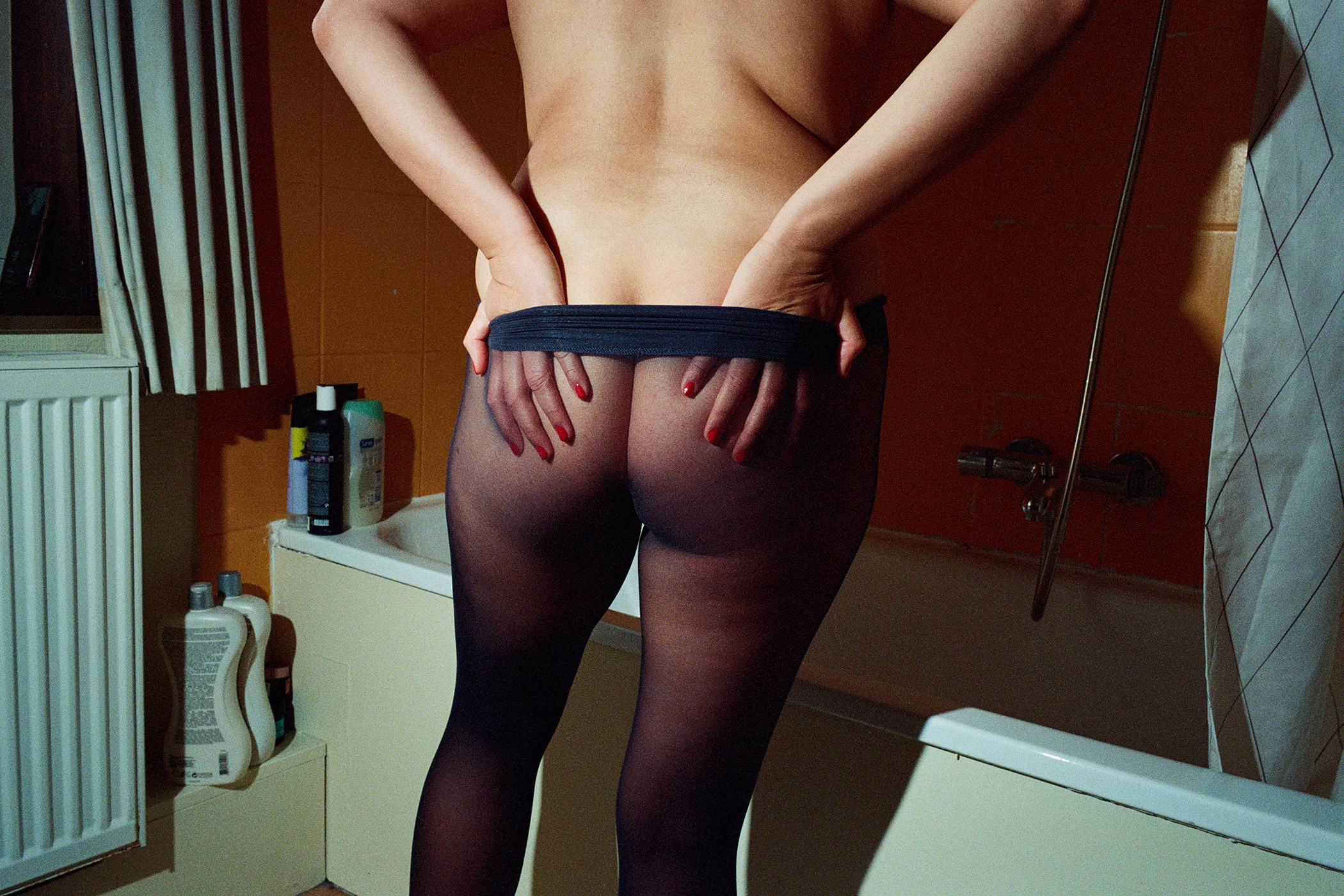
Rogers’s position in the images is more tenuous. When he does appear in pictures, he often averts his gaze, or can be seen waiting and worrying. The feeling is that he is not always having a good time. Soon into the picture-making process, Rogers realised his “mind had become a gallery of worst-case scenarios” – what might happen to Andrea while she was away? Where would her job take her?
“The whole process was very challenging,” Rogers said. “Sadness and happiness rolled into one. But it was also therapeutic. It allowed us to discuss what ordinarily would have been very hard conversations.”
And ultimately there is optimism. “I hope people can see that Andrea’s work does not define her,” Rogers said. “She is a strong, creative, ambitious woman – and I’m proud to call her my girlfriend.”

Newsletters
Choose the newsletters you want to receive
View more
For information about how The Observer protects your data, read our Privacy Policy