

I was given my first clue that visiting the International Butler Academy in the Netherlands was going to be unlike other reporting trips when I got into the car. I had been picked up at Aachen train station by a man in a suit who introduced himself as Mr Menindros, an intern at the school and one of its recent graduates. “Here you will find some water, apples and mandarins,” he said as I put my seat belt on, gesturing at a wicker basket on the seat beside me with ironed white napkins covering it. Also inside was a polished silver knife for cutting the fruit, but I only discovered this after I had chomped into an apple. This is the first of many faux pas I suspect myself of having committed over the next 48 hours.
It had not occurred to me, when I agreed to write about a prestigious academy for butlers, that I would be treated with the deference due to somebody who might in fact employ a butler, or a “principal”, in the language of private service. I do not have a butler at home. I might have guessed, before coming here, that nobody does, in the modern world. But that is not the case. Hovering discreetly in the corners of the world’s most opulent rooms, the butler lives on. And here, at a sprawling former monastery in the Dutch countryside, complete with ballroom, chapel and chandeliered dining room, is where some of those butlers cut their teeth. I wondered, what draws people to this antiquated world? And what does it take to succeed there?
Each student has paid €12,750 for this eight-week course
When I woke at 7am on my first morning at the school – in a room so thoroughly Downton Abbey with its four-poster bed that I actually laughed when I saw it – the school was already bustling. Polished shoes clacked down the staircases. By 7.50am 20 students, from 15 different countries and with ages ranging from their late teens to their early 60s, were lined up in the dining room. Each of them had paid €12,750 for this eight-week course, of which they were now on week six. They were dressed in black suits and were submitting to the morning’s appearance check by Miss Karen, the school’s executive head butler. Miss Karen completed the course herself in 2016, and earned the highest recorded score out of all 1,500 students who have passed through these doors: 977. Now she was beautifully dressed in cut-creased trousers and a wool coat, running a lint roller over lapels and inspecting nail beds.
Class in the ballroom begins at 9am, but first we ran through the day’s schedule. Every day, the students are assigned different “masterships” or duties such as dusting, vacuuming, table decoration and table measurement. When I looked up from my notepad on hearing the words “Miss Imogen”, I learned I had been assigned my own butler from among the students.
An impossibly young-looking boy approached me. “May I be of service to you in any way?” he asked.
Here he was, my own personal gentleman’s gentleman, an 18-year-old named Hugo. I spluttered a no thank you at him and went down to breakfast.
Mr Deijkers, the school’s general manager, himself dressed in a three-piece suit, told me I would be dining with Mr Wennekes, the head of the school, a man who Mr Deijkers referred to, with perfect discretion, as “the gentleman without hair”. I’d seen him roaming the halls already, dressed in a heritage Abercrombie & Fitch jumper and a white knitted scarf, whistling loudly and smoking. The students know him as “Sir”.
In a little kitchen dining room downstairs, one student pulled out a chair for me, and Mr Wennekes snapped. “Is that where she is sitting?” he said. The student started to mumble a reply.
“Sorry, what?” Mr Wennekes yelled. “You pulled out her chair, but that’s not her seat. You know that, right?”
Newsletters
Choose the newsletters you want to receive
View more
For information about how The Observer protects your data, read our Privacy Policy
“Yes sir,” the student replied.
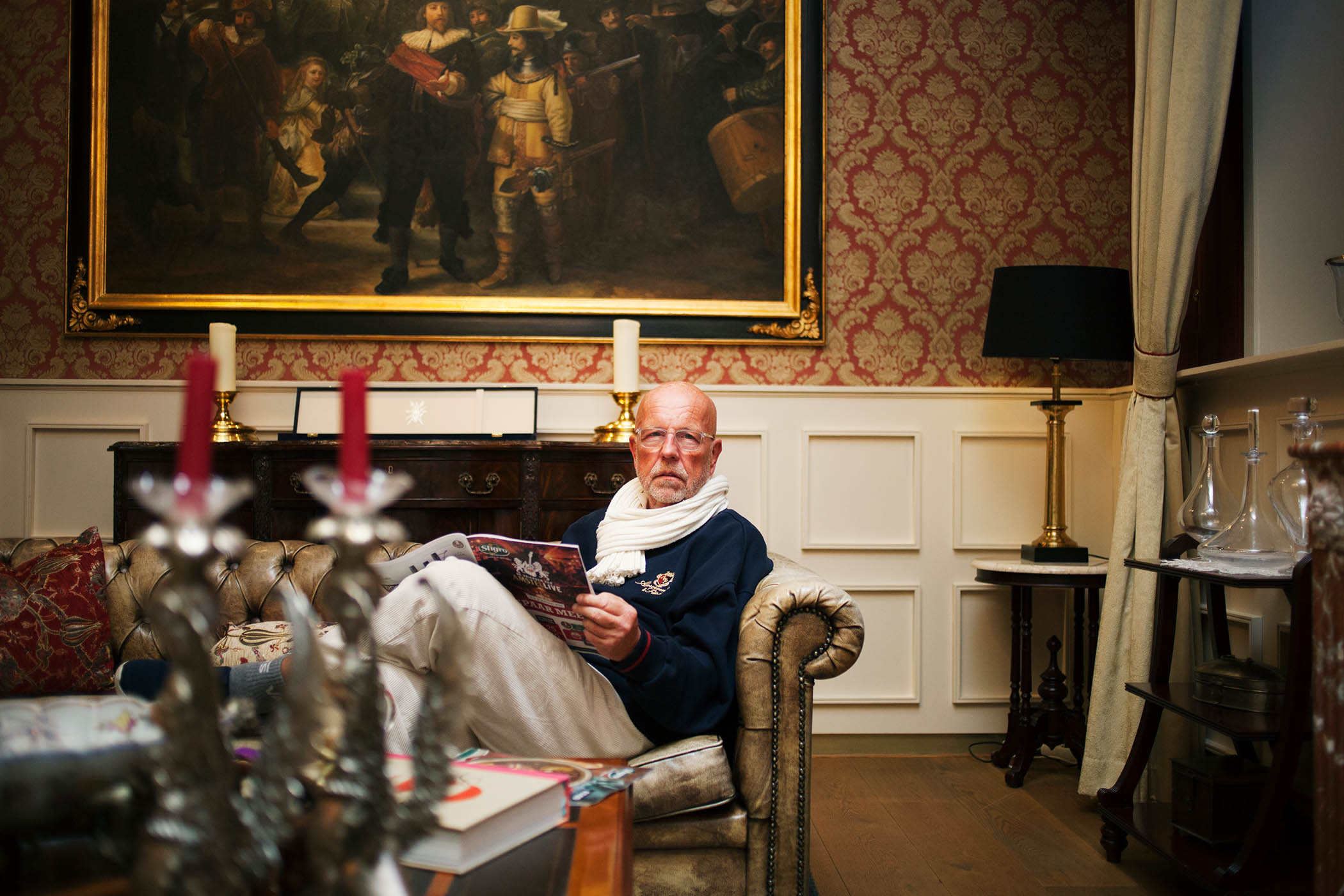
‘Students know him as Sir’: Mr Wennekes started the school in 1999
After Mr Wennekes finished eating and left the room, I whispered to a Swedish student in her 60s that he seemed scary, to which she gave a discreet smile and pursed her lips. It wasn’t for her to say.
There were two groups of students at the school, the main cohort and a class everyone referred to as “the Omanis”. The main group was to be in seminars on recruitment today, but the curriculum also includes a lot of hands-on training. There are classic butler duties such as umbrella service, how to deliver guests in and out of cars, opening a bottle of champagne. But there are more bonkers-seeming classes, too. The school has an Instagram account on which it posts clips of the butlers training to do things like put on a full uniform against the clock and carry trays of glassware while being pelted with oversized tennis balls. I asked Mr Deijkers what the learning objective is for a class like that. “First of all, it’s fun,” he admitted. But it serves a purpose, too. If you’re serving at an event, he said, nobody is keeping an eye on the serving staff’s trays. You need to be one step ahead.
“Sir” was running the seminar, which covered how the butlers should go about securing work after their training is finished. “Never before in history have there been so many millionaires and billionaires,” he said. “And trust me, these people need staff.”
There is, apparently, a global shortage of butlers. There remain aristocratic families who want and expect their households to be run in a traditional manner, but butlers are also in demand among the nouveau riche. There is a huge market in the US, where it’s more common than it is in the UK, among even the not-quite-mega-rich, to have household staff, and new, enormous demand in the Middle East, too.
The role of the butler has changed subtly in response to this shifting landscape. Someone who has suddenly come into a large fortune in the tech world, for example, might want a butler, but might not have any experience with butlers and how to be served by one. The butler needs to lead from behind in showing their principal what a butler might do for them. “If you ask a constructor to renovate your bathroom, it makes no sense that you are going to tell them how to put the tiles on the wall,” as Mr Deijkers put it. “You expect that that is being arranged. And the same is with the butler.” Butling, if one becomes good at it, can be a lucrative career. It is not unheard of for salaries to reach upwards of $100,000.
During a short break, I chatted with Mr Wennekes while he smoked another cigarette. He’s a Dutchman and spent 22 years working as a butler himself. He started the school in 1999. It used to be based at a castle in a village not far from here, before the old monastery came up for sale 10 years ago. All 135 rooms of the house have been renovated, and all the objects I see inside are part of his personal collection, built from auctions and estate sales. The house is full of oddities, including a more-than-lifesize wooden nutcracker puppet hanging in one of the libraries, a collection of steampunk top hats, and enough swords that I stopped bothering to count how many I came across.
Mr Wennekes told me he is playing a role for the students. Here, he is Sir, the unpredictable, sour, demanding head of the household. That is who I saw at breakfast. It’s so that they learn how to take this sort of behaviour in their stride, he said. Not all the possible principals in the world will be like this, but it is undeniable that some are, and you have to thicken your skin for it.

Perfectly set: ‘Rulers are used to ensure every item of tableware is precisely the right distance from everything else’
I went to join the Omanis. They had been sent here by their employer to elevate the quality of their service and, at the request of this employer, I was not allowed to interview them. Up in the attic, I found tables covered in suitcases. The Omanis were learning how and what to pack for their principal. Miss Karen presided. “Your principal is going on a two-day business trip to Rio de Janeiro with one formal dinner,” she told one student.
There was giggling among the class, all of whom were men who looked to be under the age of 30. They were packing women’s underwear. Miss Karen advised that there is a special fortified case for bras. “You have a €500 bra in your hand,” she reminded one student. It is essential not to spoil the shape. One of the Omani students ribbed another who was handling the underwear as if it might be going to bite him: “Ten years now he’s married and he still doesn’t know about this.” There were also six ironing boards, and a clutch of the Omanis was bent over one white shirt as if they were doing surgery on it. A good time to iron a single shirt is two minutes, but it can, if necessary, be done faster. I asked Mr Manseur, one of the interns overseeing the Omanis, whether he thought the students could hit the two-minute target.
“I believe they can do it,” he said. “Well, they will do it. They must do it.”
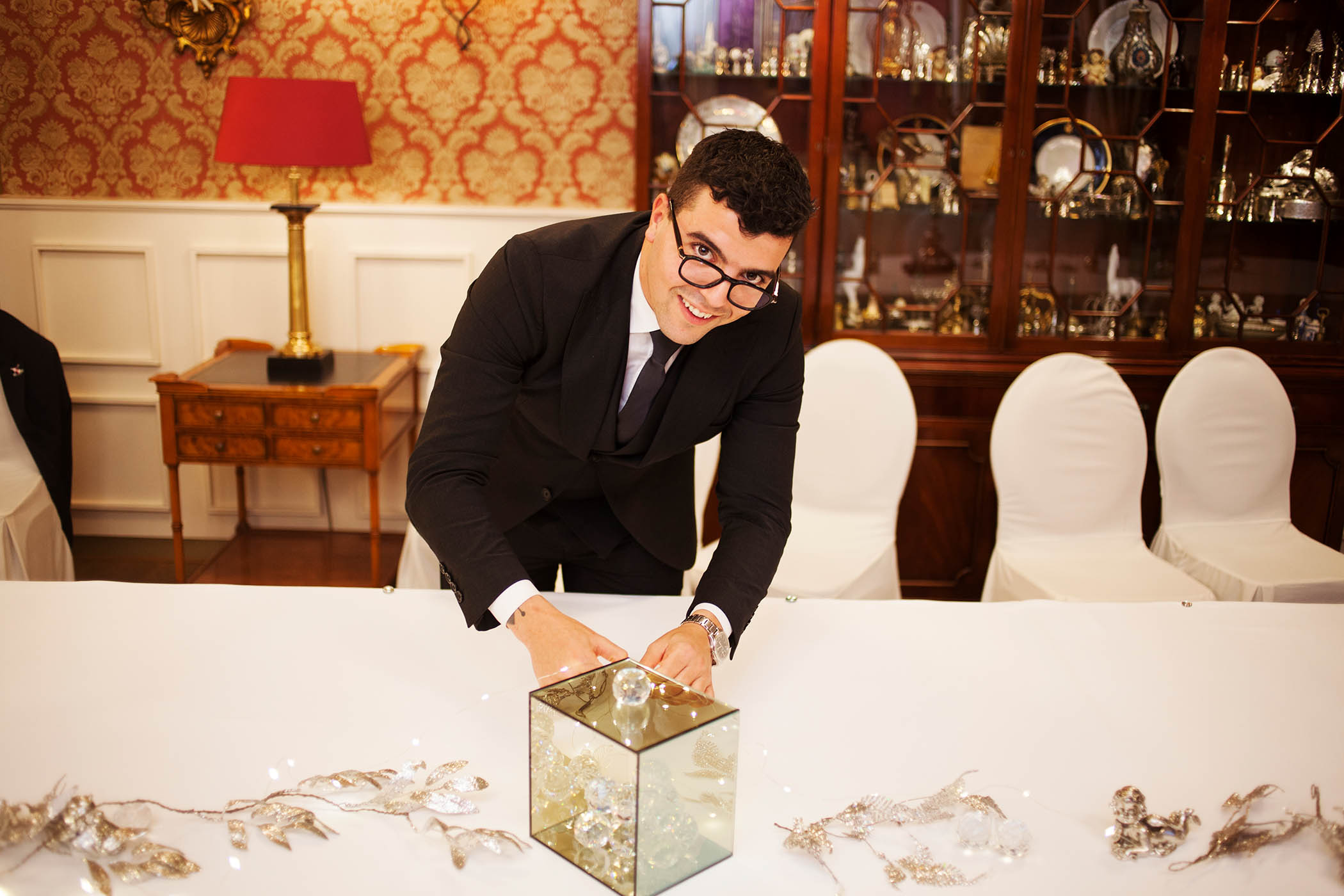
Half an hour before the buffet lunch for students and staff, the dining room was teeming with people. Twice a day, every day, the students must prepare this room spotlessly. They rushed around with rulers to ensure every item of table decoration, crockery and cutlery was at precisely the right distance from everything else. One of the Omanis looked down at a placement for at least 10 seconds before deciding it was indeed in the spot where it was supposed to be. It had to be perfect; Sir would be here at any moment, to occupy the chair at the head of the table, a throne, really: enormous and imposing in carved wood.
Hugo could not be dissuaded from pulling out my chair for me, and it turned out that if there is an art to sitting down in a chair that has been pulled out for you, I didn’t know it. As we ate, Mr Deijkers told me that lunch during the first two weeks is about learning table manners. Don’t take too much food, don’t get up to serve yourself before the people at the head of the table. “Whatever you put on your plate says something about you,” he said. It was unnerving. I was not being assessed, but I was eating my meals with people who were being trained to pick up on every small deviation from etiquette.
“You come in as a student, then you become a lady or a gentleman, and then you become a butler,” said Mr Deijkers.
Will the butlers be able to iron a shirt in two minutes? ‘I believe they can do it. Well, they will do it. They must do it’
Will the butlers be able to iron a shirt in two minutes? ‘I believe they can do it. Well, they will do it. They must do it’
After lunch was finished, I was reluctant to interrupt any of the butlers to extract their life stories, thereby adding to their already enormous number of tasks to complete. But Mr Deijkers insisted. It would be good training, he said. “A butler never has time. They have to make time.”
Maria, 48, is from Madrid, and works as the chief stewardess on a superyacht. “More and more we are being asked by our principals to bring the standards of the yachts to their houses,” she told me. She was here to learn how to do that. “I’m completely in love with my profession,” she said. What does she love about it? “Everything: the travel, meeting new people, every day being different.”
Alisha, 32, is from Birmingham. She was bored working in business administration and thought she’d give private service a go. She also wanted to “polish” herself as a person. “I didn’t not classify myself as a lady before I came here,” she said, “but I have learned to become more refined.” She’s something of an outlier in the butling world as a British Punjabi Sikh and a woman, but her womanhood may well be an advantage in securing work. There is demand for female butlers for female clients in the Middle East.
Marc, 20, from the Netherlands, and Matej, 23, from Slovakia, both come from family hospitality backgrounds and wanted to improve their ability to serve. Hugo told me what brought him to the butler school was that he wanted to develop his character in order to eventually become a monk, and from there, he said with a straight face, a saint. He sees parallels between butlering and monkhood, “with the household management, and also the service”.

Stand up straight: good posture is absolutely essential
The academy works as a recruitment agency as well as a school, matching butlers with principals. Not everyone will go straight into private service, because not everyone will be ready. Mr Deijkers told me there are perhaps only two students in this current group who will be ready on graduation to become butlers at the highest level. For the others, it might be that they work up to it by taking a job on a cruise ship, or a hotel, or as a footman. “If we put you in a job that’s too much pressure, you’re going to fail, which makes no sense for us, the butler or the family,” he said.
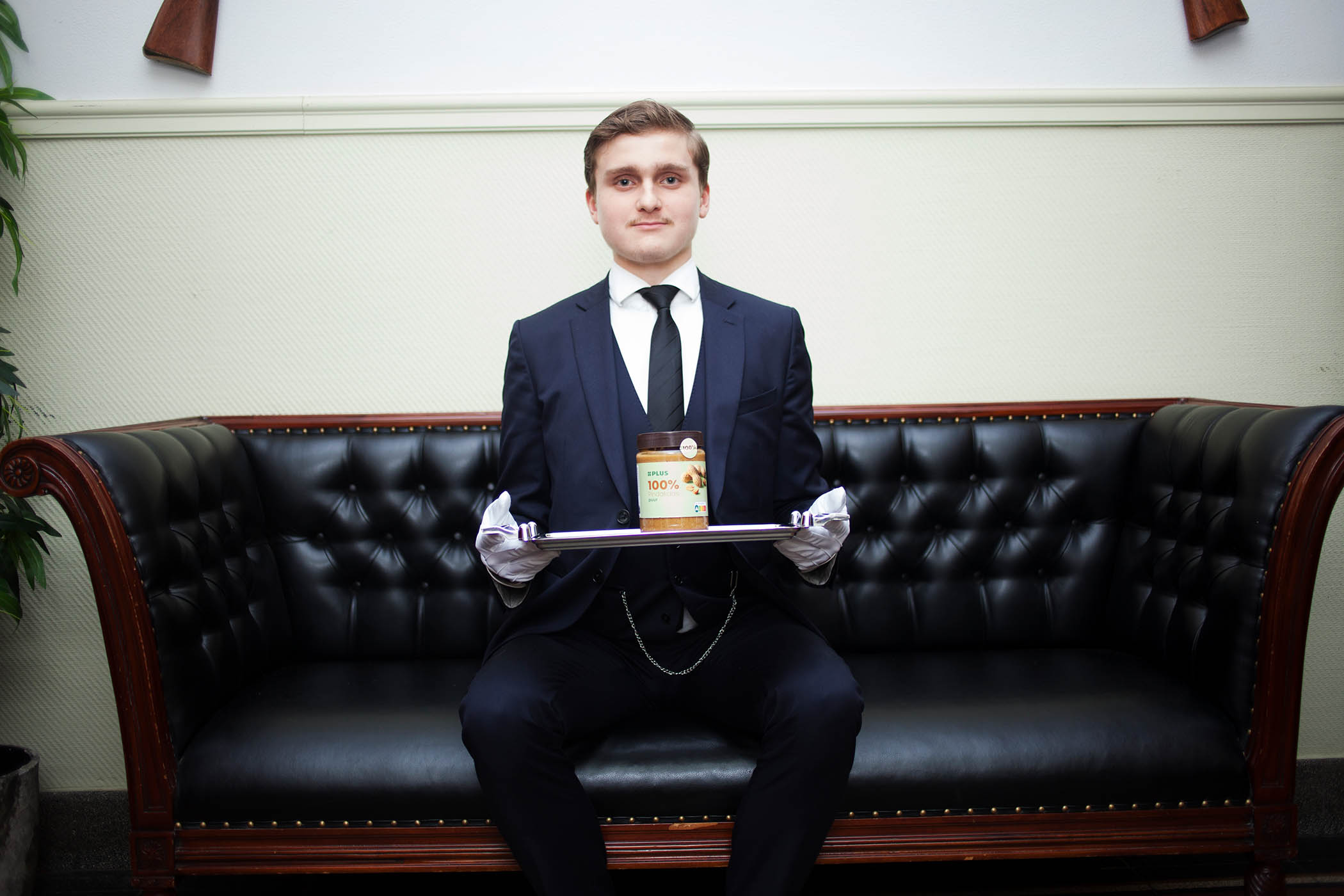
Hugo appeared and asked again whether he might be of service, so I asked him where the best place would be to buy some Dutch peanut butter for my boyfriend. Hugo directed me to a shop just up the road, but then disappeared and returned, in less than five minutes, with a huge jar of peanut butter on a silver platter, held in his white gloves. I was both embarrassed and delighted by this, and Hugo cracked a shy smile. A butler should have the ability to respond quickly and seamlessly to any request their principal might make.
Too many mistakes had been made. People standing idly during breakfast. Wooden steak knives found outside the wooden steak knife box
Too many mistakes had been made. People standing idly during breakfast. Wooden steak knives found outside the wooden steak knife box
At the end of the day’s seminars, the whole production of a meal was staged again. Over dinner Mr Roos, one of the interns, explained the points system to me. At the end of the eight-week course, there is a final written exam, as well as a formal dinner at which the butlers are expected to demonstrate their ability to deliver flawless service. But they are also being graded throughout the course. Each student begins with 1,000 points and loses or accrues them from there. There is distinction, merit, pass and then a certificate given instead of a diploma if they fail.
“Who is watching?” I asked
Mr Roos waited until his mouth was empty, the pause for which made his reply feel more ominous than it was probably meant.
“All of us,” he said. “Everyone.”
After dinner was cleared and the house returned to pristine condition, there was a debrief. Mr Wennekes looked on stonily. Too many mistakes had been made today. Black gloves worn while placing cutlery. People standing idly during breakfast. Wooden steak knives found outside the wooden-steak-knives box.
“Let’s give them some extra time in the morning,” Mr Wennekes suggested to Miss Karen. “Tomorrow, briefing is at three minutes past eight.”
“Thank you, Mr Wennekes,” the students chimed as one.
I was not being graded on my performance as a principal.But the students were being graded on the quality of the service they offered me. And so, high on the thrill of my peanut butter, when Mr Roos came to my room after dinner and asked me if there was anything I wanted or needed, I told him I would like a glass of white wine. He froze and my stomach sank. I had disgraced myself with this request in some way. Perhaps there was no wine, somehow, in this house that screamed “extensive wine cellar”. He said he was not sure that would be possible. And then we did the awkward dance of me insisting I didn’t really need the wine and him promising he would see what he could do. Ten minutes later he came back with a glass on a silver tray. His panic before, he said, was because he couldn’t be certain there was currently a bottle sufficiently chilled. I drank the wine, feeling like a spoiled dauphin.
Before I arrived at the house, I would have said that butling involves playing a role, just as Mr Wennekes was playing one. I was a waitress once upon a time, and I felt that the real me was completely invisible while I was doing that work, replaced by someone sunny and bland. Being a butler was surely that, but to an extreme.
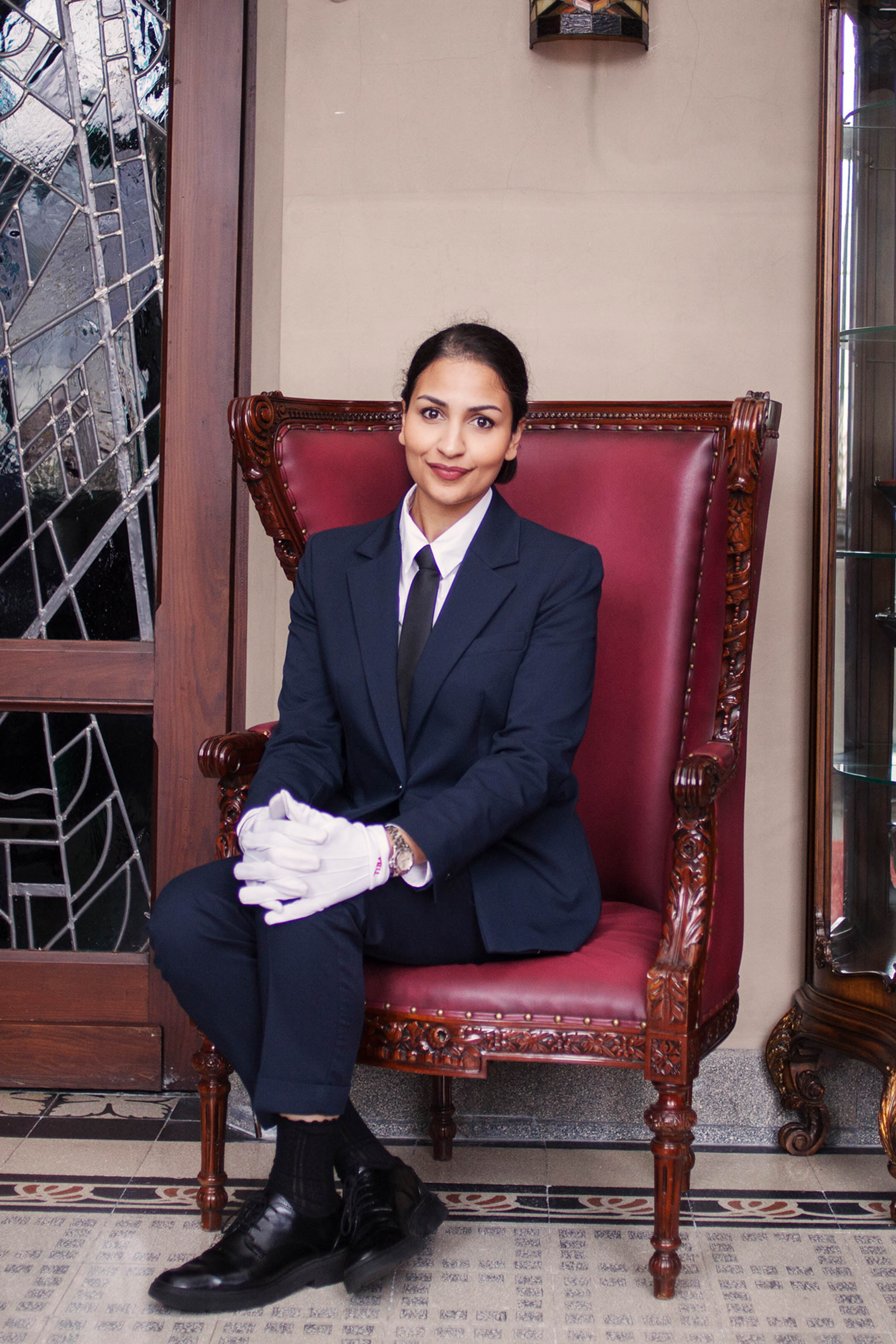
‘You come in as a student, then you become a lady or a gentleman, and then you become a butler’
But hearing the students and the staff talk about butling, I realised I was wrong. I put my assumption to Mr Deijkers. “It’s absolutely the opposite,” he said. “Imagine that seven days a week, 24 hours a day, you need to play somebody you are not. It’s a terrible life.” When I asked him what qualities a butler needed, he didn’t say discretion or organisation or tact. He said transparency and sincerity. You shouldn’t pretend to be someone you’re not just to slot into what a principal might want from you as a butler, he said. You should seek to find an employer who aligns with your values, the way you see the world, who wants to accept service in the way you want to give it.
As part of the course, all students do something called the “Lee assignment”. They imagine an ideal family, the fictional Lees, that they would want to work for. Maybe they travel a lot, maybe they have kids, maybe they have one house, or several, are working or retired. Perhaps they, like you, have an interest in classical music, video games, hiking. A butling role could last several decades. The fit needs to be good. “We need to make a connection,” said Mr Deijkers, “then you establish an opportunity for the butler to almost read their mind, because you can anticipate.” My perfect butler would have already known I wanted Dutch peanut butter. There are, of course, lines between the personal and the professional. But that is true in anybody’s working life.
What all the students have in common is a genuine enthusiasm for serving well. Maria said that the main quality a butler needs was to be caring. “You are working in someone’s house. You are going to be with them when they are sick, when they’re having an argument.” She didn’t think of butlering as playing a role. “I’m not faking it when I’m caring about you, because I actually care.” Marc agreed. “Being a butler is not my nature yet, but it’s becoming my natural state.” I had been uncomfortable being waited on because I was not used to it, wasn’t expecting it and didn’t desire it for myself. But the discomfort had been all mine. They wanted to be here.
On the morning I was due to leave, some of the class were preparing the house’s Christmas decorations, despite it being late October. The dress code was casual. Marc grooved around to Walking in a Winter Wonderland while he unboxed baubles for the ballroom tree. Three students posed with string lights draped around their necks for a photo. It was somewhat odd to see them in their normal clothes. They all seemed younger. And for all their talk of not playing a role as butlers, more like themselves.