
It was known as the Texas White House, Lyndon Baines Johnson’s 2,800-acre ranch in the Hill Country – the tough landscape in the south-west of the state between Austin and San Antonio, where the 36th president grew up. The eight-bedroom house is currently being renovated, and off limits for visitors. But the ranch, settled against the north bank of the winding Pedernales River, is a national park, and you can drive around it, stopping at the house where Johnson was born, the one-room schoolhouse where his passion for education began, the family cemetery, and the show barn, where all the equipment for maintaining his prize Hereford cattle was kept.
As we cruise along the ranch’s narrow roads, we almost have the place to ourselves; there’s a sense of time-slip in this landscape that broke Lyndon Johnson’s father, Sam Johnson, who was six times a member of the Texas House of Representatives but was driven into poverty by doomed ventures into cotton-farming and cattle-ranching. His son’s pampered herd – we might today call his ranching cosplay – was another marker of his indomitable ego, a demonstration that nothing, not even the rebarbative soil of the Hill Country, could beat him.
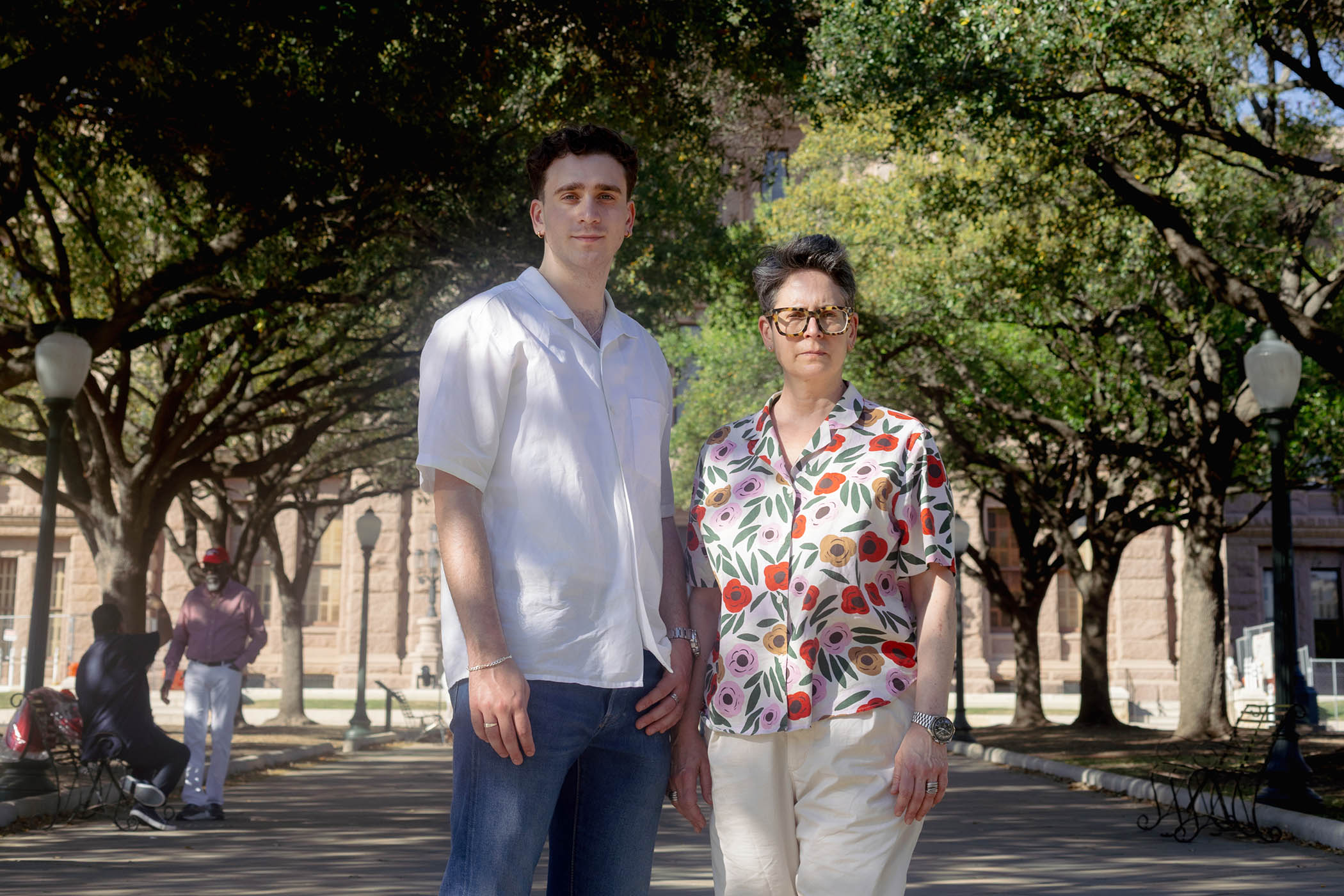
My son Theo and I wander into the shade of the barn. We’re met by Sheila, a park ranger, smart in her Smokey Bear-style hat and neat uniform. She’s intrigued to discover just how much 25-year-old Theo already knows about Lyndon Johnson. “You’ve come all the way from London to the Hill Country?” she asks, wide-eyed.
Indeed we have. Theo is a musician by training but one who has become keenly alert, in the past few years, to the particular music of politics on both sides of the Atlantic. As he tells it, about a year and half ago he was driving a friend’s car on a particularly tedious stretch of road between Barnet and Walthamstow in east London – pretty far from Texas in any manner of speaking. On a whim he downloaded the audiobook of The Path to Power, the first book of Robert Caro’s epic multi-volume biography of Johnson. And that was that.
Sheila lets us hold the weights that are used to shape the cattle’s horns – the fortunate descendants of LBJ’s animals lounge around outside. She tells us that the central aisle of the show barn was built wide enough to accommodate Johnson’s beloved Lincoln Continental. She points over at a neat house 100 yards or so from the barn; there, still, lives the widow of Dale Malechek, who was President Johnson’s ranch manager.
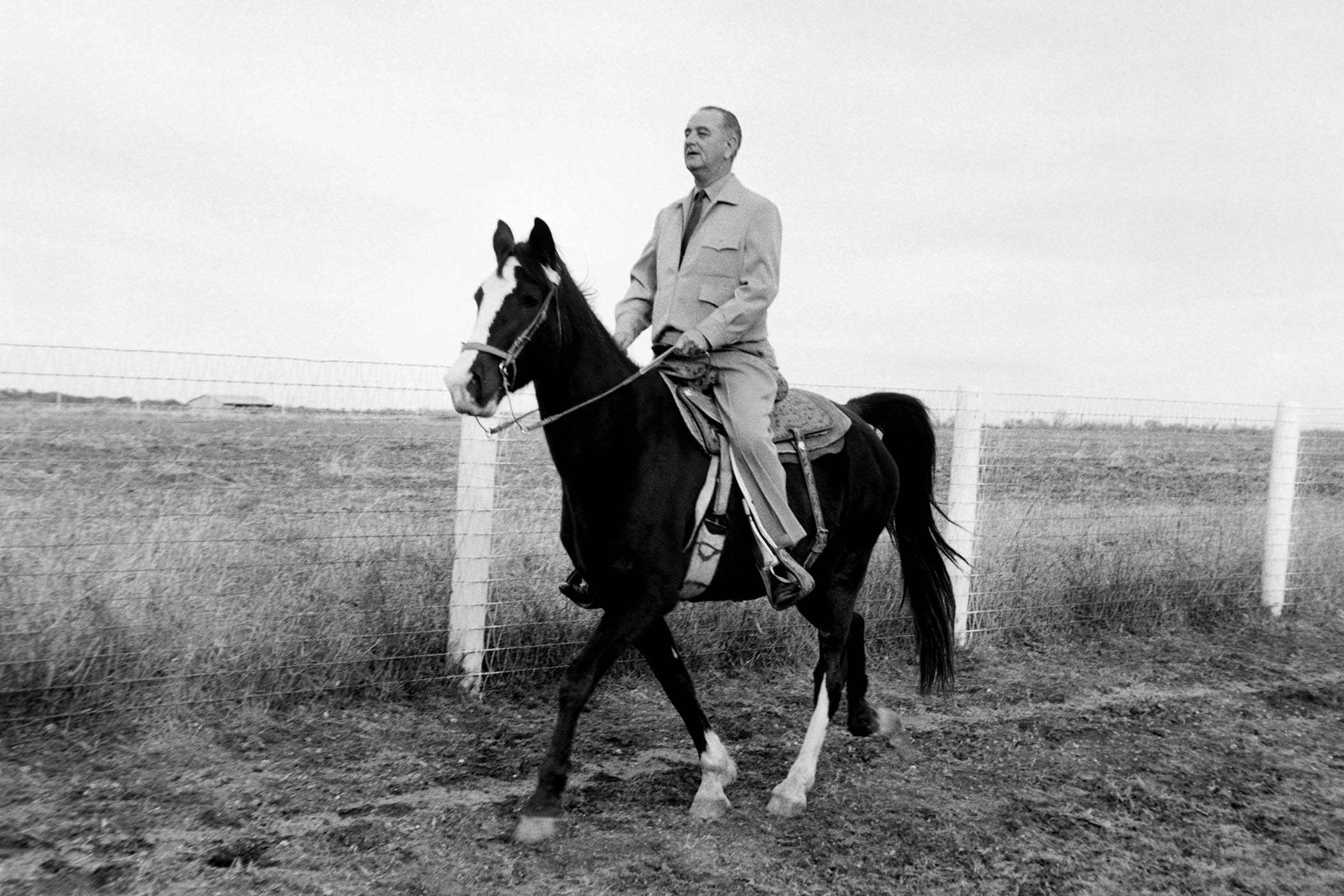
President Lyndon B Johnson riding on his ranch in Texas, 1963.
Sheila tells us that she and her husband now volunteer year-round at the country’s national parks, a new place every three months. They can park their trailer for free, and it doesn’t cost too much to live. They get to see the country, to really engage with its history. “It used to be harder to volunteer,” she says. “Now it’s much easier, a lot of spaces have opened up.”
I ask if that’s because President Trump has gutted the park system: within six months of his second inauguration, nearly a quarter of the permanent staff had gone. “I’m wearing this uniform,” she says to us soberly. “I can’t answer that question.” So we talk about Lyndon Johnson some more, and then Theo and I start to make our way to the car. “You’re the kind of folks I’d like to have a drink with,” Sheila says – it seems to me a little wistfully – waving us on our way.
If you haven’t spent a lot of time pondering the life of Lyndon Johnson, I get it. But it is a good time to consider his legacy: for here was a man who used the power of his personality to bend nearly everyone he encountered to his will, who used his size and bearing to intimidate, a man whose upbringing as an outsider gave him a chip on his shoulder that lasted all his life, a man who was absolutely willing to cheat to get to where he felt he deserved to be – and who, for good measure, preferred to govern not from Washington but from this ranch here in the Hill Country. Sound familiar? In one sense the parallels between the 36th and the 47th president are eerie.
Johnson’s legacy was blighted (many would say fatally) by the ghastly quagmire of the Vietnam war. To many he is best described as a war criminal. “Hey, hey, LBJ, how many kids did you kill today?” protesters would chant. I would argue that Donald Trump will have little legacy – except one of destruction – to blight. In contrast, what Lyndon Johnson accomplished, the building of what he called “the Great Society”, remains an astonishing achievement, despite the attacks on it emanating from the present occupant of the White House and his administration. At the end of April, for instance, the current supreme court completed the evisceration of the Voting Rights Act of 1965, one of Johnson’s greatest achievements, a landmark of the civil rights era. The 6-3 decision along partisan lines rendered ineffective the mechanism that ensured minority voters were treated fairly. Barack Obama said the decision allowed “state legislatures to gerrymander legislative districts to systematically dilute and weaken the voting power of racial minorities – so long as they do it under the guise of ‘partisanship’ rather than explicit ‘racial bias’”.
We are in a time of willed destruction. Of the Civil Rights Act of 1964. The Equal Employment Opportunity Act of 1964. The Jury Selection and Service Act of 1968. A slew of consumer protection legislation, from the Freedom of Information Act in 1966 to the Highway Safety Act of 1966 and the Radiation Control for Health and Safety Act of 1968. Public television and public radio were established under Johnson in 1967; the National Endowment of the Arts and the National Endowment for the Humanities came into being. All now under threat from Trump.
Newsletters
Choose the newsletters you want to receive
View more
For information about how The Observer protects your data, read our Privacy Policy
Let’s keep going: Medicare and Medicaid, the only guarantees of health care that poor and older Americans have; in 1967 Johnson launched a mass vaccination campaign to eradicate measles from the US. The first health warnings on cigarettes appeared in 1965 thanks to the Federal Cigarette Labeling and Advertising Act. The Higher Education Act of 1965 governed student aid and provided funding for colleges; the Elementary and Secondary Education Act of 1965 provided significant federal aid to public education; Johnson also established “Head Start” as a permanent programme of educational outreach for preschoolers — an enduring arm of his “war on poverty”.
This is by no means a complete list; these are staggering achievements for a one-term president. As much as Abraham Lincoln, as much as Franklin Delano Roosevelt, Lyndon Baines Johnson reshaped the United States.
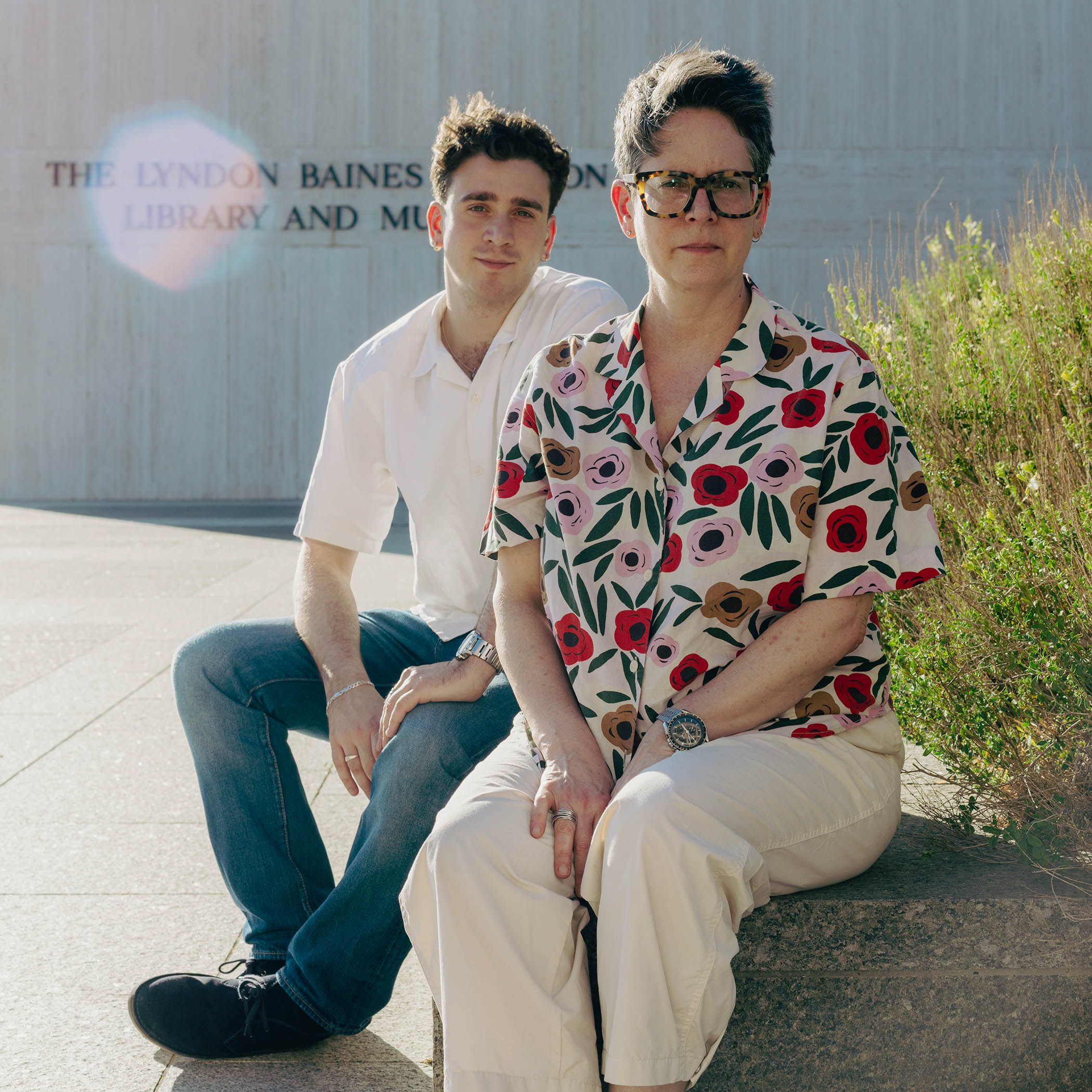
Johnson’s monument is the LBJ Presidential Library, a brutalist glory in gleaming white travertine by the University of Texas at Austin. Theo and I had flown into the state’s capital from London to get the full-court press of this edifice devoted to the president’s glory before we drove out to the Hill Country. As you come up the grand marble staircase that leads to the main exhibition halls, the files of Johnson’s massive archive – vital to Robert Caro’s painstaking “leave no page unturned” research – are displayed by glass in row upon imposing row. The “Johnson Treatment” was famous, the way he used his 6ft3 and a half inch frame to loom over those he’d cajole, bully and persuade. Ben Bradlee, editor of the Washington Post, said it was as if “a St Bernard had licked your face for an hour, [and] had pawed you all over”. A lifesize photo of a towering Johnson is on display for visitors to pose with: Theo leans back in awe. I take a picture. We laugh.
The library is a history lesson and PR exercise rolled into one. On the wall, in a section devoted to the ghastly brutality of the Vietnam war, is a famous photograph by presidential photographer Jack E Kightlinger; it was taken in July 1968, and shows Johnson slumped at his desk in the Oval Office, clearly, from his posture, in despair at the toll the war was taking. But when Theo and I have breakfast in Austin’s Driskill Hotel – in whose cafe, with its elegant pressed-tin ceiling, Johnson first courted his wife Lady Bird – with Mark Updegrove, chairman and CEO of the LBJ Foundation and presidential historian for ABC News, he’s wry about that image. “Would it change your opinion if you knew Johnson was just trying to hear better?”
Look closely at Johnson’s bent form and you’ll see his ear is nearly pressed to a speaker on his desk; he’s listening to an audiotape from the battlefield, made by his son-in-law. The photo went viral, for a time, during the Covid pandemic. More parallels to the present day: Johnson campaigned in 1964 – an election he won in a historic landslide – on peace. “We are not about to send American boys nine or 10 thousand miles away from home to do what Asian boys ought to be doing for themselves,” he said. Come February 1965, Operation Rolling Thunder, the sustained bombing of North Vietnam, was launched.
Yet Johnson did despair at the conflict; the image is not a lie. He was in very many ways a bad man; he also was, in very many ways, a great president. I was introduced to Updegrove by the film-maker Ken Burns. When I spoke to Burns in late January about the state of the nation he was realistic yet also optimistic, wary of what he memorably called “the narcissism of the present”. Our conversation with Updegrove has a darker tone. Yes, the bloody conflict of the civil war was unprecedented; yes, protests over Vietnam brutally divided the nation. But Trump’s own malignant narcissism, Updegrove thinks, puts the country – and by extension the world – in unknown and alarming territory.
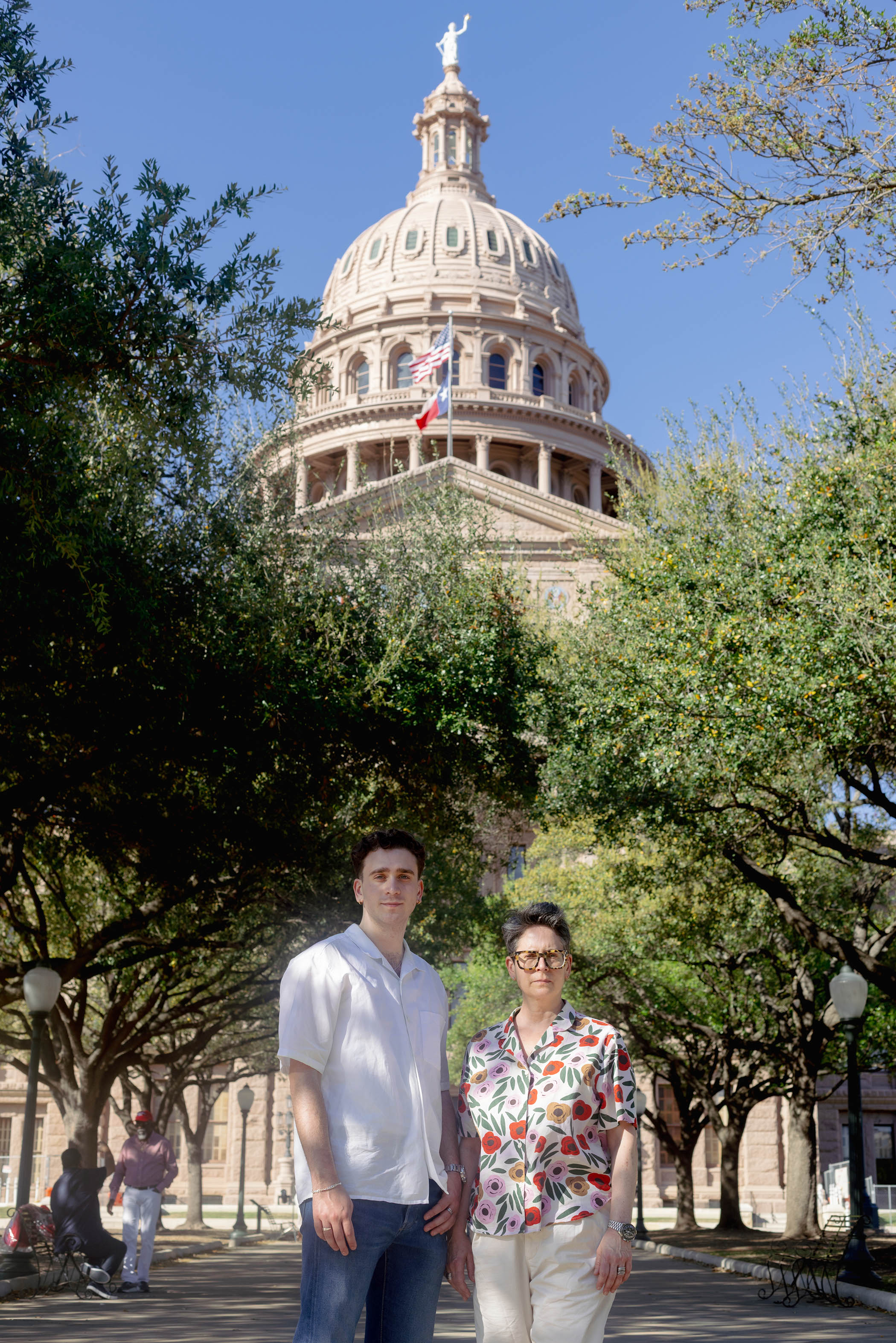
At the top of the library in Austin is a mock Oval Office; slightly scaled down, seven-eighths the size of the one in Washington. Johnson’s distinctive voice, with its Texas twang, spills from a hidden loudspeaker: “The office of the presidency is the only office in this land of all the people. Whatever may be the personal wishes or preferences of any man who holds it, a president of all the people can afford no thought of self… At no time and in no way and for no reason can a president allow the integrity or the responsibility or the freedom of the office ever to be compromised or diluted or destroyed because when you destroy it, you destroy yourselves.”
This is the change Updegrove means. We can’t excuse Lyndon Johnson’s flaws. But he knew what it meant to be in service of something other than himself, even if his personal ambition was boundless.
Johnson’s distinctive voice, with its Texas twang, spills from a hidden loudspeaker: ‘The office of the presidency is the only office in this land of all the people’
Johnson’s distinctive voice, with its Texas twang, spills from a hidden loudspeaker: ‘The office of the presidency is the only office in this land of all the people’
Johnson graduated high school in 1924 – the year my father was born. At his boyhood home I had been caught off guard by a display of the shirt he was wearing the day he died, the items he kept in his pocket: clip-on sunglasses, Vicks inhaler, a soft pack of cigarettes. The shirt and all the objects could have belonged to my father; they were exactly what I knew from my childhood. My father got an education after the second world war; Johnson worked on a road crew before finally enrolling in Southwest Texas State Teachers College in San Marcos – it was cheap, the only place he could afford. After he graduated he would tell his students – poor kids, many so poor that there’s a letter preserved in Austin asking his own mother to send him tubes of toothpaste to give to them – that they should listen to him because he was going to be president one day.
On our first morning in Dallas, Theo and I stand in the window of the sixth floor of what was once the Texas Book Depository and look down the sightline that brought Johnson to the place he’d long decided – against all odds – he was destined to go. From this vantage, all the conspiracy theories fall away, because it’s a chillingly straight shot down the wide avenue below, along which President John F Kennedy’s limousine travelled on that bright autumn day. Barely two hours after Kennedy was killed – at 12.30pm, 22 November 1963 – Lyndon Baines Johnson was sworn in as the 36th president, the oath administered by US district court judge Sarah Hughes in the sweltering compartment of Air Force One, Jacqueline Kennedy, still in the raspberry pink wool suit stained with her husband’s blood.
The building is a museum now, low-ceilinged, punctilious, restrained: though the enlarged frame-by-frame display of Zapruder’s famous and still shocking film has a lurid air. Back in Austin at the library I’d been mesmerised by a framed index card, showing Johnson’s handwritten annotations to his brief remarks in the immediate aftermath of the assassination: “This is a sad time for every American” changed to “This is a sad time for all people.” “I will do my best,” Johnson closes, “That is all I can do. I ask God’s help – and yours” runs the last typewritten line: Johnson alters it to read “I ask only for your help and God’s”, putting the people he addresses ahead even of the almighty. I spend my days thinking about how words can work most effectively: this notecard is a brief, perfect masterclass.
From the Sixth Floor Museum we head to the George W Bush Presidential Library. We have to pay $10 to park, which I resent. There’s a replica of the Oval Office here too, busier than LBJ’s, with a photographer ready to snap you seated behind the desk (that’ll be $30 at the shop downstairs). Young men in dark blazers and American flag ties mill around, bright-eyed and patriotic. “Really, who’s a Bush guy now?” Theo asks me rhetorically, though of course – given what we have now – maybe we all are.
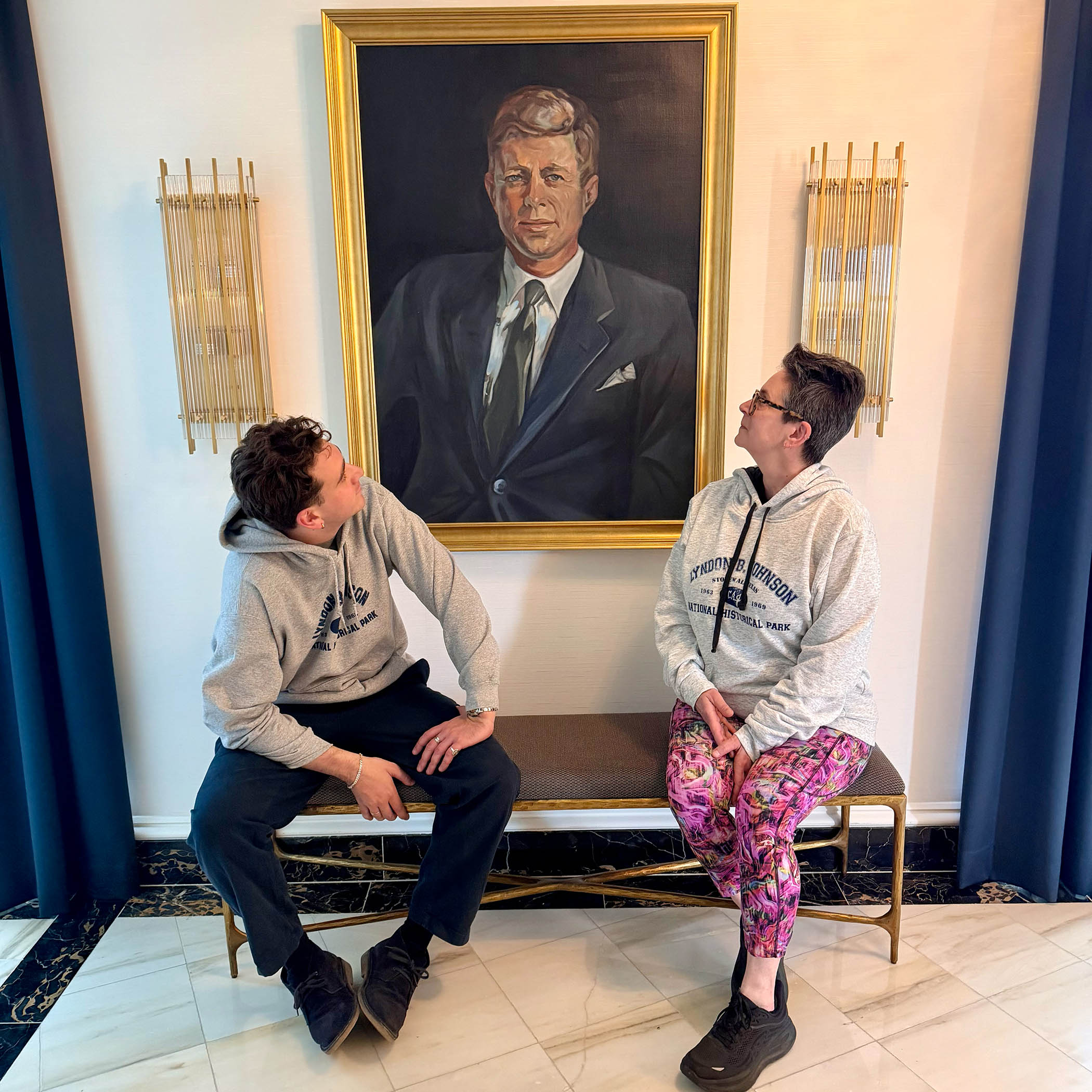
Sally, a volunteer in tan pants, welcomes us into the exhibition halls, pointing out where we can see Laura Bush’s dresses. She too asks where we’ve come from; she too is amazed at the answer – because, she says, they are seeing far fewer visitors from abroad these days. We all know what the circumstances are. I don’t know if I would have made this trip if Theo and I didn’t both have US citizenship. Not long after our return, Amnesty International issues a travel advisory in advance of the World Cup, warning of risks for foreign nationals which include arbitrary denial of entry and risk of arrest, detention and/or deportation, invasive social media screening and violent and unconstitutional immigration enforcement.
We make a move to head towards Laura’s wardrobe. Sally plucks at my sleeve. “I’m sorry,” she says, in a stage whisper. “For what’s going on now. This isn’t from the museum,” she clarifies, just like our park ranger at the ranch. “This is from me.”
We’re lucky, when we fly to DC, to escape the four and five-hour lines for security screening afflicting many US airports thanks to the government shutdown that started in mid-February; for whatever reason, things are really bad in Houston but fine at Dallas Fort Worth. It’s a three-hour flight. In Johnson’s early years in Washington – working as an aide to Congressman Richard Kleberg in the 1930s – he would drive from Texas to the capital. Washington was the only place Johnson wanted to get to. State office held no interest for him: power lay in a single place. “He had mapped out his route so long ago, had mapped it out so carefully, had held to it so grimly, had plunged along it so fiercely,” Robert Caro wrote of his fearsome determination. “By God, I’ll be president someday!” he was given to exclaim.
There is a terrible ruthlessness to Johnson. On the way into the city from Dulles Airport, Theo figures out how we can get our laundry done at a reasonable price when we get there. Theo is a determined young man. But he is not ruthless. He is making a life for himself in the political stream, in the British Civil Service, and on this trip I am beginning to see why he wants to understand Lyndon Johnson. Johnson knew, maybe better than any other president apart from Lincoln, how government can be made to work. What levers, human and bureaucratic, must be pulled for change to be effective. LBJ’s great genius was to understand and manipulate those mechanisms. We learn not always by emulation but by clear observation; this is what draws Theo to Johnson, I think.
In Washington we are ensconced at the Willard Hotel – where, according to myth, Ulysses S Grant coined the term “lobbyist” for the men who would pester him in its grand lobby as he tried to enjoy his cigar. It was, more certainly, here too, during the civil war, when the capitol dome was still stood unfinished, that Julia Ward Howe fell asleep and dreamed the words to the Battle Hymn of the Republic.
From the rooftop bar at the hotel next door we can see cranes yawing across the construction site for Trump’s 90,000 sq ft, $400m ballroom. A 10-minute walk away, a giant banner hangs down the facade of the Department of Justice, the president’s face glowering above the slogan MAKE AMERICA SAFE AGAIN. On the metro, there are squads of bored-looking national guard. It’s cherry blossom season, spring break season; the mall is thronged and when we get on one of those hop-on, hop-off tourist buses, we hop off after one stop because we’ve sat for 35 minutes in traffic.
But Theo has a plan. We grab a couple of city bikes, and cycle serenely south along the Potomac before looping over the 14th Street Bridge and a little north again through the yacht basin and into a wooded glade. Half an hour’s pedalling has taken us to the Lyndon Baines Johnson Memorial Grove: we’re the only ones here. It’s on a little island once called Columbia Island and now known as Lady Bird Johnson Park. A granite monolith, quarried a couple dozen miles from the Texas ranch, shadows the river. I had no idea this place was here – it was not on the tourist itinerary provided by Destination DC – but Theo has done his research.
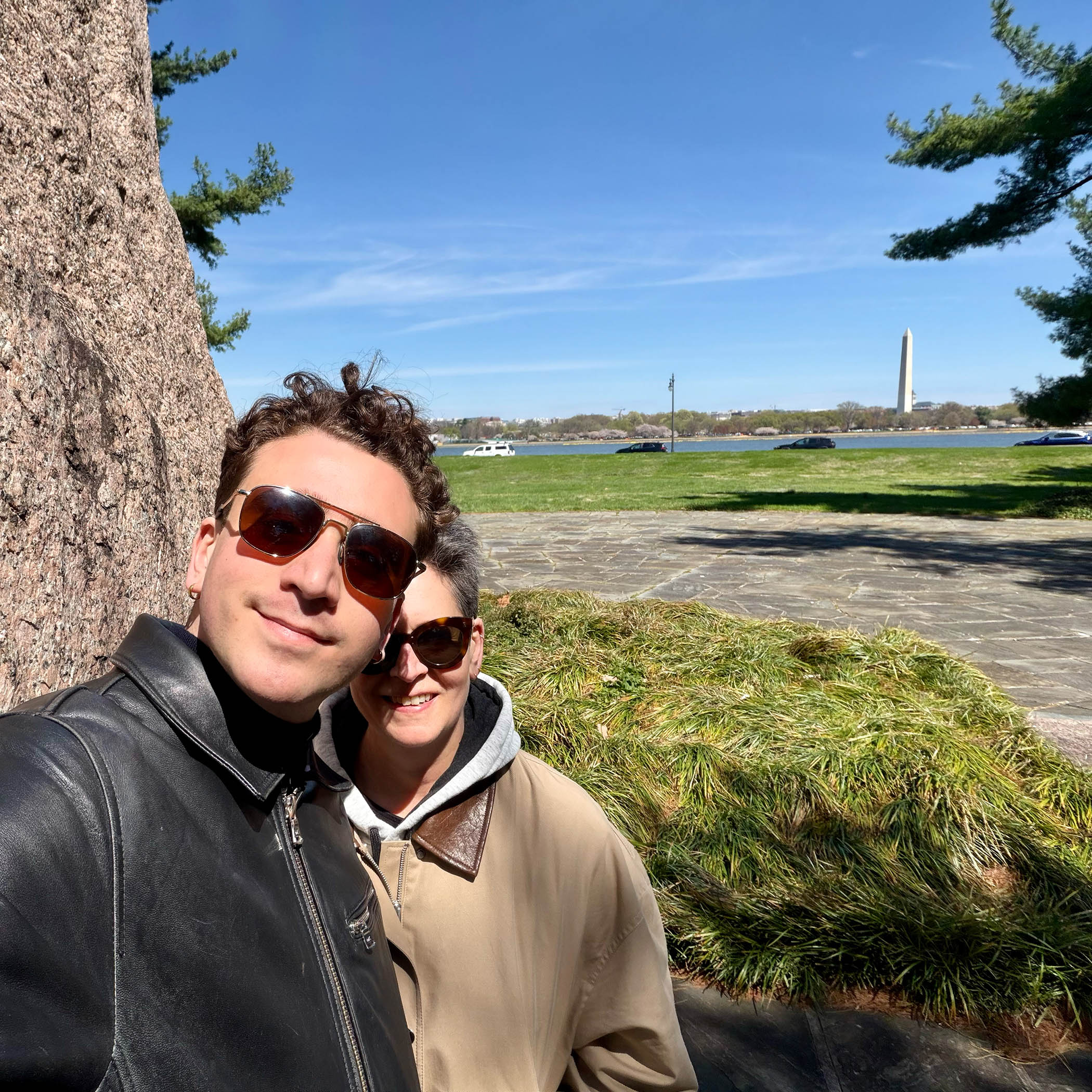
This city was Johnson’s apotheosis and downfall. Theo gets up early one morning and heads to the office of our senator, Kirsten Gillibrand of New York, to get a pass to visit the senate chamber where LBJ ruled as majority leader under the presidency of Dwight D Eisenhower. My son is proud to have done this: to express citizenship in action. The congress is the people’s house. The people must be welcome.
Johnson came from nothing to get to Washington. Having seen the coarse grass of the Hill Country, the bright bluebonnets springing up through, only serves to emphasise the distance. You can read all the history books and biographies you want, and you should: but to see for yourself changes your understanding permanently. It’s why Robert Caro moved to Blanco County – his wife and collaborator Ina gently inquiring why he couldn’t write a biography of Napoleon, so they could move to Paris instead. “We hold these truths to be self-evident,” the founders wrote, though their ideal of equality was evident to pretty much no one at the time. Lyndon Baines Johnson took them at their word. Now, 250 years have passed and we are about to find out whether all empires must, in the end, fall. But Washington DC itself – to my surprise – gives me a little hope this may not be the case.
After a swanky dinner at the Old Ebbitt Grill – haunt of DC’s powerbrokers since before the civil war – we go night-walking. The great monuments of the capital are open to all, 24 hours a day, seven days a week, lit and welcoming under a sliver of moon. I’ve only ever seen the Washington Monument from a distance, or in photographs: the scale of it, up close and brilliantly floodlit, is stunning. American flags fly all around it, casting shifting shadows on the white stone which is held together not with mortar but by gravity and friction alone: striking, how often engineering offers a metaphor for how a society might function.
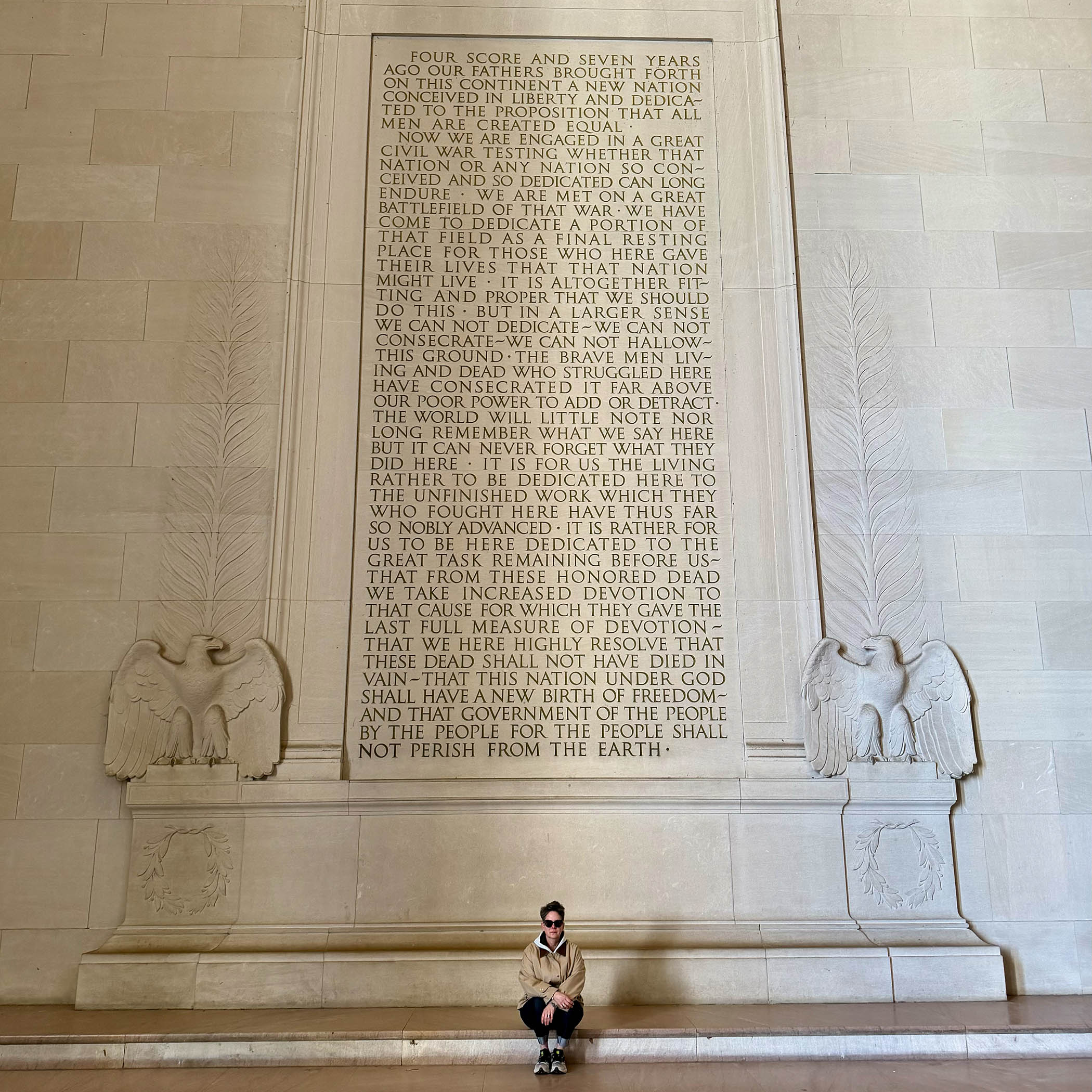
The throngs disappear, for the most part, as we walk beside the Lincoln Memorial Reflecting Pool – this is months before its coat of peeling blue paint, its noxious algae blooms – where Marian Anderson sang, where Martin Luther King Jr spoke of his dream and Lyndon Johnson, against all odds, listened. And then up the steps of the Lincoln Memorial, that extraordinary grand and grandiose structure with the massive figure of the 16th president, sculpted by Daniel Chester French and carved from white Georgia marble, at its heart. There are signs asking us to behave “respectfully” here, but the place is absolutely packed, mostly with students, milling and waving and shouting and taking selfies. And I find myself thinking: well, yes, this is respect. The sign wants quiet, at least that must be the assumption. But Lincoln – also against all odds – wanted freedom, and here it is, at 11pm on a weeknight on a spring evening in Washington DC. That government of the people, by the people, for the people, shall not perish from the earth.
In January 1973, Lyndon Johnson sat down with Walter Cronkite – then the most famous journalist in the US, and perhaps in the world; he was known as “the most trusted man in America”. Cronkite’s reporting of the Vietnam war as “mired in stalemate” in 1968 purportedly prompted Johnson to remark: “If I’ve lost Cronkite, I’ve lost middle America.” I’m old enough to have grown up with Walter Cronkite on the television; I can confirm that he felt like a member of my family. Cronkite began by asking Johnson how he became awakened to the issue of civil rights.
LBJ is seated in front of a wood stove at his beloved ranch. His hair has grown out long at the back; he’s wearing a dust-coloured shirt with the wide lapels of the era. He’s leaning forward; the light shines off his glasses.
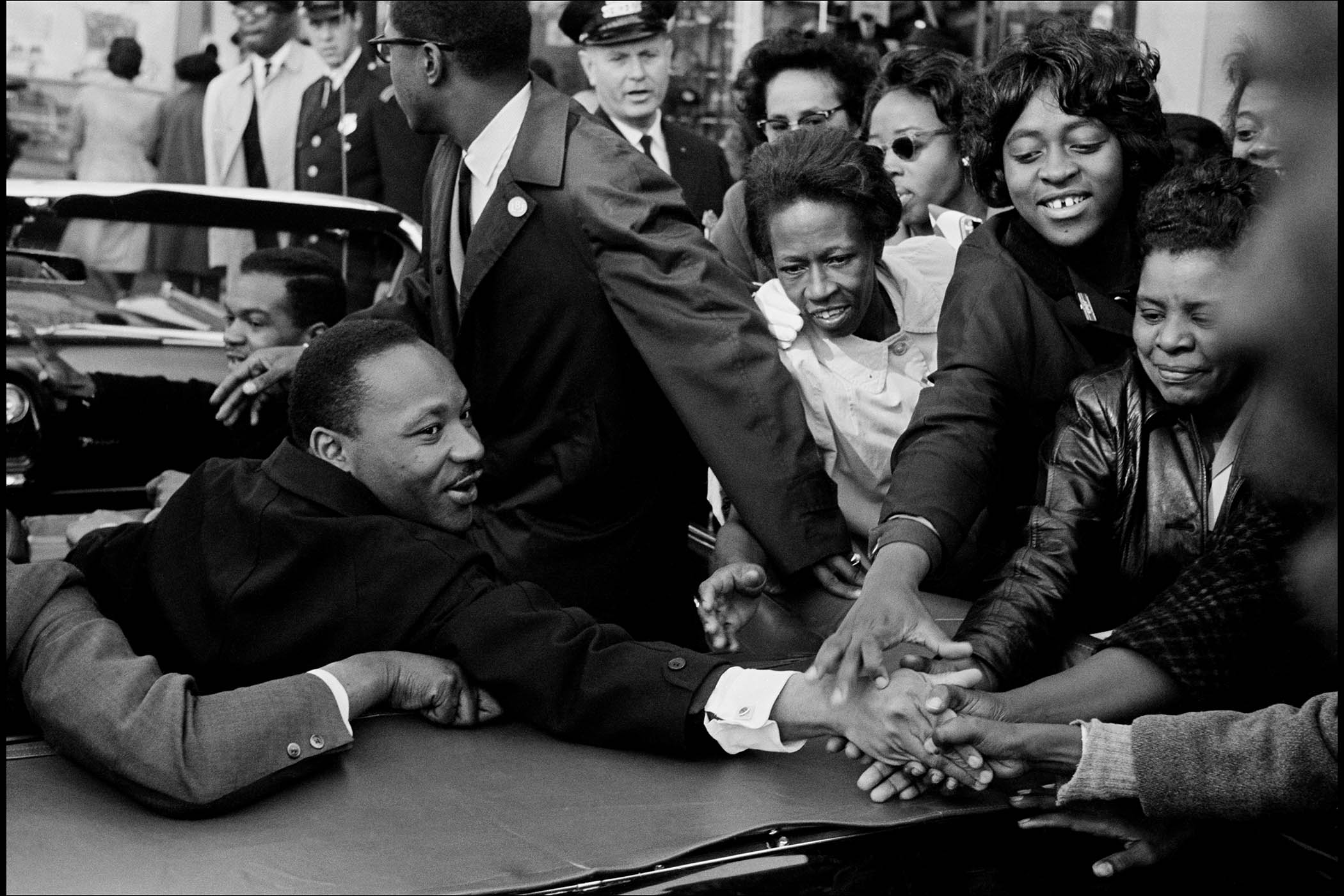
“I don’t know that I can pinpoint a day or a time or an hour,” he says to Cronkite. “Here on the Pedernales, we did not grow up in a prejudiced atmosphere. Like most other citizens of this country I took my own rights for granted,” he says. He didn’t grow up among Black people, he goes on, but he did grow up with Mexican Americans, and he taught in a Mexican American school: “There I got my real, deep first impressions of the prejudices that existed and the inequity of our school system between whites and browns.” He talks of going to Washington as a young congressman, how when he finished a speech he would go to shake hands with his Black listeners: “I remember one occasion or two, I was criticised severely for asking the blacks to come through and shake hands with them.” He describes the poll tax that existed in Texas in those days, that disenfranchised Black voters, “and they were not encouraged to vote”.
He’s leaning forward. He’s only 64 years old but he looks 10 years older, at least. “And finally, when I became president I realised that I was the leader of the country and that I was the president of all the people – and all the people were looking to me to correct the equalities and inequities. And there was something that I could do about it. I concluded that, now that I have the power, I’m going to use it every way I could.”
Ten days later, Lyndon Baines Johnson was dead of a heart attack.
Dotted across the Pedernales, cardboard signs were planted in front of houses and shops: Hill Country Strong. We could all use some of that strength, now. A president for all the people. Let’s try that again.
Erica and Theo travelled thanks to: Travel Texas (traveltexas.com); the Driskill Hotel, Austin; the Stonewall Motor Lodge; Marriott Dallas Uptown; Destination DC (washington.org); Willard Intercontinental Hotel
Photographs by Liz Moskowitz for The Observer, Dennis Stock/Magnum Photos, Theo Wagner