On a muggy Saturday last autumn, a steady stream of people parted from the crowds around Liverpool Street station and walked under the ornately carved stone entrance arch of the Bishopsgate Institute, founded in 1895 as an educational and cultural space for the people of the City of London. In the reading room, a crowd wildly diverse in age, gender and sexuality pored over tables stacked with material from its archive: BDSM magazines, scrapbooks full of photo graph s collected by a mackintosh fetishist and Tory MP, posters for queer sex events and TVs showing VHS videos of hardcore gay porn.
The atmosphere was oddly wholesome, quietly joyous; a sense of what was once taboo and locked away now open for all to access. That an event such as this can happen at all is thanks in no small part to activities detailed in the records of activist and community organisations including Stonewall, Rebel Dykes and OutRage! that are also held in the Bishopsgate Institute, home to the one of the UK’s largest LGBTQIA+ archives.
With more than 30,000 items in the collection, this archive is at the heart of contemporary writing exploring queer history and identity. I visited to look at documents rather than dirty pictures while researching British sexuality between 1939 and 1945 for my book Men at War. It also provided some of the vital and, at times, heartrending collection of testimony in Some Men in London: Queer Life, 1945 to 1959, edited by Peter Parker. John Grindrod, author of Tales of the Suburbs: LGBTQ+ Lives Behind Net Curtains, relates how, when he filled in the form requesting the records of the Croydon Area Gay Society, the ever-genial archive boss, Stef Dickers, called out: “I told you someone would ask for them eventually!”
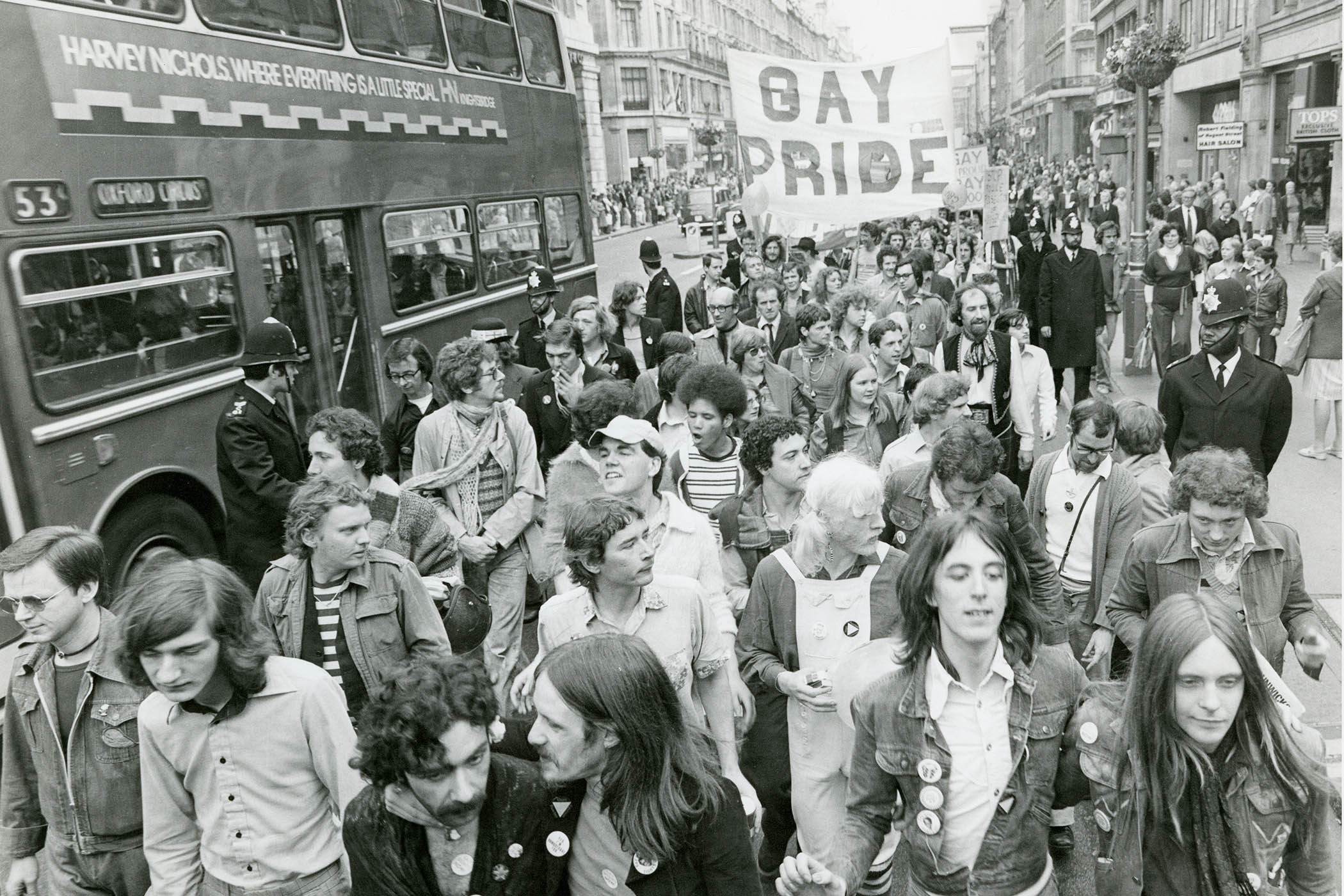
Pride march in London, 1977
These are just a few of a raft of new books that make use of the Bishopsgate and other archives to explore and understand LGBT+ lives and narratives that are often missing from mainstream histories. They raise two fundamental questions: why has this omission happened? And can we prevent it happening again?
The Log Books, Tash Walker and Adam Zmith’s commentary on the records kept by volunteers who staffed the helpline known as the Gay Switchboard – later the Lesbian and Gay Switchboard – between 1974 and 2003 is one of those new books, and begins with a similarly simple question: “Who had made us hate ourselves so much?” Many, most, probably all of us who count our sexuality as adrift from the conventional, have experienced the agony of self-loathing for some, part, or all of our lives. These books, and the archive material they are constructed from, have at their core the struggle to realise that this is not anything to do with ourselves, but the society around us.
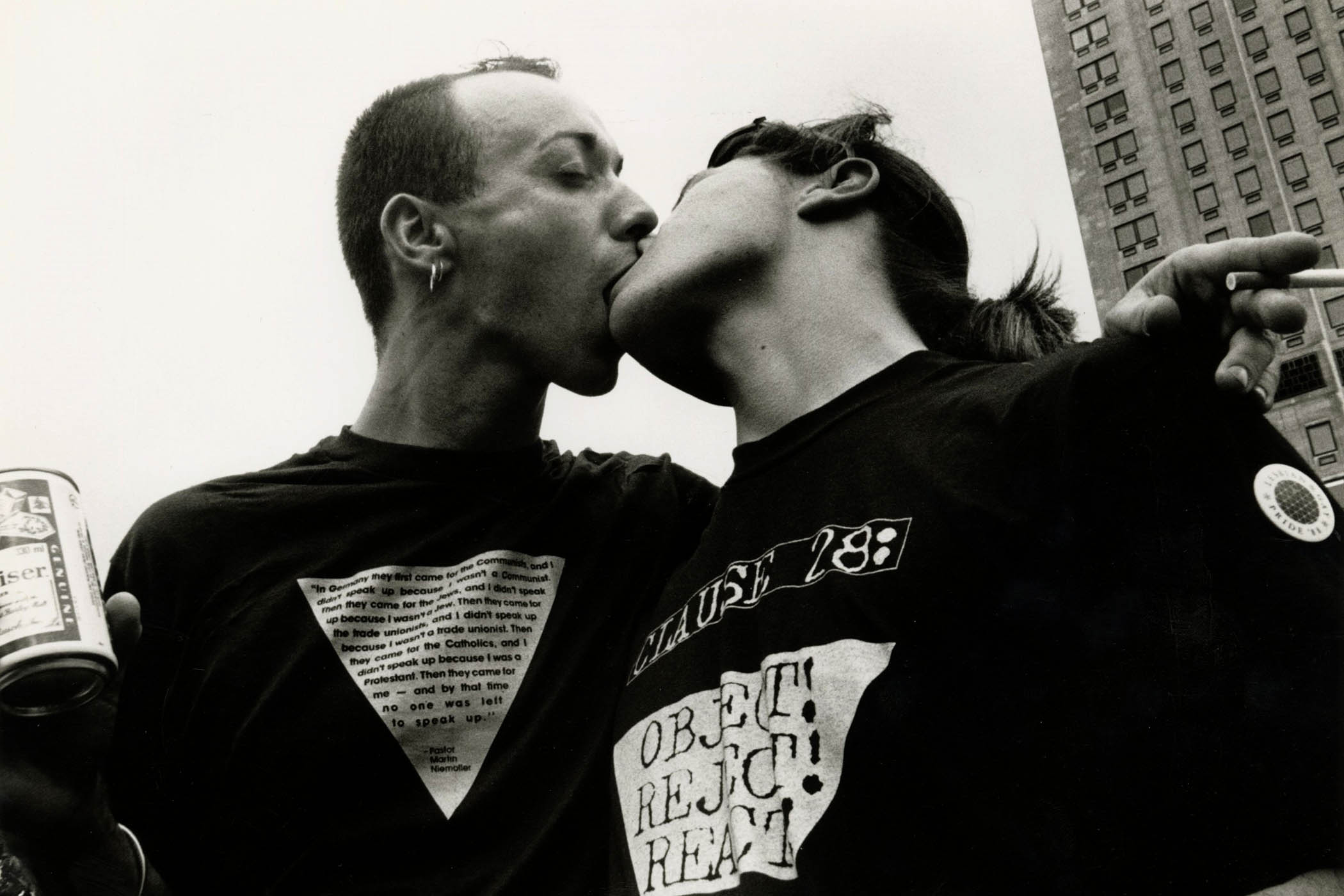
For the subjects of Some Men in London, the state had decreed that what they did together was illegal. After partial decriminalisation in England and Wales in 1967 came the gay liberation movement, only to be followed by the horror of the Aids crisis and hardening public attitudes. During the 1980s, as Walker and Zmith point out, public opinion that sex between two people of the same gender was always wrong increased from 50% in 1983 to 64% in 1987. This was just a year before the 1988 Local Government Act, Section 28 of which forbade schools, libraries and other institutions funded by local authorities from “promoting homosexuality”. It was an attempt, as the prime minister, Margaret Thatcher, put it, to indoctrinate children and young people to believe that they did not have “the inalienable right to be gay”.
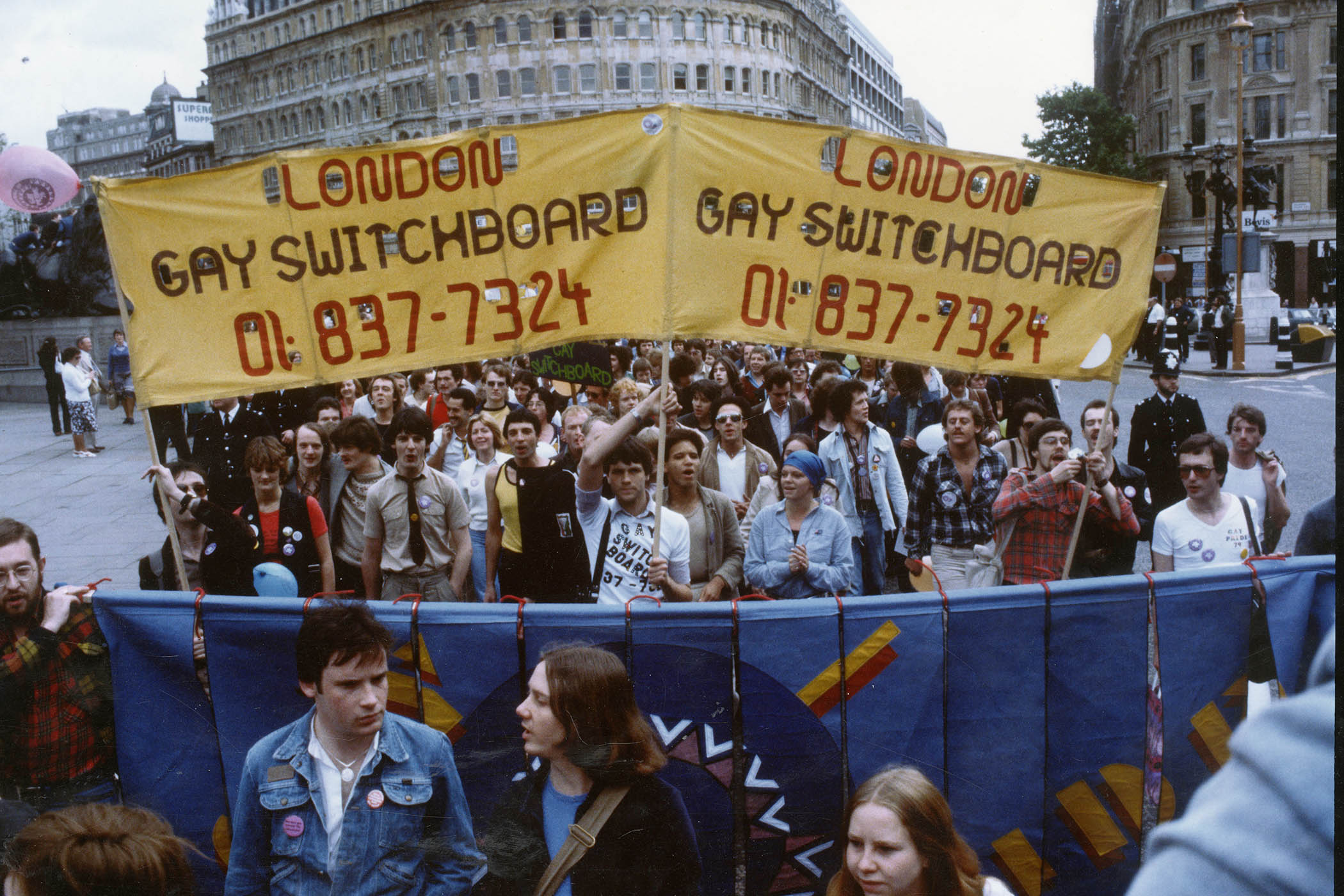
Pride march in London, 1979
It is impossible to overstate the appalling impact that Section 28 had on the lives of those of us who discovered our sexuality in the late 1980s and 1990s. In The Log Books, Walker and Zmith, born in the mid-1980s, describe it as an “attempt to scrub our generation clean of homosexuality”.
In my state boys’ school in the home counties (I discovered recently that Reform UK’s Matt Goodwin was there at the same time as me), there was not a single pupil out as gay, bisexual, nonbinary or transgender. Everyone had their suspicions, of course, and they were manifested in cruel taunting. In this toxic environment, it was a desperately lonely time as I tried to work out if I was straight or gay; I encountered no language to understand a fluid sexuality in which I felt comfortable. I had a fleeting interaction with a friend involving hands flitting beneath the desks during lessons, but it ended as soon as it began.
This moment of high risk self-discovery was replaced by a complete inability to know where to turn for hope, support, solidarity, to find someone like me. It says a lot about how homophobic the mid-1990s were that it was only years later that I discovered one of my best friends was also attracted to both men and women. Another has subsequently transitioned.
Under the state-enforced silence of Section 28, we lived in a void. As Grindrod writes of a group of friends in a school in suburban Stockport who only ended up coming out to each other once they finished full-time education, under Section 28 “the idea that school is a place where they can be open about their sexuality is laughable”.
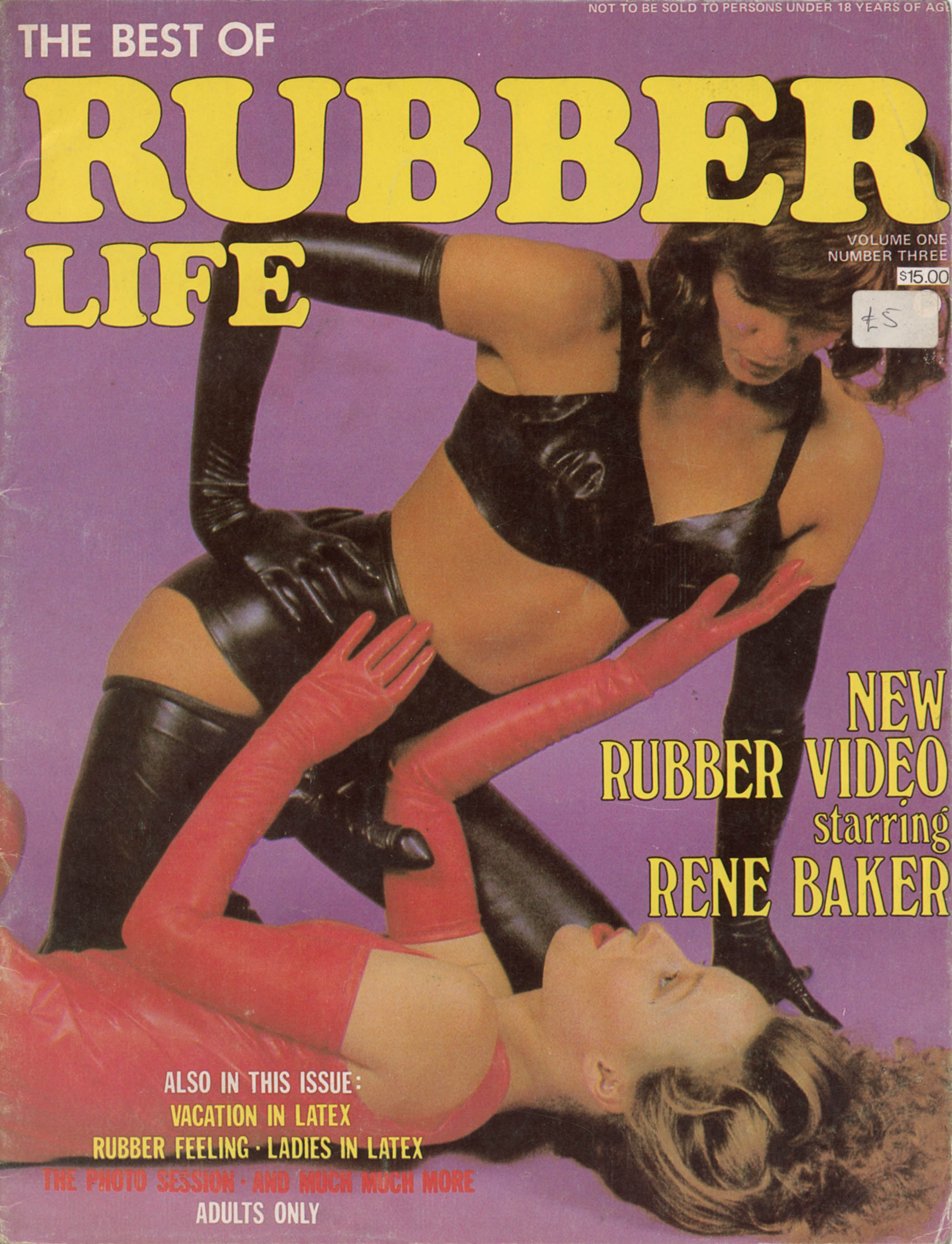
Rubber Life magazine
Section 28 is present in the logs of the Switchboard explicitly and implicitly; in the shadows from which men and women called in search of help – to find queer social groups, legal or medical advice, even how to cruise or have sex. It might have been a lifeline against this state-sanctioned oppression, but I never picked up the phone to dial. Fear of discovery, internalised shame and homophobia no doubt played a part, but then there was something deeper at work. I was certainly aware of the service, but it was called the Lesbian and Gay Switchboard; I was attracted to both genders, so surely it wasn’t for me. The switchboard itself arguably didn’t think so, and The Log Books reveals (almost as an aside in a section about the arrival of the internet) that even as late as the 1990s, bisexuals were not allowed to work as volunteers. It’s a shame that the book doesn’t really interrogate why that was.
Throughout my life, I’ve encountered prejudice over my identity. The B is often somewhat lower case in the LGBT+ spectrum, and is not terribly present in the books that are drawn from the records of the Bishopsgate Institute archive. This perhaps reflects our position in the supposed community. Gay men have said to me that I am in a closeted denial of my true homosexuality, or it’s a pose, or that bisexuals don’t count as we’re able to pass in a heterosexual context. For some gay men, bisexuals are a fetish: “You lot will do anything,” one man told me, long ago.
At the same time, the heterosexual world sees us as oversexed, greedy – a threat to “normal” sexuality. To not fit into either is lonely. I am a cisgender man with fluid sexuality, yet I barely know any others like me who are out. As someone who has written about my sexuality openly for some years, I’m frequently approached by friends, acquaintances and strangers whose sexuality doesn’t conform with either “heterosoc” or “homosoc” but who desperately need someone to talk to about it. Perhaps today, with the ease of communicating via email, social media, WhatsApp and voice notes as much as the telephone line, many of us have become individual switchboards ourselves.
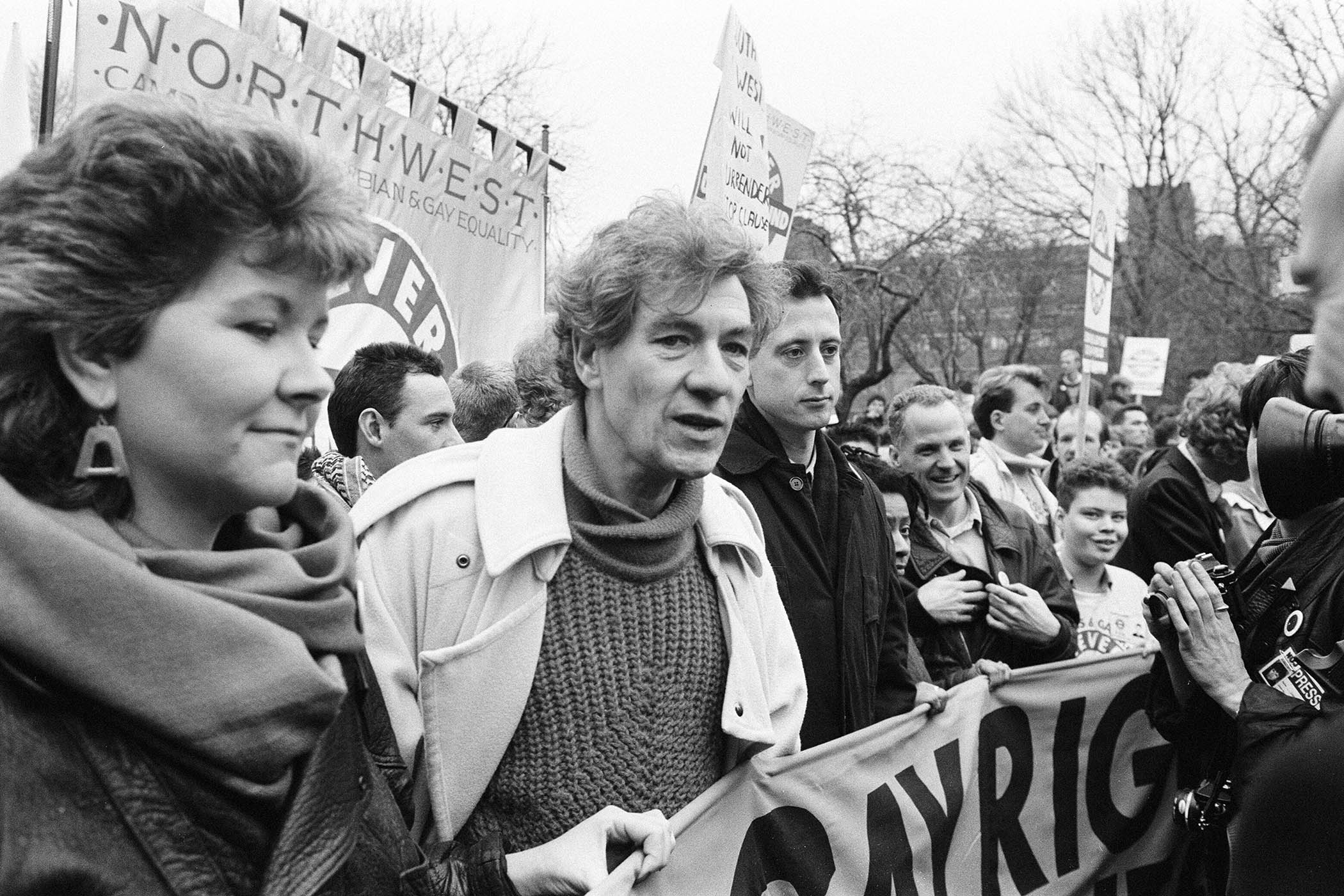
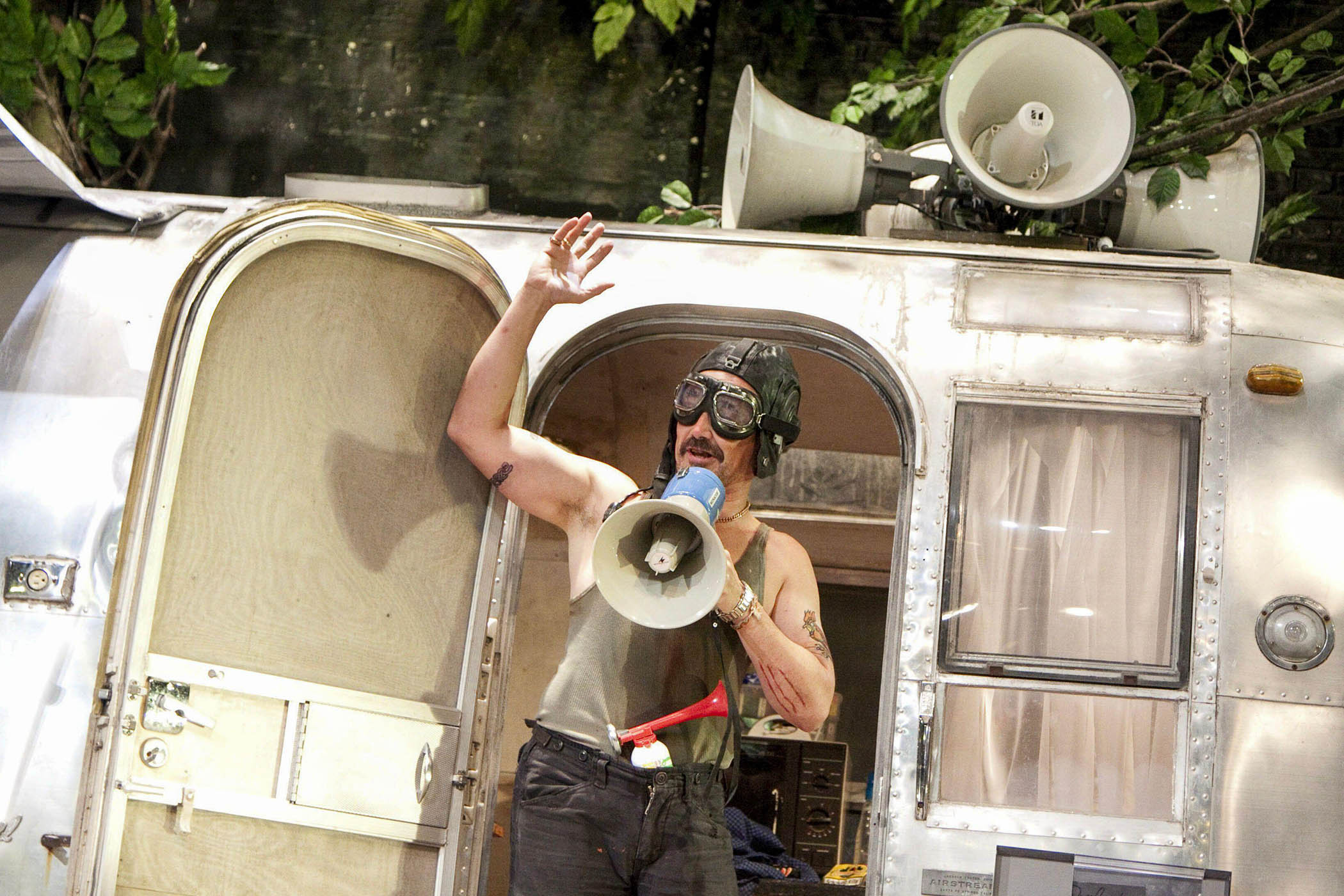
Ian McKellen protesting Section 28 in 1988
It’s right that we hold up the victory of love and sex over oppression, and contemporary LGBT+ writing does this very well, dominated as it is by stories of people overcoming prejudice to discover who they are. In The Log Books, memories are often “radiant” and “as clear and beautiful as crystal”. There are frequent mentions of callers who rang the helpline after having sex for the first time, purely because they wanted to express their happiness. I wonder if – alongside and often related to the absence of bisexuality – this celebratory tone can get in the way of acknowledging more thorny, or still hidden, histories. Perhaps the sex was merely mediocre, and furthered a sense of doubt.
For many, including me, our first time was not an ecstatic moment of self-realisation, but a loss at the hands of predators. The enforced silence of Section 28 drove us into their hands. I wonder about those who called, spoke, hung up the phone, and never dialled again, their lives remaining lonely and repressed from without and within.
I found something similar when researching queer lives in wartime; nearly all the testimony we have comes from a narrow subset of gay men who were out after the war. One of them, a remarkable man called Dudley Cave, was even involved in the founding of the Switchboard and worked there as a volunteer. These men left a record of their struggles and the joy they found, be it fleeting or enduring, but so many of those they recalled having sex, intimacy, or sharing love with during the war years are absent.
Newsletters
Choose the newsletters you want to receive
View more
For information about how The Observer protects your data, read our Privacy Policy
That there are so many gaps in LGBT+ history only makes what has come down to us so much more precious, but also emphasises that we should never be complacent, lost in a reverie of contemporary queer utopias; Pride festivals, same-sex marriage, connection on the dancefloor, ethical non-monogamy, easy app sex, chosen families, culture commercialised by the power of the pink pound. So many LGBT+ people don’t fit in with any of this, and in any case, I’m never convinced that our country has moved along as much as it thinks it has. Social media activism (and perhaps that word should be in inverted commas) gives a superficial appearance that anyone can be out and themselves and, in another vogueish term, “be seen”.
But tolerance depends on location, background, religious and cultural roots, employment, class. In Tales of the Suburbs, we learn how a hen party on a Scottish train call queer couple Lou and Sarah “disgusting” and sneak pictures on their cameraphones. Terry, a nurse who lives in Luton, describes a “whole new underbelly I didn’t know of”, where the threat of making public photos shared on the Grindr app is used to blackmail closeted men into having sex.
The shriek of silence about these difficult narratives can be overwhelming; they have left no mark in the archives and the closet has no echo. Perhaps as a bisexual man who rarely feels comfortable in either hetero or queer spaces, this is a particularly acute and personal feeling, but I genuinely believe that if it were more comfortable for bisexuals to be out, and part of these narratives, it would indicate a healthier LGBT+ ecosystem overall. I’ve always tried to be an ally of trans people, who undeniably suffer more than any of us. In seeing my trans brothers and sisters under attack from some lesbian and gay people as well as some heterosexuals, I see an echo of the biphobia I experienced from those I would have expected to be alongside me.
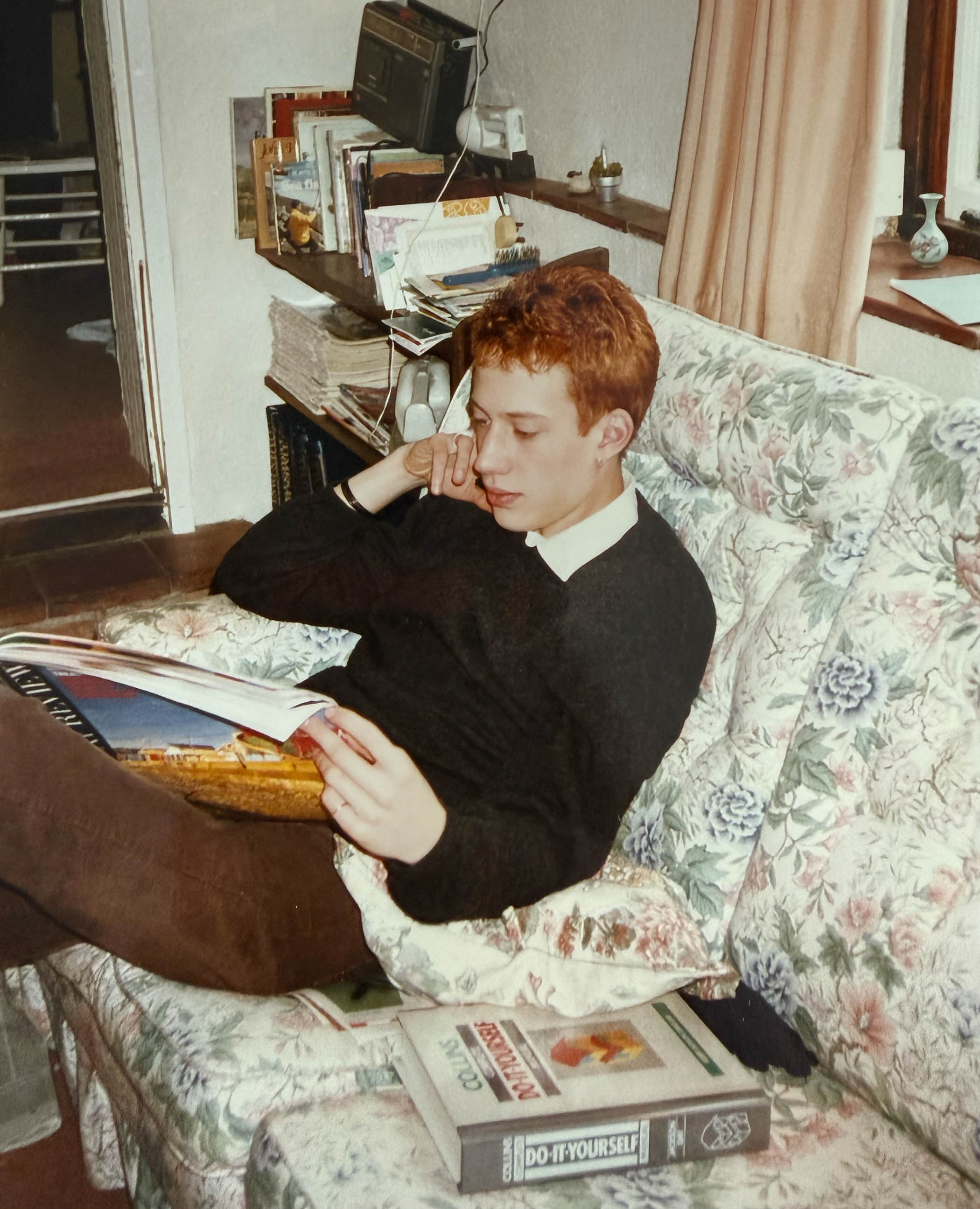
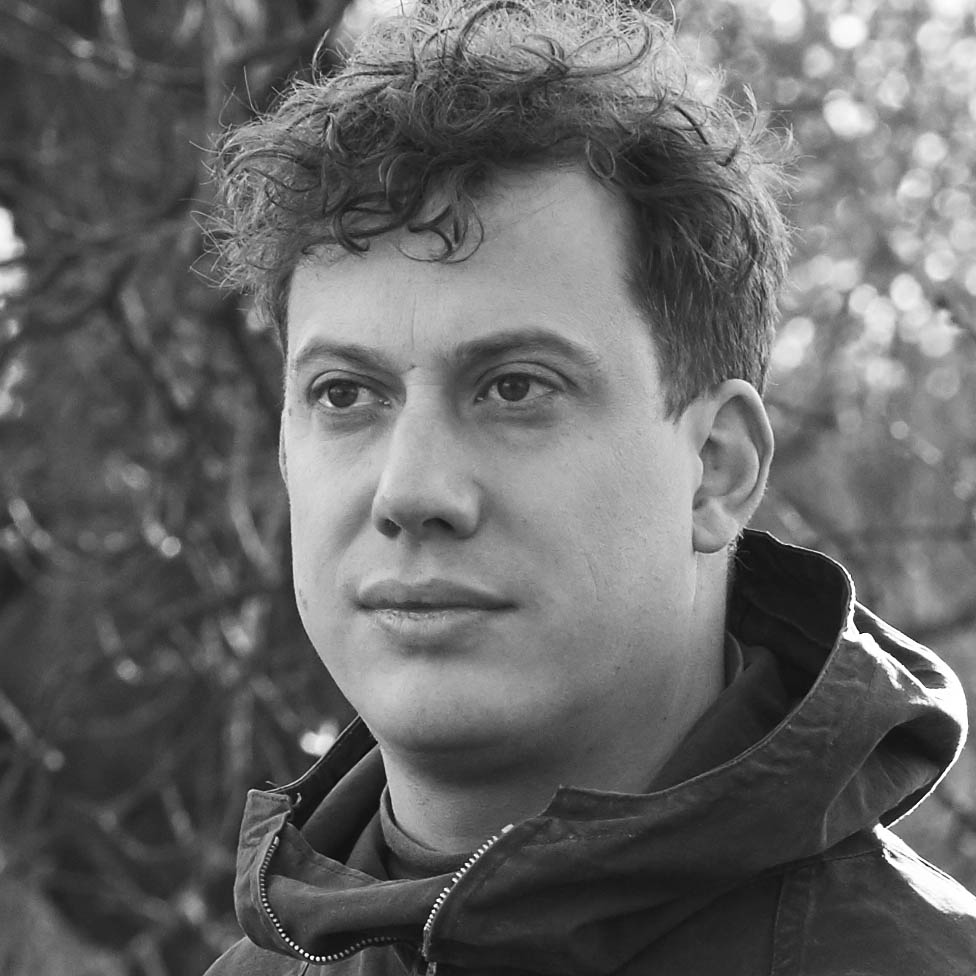
Luke Turner in 1997
Instead, we’re drifting into a future in which the walls are closing in once again. Rights granted are easily taken away. Where the US leads, Britain unfortunately often follows, and book bans have made it to our shores; in 2024, the Index On Censorship found that dozens of librarians had been asked to remove LGBT+ books from the shelves, with many more pressured to do so. Aping Donald Trump (and worse), Reform is leading the polls with its threatening slogan: “Family, community, country.” Danny Kruger MP, in charge of planning a future government run by Nigel Farage, has consistently voted against LGBT+ rights, and while in a recent interview about promoting birthrates he said: “I’m not interested in your love life, or anything about your personal life – that is your business,” his words have echoes of the Conservative politicians who in the 1980s and 1990s introduced and defended Section 28. They claimed to not care about what happened in the privacy of the home, while instigating policies that made it impossible for lives to be lived openly outside them. It’s not hard to imagine similar legislation being introduced in the near future, not helped by how the shifting of the Overton window – the range of arguments and subjects that are politically acceptable within mainstream discourse – has dragged in others who should know better. Views on transgender people have hardened in recent years, with a YouGov poll in 2025 finding that a third of British people believed it shouldn’t be possible to change legal or biological sex, up from 23% in 2022. Labour’s absolute mess over Equality and Human Rights Commission guidance threatens to make daily life impossible for so many trans men and women. An assault on trans rights is just the beginning. What starts there, comes for us all in the end.
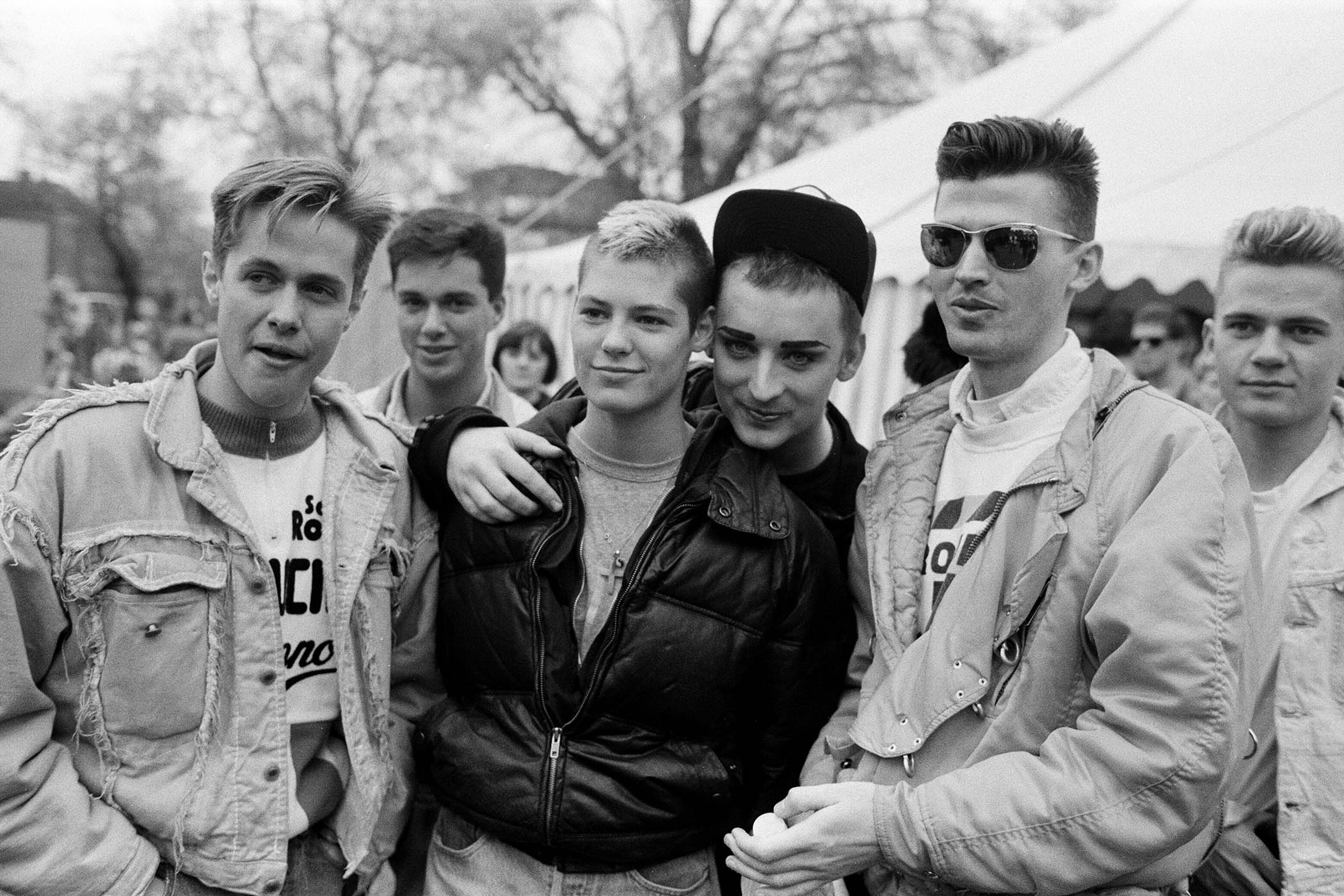
Boy George at a Stop the Clause demonstration in April 1988
It is archives, and their use in writing, art and documentary that I see as being a bulwark against this future repression. That so many narratives are missing just shows how precious what we do have really is; this distillation of thousands of interactions – some tender, some explicit, some fraught, some raucous, some joyous – into words. Against the slop of AI, and the vulnerability of digital media, these thousands of items on paper and card start to feel as resilient as grit.
An interviewee in Tales of the Suburbs relates how he went to the Basingstoke area gay society, only to find everyone discussing the sandwiches they’d had for lunch. He was shocked at this “most terrible, boring suburban conversation”. Yet the right for queer people to gather openly to be boring and discuss sandwiches is as fundamental to me as the right to dress as a horse and get ridden in a sex dungeon, or any other aspect of the wildly diverse LGBT+ lives that are held at the Bishopsgate Institute and elsewhere. That is genuine inclusivity – and the fight to maintain it continues.
Photographs by Luke Turner, Gordon Rainsford/Bishopsgate Institute, Robert Workman/Bishopsgate Institute, Alamy, Mirrorpix