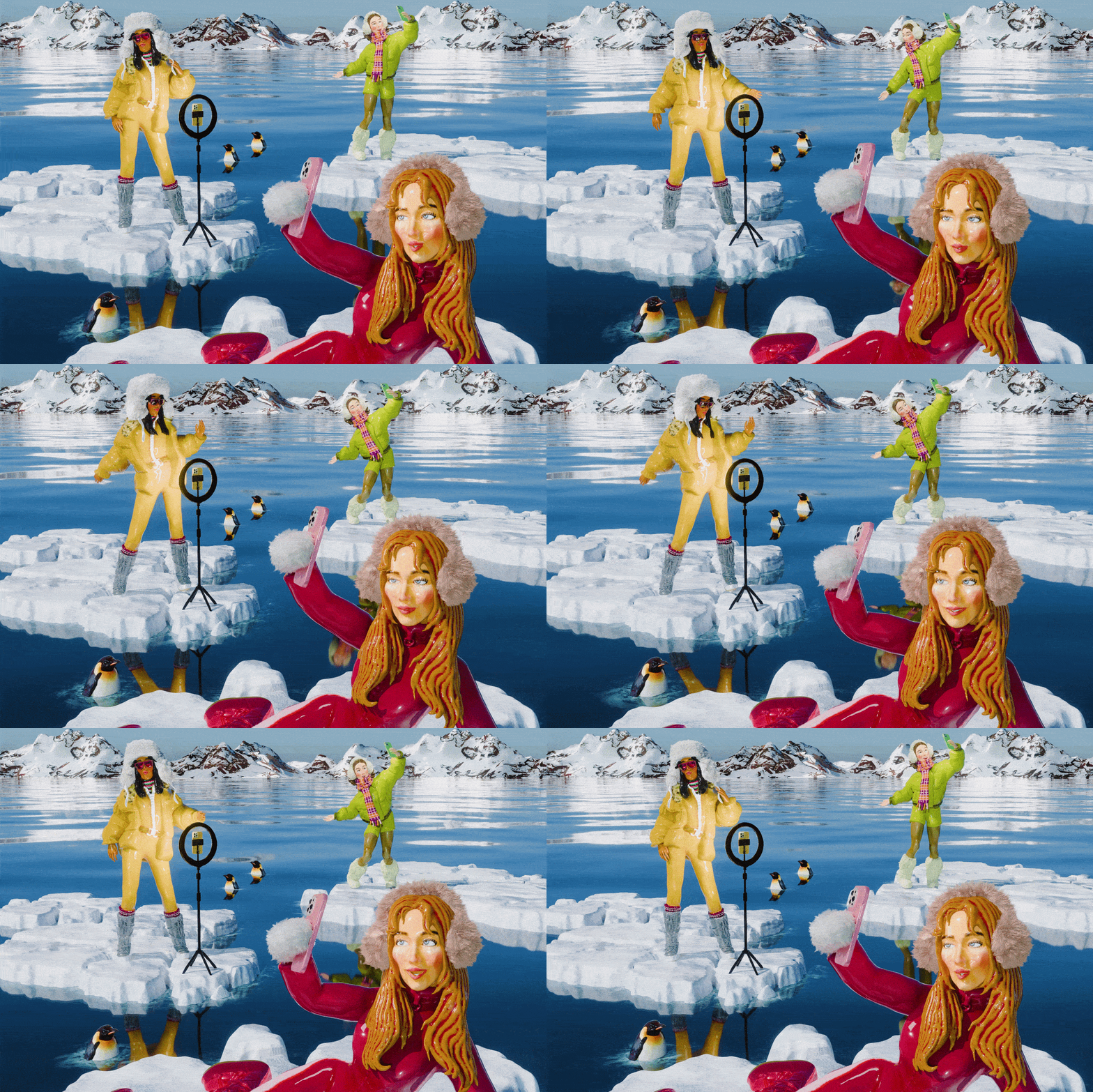




In September 2024, the influencer Naomi Jane Adams posted a video of herself on TikTok, in which she draped her bare legs over the rail of a boat while it glided through glittering, glacier-dappled water. Adams, who has one million followers on Instagram, usually posts a mishmash of political commentary, iced lattes, the environment and luxury travel content. This time the video was posted from Antarctica, where Adams, wearing a beige jumper, white shorts and fluffy ear muffs, was on a trip arranged by Albatros Expeditions, a company that organises Antarctic cruises. Adams’s post was “a paid collaboration”, she told me recently – she was required to produce content while aboard the ship –, though the tour organisers deny they offered a fee. Adams added: “Of course I was going to do it.” She captioned the video “Warm places to visit in January.” “Obviously I’ve had backlash,” she told me. “People have said: ‘You talk about sustainability, and then you go to Antarctica.’ But, I mean, how could I not? It was a once in a lifetime trip.”
For decades Antarctica was visited only by scientists and people involved in the operation of its transport system. But over the past year or so a growing number of content creators from Europe and the US have flocked to the world’s most southern continent, documenting their voyages with glossy reels. There are currently 157,000 posts hashtagged “Antarctica” on TikTok, some of which, including Adams’s video, are paired with viral pop tracks that riff off popular memes. “Sorry I won’t be able to make it I’m in Antartica,” reads a caption on one video, shared last month, and featuring an influencer applying lip gloss against a backdrop of icecaps. Another reads: “‘I never see you at the club’ Ok, but I never see you kayaking in Antarctica.”
Videos like these have mostly provoked gentle surprise, if not a more pronounced shock. On a video that has been liked 492,000 times, one TikToker asked, “Why is everyone in Antarctica right now?” Another commented: “2 weeks ago I thought nobody was allowed in Antarctica and now everyone and their mother is crossing the Drake’s passage.” According to data from the International Association Antarctica Tour Operators (IAATO), 118,491 people visited Antarctica in the 2024-25 season, up from 36,271 10 years earlier. Over 50 companies now operate Antarctic cruise ships to the continent, with an increasingly diverse menu of onshore offerings such as skiing and skydiving. More adventurous travellers are given the option of joining the swinger cruise, where guests might enjoy a clothing-optional sundeck, DJ sets and a 24-hour “playroom” for erotic exploration.
It’s been just over 200 years since humans first set foot on Antarctica. John Davis, a British-American sailor and seal-hunter, is often credited with the first documented on-shore landing (although some historians dispute his claims). The achievement sparked decades of competition, first between explorers racing to reach the South Pole first, then between nations asserting territorial claims over the icy continent during the first half of the 20th century. In 1959 12 nations signed the Antarctic Treaty, declaring that the continent would be “used for peaceful purposes only” and that it would be a place for collaborative scientific research. The agreement was followed by the 1991 Protocol on Environmental Protection environmental protection protocol, which was geared to protect Antarctica’s ecosystems.
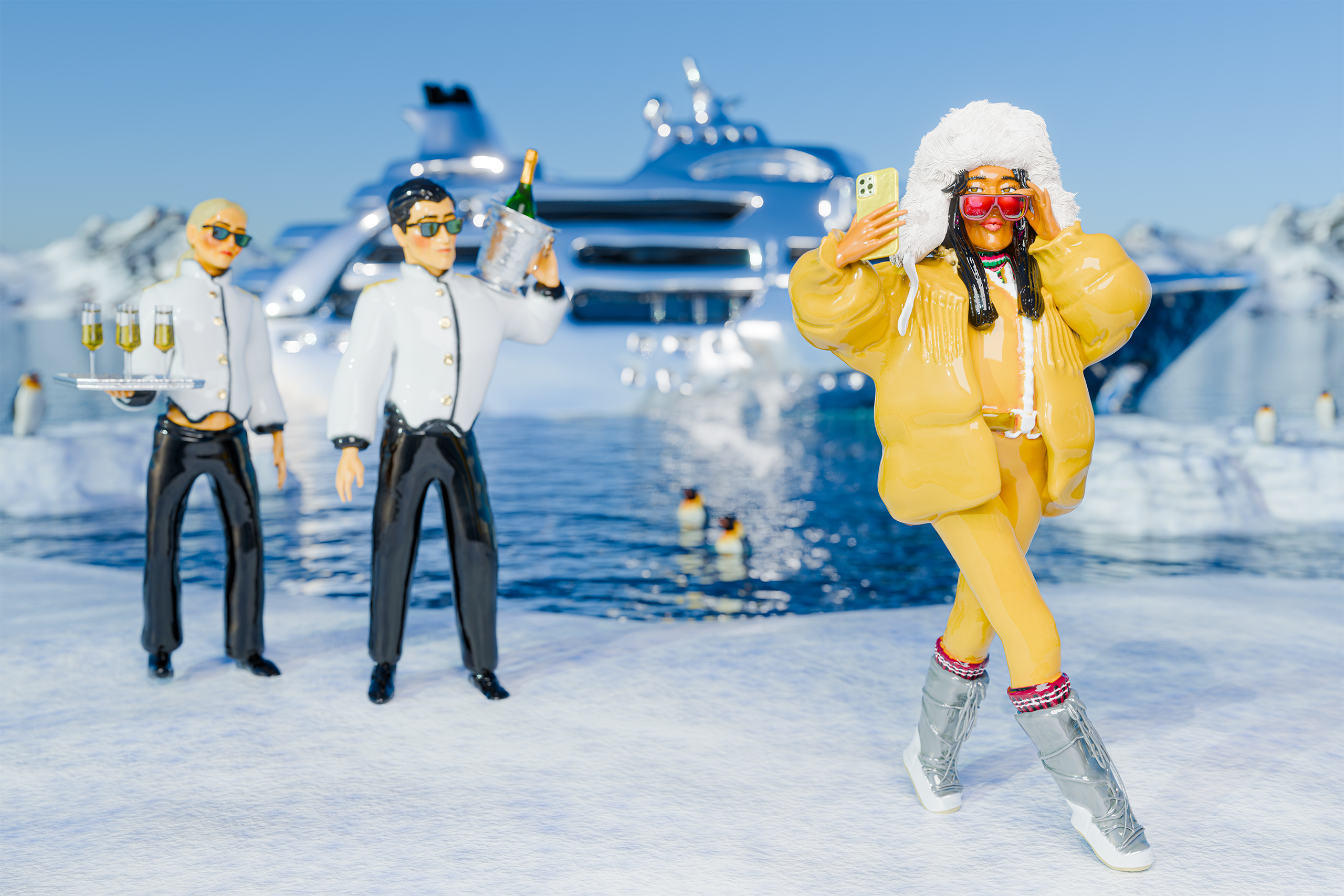
Today, there is no limitation on the number of vessels or people who can visit Antarctica in a season, but there is a daily cap on ship visits, and no more than 100 passengers can be ashore at one time. Visitors need either a permit to visit, or an authorisation from an Antarctic Treaty party. Anyone entering Antarctica risks bringing invasive species and microbes into the region, disrupting ecosystems already under threat due to climate change. Visitors must abide by strict rules, including respecting protected areas, maintaining a minimum of five metres away from all wildlife, and never feeding animals.
Lisa Kelley, the executive director of IAATO, told me recently that “a big part of what we do is creating ambassadors.” The IAATO was established in 1991 to promote safe and environmentally conscious travel to the region, with the hope that the lived experience of visiting Antarctica would inspire visitors to advocate for its protection when they returned home. Kelley quoted Sir David Attenborough, who has filmed multiple documentaries in Antarctica: “No one will protect what they don’t care about, and no one will care about what they have never experienced.” Kelley went on, “We do feel that tourism, when it’s responsibly managed, can be a force for good,” but insisted “we want [Antarctica] promoted in the appropriate way.”
Sadly not everyone visiting the White Continent is doing so respectfully. Tourists sometimes breach the rules. In 2024 a deadly strain of bird flu that has killed thousands of seabirds and sea lions in Chile and Peru was detected for the first time in Antarctica, leading IAATO to establish additional biosecurity measures. Kelley told me of one incident in which a photo appeared on social media of an influencer lying on the ground “as close to penguins as they could possibly get” just 10 minutes after an operator had briefed the visitors about the safety protocols and explained why they were important. In February it was confirmed that the avian influenza had killed more than 50 skuas, following reports that someone had graffitied a historic building at Whalers Bay on Deception Island.
Even if tourists do abide by the environmental regulations, all visits to Antarctica cumulatively impact the continent’s delicate ecosystems. “The main concern to me is not so much the extremes or the unusual behaviour,” Dr Ricardo Roura, a senior adviser at the Antarctic and Southern Ocean Coalition told me, but rather the “normalising of this kind of exploitation of wildlife in their habitat, in their home.” One estimate says that the carbon footprint for a single person’s Antarctic cruise (including ship travel and flights) is approximately equal to an average European’s yearly output, while an overnight stay on a cruise ship uses 12 times more energy than a hotel stay. Cruise ships emit air pollutants such as sulfur oxides, which contribute to acid rain, while soot from ship engines can accelerate snow melting.
Obviously there has been a backlash, but it was a once in a lifetime trip
Obviously there has been a backlash, but it was a once in a lifetime trip
Over Zoom, Dr Roura said he didn’t know much about influencers until he attended an IAATO conference earlier this year, when the organisation apparently voiced “concerns” about a new genre of tourism. According to one research paper submitted to the 2025 Antarctic Treaty Consultative Meeting, social media posts tagged with terms such as #antarctica, #antarcticadventure and #drakepassage tended to “focus on luxury, exclusivity, and personal transformation”. While some posts mentioned responsible travel, a lot of the content was centred “on the individual traveller, their lifestyle, and their experience,” which “can lead to a disconnect between the promotional narrative and the environmental realities and responsibilities associated with visiting Antarctica.” The paper also flagged that influencers may oversimplify the dangers of Antarctica travel.
“Influencers are a completely different breed of people,” Dr Roura told me, in contrast to the “curious” tourists who visited Antarctica 10 or 15 years ago. “They go there to sell their own brands, to get more clicks, to get more likes.” Because influencers are “desperate” to get content, he said, “they may ignore or bypass or avoid the rules,” glamorising harmful activities to mass audiences. Last year IAATO produced its first guidelines for working with influencers in the region, with a list of do’s and don’ts for content creation. For instance, operators should discourage influencers from creating content that makes it look like they’re closer to wildlife than they actually are, or to urge their audiences to visit Antarctica “before it’s gone” or “before it melts”. They should also reward influencers who stick to the rules, offering them Antarctic Ambassador certificates, while also warning them about behaviours in Antarctica that could get them cancelled.
The desire to venture to unexplored parts of the globe is not new. But social media algorithms, which reward extreme behaviour, have turbocharged the interest, combining the quest for new experiences with financial incentives. This frantic desire for good content may be making travel more dangerous, both for content creators and the environment. Last year a French tourist filmed himself hanging from a carriage on Madrid’s metro tracks, an Irish influencer visited a “cannibal tribe” in New Guinea, an Australian tourist did push-ups in a plane engine on the concrete at Sydney Airport and an American influencer filmed himself wrestling with a crocodile. These travel stunts follow 379 deaths recorded between 2008 and 2021 caused by people taking selfies in dangerous places.
TikTok pays creators with many followers for engaging videos that are longer than one minute, while influencers with big audiences can bag lucrative brand deals. Most content is created for the money. Still, some content creators describe their visit to Antarctica as life-altering. “There were a lot of moments that made me think about how the ecosystem affects the wildlife in Antarctica,” Nelly Rai, a TikToker with over 320,000 followers who visited the region last year (also in collaboration with Albatros Expeditions), told me recently. When I spoke to Adams she said, “You’re not just going to see the penguins. Each day is awe-inspiring… It just changes you.”
There is tension between the financial demands of being an influencer – and wanting to preserve a remote region
There is tension between the financial demands of being an influencer – and wanting to preserve a remote region
On Adams’s trip, experts were on hand to teach passengers about climate change and their responsibilities as Antarctica ambassadors. (She knew all this already, she said, but it was “really educational for others”).
“I can hit a lot of eyes,” Adams told me, of her social media reach. “I’m not just sharing for the person that I’m working with – other companies get bookings off of me.” One of her TikToks got nearly 4m views. “You can also post something that can be a little bit controversial and it will blow up.”
I wondered whether there was a tension between the financial demands of being an influencer, needing to maximise visibility and engagement, and wanting to preserve a remote region. But when I asked Adams what she thought about the responsibilities of promoting travel to Antarctica, she said that she didn’t expect “mass tourism” in the region, because trips were only available to “a certain bracket”. The average Antarctic cruise costs close to £7,500, departing from South American countries such as Argentina or Chile. “I don’t think it can overpopulate,” she said.
Still, Adams has made lifestyle changes. “I was travelling all the time before,” she told me. “I was the girl that was everywhere.” She’s since cut down on travel and is instead focusing on sharing once-in-a-lifetime experiences, showing her audience that they can “do more impactful trips” rather than “flying back and forward to Mykonos, Paris, the south of France during the summer.” This, she said, “makes you feel like you need to do more in your home life, to educate your friends and family.”
Adams received backlash when she shared content from her Antarctic voyage, and she was clearly still concerned about how her trip would be perceived. “I put my hands up to say I’m not the most sustainable person, but I try to speak sustainable practices,” she told me. Balancing personal enjoyment and an awareness of the planetary impact of our actions is complicated, and Adams is right to say that one can (and should) advocate for sustainability without living a perfectly sustainable life. Only time will tell whether the influencers jetting off to Antarctica will really become ambassadors for the melting continent, home to countless endangered and vulnerable species, or whether it will just become another backdrop for brainrotted reels and virality-seeking photo shoots.
Newsletters
Choose the newsletters you want to receive
View more
For information about how The Observer protects your data, read our Privacy Policy