This week marks the 40th anniversary of the accident at the Chernobyl nuclear plant in Ukraine. The disaster was a singular moment in history in at least two ways: it contributed to the collapse of the Soviet Union and it catalysed a new era of international environmental action. Beyond that, reactions to it offer a point of comparison, not least on the way the US engaged with the world then and how it does now. And, 25 years before I learned of my own family’s roots in Ukraine, the accident at Chernobyl would change my own life, causing me to give talks and publish my first book on the accident, and then to start to work on cases about nature.
The events of 26 April 1986 are seared on my consciousness. I was 25, a young university researcher, as anxious as anyone about the rumours that some terrible event had occurred, raising levels of radiation in the atmosphere and on the ground in Britain and elsewhere in Europe. Initially, the Soviet government denied anything untoward had occurred. Then, slowly, as they often do, the facts emerged: an explosion at the Chernobyl plant, about 70 miles the north of Kyiv, near the Ukrainian Soviet Socialist Republic’s border with Belarus, had caused fires and ripped apart a nuclear reactor, opening the plant’s roof and releasing vast quantities of radionuclides. These drifted across Europe and were duly deposited on the land. In Britain, the government closed sheep farms in Northern Ireland and in parts of England and Wales, even as the agricultural minister reassured us that our food was still safe to eat.
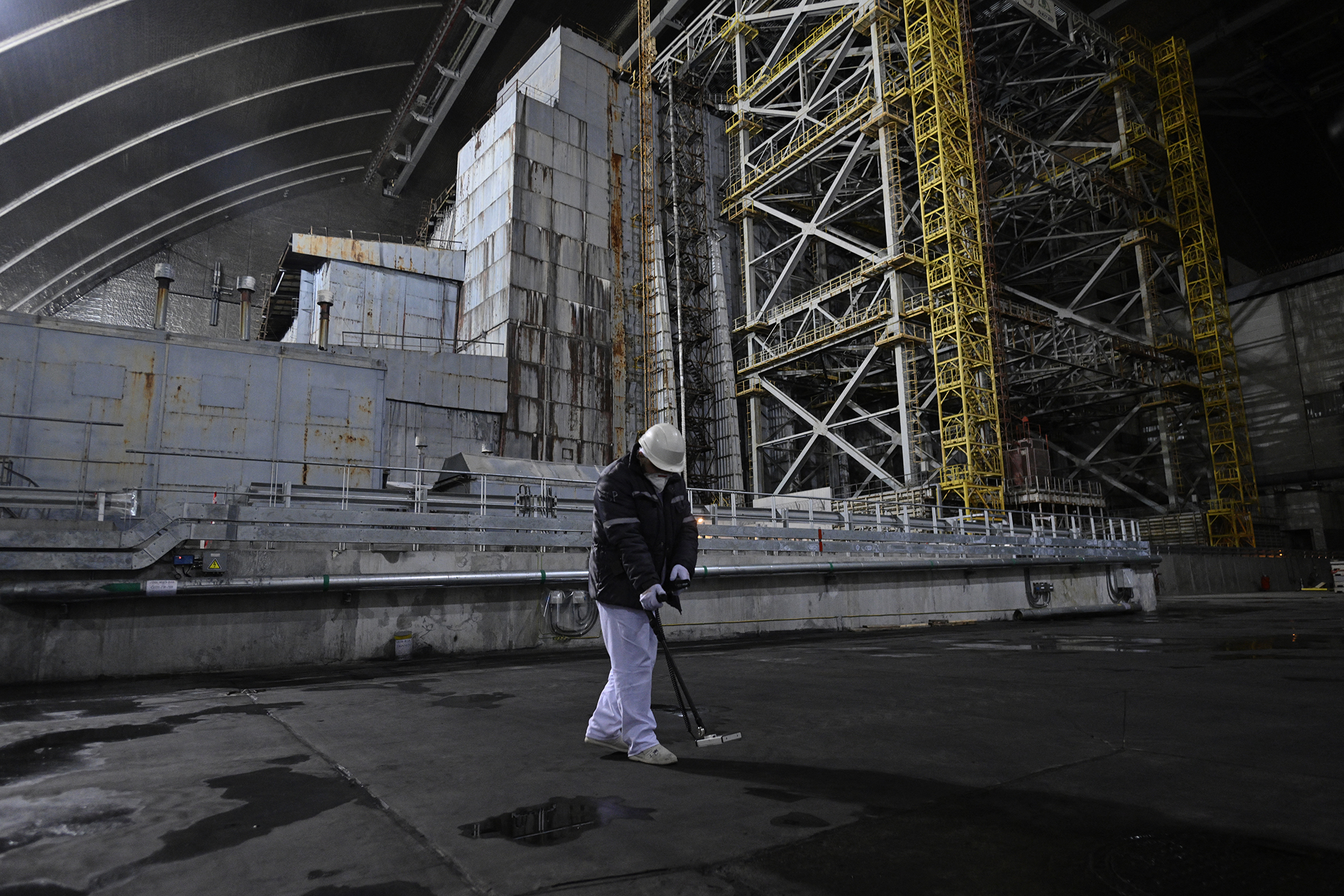
Over time, more details emerged about the tests and the shutdown, the flaws in the reactor’s design, the inadequate training and safety mechanisms. You can get a feel of the situation from the gripping television series Chernobyl, which aired in 2019. Over the next weeks, dozens of workers and firefighters would die, and more than a quarter of a million people would be evacuated and resettled. To this day, the town of Pripyat is abandoned, a ghostlike monument to the human and ecological impact of technological failure, along with a 2,600 square kilometre exclusion zone, replete with wild horses and wolves.
The accident occurred in the Soviet Union, but today the site is in Ukraine, a country that regained its independence in August 1991, following the collapse of the Soviet Union. For many, the accident had a catalytic role in that collapse, which occurred as Mikhail Gorbachev, general secretary of the Communist party of the Soviet Union, promoted twin policies of glasnost – opening up Soviet society by making more information publicly available – and perestroika – restructuring the country’s political and economic institutions.
The accident destroyed both policies: the terrible delay in informing the public about what had happened, and the ensuing risks to health, shattered public trust, because the economy was given priority over the wellbeing of people. Gorbachev himself once said that Chernobyl was “perhaps the real cause of the collapse of the Soviet Union”. The chain of events that followed, including a sense of a country diminished, led to Vladimir Putin.
The accident’s legacy was not limited to the country. In offering stark evidence of the permeability of national boundaries – how an event in one place can have major consequences thousands of miles away – it catalysed a new environmental consciousness, a recognition of our capacity to cause harm to the natural world, the limits of technological prowess and the need for international cooperation to deal with such events.
The moment was a turning point, when a new subject known as international environmental law burst onto the scene
The moment was a turning point, when a new subject known as international environmental law burst onto the scene
The accident coincided with the discovery of a hole in the ozone layer and efforts to legislate globally against that grave problem. The moment was a turning point, when a new subject known as international environmental law burst onto the scene. I lived through this moment and was invited to talk in Washington DC on Chernobyl’s implications for international law. This was a subject I knew nothing about, as rules on transboundary pollution (which originates in one country but is able to cause damage in another’s environment, by crossing borders through pathways like water or air) were non-existent, not taught at law schools and not even the subject of any textbooks. The first on international environmental law was published three years after the accident.
It fuelled the efforts of groups such as Greenpeace and Friends of the Earth and caused many countries to respond to domestic pressures. At the United Nations Earth Summit in Rio de Janeiro in June 1992, nations adopted landmark global treaties to protect the climate system and biodiversity, while committing to precautionary measures to safeguard the natural world. Chernobyl energised domestic activism, including environmental protests in Hungary, against Soviet-backed mega-dams on the Danube River – efforts that led to the first environmental case brought before the World Court in The Hague.
I participated in efforts at the International Atomic Energy Agency in Vienna to legislate new treaties aimed at preventing nuclear accidents. There, I would see first-hand the role played by the US under Ronald Reagan in responding to the legal and political challenges arising from the accident – a commitment premised on the belief that certain international problems demand solutions rooted in international law and an approach firmly based on multilateral action through global institutions.
The country that once played such an active role in the global legal response to Chernobyl has turned its back on multilateralism
The country that once played such an active role in the global legal response to Chernobyl has turned its back on multilateralism
How different things are today. The country that once played such an active role in the global legal response to Chernobyl has turned its back on multilateralism, and its diplomats now seem instructed not to utter the words “international law”. In January 1991, in the shadow of Chernobyl, George HW Bush hosted the first round of negotiations of a first treaty on climate change. Thirty-five years on, in January 2026, Donald Trump signed a memorandum announcing the United States’ withdrawal from the 1992 UN Framework Convention on Climate Change. When that action takes effect, the US, the world’s second-largest emitter of CO2, will stand entirely alone, the only nation not bound by a treaty commitment to “protect the climate system for present and future generations”.
Newsletters
Choose the newsletters you want to receive
View more
For information about how The Observer protects your data, read our Privacy Policy
For many, the nuclear accident of 1986 had terrible consequences. Yet it also set in motion developments that would change the world. It caused international law to engage with the protection of nature, reshaping change lives and borders. “Chernobyl made us free people,” said the Ukraine-born writer Svetlana Alexievich in her 2015 Nobel prize lecture.
Chernobyl was a stark reminder of how connected we are – and of the need for common rules and global institutions in times of crisis. To seek to abandon those rules and institutions, as some now wish, is a dangerous folly of the highest order. It will not happen.
Philippe Sands is professor of law at University College London and the author of East West Street (2016). He is currently writing a book about ecocide. On Monday 27 April he will present Law Stories: On Literature and Global Justice, an evening honouring the contribution to his writing of the UCL Faculty of Law and five of its students.
Photograph by Genya Savilov / AFP via Getty Images