Photographs by Cian Oba-Smith for The Observer
‘It nah good fi stay in white man country too long,” said my father, Bageye, as we drove through the quiet streets of 1970s Luton. I was born in neighbouring Hitchin and was a British citizen, as were my Jamaican-born parents, who migrated to the motherland in 1959. But, like many such pioneers and their children, we lived in a liminal state of uncertainty about our place and permanence in this country. Our Luton story is echoed in the tales of dozens of migrants to Britain from around the world, stories that I have been collecting for my oral history, What We Leave We Carry.
Bageye had a right to remain in Britain but his gloomy assessment of it not working out wasn’t new; it was a constant refrain among his West Indian spars. I’d heard it throughout my childhood in Luton as I sat in the starkly lit hallway of Mrs Knight, eavesdropping on the action in the kitchen where my father and his fellow Vauxhall factory workers gathered after collecting their wage packets, ready for the all-weekend poker game.
Bageye was a perennial loser at the poker table. “That man,” said my mother, Ethlyn, of her feckless husband. “If you want jackass fi ride, here comes Bageye.”
My father was a chancer but Ethlyn had also taken a huge gamble when she followed him from Jamaica to England. And not just to England but to Luton and in particular to Farley Hill, the council house estate on the edge of town. “Who tell me fi come to this bush place?” Ethlyn would lament when things became too much, which was often. She would stare at the four walls of the dining room and the four walls would stare defiantly back at her.
“Bush”, I intuited as a 10-year-old, was a derogatory term for the Jamaican countryside. It did not evoke a pastoral idyll. Bush was the antithesis of bucolic; it was the wild, uncivilised interior of Jamaica, home of the “poor sufferahs” who eked out a living on land that had been drenched for centuries in the blood of slavery.
Aged 27, Ethlyn had left a comfortable family home with streets lined with bougainvillea in a residential area of the Jamaican capital, Kingston, and, preceded by her merchant seaman husband, arrived in the concrete council estate of Farley Hill – bush.
The planners who dreamed up Farley Hill primarily to replace bomb-damaged buildings after the second world war would have been bemused by my mother’s antipathy. On appropriated land that had previously been a farm, the estate’s conscientious designers, heavily influenced by the garden city movement, envisaged low-density family-oriented homes with lots of open space – a network of grass verges, parks and bluebell woods.
The weekend after the [Enoch Powell] speech, my Irish school friends began teasing me, suggesting that I and my family had better pack our bags
The weekend after the [Enoch Powell] speech, my Irish school friends began teasing me, suggesting that I and my family had better pack our bags
Back then, there were very few people of South Asian origin on Farley Hill; they mostly lived downtown in Bury Park, an area we only visited to buy cheap fruit and vegetables. The neighbours with whom we mostly associated were predominantly Irish. West Indians benefited from the energy and influence of Irish migrants who advocated for the building of a local Catholic church and school, St Margaret of Scotland. Physically, with their pale skin, the Irish resembled the English. But culturally and temperamentally, they – along with a handful of flamboyant Italians including the barber Enzo, and the other British “foreigners”, the Scottish and Welsh residents – seemed closer to us than the English. All were lured, especially from the 1950s onwards, by the adventure of a new life and also by the dream: of not being stymied by unemployment (Vauxhall Motors employed 35,000 people, almost a third of the town’s entire workforce); of escaping the vagaries of nature (hurricanes in my parents’ case); and of finding good, affordable housing.
The Irish were spoken of admiringly as good workers, similarly to the way Polish workers are described today. I was always intrigued by the signature uniforms worn by neighbours like Mr McLoughlin – paint splattered overalls and heavy hobnailed boots – and I imagined these men as modern examples of ancient warriors embarking stoically on dangerous missions on building sites and laying the “black stuff” (asphalt) for motorways. Even as a child, I realised that these fellow migrants did all this hazardous and unfancied work directly for their families but indirectly for us, for all of us.
Newsletters
Choose the newsletters you want to receive
View more
For information about how The Observer protects your data, read our Privacy Policy
In some regards, Luton also provided freedom from the prejudices that were attached to my parents’ birthplace in Kingston, a city informally governed by a pigmentocracy, where your opportunities in life were closely associated with the hue of your skin. Dark-skinned Bageye had found himself at the bottom of the social ladder in Jamaica, but the native Luton population was not aware of the stratification that was represented by subtle shades of colour in former colonial countries. On Farley Hill, Bageye had a blank canvas to consider how he would cast himself; he could start again.
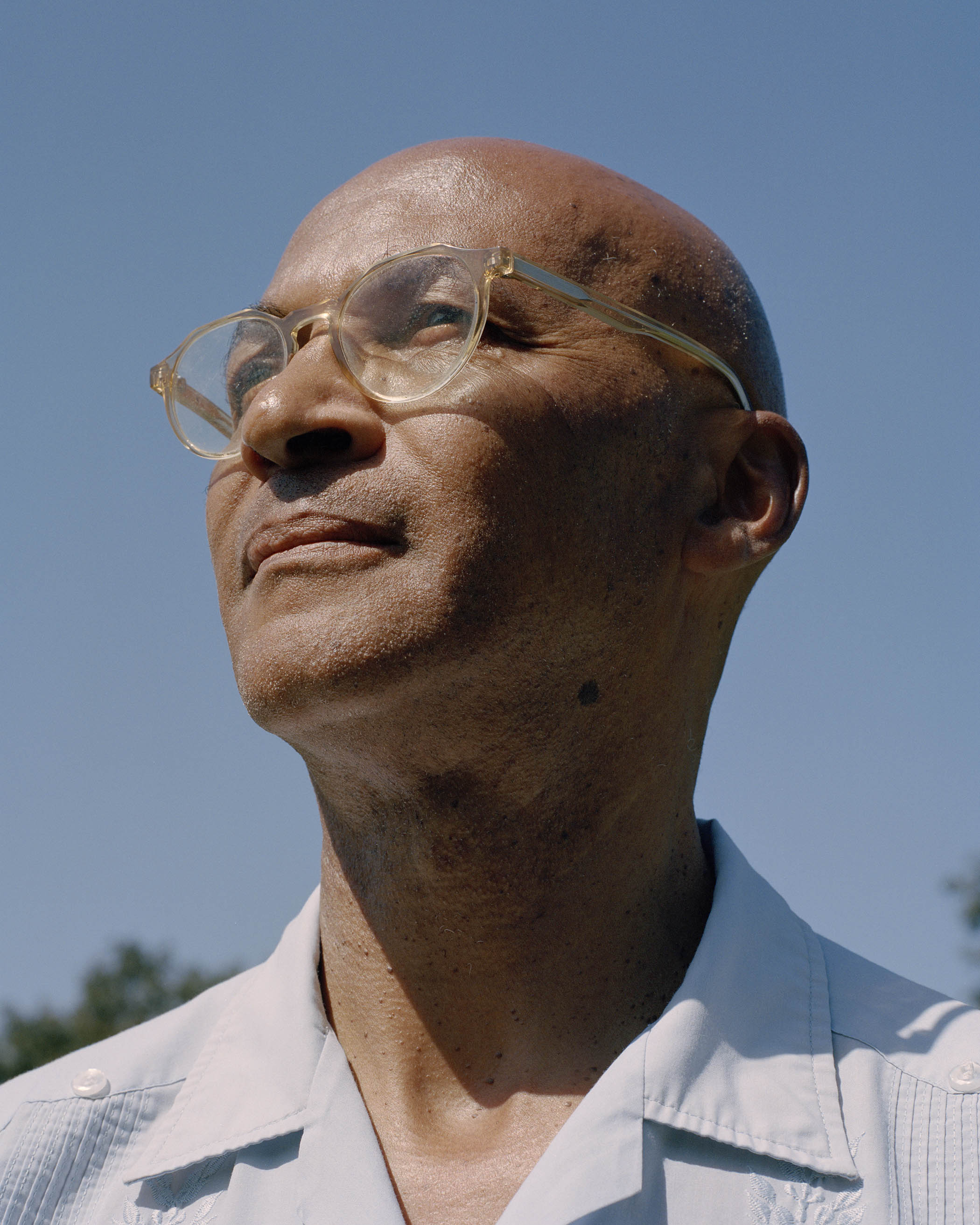
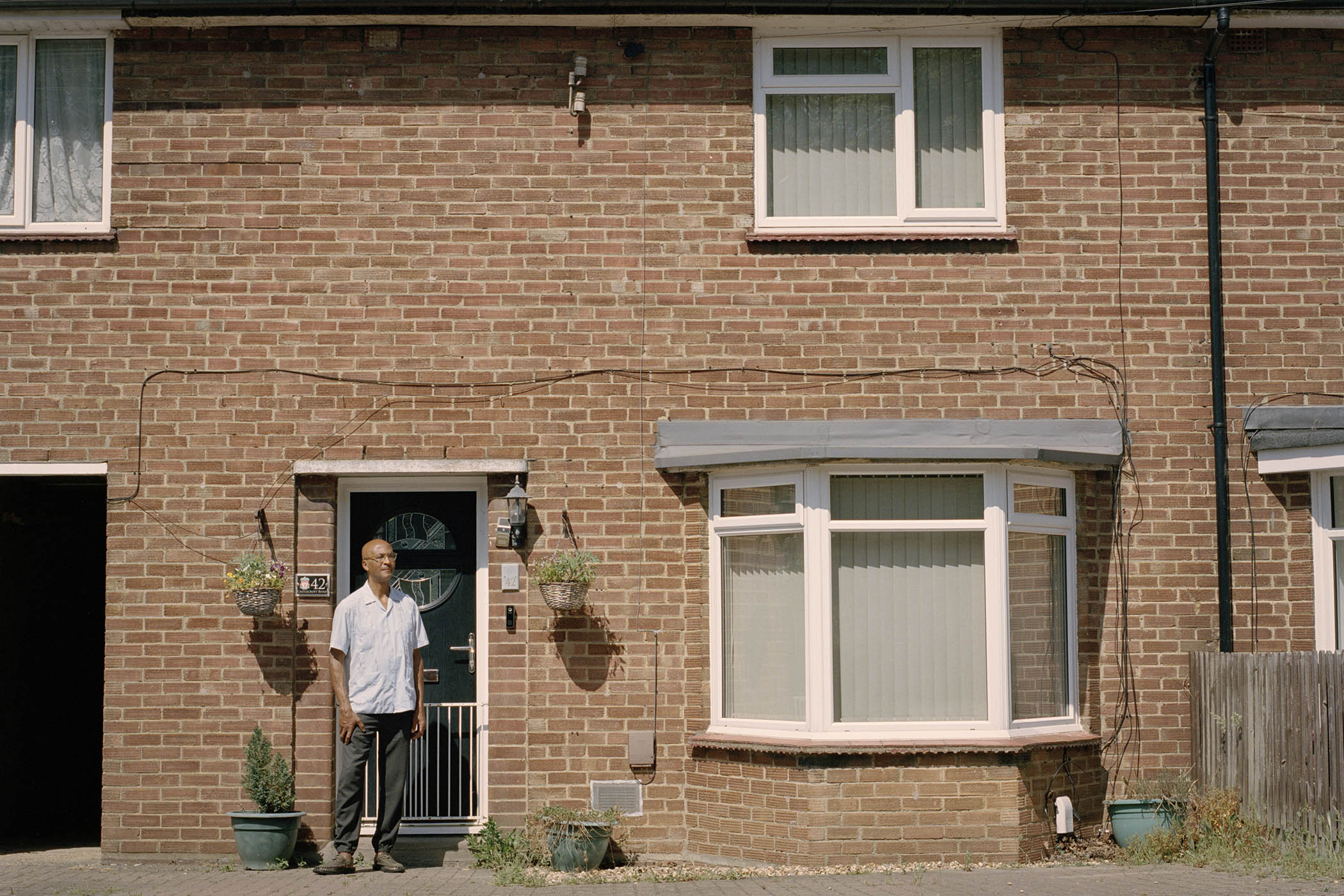
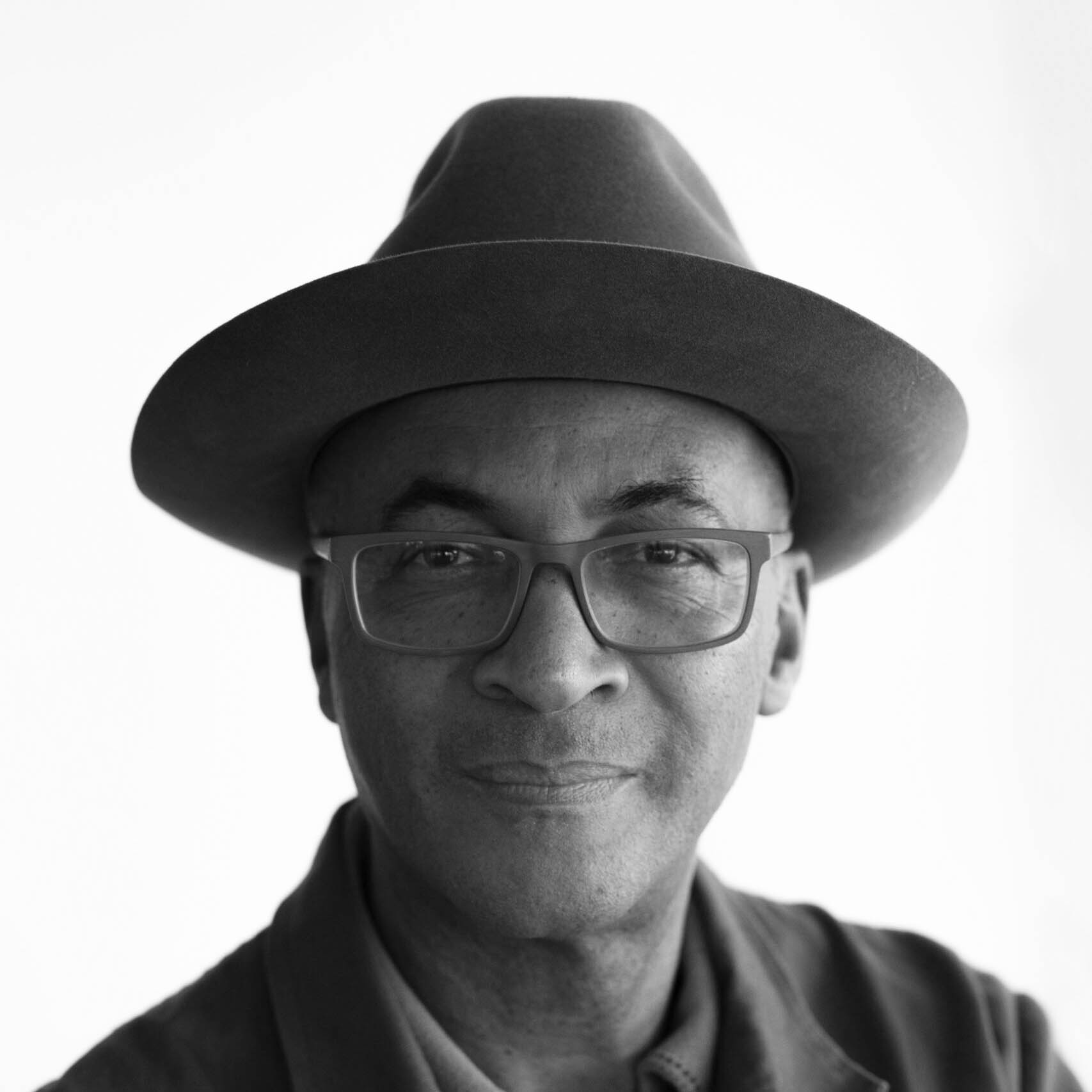
Above: Colin Grant; main picture: Grant outside his childhood home on the Farley Hill estate.
That is, until the time when, in their wisdom, the council decided to move another West Indian family next door. We joined Bageye in his bedroom looking down on the Barkers (from St Vincent) as they unloaded items from the removal van. And our father whispered mischievously, as much to himself as to us: “Imagine this, I travel 4,000 miles to get away from these people and look who they put next door.” Bageye was joking, but there really was a tension among some West Indians – an anxiety that did not seem so prevalent among our Irish and South Asian neighbours – about drawing unwelcome attention to themselves by cleaving together.
Mr Caesar, AKA “Boasty Mouth”, was the embodiment of that tension. It was well known that Ken Caesar was a Jamaican, yet he claimed to come from Cuba. And furthermore, as far as the other West Indians on Farley Hill were concerned, Boasty Mouth was too white-minded. His fawning preference for white people was expressed most explicitly in his socialising at the Parrot, the pub on the estate policed mostly by white English punters with hard, unwelcoming stares, who put down their pints in dismay if you ever had the temerity to enter.
The Parrot’s doorstep was hardly ever darkened by any West Indian other than Mr Caesar. Decades later, this hub of Farley Hill drinkers would gain notoriety as a favourite boozer of Stephen Christopher Yaxley-Lennon (AKA Tommy Robinson) who, as recalled in his memoir, Enemy of the State (2015), partly grew up on the estate. The roots of Robinson’s Islamophobia are based in football thuggery and the violent MIGs gang of football hooligans associated with Luton Football Club in which he and some relatives were involved.
Robinson, the son of Rita Carroll, an Irish migrant, was born around the time I was leaving Farley Hill. With an Irish mother, it might seem counterintuitive that he’d align himself with those voicing harsh, anti-migrant sentiments, but Robinson is not that far removed from Ken Caesar and those other descendants of migrants now jockeying for power in the Reform party. In the decade after Mr Caesar sank his final pint of Guinness, the Parrot would become the designated meeting place for Robinson and the co-founders of the rightwing English Defence League (EDL), but there’s little presence of them there now. The pub was demolished in 2016, the council has proposed building 17 residential properties in its place, and Robinson’s Uncle Darren, locals inform me, converted to Islam a while ago.
Racial prejudice always bubbled just beneath the surface of life on Farley Hill, but I don’t recall any naked resentments from “bad-minded” English neighbours directed toward us before 1968, when the Conservative MP Enoch Powell gave the noxious anti-migrant “Rivers of Blood” speech that filled the airwaves and was plastered all over the papers. Powell railed against mass migration in Britain, argued that “in 15 or 20 years, the black man will have the whip hand over the white man”, and predicted bloody racial violence unless black and brown migrants “volunteered” or were forced to go “back home”. The weekend after the speech, my Irish school friends began teasing me, suggesting that I and my family had better pack our bags as we were on our way out. The headmistress, Sister Philomena, came to my rescue. She chastised my schoolmates and warned them that if the authorities came for me in the morning, they’d be coming for the Irish kids in the afternoon. It was a powerful signal of allyship that I have never forgotten.
The Powell era was not known for its enlightenment. Schadenfreude and bigotry seemed more the order of the day: Irish and South Asian people were regularly the butt of comedians’ jokes; every week, The Black and White Minstrel Show aired on mainstream television; members of the clergy such as our local Catholic priest Father Cillian could describe black altar boys as monkeys without fear of censure; and the Troubles made my Irish friends self-consciously hypervisible.
In the 1970s, Farley Hill felt semi-detached from the rest of Luton. Getting to the town centre was just about walkable; the return uphill was more forbidding. A couple of years after Enoch Powell’s hysterical outburst, I sat on a double-decker bus so overladen with passengers that many were forced to stand with heavy bags of groceries at their feet. Instinctively, I stood up to offer my seat to one of the middle-aged women, but – too shy to speak in public – I did not say anything; I just stood. The standing woman looked perplexed. She ignored me and started up a conversation with a woman standing beside her. She gestured towards me and, chuckling to her neighbour, said: “What does it think it is? I mean, really? What does it think it is?” The shame of her wounding words propelled me back to my seat where I remained until it was time to get off.
I never said anything about the bus incident to my mother but a week later, when I overheard her talking with a church sister caustically about English people, by which she meant white people, I gleaned she must have heard about it. “Dem people!” Ethlyn cleared her throat as if something grated on it. “They tink dem is something, tink dem is civilised. Cha. They boil dem potatoes in the same pot dem use boil their knickers.”
Nonetheless, Ethlyn also made friends with our English neighbours. She was particularly fond of Mrs Jones, whose daughter had done something that had previously been deemed impossible on our estate: she had attended university and had become a teacher. Mrs Jones took vicarious pleasure in her daughter’s social mobility. Her ambition resonated with Ethlyn, who always championed her children, and plotted to persuade Bageye that somehow they should scrimp and save in order to send me to a private school 20 miles away in leafy St Albans. To help my “good brains”, they were feeding me all the fish they could afford, but it wasn’t going to work if I was destined for the failing state school – Rotherham – which would close down in the next decade. My mother would not have been familiar with the sociologist Bernard Coard and his seminal paper, How the West Indian Child Is Made Educationally Sub-normal in the British School System, but when I was inexplicably taken out of the top stream and placed in the bottom stream at school, Ethlyn became alarmed and vowed: “Uh, uh, nothing a go so.” The downgrade could not be countenanced.
The sentiment expressed in Coard’s thesis was exactly what she feared: that I would be held back by the state and not realise my educational potential. Rotherham was out of the question. St Columba’s College offered a route out from the expected destiny of the son of Jamaican migrants. And that’s when the problems with Mrs Jones began. The prospect of there being a second family with a tertiary educated son, elicited, now that I think back on it, a version of “What does it think it is?”.
Migrants are often questioned about their allegiance to their new adopted homeland, most explicitly in their responses at citizenship ceremonies. But any sense of belonging is always complicated by emotional and residual ties to the past. In rooting for the West Indies when they went out to bat against England, the black Britons I grew up with would not have passed Norman Tebbit’s cricket test. But a clear signifier in the shift towards a British identity came for me in 1980. In the year I left Farley Hill, my siblings and I gathered excitedly around the TV to cheer on Scotland’s Allan Wells as he powered his way to Olympic victory against Cuba’s Silvio Leonard, whose black Caribbeanness would ordinarily have guaranteed him favoured athlete status. But suggestions that such moments heralded a growing sense of togetherness have been tempered in recent years by a rise of racial hostility.
Recently, I returned to Farley Hill to research some stories for What We Leave We Carry. Silos of separation appeared to have emerged in the years since I left home. In my youth, Luton had been more than 90% white. Now it was majority non-white, especially around the Bury Park area. I asked Sister Vaughan, an elderly West Indian acquaintance, what Bury Park was like these days. “Oh, me nah go down dem part any more,” she answered. I asked her why not. She kissed her teeth: “Me don’ have no passport fi go down there.” I was shocked by her bigotry, and chose to focus on the humour with which she spoke. “Tensions between different communities are overstated if not outright false,” my old friend David Synott, who I grew up with on Farley Hill, tells me. For example, “every other Saturday there’s a football match in and around Bury Park and the second and third generation South Asian population are very well integrated into the town”.
Many residents of Farley Hill took up the right-to-buy offered during Margaret Thatcher’s time. Three-bedroom properties now sell for more than £300,000. Politically, the estate is still a Labour stronghold, though Reform are trying to make inroads. The demographics have changed. Over the past decades, the estate has seen more people from Turkey and Poland move to Farley Hill. St Margaret of Scotland Catholic church has an ageing congregation. Enzo, the old barber, only retired a few months ago, and has moved to leafy Harpenden just a few miles away. Some years ago the old dental surgery at the Crossway was converted into a mosque, which thrives, as do the Chinese and Indian takeaways. Despite rightwing fantasies of repatriation of migrants, and a return to a mythologised homogeneous British past, there is no going back.
In 1948, as sections of the British public voiced outrage over the imminent arrival of hundreds of migrants on board the HMT Empire Windrush, Rt Hon Arthur Creech Jones, minister for the colonies, attempted to reassure Britons, saying: “Do not worry. These people are just adventurers. They will not last longer than one British winter.” Creech Jones and those who even back then exhibited early signs of “colonial melancholia” underestimated the tenacity of migrants and their descendants. We’re here to stay.
What We Leave We Carry by Colin Grant is published by Jonathan Cape (£22). Save 15% off RRP at The Observer Shop. Delivery charges may apply.