
The name Eric, according to online sources, is of Old Norse origin, derived from Eiríkr, meaning “eternal” or “ever-powerful” ruler. It signifies leadership and strength.
In 1954, a married postman in his mid-20s is marched through the gates of Georgetown Prison in British Guiana (now Guyana). The jail is a stone’s throw from the Atlantic Ocean where the air tastes of salt. There is no fear on his face or in his heart. He is handsome, determined, and a proud member of the anti-colonial People’s Progressive party. His punishment for breaking a curfew imposed by British colonial rule, after the suspension of the constitution, is incarceration for a year.
Eric Huntley’s strength of character was hard earned. Twelve months behind bars can haunt the dreams of a free man. After his release in 1957, Eric took a voyage across the Atlantic and emigrated to England. It must have been a shock to arrive in the freezing cold. He studied in London, furthering his knowledge of politics, and worked days – and some nights – at the Mount Pleasant mail sorting office to save enough money to bring his wife, Jessica, and children from Guyana to London.
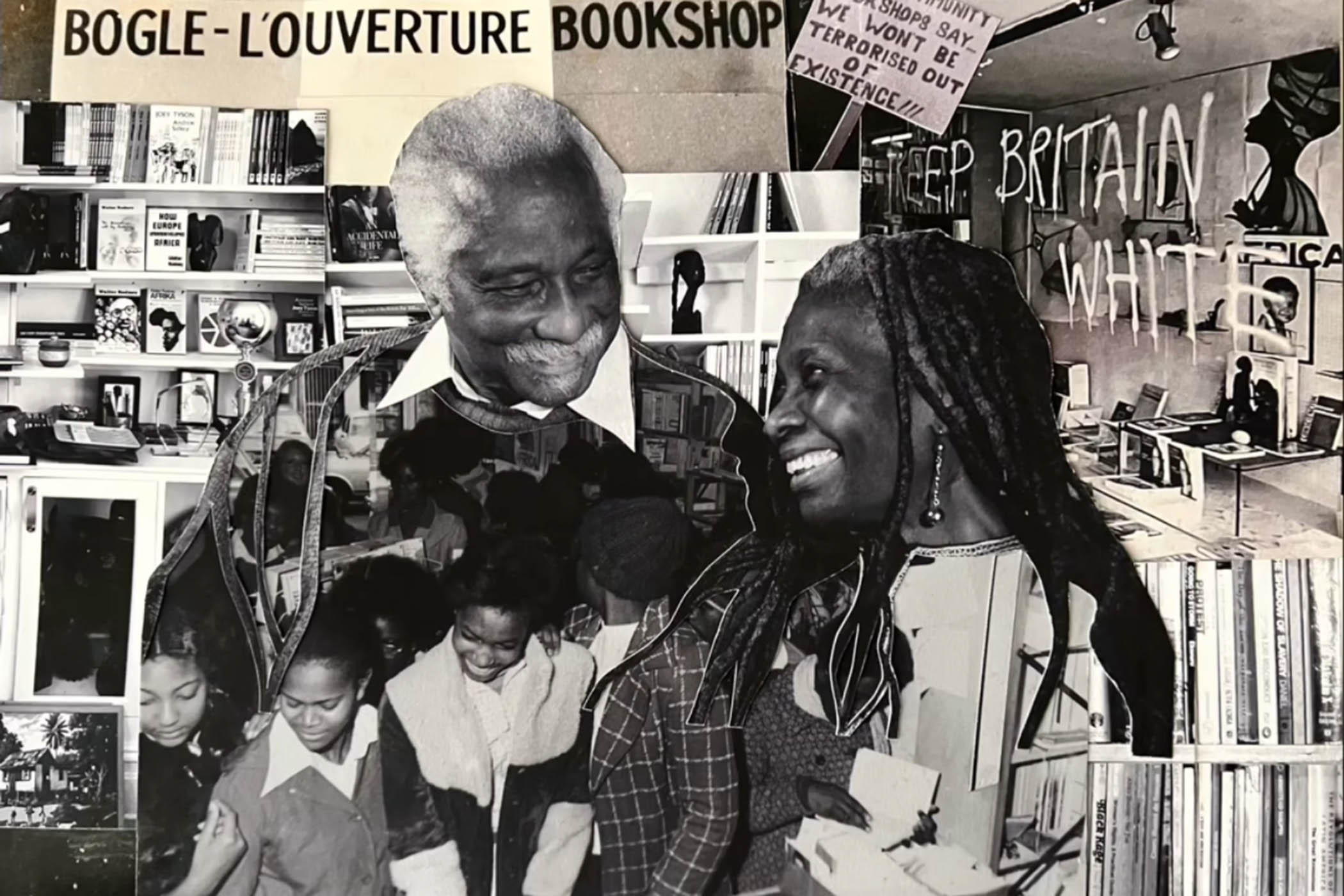
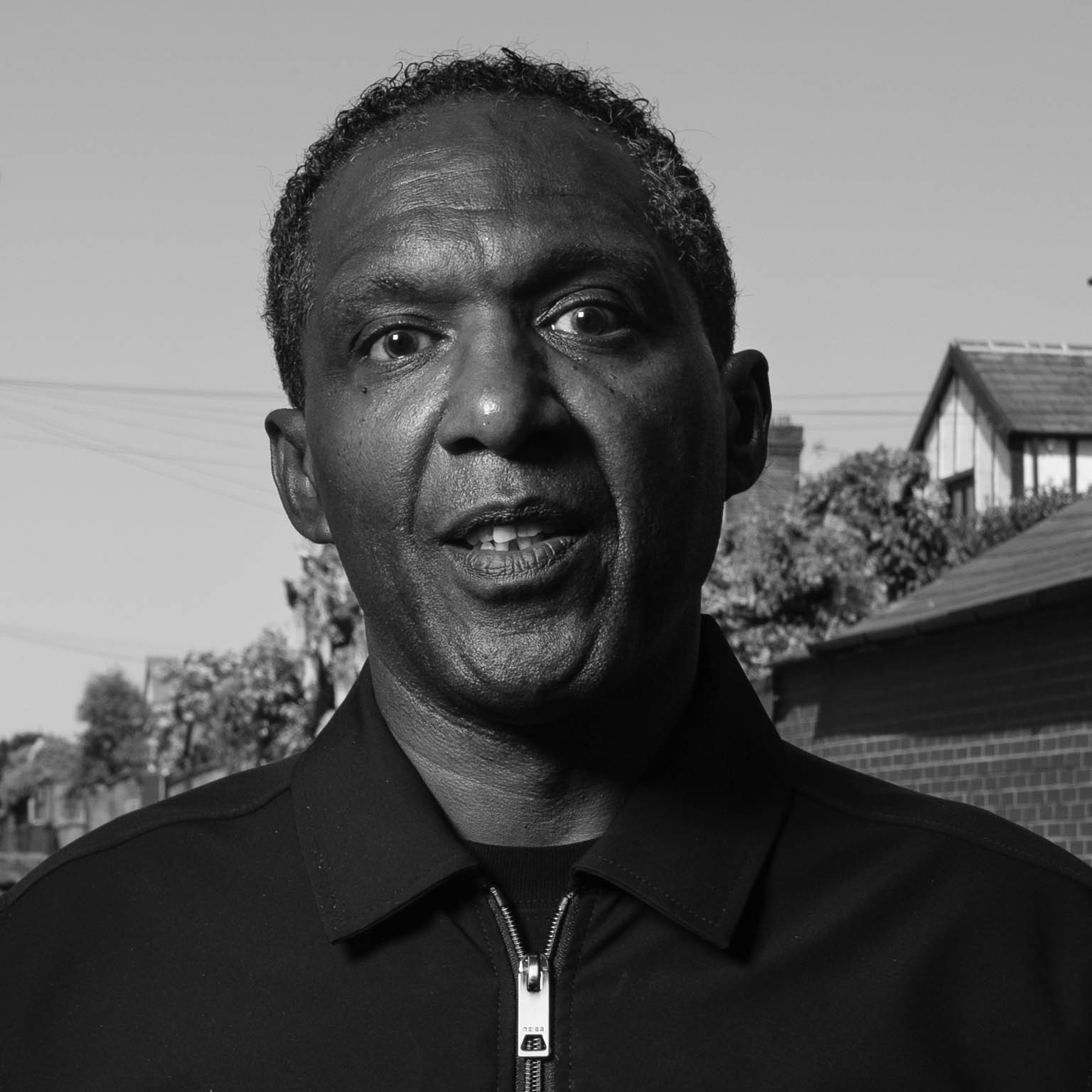
As a politicised and loving couple, they established Bogle-L’Ouverture Publications (BLP), primarily to publish the works of Guyanese activist and author Walter Rodney. Their first bestseller came in 1972 with Rodney’s How Europe Underdeveloped Africa. It is still in print. In 1975, they published Dread Beat and Blood by Linton Kwesi Johnson. These were among many books that established them as one of three Black British publishers at the time.
Eric and Jessica reinvested their early success into the business, and in 1975 they opened the Bogle-L’Ouverture Bookshop in Ealing. In a speech given at Ealing town hall in 1976, Eric described how BLP had, in the historian Naomi Oppenheim’s words, “blazed a trail in publishing, aimed at writing the wrongs of five centuries”. Unrest was rising in England. Margaret Thatcher’s police harassed the Black community with the “sus” stop-and-search laws. The National Front marched on the streets. This was the eve of the Brixton riots.
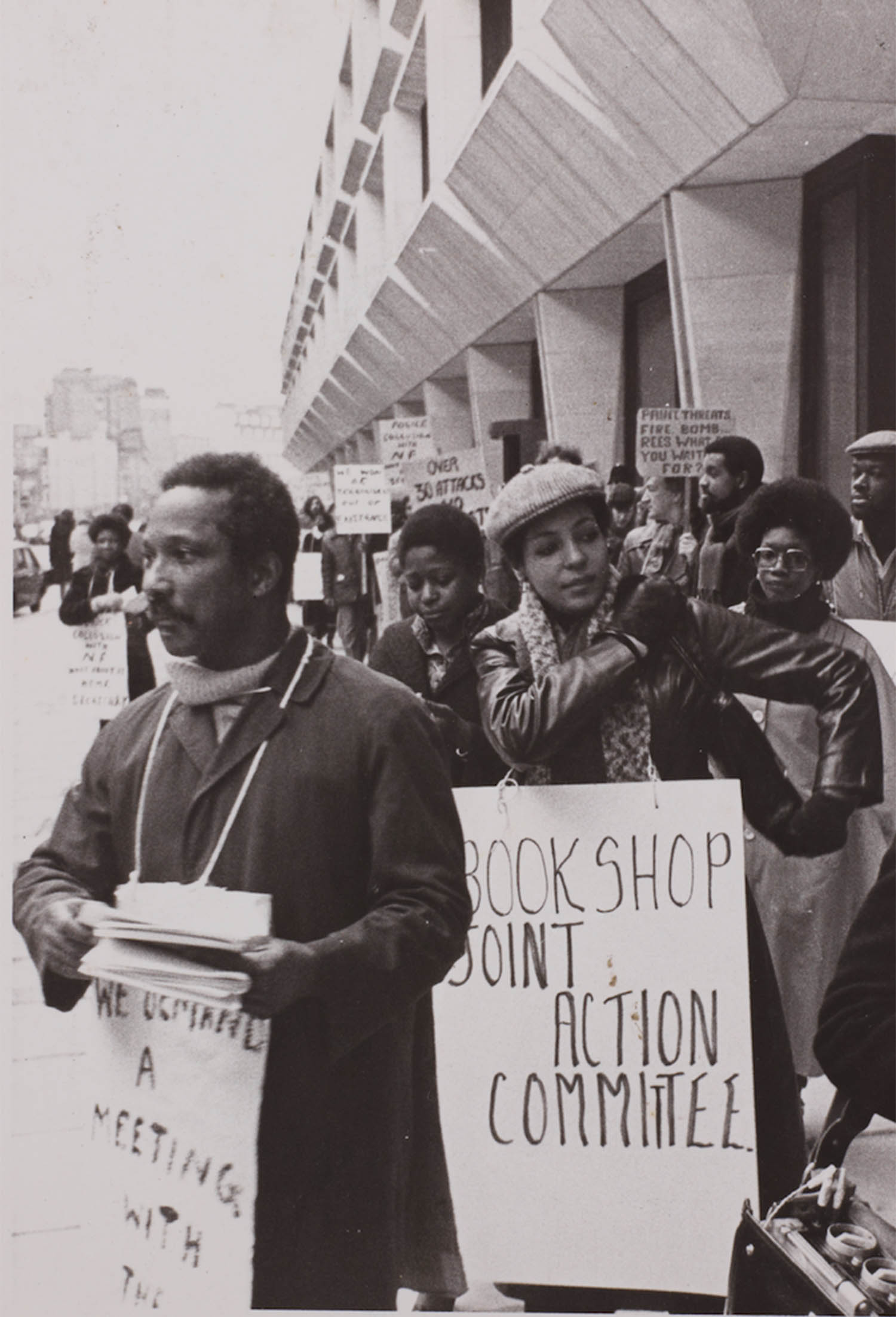
Eric Huntley, left, demonstrating in London in the 1980s
By 1980 their bookshop was becoming a racial target; their windows were smashed and their walls were daubed with racist graffiti. The same year, Rodney was assassinated in Guyana. Eric and Jessica changed the shop’s name to the Walter Rodney Bookshop. Hounded at every stage of his life, Eric continued his mission to inform, enlighten and empower through the written and spoken word, until his death aged 96 in January this year.
Back in the late 1980s, I sent Eric and Jessica my poems, through one of their authors, Valerie Bloom. In 1988, Bogle-L’Ouverture published my first proper book, Tender Fingers in a Clenched Fist. (I had paid for the printing of an earlier collection, Perceptions of the Pen, when I was 18.) You never forget your first publisher. I was 20 years old, and with that publication I set sail into the world as a writer.
The last time I saw Eric was 30 years later. It was spring 2018 at the Victoria and Albert Museum, at an exhibition of bounty looted from Maqdala (Magdala) in Ethiopia in 1868. While speaking from the podium, I was surprised to find myself balancing in his watchful eyes. Maybe he was recalling the first time we met, when I was a young author and he was teaching me how to sail my craft. Maybe he was remembering Jessica, his dear departed wife, who had died in 2013. Memory has a way of leading one thought into another; it draws us through hallucinatory corridors of associations. On seeing him at the exhibition, I felt a pang of guilt – a space I couldn’t fill with polite chit-chat. I asked what brought him to the exhibition launch.
The Battle of Maqdala was a one-sided war. Thirty-five thousand heavily armed British Indian soldiers conquered 5,000 Ethiopians. They sailed the Arabian Sea from India, marched on Maqdala, and looted the emperor’s palace, selling the spoils to the highest bidder. They took a child – the emperor’s son, Prince Alemayehu – and brought him to live on the Isle of Wight, where he was paraded before Queen Victoria. It was this invisible exhibit, a young Ethiopian boy, about whom I was speaking from the podium. Prince Alemayehu had crossed the same Solent waters as Eric did when he arrived in Southampton all those years ago.
In his gaze, I learned that words unsaid become the most prominent over time
In his gaze, I learned that words unsaid become the most prominent over time
My 21-year-old self did not have the experience to appreciate the hard work Eric and Jessica must have put into publishing each book. Who typed the text? Who commissioned the artwork? Who raised the money and took the risk? Who stacked the stock? It was the same hard work Eric and Jessica committed to all the books they published and read; the same hard work it took to scrub racist graffiti from the bookshop walls; the same determination it took to leave their home country; the same daily courage it took for Eric to survive prison; and the same hard work it took for him to say goodbye to his lifelong friend and dear wife.
Newsletters
Choose the newsletters you want to receive
View more
For information about how The Observer protects your data, read our Privacy Policy
Having sailed the seven seas upon a ship – which, in this extended and barely seaworthy metaphor, is my first real book – I see Eric standing upon the shore, radiating presence. He has a listening look. He raises his chin and strokes his beard: exactly the stance he held when I saw him at the exhibition. In his gaze, I learned that words unsaid become the most prominent over time.
At Guyana Speaks, a community event in London, Eric spoke of the wise words passed down from his Guyanese parents, words which stayed with him “long after leaving home”, like this quatrain from Henry Wadsworth Longfellow’s poem The Ladder of St Augustine:
The heights by great men reached and kept
Were not attained by sudden flight,
But they, while their companions slept,
Were toiling upward in the night.
Eric, it was you who “toiled upward in the night” to publish writers throughout the years. As one of them, I failed. I failed to say the words I should have said when last I saw you, words which have become more prominent over time: thank you.
Lemn Sissay takes part in Meet the Pioneers: The Revolutionary Publishers, with Margaret Busby and a panel hosted by Colin Grant, on 16 July at the British Library, London, produced by WritersMosaic, the Royal Literary Fund’s magazine.
Photographic montage of Eric Huntley and Jessica Huntley by Sharon Walters, on display at the National Gallery. Photograph of the artwork © Beverley Mason 2022. Photograph courtesy of the Huntley Archives at the London Archives